
What an Electrician Needs to Check Before You Choose a Sauna
SAUNA PLANNING
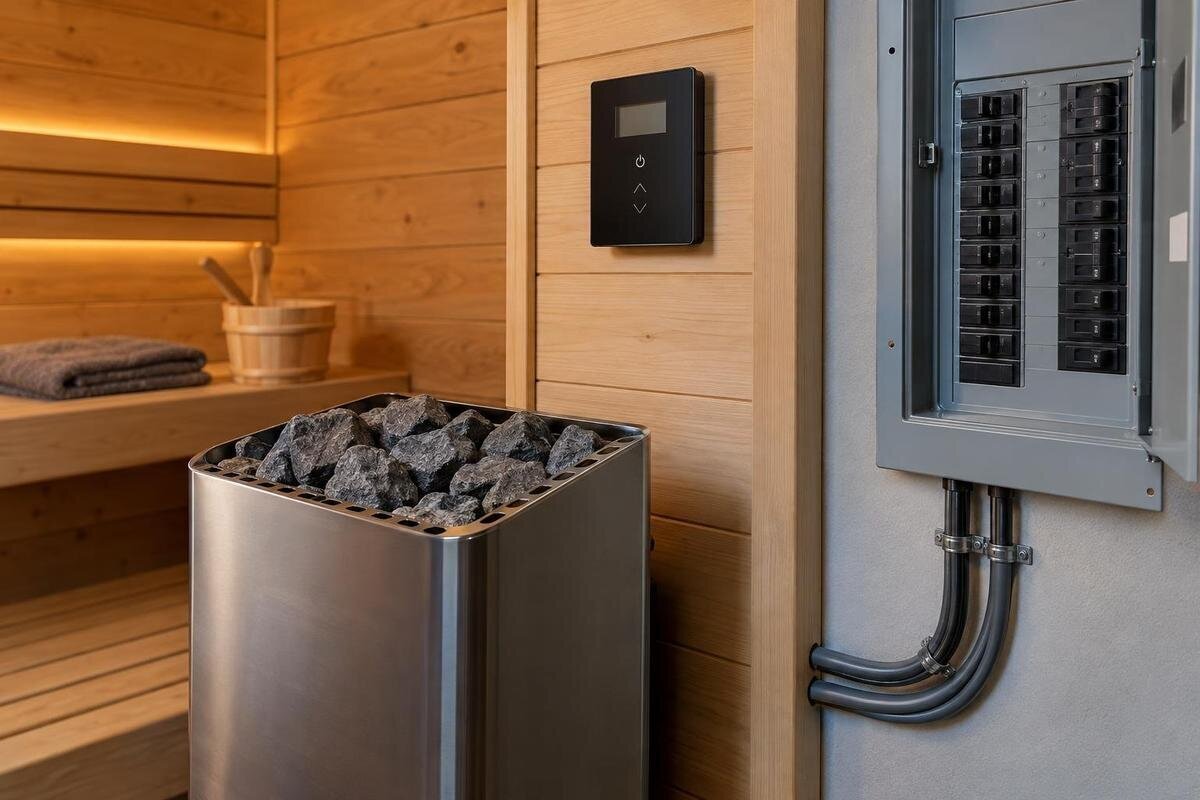
Before you choose an electric sauna, find out whether your home’s electricity supply can support the proposed heater and what may be needed to connect it. An advertised cabin size, a product photograph or the fact that a house already has several electric appliances cannot answer that. A qualified electrician needs the sauna’s exact heater requirements, details of the household supply and existing demand, and the intended location. Bringing those details together early helps you compare realistic options before committing to a particular model.
Identify the exact sauna and heater
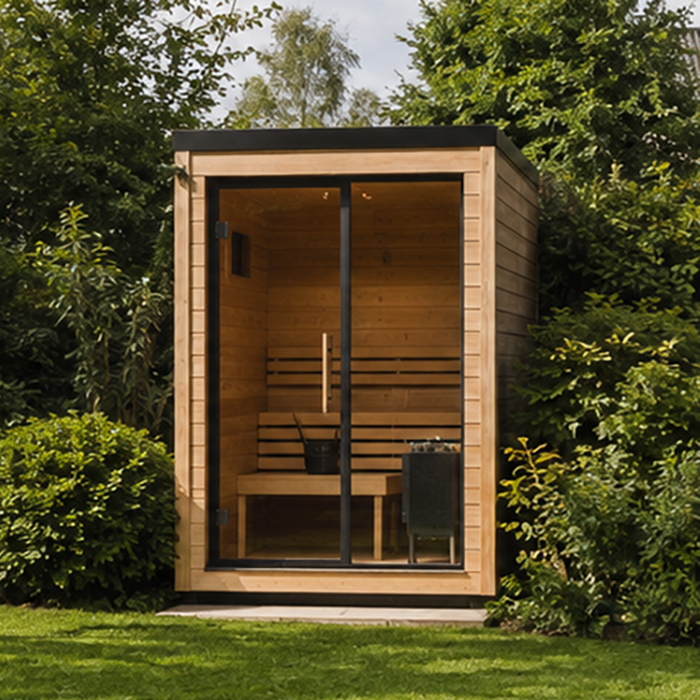
Start with the full sauna-and-heater combination, not just a cabin name. A manufacturer may specify a particular heater, while a package may offer several configurations; a product photo, category title or cabin dimensions will not tell you which applies. Ask the seller to confirm whether a heater is included, its exact make and model, and whether a controller or other powered equipment is part of the package. Give the electrician the cabin and heater identifiers together, rather than asking whether an unspecified outdoor sauna will work. That keeps the assessment tied to equipment that can be checked against manufacturer information. A product page such as the HC-150 sauna listing can identify the cabin, but its listed 2.97 m² area is not a heater rating; ask for electrical details of the heater proposed for that exact model.
If you have not settled on one option, give the electrician a short list of exact alternatives rather than a broad description. For each one, record the proposed heater, control arrangement and any options that may alter the electrical package. Request the manufacturer manual for the precise heater and confirmation that it applies to the configuration offered to you. A general brochure or a manual for a similar-looking sauna may describe different equipment, even if the cabins seem comparable. It is easier to assess a defined combination before purchase than to revisit a vague question after the model, heater or supplied components have changed. If the supplier has not confirmed a heater choice, mark it as unresolved.
Get the heater’s electrical requirements
Request the manufacturer’s electrical data and installation instructions for the exact heater, not a guess based on cabin size or an online rule of thumb. The electrician may need the stated rating and supply characteristics, such as voltage and phase, along with requirements for connection, controls, protective equipment and isolation. Ask the supplier to identify which details apply to your configuration and whether separate instructions cover a controller, lighting or other powered parts. These are inputs for the electrician to interpret, not a circuit design for you to create. If information is shown only on a label, ask the supplier how the electrician can review it before you buy.
Keep the manual title, heater model, document revision or date, and any available rating information together. Include a product code or variant number if available; it can help distinguish a manual for a similarly named model. The cabin and heater documentation should describe a compatible configuration; if the supplier proposes a different heater, request its documentation as well. The HC-225 sauna listing identifies a particular cabin, but a model name and its 4.4 m² listed area do not establish the heater’s electrical requirements. Where a document is missing, unclear or refers to a different version, ask the supplier to clarify before the electrician makes an assessment.
Have the home’s supply assessed
At the property, an electrician needs to assess the incoming supply and main switchboard, along with the circuits and equipment already drawing power. The fact that a board appears to have a spare position, or that the house has run other appliances without trouble, does not establish spare capacity for a sauna. Supply arrangements and earlier electrical changes vary from one property to another. Ask the electrician what needs inspection and whether any existing limitation affects the proposed heater. This is a site-specific assessment, not something that can be answered from cabin area, a bill or a generic online guide.
Share what you know about earlier switchboard or supply upgrades, renovations and new large appliances, and provide available records or plans if you have them. Do not remove a cover or try to interpret the switchboard yourself; unknown details are for the electrician to verify. A model reference such as the Sauna N-210 listing helps identify the product under consideration, but it cannot tell anyone how much capacity is available at your address. If you rent, live in a multi-unit building or have a shared supply arrangement, mention that early so the electrician can account for the property context and identify whether further information is needed.
Account for other household loads
Tell the electrician what else is electric in the home and what is likely to operate while the sauna is in use. Examples include an electric vehicle charger, heat pump, electric hot-water system, oven or induction cooktop; planned additions matter too. There is no need to calculate a combined load yourself. A simple note about usual timing, such as whether charging and cooking often overlap with sauna use, helps the electrician understand the operating pattern and ask for any missing information. If the sauna will be used at different times in different seasons, describe the expected pattern without trying to forecast exact demand.
The electrician can assess overall demand and whether any management arrangement would be appropriate, rather than treating the heater as if it were the only load. Mention appliances in a garage, workshop or other part of the property if they share the supply; their relevance depends on the actual arrangement. A shortlist item such as the N-250 sauna model belongs in that same picture, but its model name alone does not explain how household loads interact. Do not assume that switching an appliance off is a satisfactory plan unless the electrician confirms a workable arrangement and any equipment it would require.

Describe the proposed sauna location
Give the electrician a sketch or marked-up site plan showing the intended sauna position and the approximate route from the main switchboard to that area. Include rough distances, walls, floors, paving, gardens or other barriers, and whether the location is inside or outside. You do not need to design the route or decide where wiring should go; the point is to show the situation that needs assessing. If there are several possible positions, identify them separately. A route that looks short on a garden plan may still have practical constraints, so treat a rough measurement as planning information, not a completed design.
Describe relevant surroundings too: exposure to weather, moisture, heat, limited access, nearby buildings, and any planned paving or landscaping that could affect access later. The electrician can check what installation conditions and equipment are appropriate for the actual location, using the sauna and heater instructions. The LC-260 sauna listing is useful as an exact model reference, but a product identity cannot confirm a route at your property. If the site is not final, ask which parts of the assessment depend on its position before treating an early answer as definitive.
Include every powered component
Include every powered item in the proposed setup. The heater may be the main load, but ask the supplier which control unit, lighting or other electrical accessories are included, optional or supplied separately. Record the exact make and model of each item where available, and whether a component is selected by the manufacturer for use with that heater. A sauna package name alone does not establish what arrives in the box, and an add-on chosen later can change the information the electrician needs. This check is about the complete configuration, not a comparison of control features.
Send the electrician the package contents or written confirmation from the supplier, not just a photograph or broad product label. If a third-party heater or accessory is proposed, ask the supplier to confirm compatibility and provide its instructions; the electrician can then assess the combined requirements. A name such as the HCF-300 sauna model identifies the cabin being discussed, but the exact electrical components still need to be listed. If you are comparing a cabin-only offer with a package, make that distinction clear so the assessment is not based on equipment you will not receive.
Ask what alternatives are possible
If the first choice is not suitable as proposed, ask the electrician to explain the reason in practical terms. The issue could relate to the home’s available capacity, the proposed heater’s requirements, existing loads, the site or more than one of these; do not assume in advance which it is. Ask whether a different manufacturer-approved heater configuration, another sauna model, work to the property or a change to the planned use could be assessed. These are possibilities to discuss, not guaranteed solutions. The electrician should identify what can be assessed and what extra information or professional work would be needed before you choose.
If a proposed solution depends on a change to the home’s supply or work by another party, ask who needs to confirm that part and in what order. Request a written outline of assumptions, conditions and unresolved questions before comparing options on price or convenience. Moving to a model such as the LCF-300 sauna listing is not automatically a workaround: a different cabin or heater needs its own manufacturer requirements checked. Keep the alternative’s precise model and equipment list attached to the question so the electrician is comparing a real option rather than a name.
Agree what the electrician will assess
Make the enquiry easy to answer by sending a compact pack: exact cabin and heater details, manuals or ratings, household notes, the site plan and a list of other loads. In the same message, ask what further information the electrician needs and whether a site visit is required to assess the supply and proposed location. You can also ask whether the assessment covers only the existing supply or includes proposed alterations. That distinction helps you understand the scope of the advice rather than assuming a brief reply addresses every part of the project.
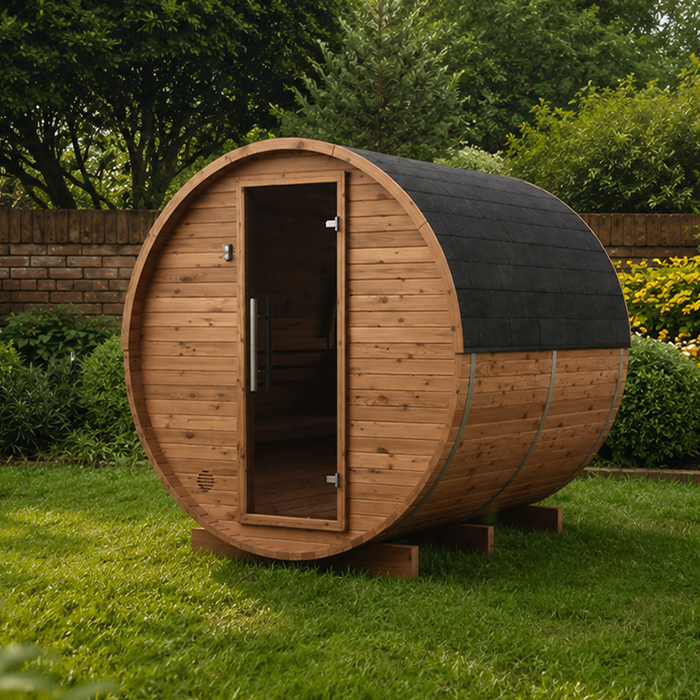
Before choosing, ask for the conclusion in writing against the model and configuration you actually described. Useful points to clarify include what has been confirmed, what remains subject to a supplier’s response, what work might be needed, and which assumptions would change the conclusion. Put the exact product name in the enquiry—for example, the S-140 sauna listing—rather than referring only to a barrel sauna. A written response is easier to compare with an order confirmation and reduces the risk of confusing a cabin, heater or accessory.
Keep the assessment tied to the final model
Treat the electrician’s answer as applying to the details they assessed, not as blanket approval for any sauna. Recheck if the heater changes, a different control or accessory is added, the sauna moves to another part of the property, or the supplier substitutes a model. A change to the household can matter too: a new charger, heat pump or other major appliance may alter the load picture. Before ordering, compare the final quote or configuration sheet with what the electrician reviewed, and flag any differences rather than assuming they are minor.
Keep a simple record with the product model, heater make and model, documentation version, included electrical components, location sketch and the electrician’s written advice. Mark unanswered items as outstanding, such as an unconfirmed heater inclusion or a pending response about the supply. If the supplier cannot provide a definitive configuration until later, ask whether the electrician’s earlier view remains valid once those details arrive. This record is helpful when several people are involved in sales, supply and site work, because it keeps each discussion attached to the same proposed setup.
Use the assessment before committing
Use the assessment to decide whether to keep, change or pause the shortlist. A helpful answer should distinguish between a setup that appears supportable as described, one that depends on specified work or confirmation, and one that cannot yet be assessed because information is missing. Ask what each conclusion means for the exact heater and location, and whether any further check must happen before purchase. Avoid reading a provisional response as a guarantee about a different product or a later change to the home. If costs or timing matter to your decision, ask the electrician for a separate scope or estimate; neither can be inferred from a model name.
When comparing the options, keep the sauna purchase and any proposed electrical work clearly identified. Check which configuration each estimate covers and whether it includes all the work identified in the assessment or only part of it. An option that depends on an unresolved supply question is not yet directly comparable with one whose requirements have been assessed. Ask which outstanding answers could change the scope or cost, and leave those items visible in your comparison. You can then decide whether to proceed with the preferred model, assess an alternative or wait for the missing information.
Frequently asked questions
Can I choose a sauna by its floor area and check the power later?
Floor area helps identify the cabin, but it does not tell you the electrical requirements of its heater or whether your home can support it. Get the exact heater details and manufacturer information, then have an electrician assess them alongside your household supply and existing loads before you commit.
What information should I send the electrician?
Send the exact sauna and heater model names, the heater’s manufacturer documentation and any available rating information. Include details of powered accessories, the intended location, known supply or switchboard work, and major household appliances. If something is not confirmed, mark it as unknown rather than guessing.
Does an empty space in the switchboard mean there is enough capacity?
No. An apparent spare position does not establish how much capacity is available from the supply or how existing electrical loads affect the proposed sauna. A qualified electrician needs to assess the property and interpret the relevant details; do not open the switchboard or try to judge its capacity yourself.
What if the preferred sauna may not suit my home's supply?
Ask the electrician to explain what is limiting the proposed setup and which alternatives can be assessed. These might involve a different documented configuration or work to the property, but no option is guaranteed until its requirements are checked. If another party needs to confirm a supply detail, ask who will do so.
Do I need another check if I change the sauna or its location?
Yes, if the change could affect the equipment or the installation conditions. A different heater, control unit, accessory, sauna model or site may alter the information the electrician assessed. Send the revised configuration and ask whether the previous assessment still applies before ordering or arranging work.
Electrical suitability is a match between the heater’s documented requirements, the household supply and the configuration you plan to install—not a conclusion drawn from cabin dimensions. Give a qualified electrician the exact sauna, heater, powered components and proposed location while your options are still open. A clear assessment can show whether the setup is supportable as described, what assumptions need confirming and what work or further checks may be needed. Keep that advice with the final model details so the sauna you order is the one that was assessed.
