
Thermowood or Untreated Timber for an Outdoor Sauna?
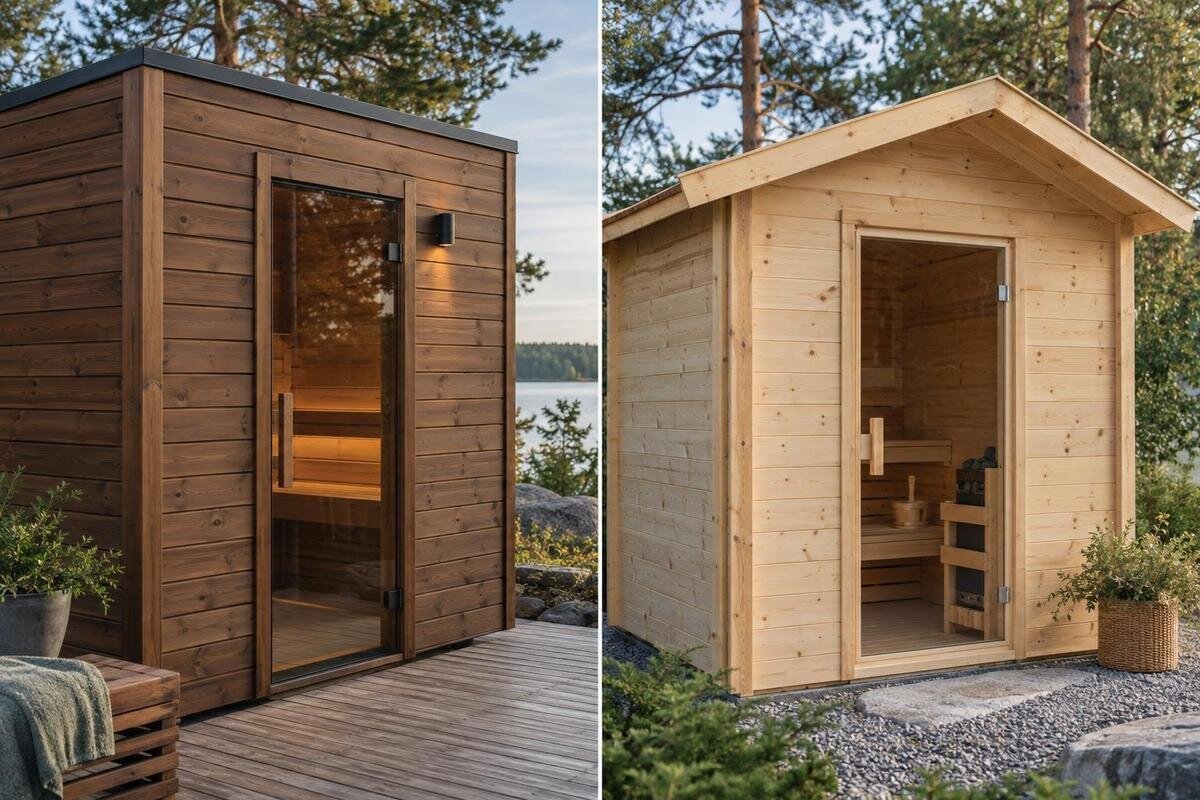
Outdoor sauna timber
Choosing exterior timber for an outdoor sauna is less about picking the name that sounds tougher and more about understanding the boards, the build and the weather they will face. Thermowood is a form of thermally modified timber; untreated timber is a description that needs clarification because it may refer to the absence of preservative treatment, surface coating, or both. Neither label alone tells you the species, grade, finish, exposure or maintenance routine. Compare the material documents and construction details, then weigh the appearance and upkeep you want against the conditions at your site.
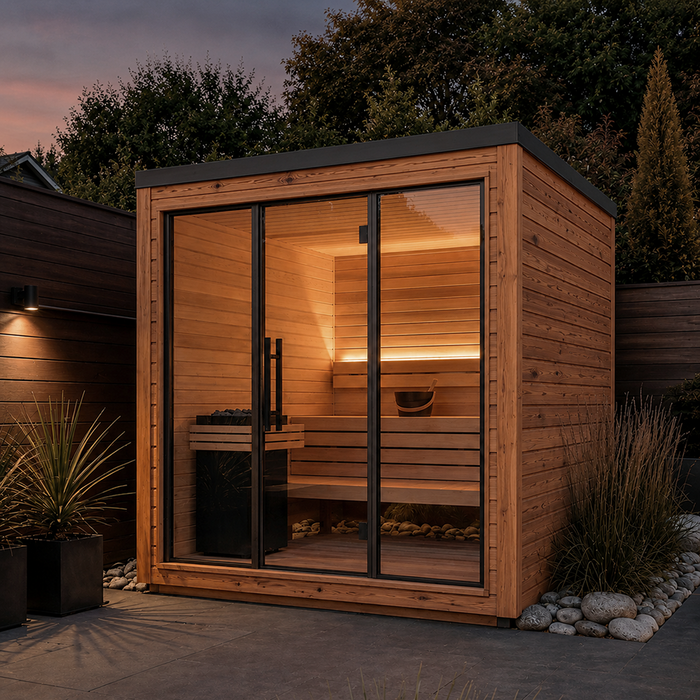
Buyer checklist 1
What ‘Thermowood’ and ‘untreated’ mean
Thermowood is commonly used to describe thermally modified timber, although it can also appear as a brand or product label. Heat modification changes the timber itself; it is not the same as applying an exterior coating, and the name is not a universal performance grade. The process, species, starting quality and finishing details all matter. Ask the seller to identify the exact timber and process behind the description, then request the manufacturer’s technical sheet. Check whether it covers exterior cladding, the whole assembly or only test samples, and note any stated limits. A brochure term alone does not establish how a particular sauna exterior will perform.
Untreated is no more complete as a specification. It may mean no preservative treatment, no factory-applied coating, or both; it does not necessarily mean the boards have not been dried, graded or planed. Ask what the description excludes, and whether a finish is supplied or recommended. When considering the Thermowood Barrel Sauna HC-150, distinguish the timber’s modification process from any surface finish applied afterwards. These are separate parts of the specification, even when a listing groups them under one material description. Knowing what has been done to the boards makes it easier to understand what further finishing, if any, the supplier expects you to arrange.
What thermal modification can change
Thermal modification can alter timber’s response to moisture and dimensional movement, as well as its mechanical properties. The direction and practical significance of those changes depend on species and process, so avoid carrying a benefit advertised for one product across to another. Ask for technical data that supports any claim about stability, durability or exterior use, and check whether it applies to the boards supplied for the sauna rather than a broad material category. Useful evidence identifies the material and intended exposure, with limitations stated. If the data describes laboratory samples, ask how it relates to the supplied boards and complete exterior. Follow the fixing guidance given for that specific material.
The conditions covered by a performance claim matter as much as the claimed benefit. Resistance to rain, suitability for ground contact, behaviour in prolonged dampness and the effects of ultraviolet exposure are separate questions; the word Thermowood does not answer them all. When assessing the Thermowood Barrel Sauna HC-225, distinguish claims about the timber from claims about the complete exterior. Thermal modification also does not establish whether a preservative or surface finish is present. A useful comparison identifies the particular property being discussed and its stated limits, rather than treating a broad description such as ‘suitable outdoors’ as an answer to every exposure question.
Buyer checklist 2
Untreated timber still depends on species and grade
Untreated timber is not one material. Species, grade, the proportion of heartwood and sapwood where relevant, drying, machining and the quality of the supplied stock all affect what you are comparing. Ask for species and grade in writing, and for evidence supporting any claim that a particular species is naturally durable or suited to exposed use. If the answer is only ‘solid wood’ or ‘untreated’, you still do not know enough to compare its expected performance with thermally modified boards. The same species can be supplied in different grades, so request the precise designation used by the maker and confirm which components it covers. Ask whether details about drying or machining are available too.
Do not assume that a natural appearance means a board will need less attention, or that untreated timber is automatically unsuitable outdoors. The decision turns on the documented material and the construction around it. If you compare an untreated quotation with the Thermowood Barrel Sauna N-210, compare species, grade, finish, intended exterior exposure and care on the same basis. This separates differences in the timber from differences in what each supplier includes. In particular, check whether one quotation includes a finish or preparatory work that the other leaves to you. Otherwise, you may be comparing a finished exterior with boards that still require work.
Assess the sauna’s weather exposure
Think about where rain reaches the sauna, how quickly surfaces dry, and how much sun, wind and shade the exterior receives. Wind-driven rain, splash from nearby paving, roof run-off, leaves and damp vegetation can create different conditions on the same site. Exposure may vary around the building: a sheltered side is not necessarily like an exposed corner, and a shaded wall may stay damp longer after rain. Sketch where water can land or collect and describe the conditions to the supplier instead of asking only whether a timber is ‘weatherproof’. Include nearby irrigation or water features, and note which sides get the strongest sun.
Ground clearance, roof overhangs, drainage, airflow around the exterior, joints and end-grain protection can influence how quickly timber dries; follow the sauna’s design instructions rather than improvising changes. Coastal air, strong sun or a persistently damp, sheltered setting may raise different concerns, so describe the actual conditions rather than relying on a single exposure label. For the Thermowood Barrel Sauna N-250, compare your proposed position with the siting guidance for the supplied exterior. Include both exposed and sheltered sides in that assessment. A location that protects one face from rain may leave another face exposed or shaded, which is relevant to the material comparison.
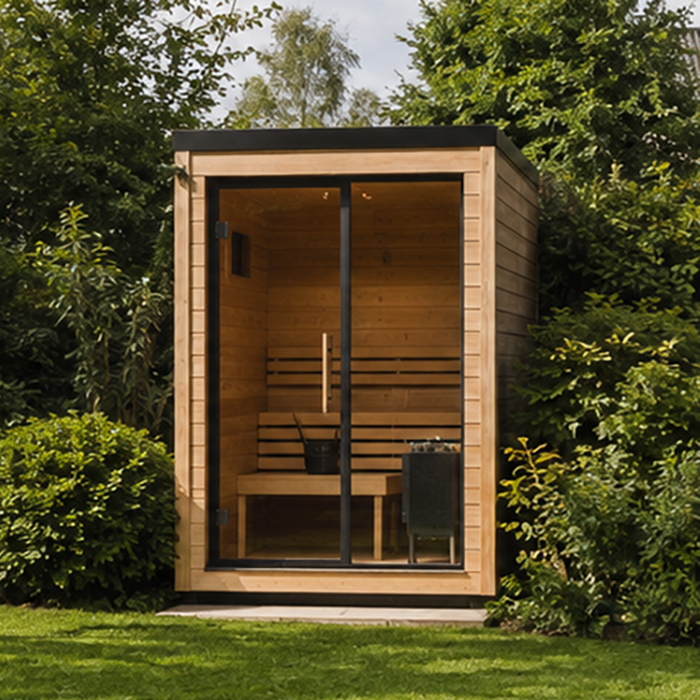
Buyer checklist 3
Exterior construction and rain protection
Timber is only one component of the sauna’s weather protection. The roof covering, wall arrangement, seals, openings, junctions, base and water run-off all affect whether rain is kept out and moisture can escape. Look at the manufacturer’s drawings and manual to understand what is included, where the exterior boards sit, and how the structure handles transitions around doors, windows and the roof. A treatment label cannot replace details for the complete sauna. If a drawing is not supplied, ask how the external layers meet and where water is meant to drain. Check whether the base and surrounding ground could create splash or pooling.
Check whether the material description refers only to cladding or also to exposed trim and door framing; different parts may use different materials or finishes. For the Thermally Modified Wood Barrel Sauna LC-260, the drawings and inclusion list should help you distinguish those components and identify any separately specified coatings, sealants, fasteners or replacement pieces. An online photograph cannot show every layer or settle what is included. Keep exterior specifications separate from those for interior sauna lining, too. Suitability for weather outside does not establish suitability for surfaces exposed to sauna heat inside, even when both are described using the same broad timber term.
Colour and finish affect the long-term look
Thermally modified timber often has a deeper initial colour than the same timber before modification, but colour is not a reliable way to identify a process or measure performance. Sun and weather can change exposed surfaces over time, and the result depends on species, exposure and finish. Untreated boards can also alter colour outdoors. Ask for an offcut or finish sample if appearance matters, and check that it represents the finished product rather than raw stock. View it in daylight if possible, as indoor lighting can make comparisons misleading. A small sample still cannot predict exactly how every face will age at your site.
Clarify whether the sauna arrives with a coating, whether the supplier recommends one, and what preparation and upkeep that finish requires. Do not assume that a clear finish will preserve the original colour, or that an oil, stain or paint is suitable for every supplied timber and location. When considering the Thermowood Barrel Sauna HCF-300, use a representative finish sample and the care advice to assess appearance, rather than relying on photographs alone. Distinguish a factory finish from modification of the timber itself. If a particular colour matters, ask what changes to expect in direct sun and whether images of weathered examples are available.
Buyer checklist 4
Maintenance depends on the timber and finish
Neither category guarantees maintenance-free ownership. A bare exterior, an applied finish and a thermally modified board raise different care questions. Follow the sauna maker’s instructions for cleaning, inspection and any recoating, because surface preparation and compatible finishes matter. Ask what signs of wear to look for and which products, if any, the supplier recommends. Do not copy a generic online schedule onto an unknown timber or finish; an interval for another species or coating may not apply. Clarify who is responsible for maintaining finishes included with the sauna, and whether the maker specifies restrictions on cleaners.
Think about practical access as well as the maintenance plan: can you inspect roof edges, lower boards and joints without shifting stored items or damaging landscaping? For the Thermowood Barrel Sauna LCF-300, consider the recommended care alongside the space you would leave around it. Record when the sauna is installed or finished, and keep its instructions with the model details so later care relates to the correct product. If the instructions specify a coating, check whether it can be replenished and what preparation is needed before another application. The material choice should suit both your willingness to maintain the exterior and your ability to reach it.
Ask for product-specific timber documents
Before deciding, request a written material specification that names the species, grade, modification or preservation process, and any factory-applied coating. Ask for the technical sheet or manufacturer statement covering intended exterior use and the limits of each claim. Where the seller uses a durability rating, treatment class or certification as evidence, ask for the document and its scope; do not infer one from the word Thermowood, a logo in a photo or general advertising. Check the document date and product identity as well as the headline result, so you know which material it describes. If a claim depends on a test, ask which method was used and what conditions it represents.
For untreated boards, ask what ‘untreated’ covers and whether the supporting information addresses the intended exposure. For either option, request assembly drawings, installation and care instructions, finish compatibility information, and confirmation of which parts each document covers. Use the Thermowood Barrel Sauna S-140 model reference when requesting its paperwork, so the response can be matched to the configuration being offered rather than a generic product family. The finish instructions should explain where a coating is intended to be applied, if at all, and what preparation is required. Also establish whether adding a finish later changes the care instructions you should follow.
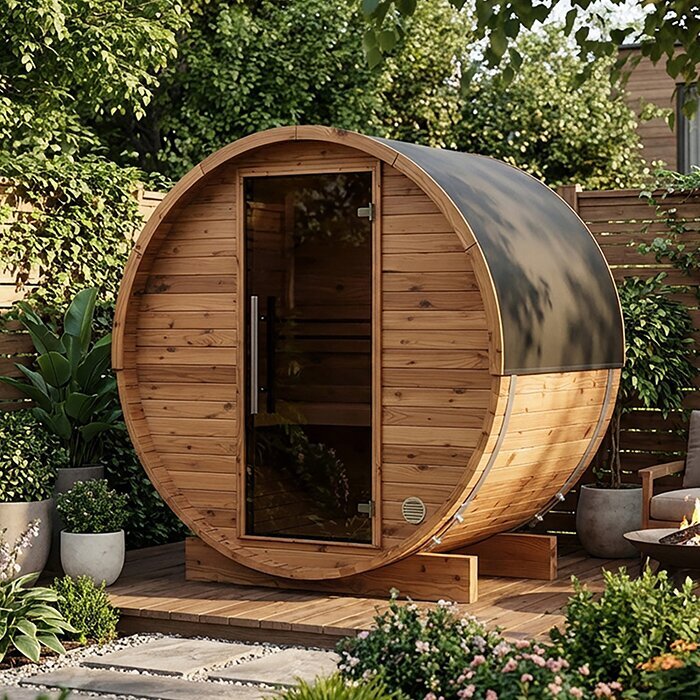
Buyer checklist 5
Compare the same details across both options
Put the options side by side using the same questions: exact species and grade; what treatment is or is not applied; which exposed parts the claim covers; evidence for intended use; water-shedding and drying details; supplied finish; and care instructions. If one seller provides clear answers while another uses broad descriptions, treat that as an information gap, not proof that either material performs better. Ask for clarification in writing, especially where a term could describe several products. Keep replies with drawings so you compare the same components rather than different scopes of supply. Note any unanswered item rather than filling it with assumptions.
Then weigh the trade-offs that matter to you. One option may offer a documented property or colour you value, while the other may suit your preference for a specified untreated material or a particular finish. Consider whether the recommended coating and care routine fit your willingness to maintain the exterior, and whether you are comfortable with colour change. Keep appearance, maintenance and exposure as separate considerations: a preferred colour does not settle suitability, and a suitable material may still require care you would rather avoid. Neither Thermowood nor untreated timber deserves an automatic ranking without considering the actual boards and exterior construction.
When a timber claim needs clarification
Broad claims deserve closer attention when they blur the distinction between the timber and the finished sauna. For ‘weatherproof’, establish whether the seller means a property of the boards or rain protection provided by the complete exterior. For ‘maintenance-free’, clarify whether that includes any coating as well as the timber. For ‘chemical-free’, ask exactly what the term excludes rather than interpreting it yourself. An answer should identify the component concerned and explain the claim’s limits. If the seller cannot identify the species or explain what ‘untreated’ means, the material comparison remains incomplete, regardless of how confidently the wider claim is presented.
If a sales description and a technical document appear to disagree, ask which description applies to the configuration being offered and have the discrepancy clarified in writing. Separate that unresolved point from the details already established; an incomplete answer is not a reason to dismiss an entire material category. Where site exposure or structural details raise questions beyond the supplied instructions, a suitably qualified building or timber professional can help interpret them. Keep the question specific to the uncertain detail, such as the proposed exposure or finish. The aim is to understand whether the offered exterior matches your setting and expectations for upkeep.
Frequently asked questions
Does Thermowood make an outdoor sauna waterproof?
No. Thermowood describes a timber product or thermal modification, not a guarantee that the complete sauna keeps rain out. Roof and wall details, junctions, coatings, installation and site exposure all affect how the building manages rain and dries. Check the manual and ask what any exterior-use claim covers; the timber label cannot replace weather-resistant construction. Also ask whether the guidance applies to the finished assembly, not just a material sample.
Is untreated timber always unsuitable for an outdoor sauna?
Not necessarily. Untreated timber may be an option when its species, grade, construction and exposure are appropriate, but the label alone does not establish that. Ask whether untreated means no preservative, no surface finish or both, and get evidence for any natural-durability or exterior-use claim. Confirm the recommended care too: untreated does not automatically mean low-maintenance, and appearance is not technical evidence.
Is Thermowood maintenance-free?
No. Thermal modification does not remove the need to follow the product instructions, inspect the exterior or care for any finish. Weather can change exposed timber, while a coating may need attention in its own right. Follow the sauna maker’s cleaning and inspection guidance and ask which products are compatible; there is no universal recoating interval for every species and coating. Keep a note of any finish applied.
Can the same timber be used inside and outside a sauna?
Not automatically. Exterior suitability relates to weather exposure, while interior surfaces face sauna heat and different contact conditions. A specification for exterior cladding does not prove that the timber is intended for interior lining, and an interior lining description does not establish outdoor durability. Ask the manufacturer to identify the material and intended use for each component, and keep the two specifications separate.
What documents should I ask for before choosing?
Request a specification naming the species, grade, modification or preservation process, and any factory-applied finish, plus technical information supporting the stated exterior use. Ask for drawings, inclusions, installation and maintenance instructions, and evidence behind any durability or certification claim. Check that each document matches the model and configuration being offered, and ask for unclear terms to be explained in writing. Record anything that remains unconfirmed.
Thermowood and untreated timber do not guarantee a particular lifespan, maintenance level or weather performance. The useful choice is the one with a clear material identity, evidence relevant to the intended exposure, a sound exterior design and care instructions you are prepared to follow. A thermally modified product may suit you when its documented properties and finish meet your needs; untreated timber may suit you when its species, grade and exposure are clear. Decide from the evidence for the sauna in front of you, not the timber label alone.
