
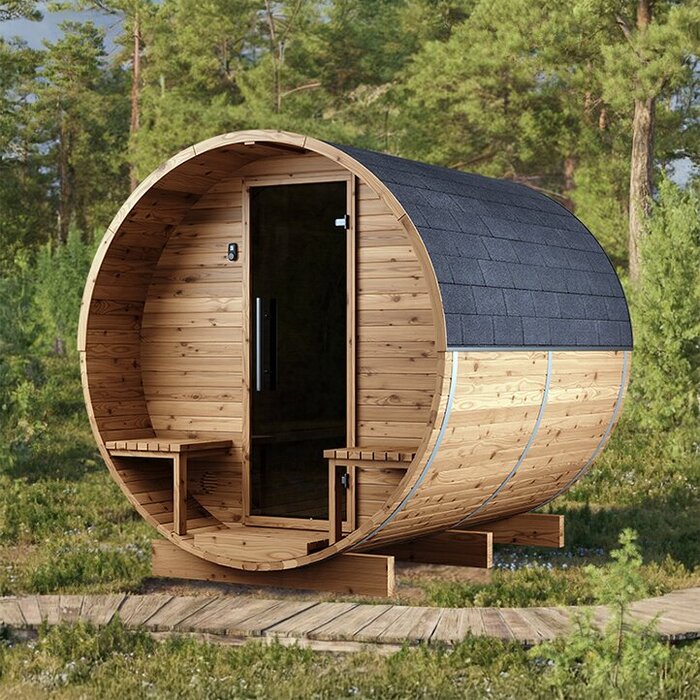
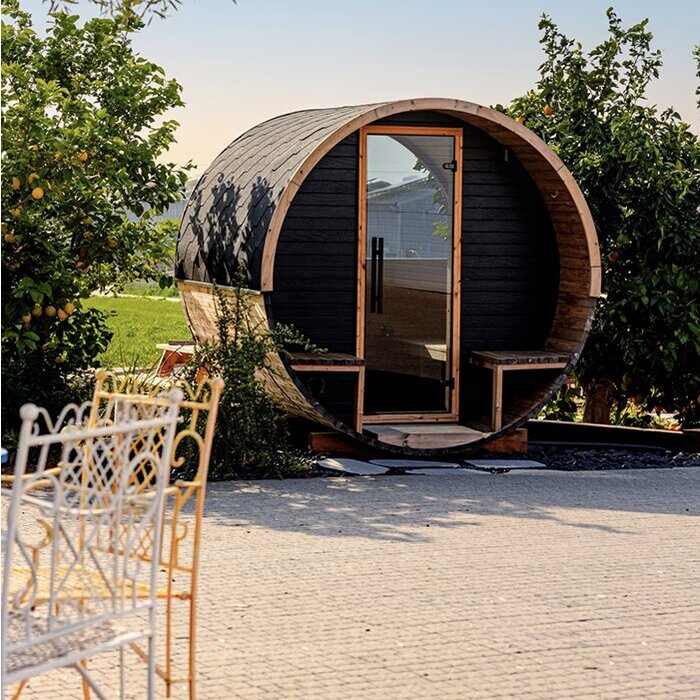

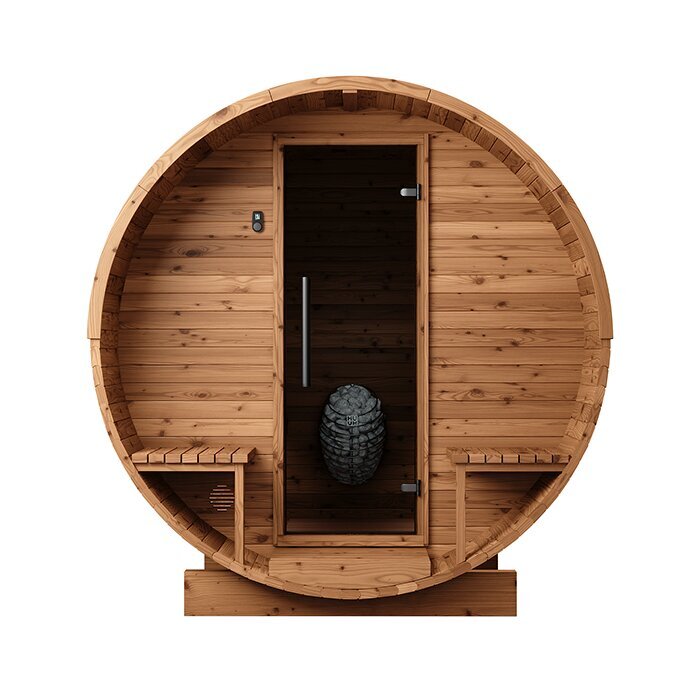


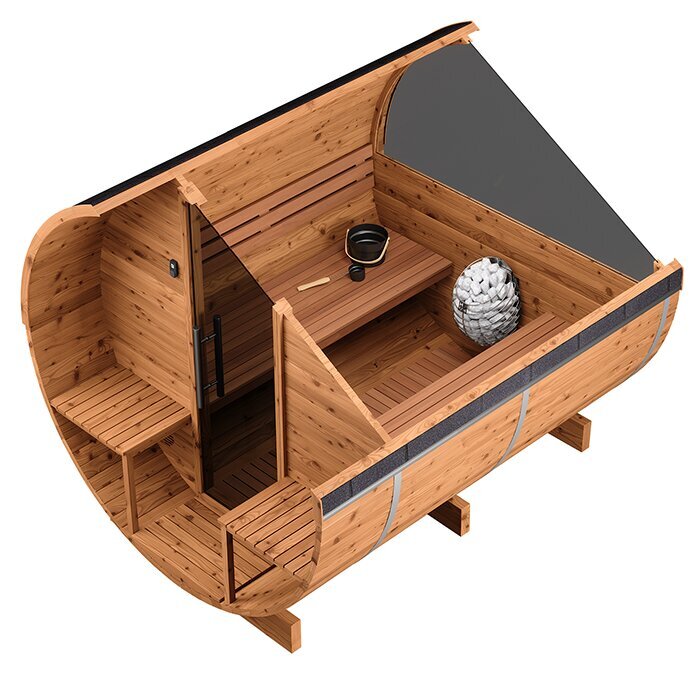








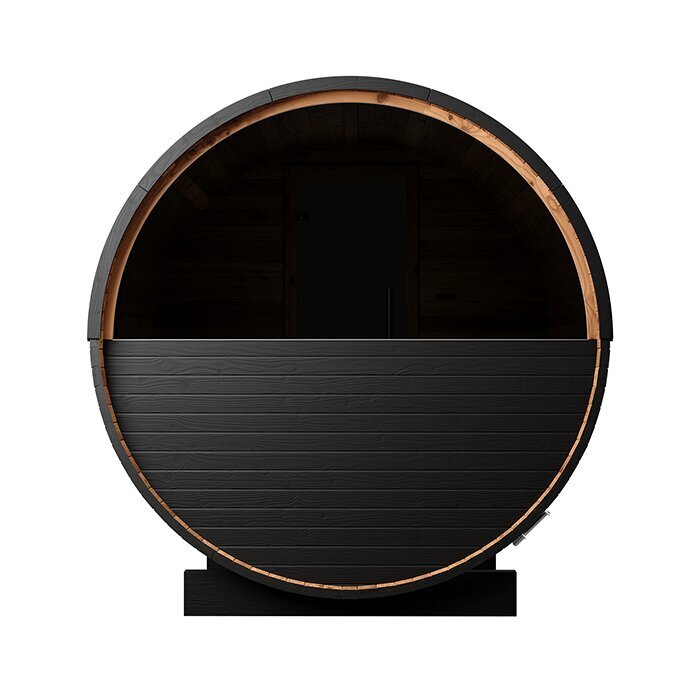





LCF 260 thermowood barrel sauna with high cabin
Bloomcabin LCF 260 – 192 cm benches, 210 cm interior height and two heater options
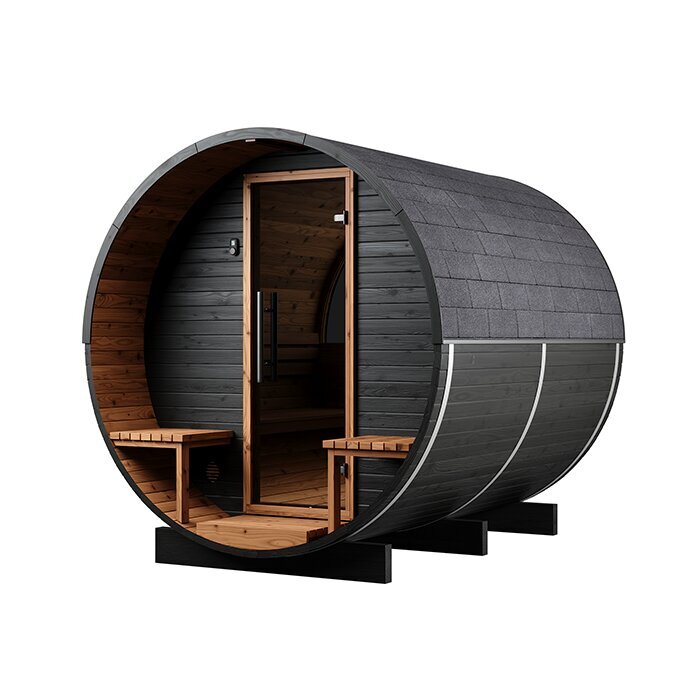
The Bloomcabin LCF 260 is an FSC®-certified thermowood barrel sauna for relaxing together in the garden. Its external dimensions are 264 × 229 × 238 cm, with 192 cm benches and a 210 cm interior height. Depending on the configuration, an electric or wood-fired heater may be suitable. Before ordering, check the exact layout and included items for your selected version.
Here you can learn what matters when choosing the model, location, heating type and care routine. Always check the exact scope of supply in your selected product configuration. Find further shapes, sizes and layouts in the Bloomcabin sauna range.
Model profile
192 cm benches and 210 cm interior height
The LCF 260 combines an external length of 264 cm with 192 cm benches. As well as the footprint, allow clear access for assembly, care and technical inspections. Compare the complete dimensions with the conditions in your garden.
Arrange the entrance so shoes and textiles do not obstruct access. Remove damp textiles after use for drying. Refer to the product configuration and drawing to see which areas are included with your chosen version.
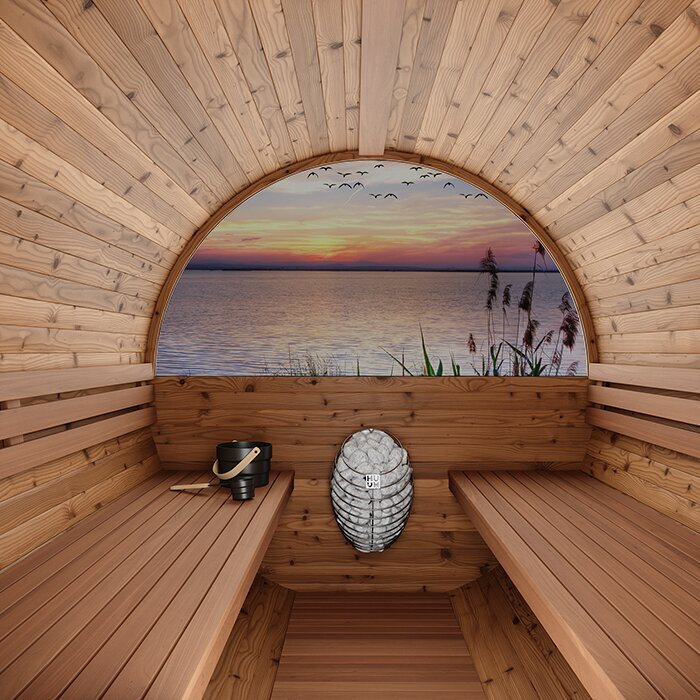
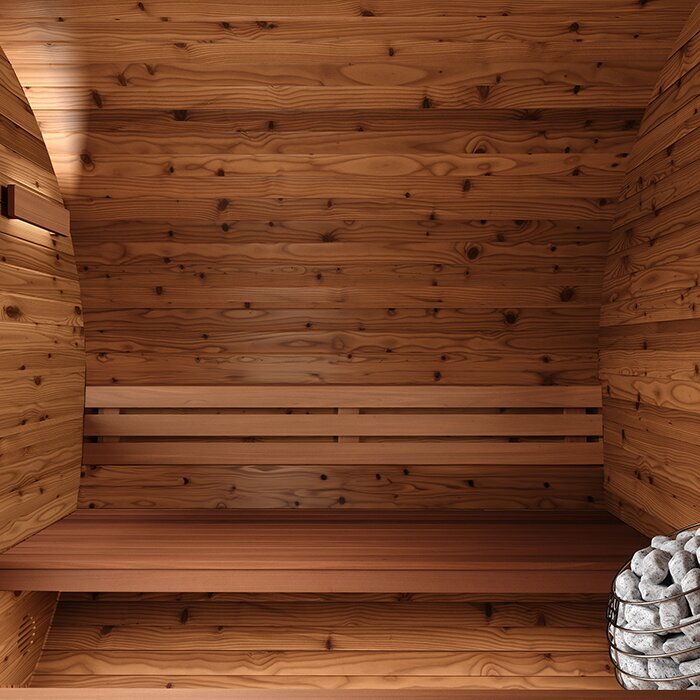
The 192 cm benches allow different sitting positions. Whether someone can lie down comfortably depends on their height, preferred position and simultaneous occupancy. Compare the bench length with your own height.
Model overview
What matters with the LCF 260
The LCF 260 combines a classic barrel shape with a higher cabin. Key considerations are the external dimensions, bench length and suitability for regular use. Check the available area, including required access and maintenance space.
For family and friends
Its size suits shared sauna sessions with family or a small group of friends. How spacious it feels depends on body size, sitting posture and the distance people prefer.
Barrel shape with 229 cm external width
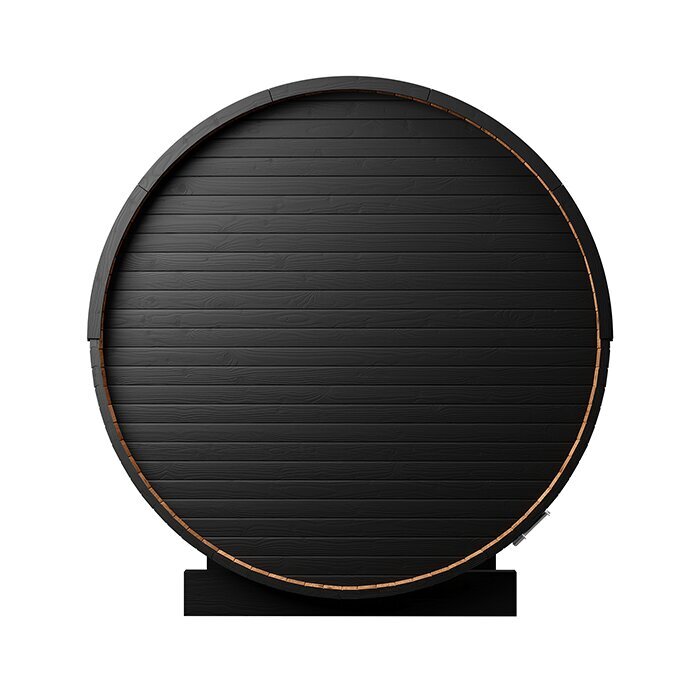
The external width is 229 cm. Also allow for 264 cm length, 238 cm height and the required clear space at the installation site.
Long benches
The 192 cm seating surfaces accommodate different sitting positions. Match simultaneous occupancy to the specific configuration and your comfort requirements.
Electric or wood-fired heater
The heating type determines operation, technical preparation and your sauna routine. Decide on it before finalising the site and connections.
Capacity
Suitable occupancy depends on your sauna routine
When using the sauna together, seating and access routes must remain clear. Store extra towels and changes of clothing outside, and organise transitions between sessions without crowding.
With fewer people inside, there is more room for individual sitting positions. If you mainly use the sauna as a couple, weigh the benefit of longer benches against the footprint of the complete sauna.
Suitable occupancy depends on body size, sitting posture and personal space requirements. No fixed number of users is guaranteed here. Check the capacity of your selected version before ordering.
Interior height
210 cm interior height for more headroom
The LCF 260 has an interior height of 210 cm. Compare this height with the regular users' heights. The barrel curve can reduce headroom at the sides, so also consider the bench positions.
The higher cabin makes moving around inside easier. Nevertheless, check the exact internal contour, entrance and bench arrangement for the selected version.
A 192 cm bench length and 210 cm interior height are different measurements. External height is 238 cm. Use external dimensions for site planning and interior dimensions for comfort planning.
Thermowood
Caring for outdoor thermowood properly
The LCF 260 is made from FSC®-certified thermowood. Thermal treatment means the wood absorbs less moisture and is more dimensionally stable. That is beneficial for an outdoor sauna, but it does not make the material maintenance-free. Sun, rain, splash water and changing humidity still affect timber surfaces and joints. Choose a site where irrigation does not constantly spray the barrel wall and rainwater from a nearby roof does not run directly onto the sauna.
Thermowood’s darker natural tone complements many gardens, patios and holiday homes. Without colour-preserving treatment, the surface can gradually turn grey. Distinguish this visual change from damage such as pronounced cracking, permanently damp areas or loosened components. To retain the original colour for as long as possible, use a care system suitable for exterior thermowood according to the manufacturer’s instructions. Test it first in an inconspicuous place, as it can alter the wood colour.
A good care routine starts with regular visual checks. Inspect exterior timber surfaces, end sections, door areas, support points and barrel bands for visible changes. Remove leaves and dirt after severe weather so moisture does not remain on the wood unnecessarily. Gentle cleaning methods are sufficient inside; aggressive or strongly perfumed products are unsuitable for heated timber surfaces. Let all surfaces dry completely after cleaning. Adjust barrel bands and load-bearing parts only in accordance with the assembly and care instructions.
Heating
Electric or wood-fired heater: which type suits planned use?
An electric heater suits anyone wanting regular sauna use with little preparation. There is no need to store or add firewood, but the site needs a professionally planned electrical supply. Before assembly, have a licensed electrical professional assess cable routing, connection, controls, protective measures, equipment suitability and certification. Temporary extension leads and DIY connection work are inappropriate; New Zealand’s limited homeowner wiring pathway expressly excludes saunas. Technical components must remain accessible for inspection and maintenance without obstructing routes around the sauna.
A wood-fired heater suits those for whom fire, firewood and manual heating are part of the sauna experience. This option needs more preparation and supervision: dry firewood requires suitable storage, the fire must be supervised during operation, and ash remains after use. The flue route also affects where the sauna can be located. Trees, canopies and neighbouring structures must therefore be considered during planning. Anyone choosing this traditional heating method should allow for the ongoing work involved.
With a wood-fired heater, clarify fire and heat protection, flue routing and local requirements before installation. Ask the council and relevant local authorities to assess the specific heater and site; required clearances and protection depend on that configuration and the manufacturer’s instructions. A licensed electrical professional should assess the electric version’s supply, protection, equipment suitability and certification. Before ordering, check whether the heater, controls, sauna stones, flue parts and protective components are included. Selecting a heating type does not automatically determine whether these items are supplied.
Foundation
The sauna is approximately 264 cm long and requires a level, load-bearing base
The base must support the entire structure, including heater, sauna stones and users, evenly. The right foundation type depends on soil, terrain and local conditions, and should be clarified before delivery. A surface may look level but still settle under load or change through frost and water. Every intended support point must be fully supported. At the same time, water must drain beneath the sauna and adequate air circulation must remain possible.
Unevenness can put stress on barrel profiles, alter joints and affect door operation. Check level and height across the full installation area, not only at the corners. After assembly, doors should open and close without force. Scraping doors, conspicuous gaps or a changed position can later indicate movement in the base. In that case, investigate the cause first rather than simply adjusting the fittings.
Water must not collect permanently beneath or beside the sauna. Shape the surrounding area so rainfall drains away from the sauna and support points can remain dry. Cleaning or cooling water also needs a suitable drainage route. Do not position an outdoor shower where spray or wastewater regularly reaches beneath the sauna. Keep plants and accumulated leaves away from lower timber sections. An accessible plinth area is easier to inspect and maintain.
Comparison
Comparing the LCF 260 with more compact saunas
The LC 225 is the better choice when every centimetre of installation space matters or only a few people usually use the sauna. Do not compare garden length alone. Doors, exterior surfaces and technical areas must remain accessible for use, assembly and future care. A sauna should not simply fit mathematically between a fence and building.
The LCF 260 offers 192 cm benches and an interior height of 210 cm. Its external structure measures 264 × 229 × 238 cm. Check whether this combination suits your garden and intended use better than a smaller version.
For each model, compare external dimensions, bench length, interior height and confirmed layout separately. Details from another model must not be transferred to the LCF 260.
Outdoor area
Arrange changing, cooling and resting areas sensibly
Arrange the changing area so access remains clear. Plan a dry storage spot outside the heated cabin. Hooks and shelves must not obstruct walkways, the heater area or air circulation.
A sheltered resting place nearby makes use more pleasant in rain or cool weather. Plan it as a separate area so it neither crowds the sauna nor blocks maintenance access. If adding a canopy, consider the selected heating type, as a wood-fired heater with flue has different requirements from an electric heater. Rainwater must drain in a controlled way and must not run down the barrel wall or foundation.
If an outdoor shower or plunge pool is planned, the route to it should be short, clear and slip-resistant. Avoid loose items, hard-to-see edges and unnecessary steps. Provide separate drainage for the water so access routes and the sauna base do not remain wet. The resting area is best outside the immediate splash zone. This keeps changing, sauna use, cooling and resting clearly separate.
Who is it for?
Who is the Bloomcabin LCF 260 suited to?
The LCF 260 suits shared sauna evenings. Check bench length, interior height and actual occupancy. With children, close supervision and a well-organised entrance are particularly important.
At a holiday home, the classic barrel shape suits many outdoor settings, but changing guests require clear responsibilities for operation. Instructions for using the heater, ventilating and drying should be easy to understand. With a wood-fired heater, firewood, ash disposal and fire supervision must be reliably organised. With an electric heater, it must be clear that the connection must not be altered. Between stays, a responsible person should check the interior, doors and heater area. The heating type must therefore suit the property’s management plan.
For couples, the long benches and higher cabin may be appealing. Regardless of occupancy, the sauna needs its full footprint; compare this space requirement with more compact models.
Choosing a location
Weather, privacy and good access all matter at the site
A short, lit and slip-resistant path from the house makes the sauna easier to use in darkness and wet weather. The entrance, steps and changes of direction should be clearly visible without glare from lighting. When choosing a site, check the route for narrow points, steep slopes and loose surfaces. It must be possible to keep it clear and safe to walk on long term. Also avoid a location where a barbecue area, play area or frequently used path is directly in front of the sauna door.
Privacy and accessibility need to work together. Dense planting can provide screening, but should not rest permanently against timber walls or prevent their inspection. Also consider leaves, overhanging branches and the reach of irrigation systems. Large trees often create additional cleaning work; with a wood-fired heater, the location can also complicate flue planning. Leave enough space around the sauna for drying, cleaning and technical work.
Also consider the weather-facing side of the property. In exposed locations, doors and timber surfaces face greater stress, while tight, poorly ventilated corners can hold moisture for longer. Screening must not replace required clearances or completely block air movement. Leave enough room to inspect exterior surfaces and apply care products. If a canopy or privacy screen is added later, reconsider drainage, access and, where relevant, flue routing.
Before ordering
Before ordering: check configuration, transport route and site
Check your selected product configuration in full. Depending on the version, the combination and scope of supply for the heater, controls, sauna stones, flue parts and protective components can differ. The order must therefore suit the planned heating concept; images of other variants are not a reliable basis. Also clarify which tools, fixings and on-site work are needed for assembly and connection. This helps prevent delays caused by missing parts or unresolved connections.
Check vehicle access, the unloading area and the entire transport route to the prepared base. Prefabricated components make assembly easier, but do not automatically fit through every gate, wall opening or tight bend. Stairs, slopes, overhanging branches, low roof edges and delicate ground surfaces can also make transport difficult. Before delivery, establish a safe unloading area and a dry, orderly place for temporary storage of components.
New Zealand building consent and resource consent are separate checks, and council district-plan rules can still apply. Ask your council to assess the specific sauna, including its foundation, boundary position, services, stormwater and any flue. Use licensed trades for electrical work and confirm any wood-burner or fire restrictions locally. General product details do not replace a project-specific assessment. Find more preparation guidance under Useful information.
Safe sauna routine
Check before heating, ventilate thoroughly after use
Before switching on or lighting the heater, check that the heater area is clear of towels, bathrobes, cleaning items and other combustible objects. Doors and walkways must remain unobstructed. Children may only be in the sauna under the direct supervision of a responsible adult. Anyone unsure whether sauna use suits their health should seek medical advice beforehand. Do not use the sauna under the influence of alcohol.
Always operate the heater according to its instructions. Pour water onto suitable sauna stones only as intended; other liquids or unsuitable additives do not belong on the heater. With a wood-fired heater, supervise the fire reliably during operation. Ventilate the cabin after the final sauna session and allow it to dry completely. For the wood-fired version, regularly inspect the firebox, cooled ash and visible parts of the flue system. Handle ash only when no embers remain.
Clean towels on the benches and prompt removal of dirt help protect interior surfaces. Let benches and floor dry, and remove damp textiles. If there is smoke, an unusual smell or a malfunction, stop operation and have the cause checked by a qualified professional.
Frequently asked questions
FAQ – Bloomcabin LCF 260
Which areas around the sauna must remain freely accessible?
The entrance, end sections and technical components must remain accessible. Allow space for assembly, cleaning and inspections in addition to the footprint.
Does the LCF 260 suit households where usually only two people use the sauna?
Yes, the 192 cm benches can also be appealing for use as a couple. Compare the comfort with the space requirement and dimensions of smaller models.
Can you lie down on the approximately 192 cm benches?
That is possible for a suitable body height. The preferred lying position, barrel curve and number of people present at once are decisive. If lying down matters to you, compare the bench length with your height before purchase.
How high is the LCF 260 inside and outside?
The interior height is 210 cm and the external height is 238 cm. Also consider the internal contour and clear space needed for assembly and heating equipment.
Which layout belongs to the selected version?
The product configuration and confirmed drawing are decisive. Do not transfer details about an anteroom from another sauna model.
Which heating type suits which sauna routine?
An electric heater suits regular use with little preparation, but requires a professionally installed electrical connection. A wood-fired heater is the right choice if manual heating with fire is wanted and fuel storage, supervision and a suitable flue solution are planned. Check the exact scope of supply for both variants.
What should be prepared before delivery?
The load-bearing base, water drainage and transport route should be clarified. The heating type, product configuration and required connections must also be decided. Check that components can be moved without obstacles from the unloading area to the foundation.
Bloomcabin LCF 260
Plan the LCF 260 consistently from order to assembly
Bring decisions about the model, heating type and location together in one planning document. Add the prepared base, drainage, connections, access route and route from the unloading area. This enables involved trades to coordinate their work and identify open points before delivery.
If another size, interior height or construction style better suits your garden and habits, compare further outdoor and barrel saunas from Bloomcabin.
Checklist before ordering
✓ Is there enough space including door and maintenance areas?
✓ How many people usually use the sauna at once?
✓ Are the bench length and interior height suitable for the tallest regular users?
✓ Does the confirmed layout suit your planned sauna routine?
✓ Are the heating type, scope of supply and professional connections clarified?
✓ Are the load-bearing base, drainage and transport route fully prepared?
View Bloomcabin LCF 260