
Buying a Pre-Assembled Sauna: Delivery and Crane Access
Sauna buying guide
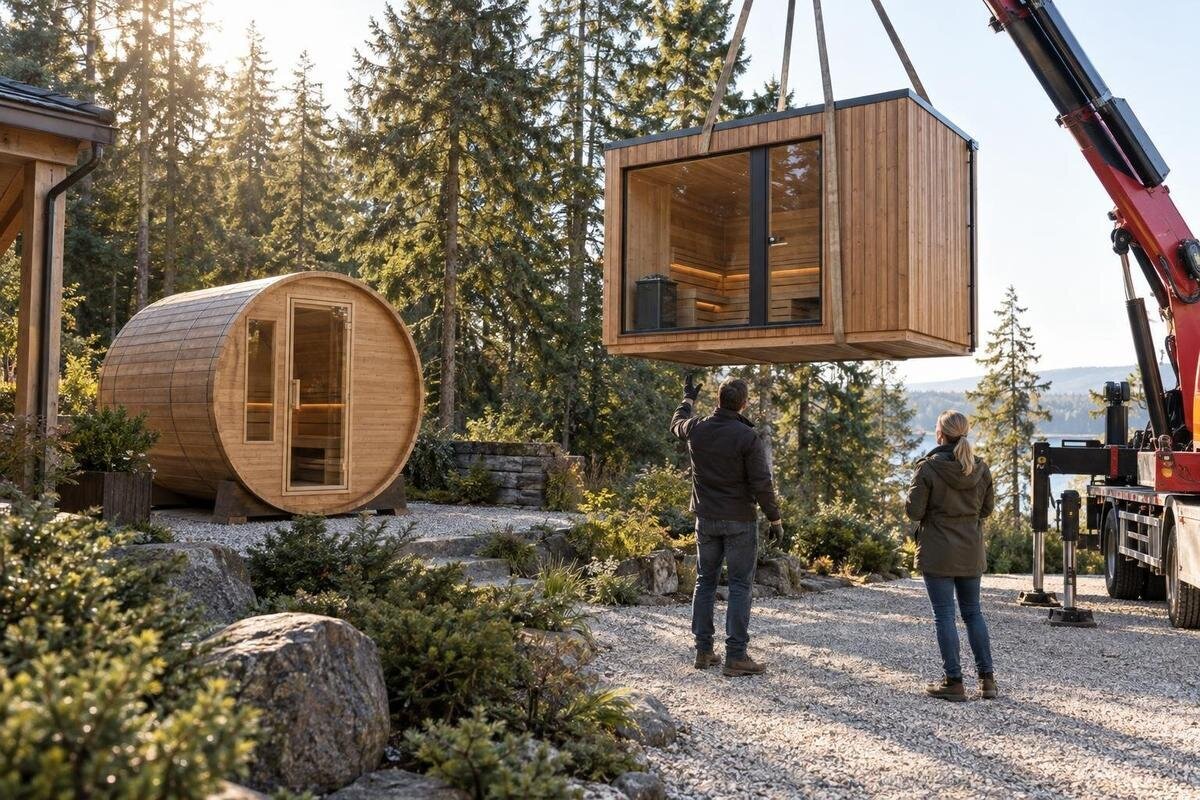
Buying a pre-assembled sauna is not only a question of choosing a model and finding space for it. The delivery route, unloading method and final lift can determine whether the unit can reach its base at all. Before you order, establish what “pre-assembled” means for the exact product, measure the route from the road to the installation point, and confirm vehicle or crane access with the people responsible for delivery.
What “pre-assembled” means for delivery
The phrase “pre-assembled” does not, by itself, tell you whether the sauna arrives as one complete cabin, with some parts removed for transport, or in larger sections that need joining on site. Nor does it promise that the delivery crew will carry it from the vehicle to its base. Before comparing models, ask the supplier to describe the exact state in which the sauna will arrive: what is assembled, what is detached and what work remains after placement. That answer affects the transport dimensions, handling method and amount of clear space needed at the destination.
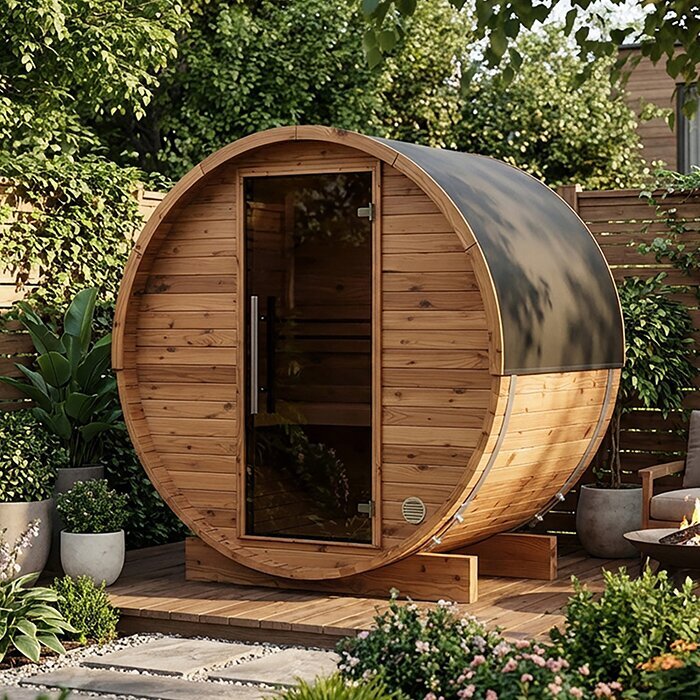
Request both the installed dimensions and the dimensions of the load as it will actually travel, together with its weight in that configuration. Find out whether protective packaging, a transport frame or detached components change the outside measurements, and whether the unit has a specified orientation for handling. These details affect a gate check and any lift assessment; an installed footprint alone is not enough. Use the Thermowood Barrel Sauna S 140 listing to identify a candidate, then ask the supplier for missing delivery data for that exact model. A product name and photographs cannot establish its transport size, weight or included handling.
Agree the unloading method and delivery point
Make the delivery endpoint explicit in the order discussion: is the quoted service to the kerb, driveway, property boundary, an agreed unloading point or the sauna’s prepared base? Those are different outcomes. A vehicle may reach the entrance yet leave the unit too far from its intended position for the planned handling method. Ask whether vehicle unloading, movement across the site and placement on the base are included, and who is responsible at each handover. If the retailer and carrier use “delivery” differently, a written description of the endpoint helps prevent the quote from being misunderstood.
Ask whether lifting is part of the service or must be booked separately, and whether the quoted crew is equipped to take the unit all the way to the base. If a separate crane contractor is required, find out who makes the booking and who provides the load information. Confirm what happens if access on arrival differs from the details you supplied: the carrier may not be able to unload as planned, and a return visit could add cost. When discussing a specific candidate, such as the HC 150 Thermowood Barrel Sauna page, have the supplier confirm the unloading scope for that exact listing rather than relying on its name.
Measure the route from drop-off to the sauna base
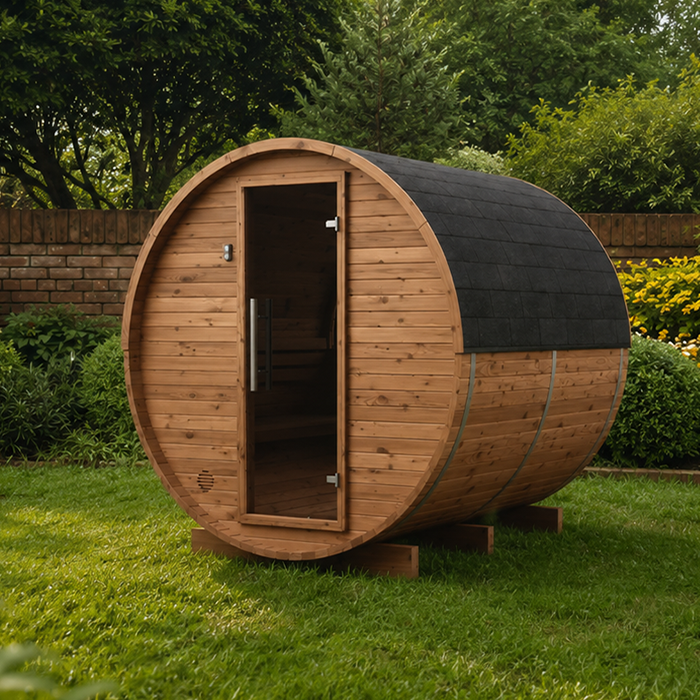
For a ground-level move, find the narrowest point and every change of direction between the agreed unloading point and the base. Measure the clear opening with gates fully open, including the space taken by posts, hinges, wall returns and projecting handles. Check overhead clearance too, such as low branches or a covered passage. A nominal gate width or a plan drawing can conceal the actual pinch point. Ask for the sauna’s travel dimensions and the clearance needed for its approved handling equipment. For the Thermowood Barrel Sauna HC 225 listing, as for any candidate, compare the site with confirmed delivery measurements, not the scale of a photograph.
Walk the whole route and note corners, steps, slopes, uneven paving and sections where the path narrows. A route that is wide enough in a straight line may still leave too little room to turn the load or handling equipment. Take photographs from the unloading point through to the final position, and mark tight measurements on a simple sketch. If the route depends on moving a fence, crossing a neighbouring property or using a shared access, arrange that beforehand and check the proposed method with the supplier. Do not assume that an obstacle can be removed or crossed on delivery day.
Check vehicle access to the property
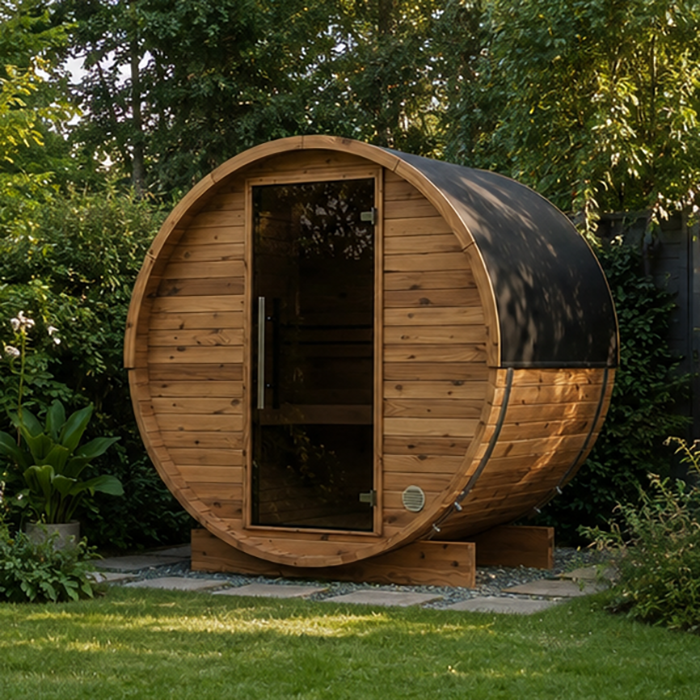
A route that works for a car may not work for the delivery vehicle. Ask the carrier what vehicle is planned and request its relevant dimensions and access requirements. Then check the approach, entrance, turning space and stopping position, including low branches, archways, narrow roads, parked vehicles and places where reversing may be difficult. If the carrier could use different vehicles, ask which one is expected for your booking and whether a change would affect access. For a candidate such as the Thermowood Barrel Sauna N 210, do not infer the delivery vehicle from the product name; confirm vehicle access separately.
Check where the vehicle would stop and unload, not only whether it can enter the property. Tell the carrier about steep or soft sections, sloping driveways, paving, drainage covers and any surface that may be unsuitable for a heavy vehicle. Do not try to calculate ground capacity from appearance; ask the delivery provider what needs assessment and whether it can use the proposed stopping point. If a crane is also being considered, its vehicle may need a different position and more clear space. Share photographs and measurements early so the provider can flag a problem before delivery is booked.
Decide whether crane access is needed
A crane may offer a way to move the sauna over a wall or other ground-level obstacle, but it is not a universal solution. The crane must be able to reach a suitable set-up point, the load must have a clear route through the air, and there must be a workable place to lower it. Walls, roofs, trees, narrow approaches, limited set-up space or unsuitable ground can all affect the plan. Compare crane delivery with the supplier’s other approved handling options before choosing a model on the assumption that it can simply be lifted into place.
Ask whether a crane is included in the delivery offer, who books it and which company will assess the lift. The supplier needs to confirm the sauna’s dimensions, weight and handling information for the actual delivery configuration; the lifting provider needs those details to decide whether and how a lift can be arranged. A page such as the N 250 Thermowood Barrel Sauna listing identifies the candidate, but does not establish that it is suitable for a particular crane or site. Get the product and site details considered together before placing an order.
Confirm the crane’s reach and lifting path
Give the lifting provider the proposed crane position and the location where the sauna must be lowered, along with the distances and heights between them. Include obstacles along the whole route, not just the wall or fence that seems most obvious. A crane’s advertised maximum reach is not confirmation that it can complete a particular lift: its working capacity depends on the load, distance, equipment configuration and lifting arrangement. The contractor should assess the job using the actual site and load information. When considering the Thermowood Barrel Sauna LC 260 page, use it to identify the product, then request the measurements and lifting details needed for that assessment.
Ask the supplier for the load’s weight and dimensions in lifting condition, its intended orientation and any manufacturer-provided lifting points or restrictions. The lifting contractor can then decide what equipment and arrangement are appropriate. Do not guess where lifting gear should attach, assume packaging can remain in place, or treat an installation diagram as a lift plan. If the supplier cannot confirm how the unit is meant to be handled, resolve that before booking a crane. Give the same product information to the supplier and lifting provider so their plans refer to the same sauna and delivery configuration.
Assess crane set-up space and obstacles
A crane needs a suitable place to arrive, position itself and operate. Ask the lifting provider how much space must be kept clear and what site conditions it needs to assess, including the ground and the area used for supports. Driveways, lawns, slopes, covers and confined spaces are not interchangeable set-up points; do not decide that one will take the equipment based on appearance. Include the intended vehicle position in your site sketch and make clear if space is shared or restricted. The provider can say whether the proposed set-up area is workable or whether the lift needs a different plan.
Show the provider the full overhead and ground-level surroundings: trees, roof edges, walls, fences and any overhead cables, including power lines. Explain if the route would pass near a boundary or over neighbouring land, so the plan can be reviewed and any arrangements made in advance. The listing named 6 89 m is useful for identifying a product under consideration, but its title cannot establish crane compatibility. Send the exact product identification and clear site photographs to the supplier and lifting provider; neither should have to infer the load or route from a product image.
Coordinate delivery day and site readiness
Once the delivery method is agreed, make sure the practical arrangements match it. Confirm the arrival window, the vehicle’s stopping point, how the driver will access the site and who will be there to meet the crew. Arrange for gates to be unlocked and the agreed route to be clear of parked cars, stored materials and garden equipment. If the plan depends on a crane or a separate contractor, check that the bookings and arrival times are coordinated. Keep the supplier’s and carrier’s contact details to hand so a change can be discussed before the vehicle sets off.
Ask the supplier what must be ready at the final position for the sauna to be placed, including any requirements for the prepared base and the unit’s orientation. Do not assume that the delivery team will level, prepare or alter the site unless that work is stated in the service. Check the base and approach against the instructions for the exact product, and resolve any uncertainty with the supplier or a suitable installer before delivery day. For the Thermowood Barrel Sauna HCF 225 listing, confirm the arrangement for that specific candidate rather than assuming delivery conditions are identical across a category.
Compare delivery terms before purchase
Compare the full delivery scope alongside the product price, not just the headline description. Ask whether transport, unloading, crane hire, final placement or additional handling are included, and whether there could be extra charges for waiting, restricted access, a failed visit or a second delivery attempt. These are questions to settle, not charges to assume. If two offers use different delivery points or handling methods, they are not directly comparable until you understand what each includes. Request a written breakdown so you can account for the whole route from the vehicle to the prepared base.
Keep written answers about the expected delivery configuration, dimensions and weight with the quote. Record the agreed drop-off point, who supplies lifting equipment, who arranges any crane, what site information has been shared and who is responsible for placement. Check the terms for changes to access, delays, rescheduling and costs if the vehicle cannot use the agreed route. If a delivery condition is unclear, ask for it to be explained before ordering. A shared written plan gives the retailer, carrier and any lifting provider the same understanding of what has been agreed.
Final checks before ordering
Before committing, bring the details together for the exact sauna you intend to buy: its delivery-state dimensions and weight, the unloading method, a measured route, vehicle access and, if relevant, the crane position and lift path. Send the supplier a site sketch and photographs, including close views of gates, turns, overhead obstacles and the final set-down area. Ask it to confirm that the delivery configuration and proposed service have been considered. If a crane is involved, get the lifting provider to review the same information rather than relying on a general assurance that the reach looks sufficient.
If the route or lift cannot be confirmed, consider changing the final location, choosing a different delivery arrangement or comparing another model. Do not assume that a sauna can be dismantled, moved by a different method or assembled on site unless the supplier confirms that option. Check the terms for changing or rescheduling an order as well, so you understand the consequences before making a commitment. A pre-assembled sauna is a more dependable purchase choice when its product information, access plan and delivery responsibilities all describe the same job.
Frequently asked questions
What does “pre-assembled” mean for delivery?
It does not guarantee that the sauna arrives as one complete unit or that the crew will place it on its base. Ask what is assembled, what travels separately, the transport dimensions and weight, and which parts of unloading and placement are included.
Does a pre-assembled sauna always need a crane?
No. It depends on the sauna’s transport configuration, the route, the unloading method and where delivery vehicles can stop. Ask the supplier what handling options are available for the exact model, and involve a qualified lifting provider if a crane may be needed.
What should I measure before ordering?
Get the sauna’s dimensions in its delivery configuration, then measure the clear width and height of gates and other tight points, plus turns and the route from the unloading point to the base. Also check the delivery vehicle’s approach and possible crane set-up area.
How can I check whether a crane can reach?
Send a qualified lifting provider the exact sauna’s weight and lifting information, a site plan or measurements, and photographs of the approach, set-up point and lift route. An advertised maximum reach is not enough to confirm that a particular lift is suitable.
Who should arrange the crane and final placement?
That depends on the delivery arrangement. Confirm in writing who books the crane, provides the load information, directs the lift and places the sauna on its base. Also agree what happens, and who pays, if the planned access is unavailable on delivery day.
A sound purchase decision depends on more than the sauna’s intended position: the delivery vehicle, handling method and route to the base all need to work together. Match the exact product’s transport information with a site-specific access assessment, and make sure the quote says who is responsible for unloading and final placement. That way, delivery is part of the buying decision rather than a problem discovered after the order is placed.
