
Buying a Sauna for Your Holiday Home: What to Consider
Sauna buying guide
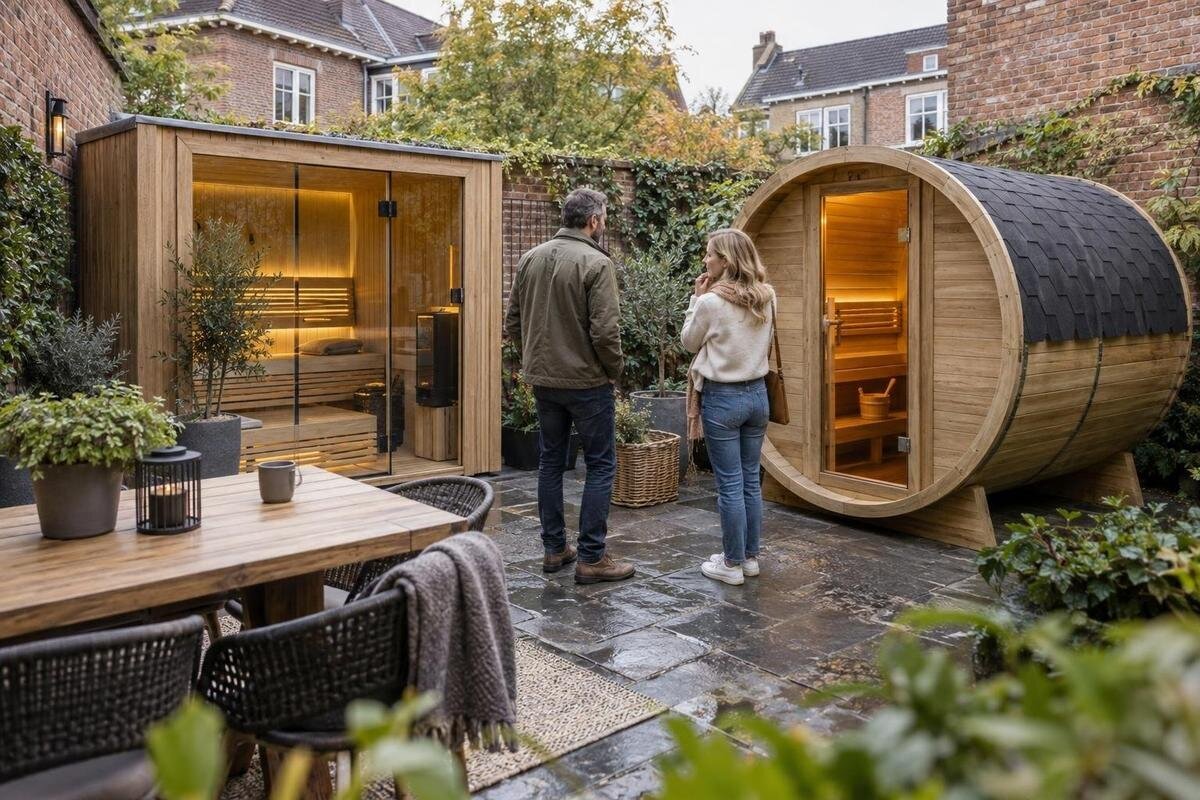
When buying a sauna for a holiday home, start with how the property is actually used, not with the most eye-catching model. A second home may be used in bursts and then left empty, so capacity, siting, installation needs and who will operate it all matter alongside its footprint. Think about the people likely to use it, the costs of occasional use and how the sauna will be delivered to its final position. Compare the actual product information and installation scope rather than reading dimensions or features into a model name.
Decide who will use the sauna and how often
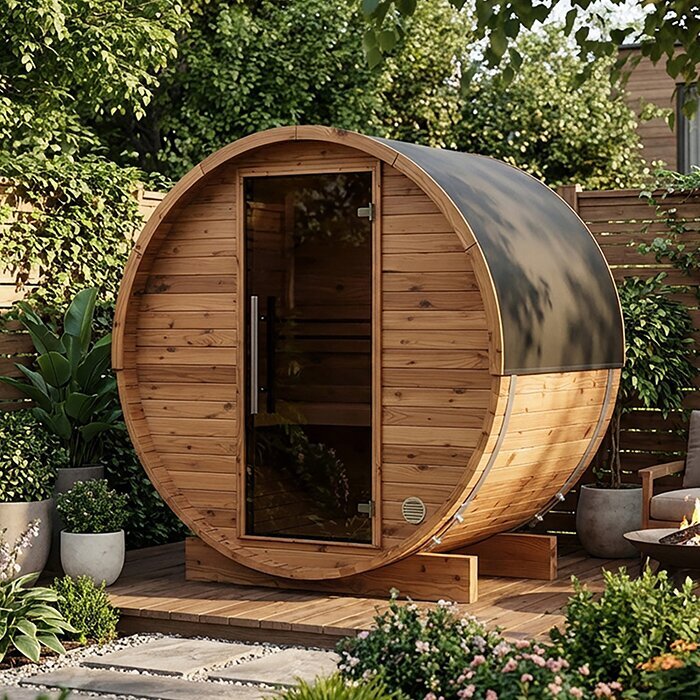
Begin with the people who will use it and the occasions when they are likely to do so. A couple visiting together has different space needs from a family or group hoping to use the sauna at the same time. Think about the busiest realistic session, not a rare gathering, and whether people expect to sit close together or value extra room to enter and settle. Consider how it fits into a normal stay: will everyone use it together, or are visits likely to be staggered? This gives you a practical capacity target rather than treating the holiday home’s total sleeping capacity as the number of sauna users. If plans vary, choose for the common pattern and consider what occasional group use will require.
Compare that target with the manufacturer’s stated occupancy, interior dimensions and bench layout; each answers a different question. A headline capacity does not show how much room each person has or whether the arrangement suits your group. The listing Thermowood Barrel Sauna S 140 is a model name, not proof of capacity: consult the exact product information and ask the seller to clarify anything missing. Keep your preferred size provisional until you have considered the entry and where people can change nearby. A suitable layout for typical visits is more useful than choosing by a number in a product title.
Measure the space and check the actual dimensions
Measure both the room or plot where the sauna will sit and the space needed to use it. Indoors, note the available floor area, ceiling height, doorway and route through the property. For an outdoor position, measure the proposed footprint and the approach from the access point, including the surface and clearances specified for the exact model. Compare external dimensions with the internal seating area: the former determine whether it fits, while the latter helps you understand how the layout may feel. Allow for the door to open, people to get in and out, and any service access required by the instructions.
Do not infer length, capacity or bench arrangement from letters or figures in a model title. With HC 150 Thermowood Barrel Sauna, for example, check the current product information for actual internal and external measurements. If only an overall size is shown, ask for a drawing or clarification before planning a room layout or base. Mark the proposed outline on the floor or ground, then test the route from the entrance to the site, including corners and steps. A full-scale check can reveal a tight turn or blocked doorway that a catalogue image cannot show.
Choose a suitable indoor or outdoor location
Decide whether an indoor or outdoor position makes more sense for this property, and choose a model intended for that setting rather than assuming any sauna will suit either one. An indoor room brings questions about headroom, ventilation, moisture management, floor finish and access to the required utilities. Outdoors, consider a suitable base, weather exposure, privacy, drainage around the site and a route that remains practical in poor light or wet conditions. Requirements vary by model, so use the product instructions and an installer’s advice to assess whether the proposed location is suitable.
Think about how far the sauna is from the rooms people use before and afterwards. A short, private route can make it easier to include in a stay; a more distant corner may need lighting, a clear path and somewhere to change or leave belongings. For a candidate such as Thermowood Barrel Sauna HC 225, the listing title alone does not confirm a suitable location. Check the manufacturer’s requirements for the exact version, including the site, base, ventilation and clearances, and have property-specific questions assessed by a suitably qualified installer. Don’t choose the position solely because it looks appealing in a photograph.
Confirm installation and utility requirements
Before ordering, establish what the chosen heater needs and whether the property has a suitable supply. Ask for the exact heater model, connection and supply details, and information about any controls included with the sauna. Don’t assume that a plug-in connection is available or that an existing circuit is adequate. Have a qualified electrician or sauna installer assess the proposed installation against the manufacturer’s instructions. If you are considering a wood-fired option, get professional advice on the flue, clearances and site requirements before committing. The aim is to verify the complete installation for this unit and property, not to estimate electrical work from a photograph or model name.
Separate the equipment from the work needed to make it usable. Ask whether the quoted package includes the heater, controls, assembly, connection, base preparation or commissioning, or whether you must arrange any of these separately. Confirm who is responsible for each task, what the site must be ready for and whether an installer needs to inspect it first. For Thermowood Barrel Sauna N 210, use the current listing and supporting instructions to confirm the exact equipment and requirements. If anything is unclear, ask the retailer rather than assuming it is included, and record the agreed scope so the delivery and installation plans match the property.
Estimate running costs for the way you will use it
A holiday home may be used intensively over a few weekends and hardly at all at other times, so estimate costs from the pattern you expect rather than an assumed daily routine. Ask for the heater’s stated power and, where available, an estimate of energy use per typical session for the exact configuration. Compare that information with your electricity tariff and likely number of sessions. A rating alone cannot tell you exactly what a session will cost: actual use depends on the installation and the way the sauna is operated. If the supplier cannot provide a useful estimate, treat your own figure as provisional and compare candidates using the same assumptions.
Include costs beyond electricity. The sauna may require cleaning products, periodic care or other consumables specified by the manufacturer; find out what is required before comparing long-term budgets. If nobody is at the holiday home between visits, decide who will handle routine upkeep and whether the site is convenient to reach if service is needed. For a listing such as N 250 Thermowood Barrel Sauna, consult information for the exact version rather than interpreting its name as evidence of its heater or expected consumption. Ask for missing details in writing, then compare projected use and maintenance together instead of relying on one headline figure.
Look for straightforward controls and instructions
With occasional use, the easiest setup is one people can understand without relying on the owner to explain every control. Check the clarity of the operating process, where the controls are positioned and whether the instructions can be kept at the property. Confirm what is built into the sauna, what is supplied separately and whether a phone, network connection or other device is required; don’t assume a feature from a photograph. If family or friends share the home, consider the least technically confident regular user as well as yourself. Keep the operating information consistent with the manufacturer’s instructions rather than relying on informal guesses.
Ask to see the controls or a manual before choosing, and consider who will prepare the sauna for use and who will look after it afterwards. A simple routine may matter more in a second home than a long list of features that nobody uses. Treat the page for Thermowood Barrel Sauna LC 260 as a point to investigate, not evidence of a particular control system: confirm the actual arrangement, instructions and included equipment with the retailer. If other people will use the property, leave clear information that points them to the official instructions. This is more reliable than a verbal handover that may be forgotten between visits.
Plan the route, entry and privacy
Map the route from the living area to the sauna, especially if it will be outside. People need a straightforward way to get there and enter without blocking a main path or passing through someone else’s private room. Consider the door swing, threshold, steps, lighting and a nearby place to change or leave belongings. If people of different ages or with different mobility needs will use it, compare the access dimensions with what they can manage and ask the supplier about details that are not listed. A spacious interior can still be inconvenient if the approach, doorway or changing area is cramped.
Privacy is another practical part of siting. Check sightlines from neighbouring properties and from the holiday home itself, and consider whether the route feels comfortable after dark. If the proposed position is visible from a shared garden, agree how it will be accessed before fixing the location. A listing named 6 89 m does not tell you the door position, threshold or clearances; ask for a dimensioned plan and compare it with the route and surrounding space. These checks are about how a particular sauna fits this home, not an assumption that a model offers a certain layout or access feature.
Check delivery access and assembly arrangements
Check the delivery route as carefully as the final footprint. Measure gates, passageways, door openings, turns, stairs and any narrow section between the property boundary and installation point. Ask the retailer for package dimensions and weight, the delivery format, unloading arrangements and whether parts need to be carried or assembled on site; a finished-unit measurement may not describe what arrives. Make sure the route is clear and confirm who is responsible for moving the goods from the delivery point. If a vehicle cannot reach the site, establish before ordering whether another arrangement is possible and what it involves.
Confirm the work sequence as well: the base and utilities may need to be ready before assembly, while delivery and installation may be handled by different people. Ask what site preparation is required, whether installation is offered, what is excluded and how the separate tasks will be coordinated. For Thermowood Barrel Sauna HCF 225, check the current documentation for packaged dimensions, access and included components, and request clarification if a detail is missing. Rely on the written terms for delivery and assembly rather than making assumptions. Once the route, site and responsibilities are clear, you can judge whether the chosen configuration is practical to receive.
Compare the full purchase cost and aftercare
Build your comparison around the full installed cost, not just the price of the sauna unit. Set out the unit, heater if priced separately, transport, site preparation, assembly, professional work and any controls or accessories you intend to buy. Ask for a written quote that makes included and excluded items clear; otherwise two apparently similar quotes may cover different work. Allow for costs that are still awaiting a site assessment, but base any allowance on information from suppliers or installers rather than an invented percentage. If you will not be at the property during the work, include the practical arrangements needed to coordinate it.
Read the aftercare and support information as part of the purchase. Check which cleaning and maintenance instructions apply, whether replacement parts or service support are identified, and how faults would be handled when the property is unoccupied. Review any warranty terms supplied, including conditions and exclusions, without assuming coverage from a general statement. If the home is shared or managed by someone else, agree who will keep the documents and arrange routine care. This makes the responsibilities between visits clear and helps you compare the ongoing commitment as well as the initial cost.
Review the specification and order terms before committing
Before placing an order, compare the product information, quote and installation instructions. Confirm the exact model and configuration, internal and external dimensions, declared user capacity, heater and supply requirements, suitable location, included controls, and any base, ventilation or clearance requirements. Ask for a drawing or manual if a critical measurement or connection detail is missing. Keep a written record of answers and who confirmed them, particularly when the retailer, delivery team and installer are different organisations. This gives you a reference for checking that the delivered configuration is the one you planned around.
Check any property-specific permissions or conditions with the appropriate local authority, insurer, landlord or installer where relevant. What applies can depend on the site and the work proposed, so a product being sold does not mean it is suitable for every property. Read the order terms for payment, stated delivery arrangements, returns and cancellations, and confirm who handles installation. These checks establish that the chosen sauna can be placed, connected, delivered and paid for on terms that suit your holiday home. Pause if the written information and verbal explanations do not agree.
Frequently asked questions
How many people should a holiday-home sauna accommodate?
Base capacity on how many people are likely to use it at the same time, then compare the manufacturer’s stated occupancy with the interior dimensions and bench layout. Check the entry and surrounding space too. Don’t infer capacity from a model name or buy for an occasional maximum group if the layout would feel cramped for regular users.
Should I choose an indoor or outdoor sauna?
Choose according to the space available and how you want to reach and use the sauna, but confirm that the exact model is intended for that setting. Check the relevant room, ventilation, base, access and utility requirements in the manufacturer’s information, and ask a qualified installer to assess anything specific to the property.
How can I estimate sauna running costs?
Ask for the heater information and, if available, an energy estimate for a typical session in the exact configuration. Compare it with your tariff and expected frequency of use. Include cleaning and any maintenance or consumables specified by the manufacturer. Treat figures as estimates, since actual use depends on the installation and operating pattern.
What should I check before delivery?
Confirm the package dimensions, delivery and unloading arrangements, and the route from the delivery point to the site. Ask what base preparation and assembly are required, who is responsible for each task, and whether installation is included. Make sure the site and access are ready in line with the written order and installation information.
How do I make a sauna easy to use when we visit occasionally?
Look for controls and instructions that the people using the property can understand without the owner being present. Confirm what equipment is included, whether any device or connection is required, and where the manufacturer’s instructions will be kept. Agree who will handle routine care between visits, particularly if the home is managed by someone else.
Let the holiday home’s real routine set your priorities: who visits, how many people may use the sauna together and how often it is likely to run. Then compare candidates against measured space and access, installation requirements, likely costs and straightforward operation. Treat catalogue names as identifiers; the deciding evidence is the current specification, written quote and an installer’s assessment of the site. A sauna chosen around those practical details is more likely to suit the property than one selected mainly for its appearance or a number in its title.
