
Buying a Sauna for Cold Winters: Ask About Heat-Up Time and Heat Loss
Sauna buying guide
Buying a sauna for cold winters means assessing how it performs from a cold start and how much energy it needs to maintain the intended conditions, not simply accepting the shortest advertised heat-up time. A time figure can depend on the starting temperature, the heater and the way the result was measured; heat loss depends on the finished construction and site as well as the weather. Ask sellers to explain their figures for the exact model and configuration you plan to order. This guide turns those questions into a fair comparison without assuming that a product name or shape proves winter performance.
What a heat-up time is actually measuring
A quoted heat-up time is meaningful only when its starting point and endpoint are defined. Ask for the cabin’s initial temperature, the outdoor conditions during the test, the target used and where the reading was taken. A sensor near the heater may show a different result from one in the seating area. Find out whether the number describes air reaching a target or a cabin considered ready for normal use after benches and interior surfaces have warmed. Those milestones are not interchangeable, so two sellers may use the same phrase for different outcomes. Ask, too, whether the figure comes from one test, repeated tests or an estimate. Note the date and version of any information supplied, particularly if the manufacturer offers different configurations under a similar product name.
Check whether the time refers to a fully assembled sauna, and whether the heater, ventilation arrangement and control settings match the package you would order. If the method is not published, ask the seller to explain it in writing. A very short estimate based on a mild indoor start may not predict a cold outdoor start. The Thermowood Barrel Sauna S 140 product page can be a point of comparison, but its name alone does not establish a heat-up time or test conditions. Ask for the evidence behind any performance figure for the exact configuration.
Ask whether the estimate reflects cold outdoor conditions
A winter buying decision calls for more than asking whether a sauna can be used in cold weather. Ask what outside conditions the supplier has tested, whether the cabin began cold or had already been warmed, and how the estimate was produced. If there is no cold-weather test, find out whether a range or calculation is available and what assumptions it uses. A figure without a stated starting condition is difficult to compare with another seller’s result, and it should not be treated as a promise for every winter day. It is also worth asking whether rain, snow or wind were part of the assessment, or whether the figure concerns air temperature alone.
The setting of a test also matters when you compare it with your intended site. Ask whether the data come from a sheltered location and whether exposure to wind changes the supplier’s guidance for siting or performance. Do not assume that a sheltered position will make every sauna behave like a tested example. When reviewing the HC 150 Thermowood Barrel Sauna listing, use the product page as a reference point, then ask which winter conditions the supplier’s information actually covers.
Match the heater to the exact sauna configuration
The recommended heater depends on the sauna it is intended to heat, not only on how quickly you would like it to warm up. Ask the manufacturer which heater is suitable for the exact model and configuration, taking account of the stated internal volume, construction and any glazing or other features identified in the specifications. Do not choose a heater by comparing names, appearance or a single size figure, and do not assume that a heater listed for one sauna will suit another. Ask whether the recommendation changes when optional features are selected, so the quotation and the manufacturer’s advice describe the same version.
Confirm whether a heater is included, which make and model is proposed, and whether the controls and other listed components form part of the package. If you are considering a separate heater, get written confirmation of compatibility from the sauna supplier rather than relying on a general rule. The Thermowood Barrel Sauna HC 225 page identifies a particular listing, but the title alone does not confirm its heater or winter performance. Have a qualified electrician check the proposed supply before you commit.
Examine the complete insulated envelope
Heat can escape through more than one part of a sauna. Ask what the finished construction includes in the walls, roof and floor, and how the door, joints and any glazed sections are dealt with. Find out whether insulation is included throughout, only in specified areas, or not at all. If the supplier provides thermal performance information, ask whether it applies to the complete assembled sauna or to an individual material or component. That distinction helps avoid comparing a component description with a whole-cabin claim. Request drawings, a specification sheet or another clear record where available, rather than relying solely on broad marketing terms such as insulated or winter-ready.
A material name or a description of the exterior does not, by itself, tell you how well the complete sauna retains heat. Request the construction details for the version you plan to buy, including any differences between standard and optional components. For example, read the Thermowood Barrel Sauna N 210 listing alongside any technical information the supplier provides; do not infer insulation or heat retention from the product title. If a detail is unavailable, record it as an unknown rather than filling the gap with an assumption.
Check doors, glazing and ventilation as a system
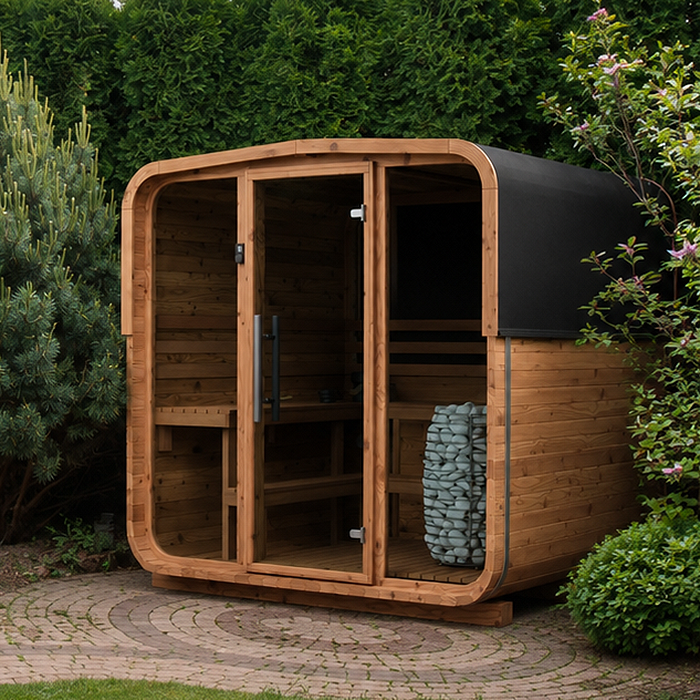
Doors and windows affect both the use of the space and the way heat is retained. Ask how the door closes and what information is available about its seal. If the sauna has glazing, check what type is specified and whether the quoted heat-up estimate applies to that exact configuration. A window may be a welcome source of light, but its effect on heat loss depends on the glazing and surrounding construction; its presence alone does not tell you how the whole cabin will perform. Compare the number and position of openings as well as their description, because two otherwise similar configurations may not have the same arrangement.
Ventilation should be assessed as part of the sauna’s intended design, not treated as an opening to block in pursuit of a faster warm-up. Ask where the ventilation openings are, how they are meant to be used and whether the supplier’s time estimate assumes the normal operating arrangement. Follow the manufacturer’s instructions rather than changing openings to chase a performance figure. The N 250 Thermowood Barrel Sauna product page can help you identify the listing you are comparing; request details for its specified doors, glazing and ventilation before drawing conclusions.
Separate warm-up speed from heat retention
A fast initial warm-up does not tell you how well a sauna holds its temperature once it is in use. Heat can leave when the door is opened, and the cabin may need time to return to its intended conditions. Ask whether the supplier has information on temperature stability or recovery during normal use, and what the test included. If such data are unavailable, keep that separate from the published heat-up time rather than assuming one figure answers both questions. Clarify whether any reported observation involved people entering and leaving, since an untouched closed cabin is a different comparison from ordinary use.
Find out how long a reported result was observed and whether it covers only the initial warm-up or also a period of maintaining the target. Ask whether the heater’s controls were operating as they would in normal use, if the supplier has that information. These details can help you judge whether the evidence matches the way you expect to use the sauna in winter. The Thermowood Barrel Sauna LC 260 listing is a product reference, not proof of heat retention; compare the specific performance information the seller can provide.
Compare energy-use figures on the same basis
If running cost matters to your decision, ask for energy-use information rather than trying to infer it from a heat-up time. A heater’s rated power, usually stated in kilowatts, is not automatically the amount of energy used over a complete session. Request any available consumption figure in kilowatt-hours and check what it covers: warm-up alone, warm-up plus maintaining temperature, or another defined period. Ask for the starting conditions and heater configuration too, so the figure has context. Record whether the figure is measured, calculated or illustrative, because those descriptions indicate how directly it can be compared with another supplier’s information.
Only compare energy figures that describe a similar period and setup. If one seller gives a warm-up figure and another gives consumption across a longer use period, they are not like-for-like. You can use a supplier’s relevant consumption information with your own electricity tariff to consider potential cost, but do not treat a time estimate as an energy reading. The sauna listing labelled 6 89 m can be checked as a specific product reference; request any energy information for the exact configuration rather than inferring it from the listing label.
Plan the site and installation before ordering
The site affects how closely your experience may match a supplier’s test conditions. Before buying, ask what the manufacturer requires for the base, drainage, clearances and position, and whether there are specific recommendations for an exposed or sheltered location. Check that the proposed site can be assessed for those requirements; do not assume that a convenient spot will suit every model. A qualified installer or other relevant professional can advise on site-specific work that needs technical assessment. Consider the route taken by prevailing weather and whether nearby buildings, fences or vegetation alter exposure at the proposed location, then discuss those observations with the supplier or installer.
Also check practical access for delivery and assembly, including the route to the intended position and any preparation that must be completed first. Ask which tasks are included in the order and which need separate arrangements, and confirm the proposed electrical supply with a qualified electrician. The Thermowood Barrel Sauna HCF 225 page can identify the product you are considering, but obtain installation guidance for that exact configuration. Resolving access and preparation questions before purchase can prevent avoidable surprises later.
Confirm what the order includes
Ask for a written quotation that identifies the sauna model and the selected configuration, including the heater, controls, ventilation and any insulation or glazing options. It should also make clear what is included for delivery, unloading, assembly and installation, and what is excluded. This matters when comparing two offers: a lower headline price is not necessarily a like-for-like package if one requires additional preparation or separate components. Do not assume that an item is included just because it appears in a product photograph or description. Check whether the quotation identifies any customer-supplied work or services, so responsibilities are clear before arrangements are made.
Before placing an order, ask about the expected schedule for your specific purchase rather than assuming that a winter order can be installed immediately. Review the supplier’s stated after-sales support, any relevant warranty terms and the conditions or exclusions that apply; do not rely on an informal assurance alone. Keep the answers alongside the product details and quotation, so you can check that the sauna, heater and installation plan you agreed to are the ones being ordered.
Use supplier answers to make a fair comparison
Put each supplier’s response in the same format. Record the starting and outdoor conditions, heat-up endpoint, measurement point, heater and configuration, then note the insulation and opening details and any energy-use information. Add what is included in the order and which site or installation arrangements remain your responsibility. This makes missing information visible and helps prevent a precise-looking number from outweighing more relevant evidence. If a seller cannot answer a question, mark it as unknown rather than assuming the answer is favourable or unfavourable. Keeping supplier responses, specifications and quotations together also makes it easier to spot when a figure relates to a different configuration from the one priced.
Give the most weight to information that matches the winter conditions and use you expect. If quick warm-up is your priority, compare evidence based on similar cold starts; if maintaining heat and energy use matter more, look for relevant information about the complete period of use. A supplier’s willingness to explain the basis of its figures is useful when judging how much confidence to place in them. Choose the option whose documented configuration and remaining uncertainties you are comfortable with, not simply the one with the most appealing time claim.
Frequently asked questions
Is the shortest quoted heat-up time always the best choice?
No. First check that the figures use comparable starting conditions, heaters, measurement points and end targets. A short time based on a mild indoor start may tell you little about a cold outdoor start. Also consider how the sauna holds its temperature and what energy data are available; speed on its own does not describe the whole experience.
Can I rely on a heat-up estimate for a cold day?
Only if the supplier explains the conditions behind it and says how they relate to your intended use. Ask whether the estimate was tested in cold weather or calculated, and what assumptions it uses. If there is no cold-weather evidence, treat the result as an estimate rather than a winter performance guarantee.
Should I choose a more powerful heater for winter?
Do not select a heater by guesswork or simply add more output. Ask the sauna manufacturer which heater is suitable for the exact model and configuration, including its specified construction and openings. Before ordering, have a qualified professional confirm that the proposed electrical supply is suitable.
Does a barrel sauna design mean lower heat loss?
The shape or product name does not establish insulation, air leakage or heat retention. Compare the construction details for the finished sauna, including insulation, joints, door and glazing, where applicable. Ask the supplier what winter-performance information is available for the configuration you would actually buy.
What should I request before placing an order?
Ask for the heat-up estimate and its test conditions, the recommended heater, details of the thermal construction, and any energy-use information. Get written confirmation of what the package includes, along with site-preparation, delivery and installation requirements. That gives you a clearer basis for comparing both performance and the full order.
A useful winter comparison combines a clearly defined heat-up estimate with evidence about the complete sauna, its heater, heat retention and energy use. Check that the figures apply to the same kind of start and the configuration you intend to buy, then settle site, delivery and installation questions before ordering. When information is missing, treat it as an open question—not as a guarantee of poor performance or a reason to guess.
