
Buying a Sauna for Frequent Use: Practical Features to Prioritise

SAUNA BUYING GUIDE
Buying a sauna for frequent use is less about choosing the most striking exterior and more about whether the whole routine will remain practical: preparing it, using it comfortably, cleaning it and keeping it in good condition. Compare documented heating and construction details against your likely pattern and household, rather than treating a model name or photograph as evidence. Capacity, insulation where provided, materials, access and aftercare can all affect week-to-week convenience. This guide explains what to compare and which questions to settle before ordering.
Buying checklist 1
Match the sauna to your weekly routine
Start by writing down how the sauna will fit into an ordinary week, not an idealised one. Note how many people are likely to use it at once, whether they will use it one after another, how much time you have for preparation, and whether changing and cooling off need to happen nearby. These details affect the room you need and which practical features matter most. A solo routine may favour a compact layout; regular shared sessions place more weight on bench space, access and a comfortable way to enter and leave. Use the busiest likely session, rather than the weekly average, to set a capacity baseline. Neither a nominal head count nor an image showing several people proves that the interior will suit your household: check the usable measurements and seating plan.
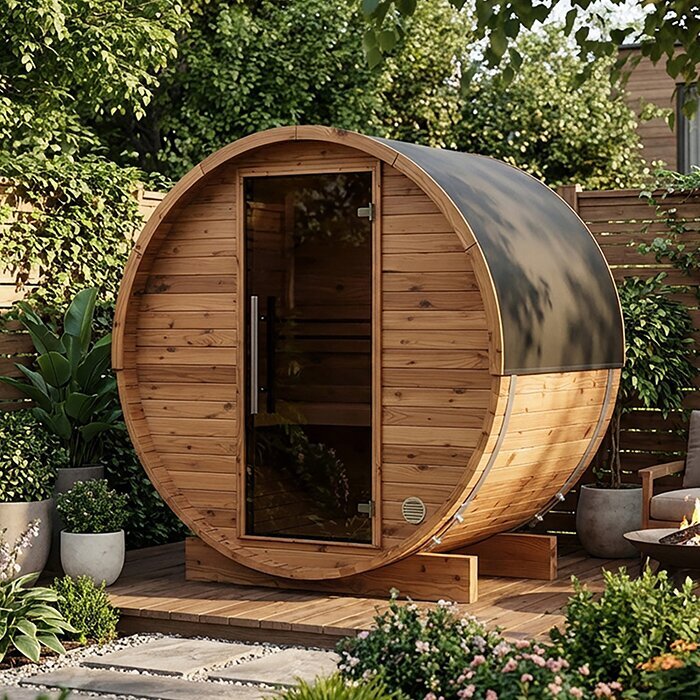
Also think about how often you expect to use it when life is busy. If starting the heater, clearing the area or wiping down awkward corners turns each session into a chore, the sauna may be used less than intended. Compare the whole routine, from preparation to cleaning afterwards: how the controls are used, whether towels and accessories have a place nearby, and whether the entrance to the hot room is easy to reach. For an early comparison, the Thermowood Barrel Sauna S 140 listing is a candidate to assess, not a recommendation based on its name. Look for stated dimensions, seating and package details; if a point is absent, ask rather than infer it. Consider who will handle these repeated tasks as well as who will sit inside.
Compare heating performance for repeated use
Heating performance for regular use is about a repeatable routine, not simply the largest number in a specification. Compare the heater’s stated output with the sauna volume the supplier says it is designed for, and look for clear operating guidance, control options and published warm-up or energy-use figures. Check the conditions behind those figures: a result recorded under a particular test or ambient condition may not predict your own set-up. Think about whether you will use the sauna in one longer session or for successive sessions, and what the manufacturer says about operation between them. Ask whether any energy-use figure covers just heating or the complete preparation cycle. Vague terms such as ‘rapid’ do not replace technical information.
For frequent use, ask whether the heater and control system can support your intended pattern while remaining straightforward to operate. Find out what must be switched on, adjusted or monitored each time, whether the controls are included, and what routine care the manufacturer recommends. Compare how settings are described and whether the instructions are easy to consult; that can affect convenience as much as headline output. Review the information for HC 150 Thermowood Barrel Sauna against the same points for other candidates, without assuming from its model name what heating package it contains. If the specification is missing or the heater is selected separately, ask the supplier or a qualified installer to confirm suitability for the sauna and site before ordering.
Buying checklist 2
Check insulation and construction details
Insulation and heat retention are worth examining because repeated use makes the gap between stated performance and an actual routine more noticeable. First establish what construction the candidate has: ask whether the walls, roof, floor or door are insulated, what materials are used, and which parts are sealed. Sauna formats are built differently, so do not assume that an exterior shape, a timber name or a product photograph tells you whether insulation is present. A bare statement such as ‘well insulated’ is hard to compare unless the supplier explains the construction and provides an applicable performance figure. Look for construction details and the assumptions behind any energy estimate, rather than treating an adjective as a guarantee.
Consider how the sauna will be used and where it will stand, then compare the manufacturer’s guidance for that configuration. Ask whether energy figures assume a particular installation, heater or operating pattern, and whether seals or joints need periodic attention. If you are considering a model such as the Thermowood Barrel Sauna HC 225, use the product information to identify what is actually documented; the label alone establishes neither insulation nor efficiency. If a figure is not available, compare the construction details rather than extrapolating from another sauna. A supplier that cannot provide a clear construction description leaves you without a sound basis for comparing heat retention, so record the uncertainty as a difference between options.
Judge capacity by usable interior space
Capacity has to mean usable room, not just an advertised head count. Check internal measurements, bench dimensions and arrangement, clearance for entering and leaving, and whether the seating lets intended users sit comfortably without crowding the door. If lying down matters, verify the usable bench length rather than assuming the footprint allows it. If several people may use it at once, compare the actual space and posture the plan supports; a nominal capacity may describe a maximum rather than the comfort you want during regular use. Review a dimensioned drawing as well as photographs, since camera angles can disguise proportions.
Frequent use also makes small layout inconveniences more apparent. Consider whether the heater location takes away bench space, whether the controls are accessible without awkward reaching, and whether access to the interior makes cleaning straightforward. Think about the path between the changing area and the door, including whether one user must move for another to get in or out. If flexibility matters, ask whether benches are fixed or movable rather than assuming from a photograph. The Thermowood Barrel Sauna N 210 listing can be checked against your household’s requirements like any other candidate: compare internal and external measurements, seat arrangement and door position. If the information gives only a nominal capacity, ask what it means before using it to decide.
Buying checklist 3
Understand the materials and finish
For materials, the key buying question is not which timber name sounds most robust, but what is actually used and how the surfaces are finished. Ask for the wood species for each part, whether it has been treated or coated, and which surfaces are exposed to heat, moisture and regular cleaning. Where the material varies by component, ask for each one to be identified rather than relying on a broad description. Request the supplier’s care instructions and expected inspection points. A finish that looks appealing in a product image may require a particular method of cleaning or periodic maintenance; do not assume that every timber or coating can be treated alike. Where metal fasteners, glazing or other components form part of the design, check how they are specified and cared for too.
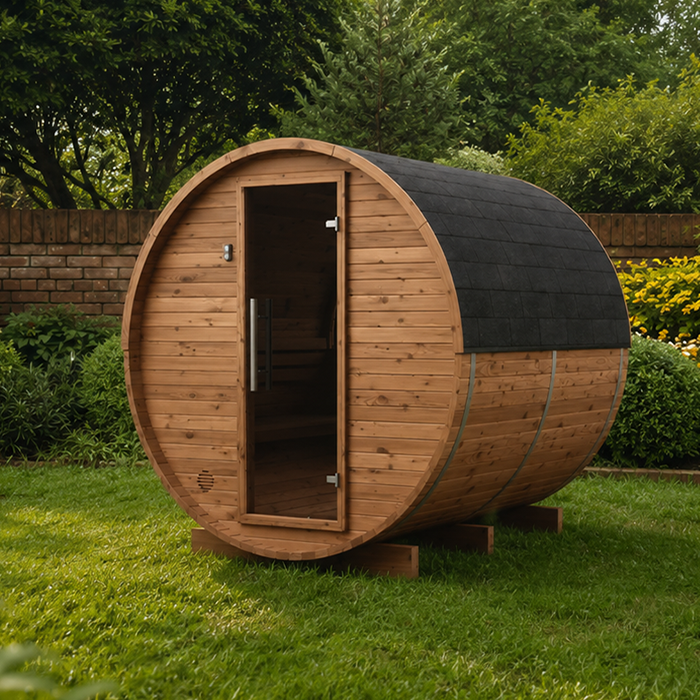
Look for written details about which parts arrive finished and whether any further treatment is required after assembly. Ask which components can be replaced if a bench part, seal or fitting wears, and whether those items are available through the seller. The title of a listing such as N 250 Thermowood Barrel Sauna is not a substitute for a material schedule or care guide: model names and photographs do not answer questions about coatings, construction or maintenance. A concise written specification lets you compare lifetime upkeep and spot details that could be inconvenient in a sauna used week after week. Keep the care information with the product details you use to compare candidates.
Plan for cleaning and routine maintenance
Maintenance deserves a place in the comparison before purchase, rather than being left until the first clean. Ask how to clean the benches, floor and other contact surfaces; which cleaners are permitted; how the cabin should be aired or dried after use; and whether any components need periodic checks. A manufacturer’s care guide is more useful than broad assurances that a sauna is ‘easy to maintain’. For frequent sessions, reachable surfaces and clear instructions can save effort, but only the supplied design and care information can confirm what cleaning involves. Do not apply household products or treatments unless the manufacturer says they are suitable.
Map routine care onto your actual week: where wet towels and used accessories go, whether you can reach corners without moving heavy items, and how long the maker recommends allowing the interior to dry. Ask how any removable parts are cleaned, if the design has them, and whether cleaning or replacement work requires specialist help. Compare those answers across products instead of judging upkeep from a polished photograph. The information for Thermowood Barrel Sauna LC 260 can be reviewed as one listing in that comparison, but the model label says nothing about its cleaning requirements. If a maintenance schedule or approved-care instructions are not provided, get them before ordering.
Buying checklist 4
Check controls, servicing and replacement parts
Controls and serviceability are small details with outsized influence when the sauna is used often. Check how the user interface works, where it is positioned, whether settings are explained clearly, and whether the relevant instructions are supplied in a format you can keep. Confirm the equipment’s maintenance requirements and any stated service arrangements. If several household members will use the sauna, clarity matters: a control that only one person understands can make the routine less convenient. Avoid assuming that a timer, remote control, lighting or other accessory is included just because it appears in a photograph or is mentioned in a general description; confirm each item in the written package details.
Ask how to obtain replacement components and who handles a fault after installation; record any warranty terms and exclusions as supplied, rather than treating a general promise of support as a commitment. Ask the supplier to identify what technical assistance is available and which tasks require a qualified person. Do not attempt to resolve electrical or heater faults yourself on the basis of online shopping copy. The listing labelled ‘6 89 m’ can be assessed with the same questions as other candidates; the label alone provides no evidence about its controls, service support or contents. Check that operating instructions will be available to everyone who may use the sauna, not only the person placing the order.
Confirm the site and installation requirements
Even a sauna that suits the household on paper may be awkward in the chosen location. Measure not just the footprint but the route into position, door opening, nearby access, space for routine cleaning and whatever clearance or ventilation the manufacturer requires. For outdoor installations, establish the product’s stated suitability for the intended exposure and ask what base and weather protection are specified; never infer this from a photograph. Indoor and outdoor installations can bring different site questions, so treat the supplier’s drawings and instructions as the starting point rather than applying assumptions from another sauna. Include privacy and ease of access in the site assessment, not just whether the product physically fits.
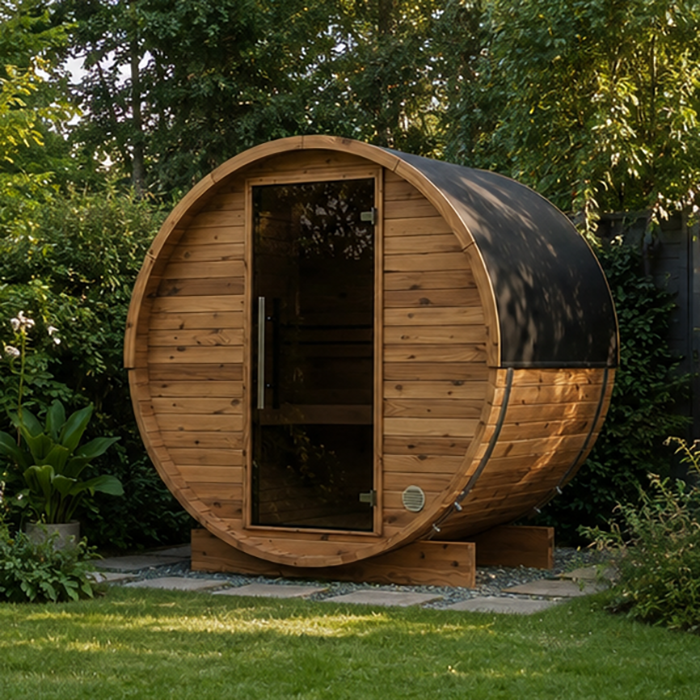
Before ordering, check assembly requirements and delivery access. Have a qualified installer assess the electrical supply, ventilation and installation requirements for your particular site, and involve an appropriate professional on questions about the supporting base or structure. Do not rely on an internet image or assumed clearances. Verify whether assembly and heater-related components are included and who is responsible for arranging installation; these are scope questions, not details to guess. If comparing the Thermowood Barrel Sauna HCF 225, confirm the seller’s site and installation information for that specific listing. Clear answers before ordering help prevent site-preparation surprises.
Buying checklist 5
Compare running costs and ownership terms
Purchase price on its own is a poor guide to value when a sauna will be used regularly. Build a comparison that includes installation, the heater and controls if purchased separately, electrical work by a professional, estimated energy use, cleaning supplies, maintenance, replacement parts and any ongoing service. Ask for the assumptions behind operating-cost estimates, including the heater and usage pattern, and compare like with like. If no estimate is available, note that as an unknown rather than inventing one from dimensions or an efficiency label. Your energy tariff and routine affect the eventual cost, so an estimate is an aid to comparison, not a promise of what your bills will be. Separate one-off costs from recurring ones.
Also compare what you receive and what the seller commits to: written package contents, warranty duration and coverage, parts availability, customer support, delivery and assembly terms. These can have more bearing on ownership than a small difference in initial price, particularly if a fault or maintenance question would interrupt regular use. Look for separately priced options, exclusions and necessary extras in the offer, and keep the written details with your comparison. The point is not to forecast every future expense precisely; it is to distinguish confirmed figures from estimates and unanswered questions before choosing.
Compare sauna models on the same criteria
Put candidates into a simple side-by-side table, using the same rows for each: usable capacity and dimensions; documented heater and controls; construction and insulation details; materials and care instructions; cleaning access; installation requirements; running-cost information; and support, parts and supplied components. Mark each item as confirmed, estimated or unknown. This prevents an attractive exterior, a model title or one impressive specification from dominating the decision. For frequent use, give extra weight to repeated tasks—starting, operating, airing, cleaning and maintaining the sauna—because a minor inconvenience repeated each session can matter more than an occasional feature.
Decide which requirements are essential for your home and which are preferences, then check the source of every important claim. Product photographs can help you assess appearance, but they do not establish dimensions or package contents. Dimensioned drawings, full instructions and a written response from the seller are more useful for resolving those questions. Before placing an order, read the relevant installation and warranty terms, confirm the scope of delivery and assembly, and resolve any issue that affects site fit or safe operation with the seller or a qualified installer. If a candidate still has significant unknowns, compare it as an incomplete option rather than filling gaps with assumptions.
Frequently asked questions
How do I define frequent sauna use?
There is no universal weekly threshold. Define it by your intended routine: how often the sauna will be heated, whether use is shared or in consecutive turns, and how much preparation and cleaning you can manage. These details help identify which features deserve priority, without relying on someone else’s definition of regular use.
Which heater specification matters most for a sauna used often?
Do not select by output alone. Compare the stated heater output with the supplier’s recommended sauna volume, then check operating guidance, control details and any energy-use figures with clear assumptions. Ask how the manufacturer describes successive sessions. A qualified installer or the supplier should confirm that the planned heater and installation suit the particular sauna.
Do I need an insulated sauna for regular use?
Not automatically. Insulation depends on the sauna’s design and intended location. Ask for construction details for the walls, roof, floor and door, plus any relevant performance information. A timber label or exterior shape is not evidence of insulation; compare documented details for each option and record gaps rather than guessing.
How can I tell whether the advertised capacity will be comfortable?
Use the interior measurements and bench layout, not just an advertised head count. Check usable seat length and depth, access to the door, and how many people can sit in the positions you actually want. If the page gives only a capacity figure, ask what arrangement and comfort level that figure describes.
What should I ask about before ordering?
Confirm dimensions, construction, heater and control information, what is included, care instructions, site and assembly requirements, energy-use assumptions, spare-parts support and the seller’s written warranty and delivery terms. Resolve any point that affects fit or safe installation with the seller or a qualified professional before placing the order.
For a sauna used often, the best fit is the one whose capacity, heating, construction and care requirements match a real household routine and whose essential details are documented. A striking exterior cannot make up for awkward access, unclear controls or maintenance that is difficult to manage; an extra feature has little value if it does not improve the way you will use the sauna. Weigh the confirmed specifications against the tasks repeated each week, then choose on that balance rather than the longest feature list.
