
Buying a Summer House Direct from a Manufacturer
Summer house buying guide
If you plan to buy a summer house direct from a manufacturer, treat “direct” as something to verify rather than a guarantee of price or service. Identify the business taking your order, then compare the same size, layout, materials, specification, included items and delivery scope across options. A short brief about how you will use the building and what your garden can accommodate makes it easier to request a like-for-like quotation and spot missing details before ordering.
Before you order 1
What buying direct from a manufacturer means
“Direct from the manufacturer” describes a sales route, but the phrase alone does not tell you who is taking your order. Before comparing buildings, find the business name that will appear on the quotation, order confirmation and invoice, and check that it is the business you think you are contacting. Ask whether that business makes the summer house, sells it on behalf of another company or acts as a retailer. If more than one organisation is involved, ask which one is responsible for each part. Check that the seller named on the paperwork matches the answer you have been given. A brand name, factory-style photograph or product page is not enough to establish the relationship.
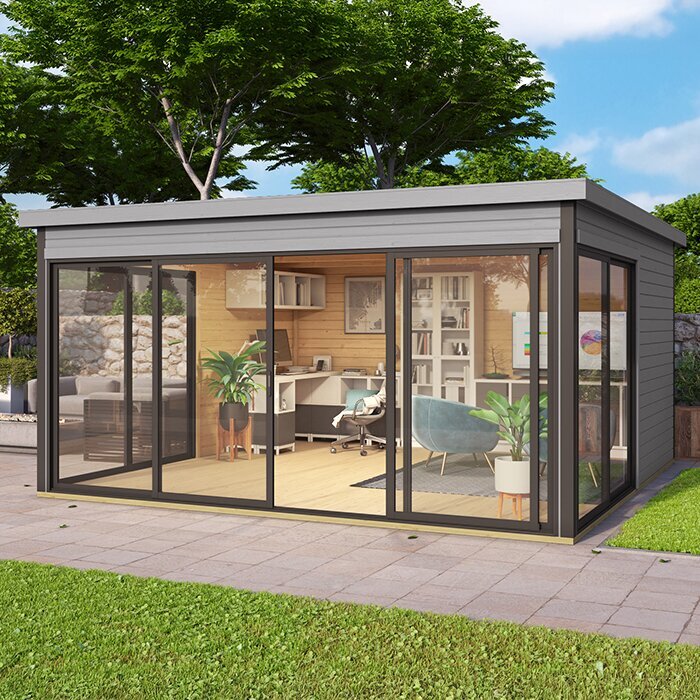
Buying direct can make it easier to put technical questions to someone close to the product, but treat that as a possibility to confirm, not a promised benefit. It does not, by itself, mean a lower price, shorter wait, broader customisation or better after-sales support. Ask what the manufacturer actually handles, whether sales and delivery are managed by another party, and how requested changes are approved. A model page such as Verdana 1 identifies a particular listing; its name alone says nothing about who sells it or what responsibility the seller accepts. Verify the sales route first, then judge the building against the specification and service you are offered.
Identify who handles advice, the order and after-sales questions
Map out who answers which questions before you place an order. A manufacturer’s technical team may answer construction queries, while a sales office, distributor or delivery contractor handles other stages; do not assume one contact controls everything. Ask who can confirm measurements and configuration, who issues the final order documents, who arranges delivery, and whom to approach if an item is damaged or missing. If responsibilities are divided, get the contact routes and escalation process in writing. Check whether a technical answer will be included in the order documents or needs approval from the business taking your order. This helps you know where a query belongs and what has actually been confirmed.
Test the buying process with questions tied to a real choice: request a drawing, a written material description or confirmation of an included item, then see whether the reply addresses that point rather than sending you back to a general brochure. Keep the product name and any variant code in the conversation. When asking about the Verdana 2 listing, quote its exact page reference and ask for information tied to the configuration being discussed. For after-sales questions, ask how to report damage or a missing part and who coordinates the response. Save useful replies with the quotation so you can compare them with the final order.
Before you order 2
Set your brief before comparing models
Decide what the building needs to do before asking for recommendations. A place for occasional summer relaxation can have different priorities from a hobby room, a space for guests or enclosed storage. List the activities, how many people may use it at once, the furniture or equipment that needs to fit, and whether you need to keep a route clear when items are inside. If you expect to use it in colder or wetter weather, ask what the offered construction is intended to support. Do not assume a standard summer house is insulated or designed for year-round use; ask for relevant details if that matters to you.
Turn your list into a brief you can send unchanged to each manufacturer or seller: intended use, approximate number of users, items that must fit, preferred opening arrangement and any firm limits imposed by the site. Keep preferences separate from essentials, so a quotation does not quietly assume an upgrade you did not request. If the Durano listing is on your shortlist, use the same brief when asking about it as for other options. That makes differences in the answers easier to trace to the actual specifications, rather than to different assumptions. Ask the supplier to point out anything your brief does not cover.
Compare dimensions and the internal layout
Compare the measurements that affect both the plot and the room inside. Request a dimensioned plan and elevation, and ask whether the published width and depth refer to the outside walls, roof edge or another measurement point. Check the external footprint against a measured sketch of your garden, then use the stated internal dimensions to see whether furniture, seating and a clear route will fit. Ask how any stated floor area is calculated. Door and window positions matter as much as overall size: a layout that looks generous on paper may not suit the way you enter or arrange the room. Do not infer usable floor area from a product title or photograph.
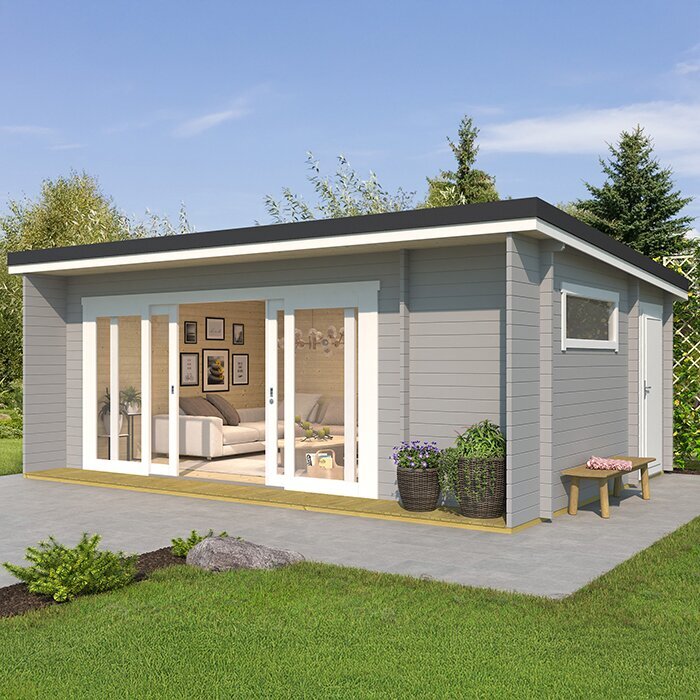
Plan for the building to be brought into the garden as well as for it to fit once assembled. Measure gates, paths, turns and the narrowest access point; ask what size of delivery sections or packages to allow for, and whether access is assessed before dispatch. Check the space needed around the building for assembly and for opening doors or windows, using the supplier’s drawings rather than a general image. If Veltor 1 is a candidate, request its own dimensioned drawing and compare the stated external and internal measurements with your site plan. Resolve any mismatch before ordering; a description such as compact or spacious cannot settle it.
Before you order 3
Ask for exact material and finish details
Treat material words as a prompt for a specification, not as the specification itself. If a building is described as timber, ask for the species and grade, the profile and thickness of the boards, and whether components are supplied untreated, treated or finished. Find out which parts those descriptions cover: walls, floor, roof structure and external trim may have separate details. Ask whether a coating is factory-applied, whether further work is expected before use, and what care the manufacturer recommends. Avoid judging durability or maintenance from broad labels such as wooden, Nordic or premium; those words do not explain the material properties or the upkeep required.
Ask for details about glazing and the roof as well. For any windows or glazed doors, check what material and configuration are specified; do not assume a photograph or general description supplies the detail. Find out whether the quoted roof includes the covering or only the structure beneath it. Check whether a floor, fixings, seals and finishing products are included, separately priced or left for you to source. A label such as the Orello 1 listing identifies a model to ask about, but is not a substitute for the chosen variant’s technical sheet and written quotation. Request care instructions that apply to the materials actually supplied.
Check what the quoted specification includes
Ask for the full specification of the exact package being quoted. A named model may be sold in more than one configuration, and a product photograph may not show everything included. Request a dated document that identifies the selected variant and lists the parts supplied. Check separately for the floor, roof covering, glazing, door and window hardware, locks, fixings and any protective finish. For each item, establish whether it is standard, optional, supplied by another party or excluded. That makes the scope clearer and helps prevent different assumptions about what the quoted building comprises.
Match the specification to the drawing and order confirmation. The documents should use consistent terms for the model, variant, dimensions, openings and selected extras; if one states a different size or configuration, ask for it to be corrected before confirming. Check whether accessories are compatible with the selected variant and whether any substitutions are possible. When reviewing the Modano 1 page, compare its details with the documents for the version you are considering rather than borrowing information from another model or a photograph. Keep the agreed documents together, and ask which version is the final one if a drawing or specification is updated.
Before you order 4
Compare the full quotation, not just the model price
Ask for an itemised quotation that shows what makes up the total. It should identify the model and configuration, options, delivery charges and any separately offered assembly or site work, with inclusions and exclusions clear. Confirm what the quoted amount covers, whether applicable taxes are included, when payments are due and how requested changes would affect the amount. Do not assume a manufacturer-direct quotation is automatically cheaper than a retailer’s: a lower first figure may describe a narrower package. The useful comparison is the price for the same specification and scope, not simply the amount displayed beside a product name.
Request a quotation for one defined version, then compare another supplier’s offer against the same list: building, finishes, included components, delivery point, unloading, assembly if relevant and any site preparation. Mark provisional items as provisional rather than treating them as included. If the Veltor 2 listing is under discussion, use its exact reference and ask the seller to show the chosen variant and extras in the quotation. If a discount or promotional term is mentioned, check its written conditions and the basis of comparison; do not let a headline saving obscure items that are missing or charged separately.
Confirm production timing and delivery access
Ask for the current estimated production and delivery timetable before committing, and find out what starts that timetable: order acceptance, payment, approval of a drawing or another milestone. Clarify whether dates are estimates or confirmed appointments, how updates will be sent and who will tell you if the schedule changes. Ask who arranges transport and who contacts you about delivery, particularly if the manufacturer and seller are different organisations. Find out what could affect the timing and when you would be notified. Treat a date discussed in conversation as provisional until it appears in the order documents or an agreed written update.
Delivery to an address does not necessarily mean delivery to the intended position in the garden. Ask where the vehicle will stop, whether unloading is included, what access the driver needs and whether packages can be taken beyond the kerb or driveway. Measure the route and mention gates, steps, slopes, tight turns, overhead obstructions or restricted vehicle access; do not assume a carrier can pass them. Get the supplier’s requirements for unloading and receiving the goods, and agree who needs to be present and what happens if access prevents delivery. These details can affect both the practical arrangements and the total cost.
Before you order 5
Keep the final specification and changes in writing
Read the supplier’s current sales and delivery terms alongside the quotation. Look for how the documents handle order changes, cancellations, returns, damaged or missing items and any stated complaint process; the current terms matter more than a verbal summary. If wording is unclear, ask for an explanation in writing and keep it with the order papers. Do not assume that one manufacturer’s process is the same as another seller’s, or that a phone assurance has been added to the written order. Reviewing these details before confirming gives you a clearer picture of the process if the specification changes or a delivery issue arises.
Use a final confirmation check to catch changes made during sales discussions. Compare the approved drawing, item list, price, delivery scope and timing with the order form, and ask for discrepancies to be corrected before confirming. Record each agreed variation by model or variant, description, added or removed items, price effect and any timing effect. Keep the version of each file and the date it was agreed; if a later document replaces an earlier one, ask the supplier to say so. A clear record makes it easier to establish what you ordered without relying on memory or a long chain of messages.
Make a like-for-like comparison before ordering
Make the final choice using a like-for-like table rather than an overall impression. Give each option a row for seller and manufacturer identity, external and internal dimensions, layout, material details, inclusions, total quoted cost, delivery arrangement, estimated timing and after-sales contact. Note the evidence beside each entry—such as a drawing, specification sheet, quotation or written reply—and label unknowns as unknown. This makes it less likely that a low price hides an excluded component or an unconfirmed delivery assumption. Compare only information confirmed for the specific version you would order.
Decide which points are essential and which you can trade off, then resolve any unanswered essential question before ordering. If Veltor 3 is in your final comparison, use the same checklist as for every alternative; the model name is not a substitute for measured dimensions or a written specification. Ask the seller to confirm that the quotation still refers to the version you selected and that the delivery assumptions match your site. You can then assess the options on fit, scope and service, rather than on the promise of buying direct alone.
Frequently asked questions
How can I tell whether I am buying directly from the manufacturer?
Check the name of the business that accepts your order and appears on the order documents, then ask whether it makes the building or sells through another company. If the manufacturer, seller and delivery provider are different organisations, find out who handles specifications, changes and after-sales queries. Ask for the arrangement in writing.
Is buying a summer house direct from a manufacturer always cheaper?
No. Compare the same specification and configuration, including options, delivery, unloading and any separately charged work. A manufacturer's base price may cover a different package from a retailer's total, so check exactly what each quotation includes before comparing amounts.
What should I request before placing an order?
Ask for a dimensioned drawing, an exact materials and finish specification, a list of inclusions and options, delivery details, an itemised quotation and the supplier's current terms. Check that the documents refer to the same model and variant, and include any changes agreed for your order.
Can I ask for changes to a standard summer house?
Possibly, but availability and consequences vary. Ask whether a change is possible for the specific model, and whether it affects dimensions, materials, cost or estimated timing. Have any agreed changes reflected in an updated drawing and quotation before confirming the order.
Does a wooden summer house need treatment?
That depends on the materials and finish specified. Ask whether components arrive treated or finished, which parts the description covers, whether any work is expected before use and which care instructions apply. Use guidance for the materials actually supplied rather than relying on generic advice.
Buying direct is easiest to assess when both the sales route and the building are clearly described: know who takes responsibility for the sale, which version is quoted, and what the delivery and total include. A well-documented comparison is more useful than a reassuring sales label. When a seller can connect your brief to a specific drawing, materials list, price and delivery plan—and resolve gaps before confirmation—you can judge the offer on the evidence and choose a summer house that fits the space and requirements you actually have.
