
Buying a Summer House for a Coastal Location
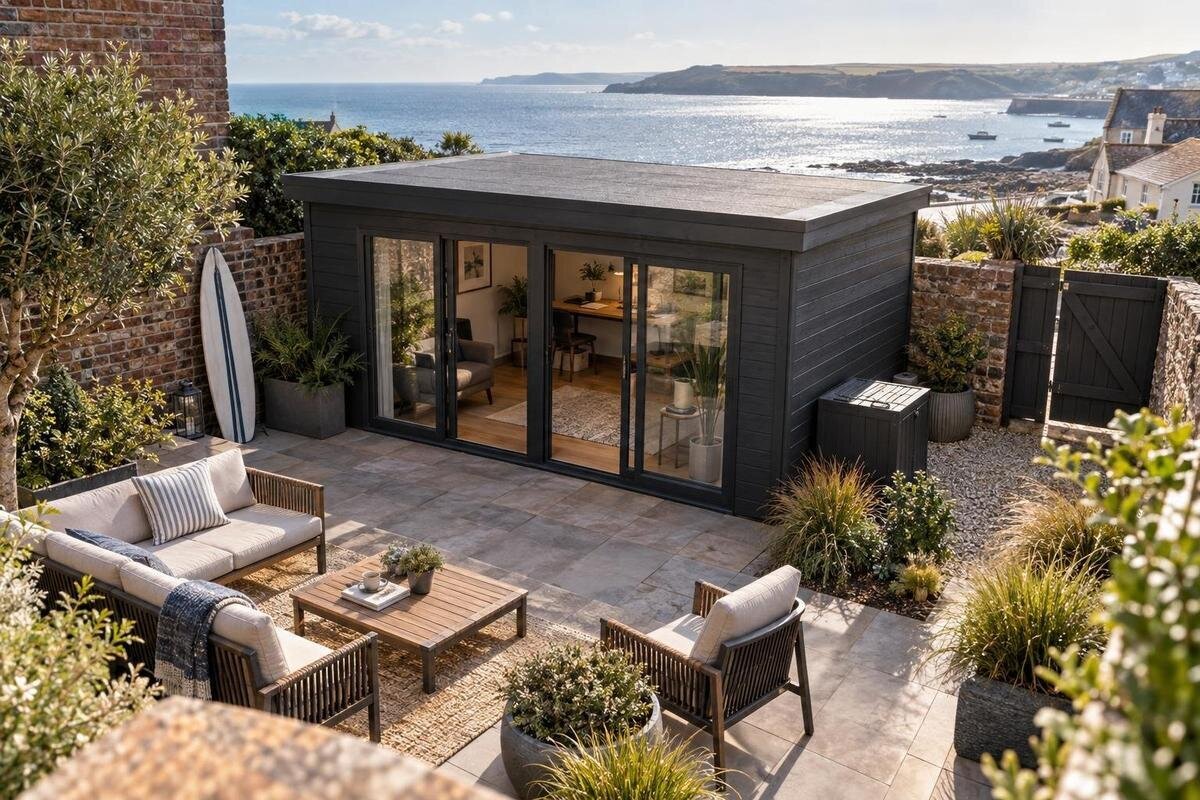
Buying guide
When buying a summer house for a coastal location, assess the conditions in the garden before choosing a design. Salt carried on the air, gusts, wind-driven rain and strong sun can affect where a building sits, which construction details matter and how much upkeep it needs. The postcode alone does not describe exposure: compare the actual site with product-specific guidance and get clear answers on wind limits, base requirements and maintenance before ordering.
How coastal exposure affects the choice
A seaside address can describe very different conditions. A plot behind buildings or established planting may receive little direct spray; an open, elevated garden facing prevailing weather may be exposed to stronger gusts, salt carried inland and frequent wind-driven rain. Distance from the shoreline is only one clue. Aspect, elevation, nearby buildings and the route wind takes through the garden all affect the proposed position. Salt exposure and wind exposure are related but not identical: a sheltered corner can still collect salt, while a windy spot may receive little direct spray. Consider occasional storms as well as the prevailing weather, and treat the garden’s microclimate—not the broad label coastal—as your starting point.
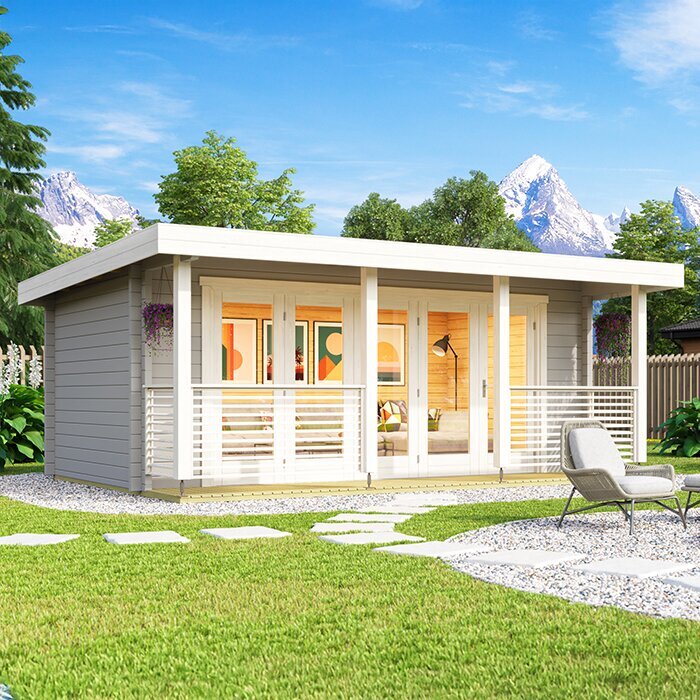
Turn that assessment into a shortlist of questions before comparing models: what materials are used, how are exposed surfaces and fixings protected, what wind limits apply, and which base and maintenance instructions are required? Add the Verdana 1 garden house listing as one candidate to assess against those points. Use its product information and ask the supplier to confirm anything missing in writing; the model name cannot answer questions about site suitability. Check whether any guidance covers the whole structure or only a component. Keep replies beside the listing so you can compare designs consistently, rather than relying on a photograph or a general weather-resistant claim.
Assess wind and salt exposure around the plot
Do not judge shelter on a calm day. Note which directions bring the strongest wind and rain, and where gusts funnel between a house, fence or outbuilding. A screen or hedge may reduce exposure in one area while leaving another open, and nearby structures can redirect air rather than block it evenly. Look for recurring salt deposits on nearby glass or metalwork, but treat them as clues rather than a precise measure of spray. Salt or moisture may also reach a proposed position through splash from exposed ground or paving. If practical, ask neighbours how the garden feels in rough weather; this can help distinguish a sheltered plot from one facing repeated wind and salt.
Mark two or three possible positions on a simple plan. Note which sides face the weather, what lies between them and the sea, and how much shelter is likely to remain when nearby trees lose their leaves. Include sunlight and everyday access, but do not rely on planting or a fence to compensate for a product without suitable wind guidance. Compare observations from more than one weather pattern if you can; a single calm visit can be misleading. Keep the Verdana 2 garden house page beside your site notes and check the documented details against each possible position. A sketch of walls, fences and taller trees can also help you explain the exposure when asking the supplier questions.
Choose a position with reliable drainage
First check where rainwater goes. Mark runoff from paving, higher ground, roofs and downpipes; a position that repeatedly collects water can keep the base and lower parts damp even when the wider garden dries quickly. Avoid locating the footprint where a downpipe discharges or water pools after rain. A sandy or gravelly surface is not proof that the ground will support a base evenly: soil, fill and buried services vary within a property. Leave access to inspect around the building, too, so that leaves or debris do not hide standing water. If the ground is uncertain, ask the installer to assess it and specify the required base instead of guessing from the surface.
Once the ground is understood, compare the actual footprint with the available space. Use the product’s stated dimensions, check whether they include roof projections, allow for the opening movement shown in its plan and leave room to inspect and maintain the walls. Ask the supplier which base the particular design requires and whether it needs to be level or prepared in a particular way; do not assume one base suits every summer house. For the Durano garden house listing, verify the published dimensions and base guidance before marking out a position, then discuss any uncertainty with a qualified installer.
Compare construction, finishes and fixings
Compare materials and treatments, not just colour or a broad material label. If the design uses timber, ask whether it arrives treated or unfinished, which faces and cut ends need protection, what coating system is compatible, and when that finish must be applied or renewed. Repeated wetting, drying and strong sun can affect timber, so a decorative finish at delivery does not remove the need to follow care instructions. Ask how a factory-applied protective treatment differs from a decorative coat, since they may need different care. For metal components, ask how panels, fasteners and fittings are protected from corrosion in salt-laden air. For synthetic parts, check guidance for sun exposure and cleaning.
Small details are worth checking in a seaside garden: exposed screw heads, hinges, handles, brackets and cut edges may need protection as well as the main surfaces. Ask whether the stated treatment covers these parts, how damage to a coating should be repaired and whether replacement fittings are specified. Find out whether the instructions cover cuts or scuffs made during assembly. Avoid treating terms such as stainless or weather-resistant as a complete answer without knowing what the maker recommends for the model. When reviewing the Veltor 1 garden house listing, record the actual construction and finish information supplied, then request details that are not clearly stated. This helps compare maintenance needs, not just appearance.
Check the roof and rainwater arrangements
Wind-driven rain can reach places that a sheltered garden never tests. Check what roof covering and edge details are included, whether any coating or periodic treatment is required, and how the supplier says rainwater should drain away. Ask how exposed joints and roof edges are maintained, and whether gutters or other drainage parts are included, optional or outside the supply. A roof that looks substantial in a photograph is not proof of performance in a gusty location. Use the product’s installation and care documents rather than appearance, and ask who should inspect or repair the roof if access would be difficult.
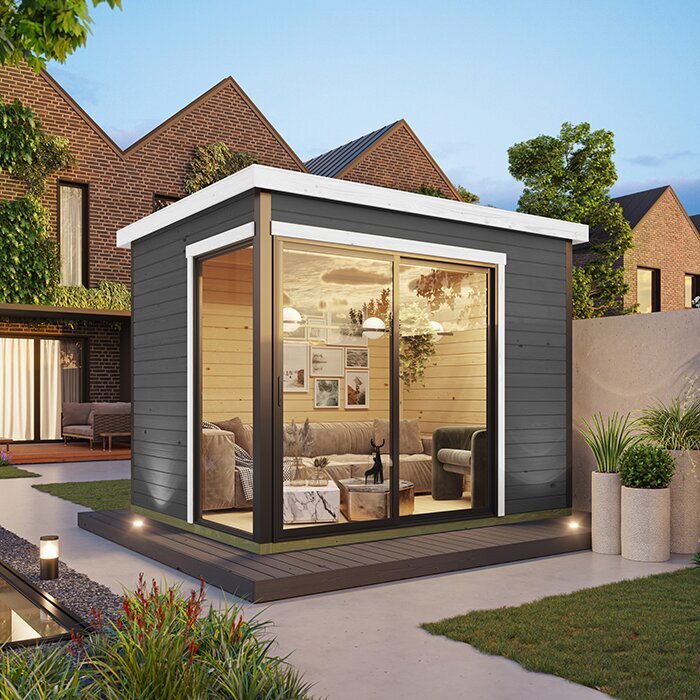
Plan where runoff will land before choosing the final position: water should not be directed towards the base, a neighbouring structure or an already wet corner. If a nearby building’s roof or downpipe may affect the site, include that when discussing drainage with the installer. For the Orello garden house listing, use the available product details to identify roof materials, finishing instructions and drainage provisions, then confirm any gaps with the supplier. Include future roof upkeep in your ownership estimate; the least visible parts can be awkward to reach once the house is in place.
Review doors, windows and other exposed fittings
Doors, windows and other moving parts face the same salt and moisture as walls, but their seals and mechanisms also need to work repeatedly. Ask what the frames, hinges, locks and handles are made from or protected with, and how to clean away salt or grit without damaging finishes. Where glazing is part of a design, check the published glass and frame information, maintenance instructions and arrangements for replacement if a pane is damaged. Check sill or threshold details and how water is intended to leave the opening; these matter in wind-driven rain. An attractive glazed front is not, by itself, evidence of a coastal performance rating.
Think about the direction each opening faces and whether it can be reached for cleaning and inspection. A door that opens into a path, fence or exposed corner may be inconvenient; a usable route makes routine care easier. Ask how openings should be secured in high winds, following the maker’s guidance. If you can inspect a display model, operate the fittings and look at the seals; otherwise request a drawing and care instructions. On the Modano 1 garden house page, check the opening and glazing details that are actually documented and note any unanswered questions for the supplier. Judge the model by information for its exact configuration, not by a photograph of a similar design.
Confirm wind limits and anchoring before paying
Ask for product-specific wind information before paying. Find out whether the supplier states a wind-exposure limit or test result, what parts of the structure it covers, and what assumptions it makes about the base, fixing system and installation. The walls, roof, openings and anchorage have to be considered together; changing a component or using an improvised fixing can affect the intended assembly. Ask whether the information applies to the exact configuration you plan to order. A fence or nearby building may offer some shelter, but it cannot establish a model’s rating. Do not estimate wind forces yourself from the building’s size or appearance. If the garden is unusually exposed, ask a qualified installer or relevant building professional to assess the site.
Request written confirmation that the exact model and proposed base are appropriate for the site, including any limits or conditions. Check what anchoring components are included, who supplies them and who is responsible for fitting them; a product listing may not answer every site-specific question. Before shortlisting the Veltor 2 garden house page, locate the model-specific assembly and wind guidance, and ask the supplier to clarify anything missing. If the product description and supplier’s advice differ, resolve that before ordering. Keep the response with the order paperwork so the agreed specification and responsibilities are clear.
Budget for coastal maintenance
Maintenance is part of the purchase, not an optional extra at the seaside. Salt deposits, damp, rain and strong sunlight can affect different components at different rates, so use the maker’s cleaning and inspection schedule rather than applying a generic interval to every material. Ask what to inspect on cladding, coatings, roof edges, seals and metal fittings, and what signs mean a repair is needed. Pay attention to lower edges and joints where moisture may linger. Follow the approved cleaning method; an abrasive tool or unsuitable cleaner can damage a finish. After severe weather, inspect accessible parts from a safe position and arrange professional attention if anything appears loose or damaged.
Turn the instructions into an estimate of work and materials: note which finishes need renewal, whether treatment is needed before assembly, what products are compatible and whether replacement parts can be identified. Ask who is responsible for applying any initial protection and what remains for you to do later. Use the Veltor 3 garden house page as one record in that comparison, requesting model-specific details where they are not published. Add cleaning and future coating work to the real cost of ownership, and consider whether you can reach the surfaces that need care. If you would not keep up with the stated routine, a more sheltered position may be preferable to relying on a finish you will not renew.
Resolve delivery, assembly and local restrictions
Delivery and assembly also need a coastal plan. Confirm the seller’s unloading requirements, what access the delivery vehicle needs and whether parts must be stored before assembly. A prepared base may be exposed to rain or salt while you wait, so ask how components should be protected and how long they can remain in storage under the stated conditions. Check whether packaging should be inspected or kept in place until assembly, following the supplier’s instructions. Do not assume packaging alone makes outdoor storage acceptable. Clarify what the order includes—unloading, assembly, finishing, drainage accessories and packaging removal—and which tasks require a separate installer.
Before committing, check whether any planning conditions, property restrictions or local designations affect the proposed building. Ask the relevant local planning authority or property manager what applies to your address; do not assume that a small garden building is automatically unrestricted. For an exposed site, agree in advance who will assess the ground, confirm the base requirements and fit the specified anchoring system, and make sure responsibilities are clear in the quote. If the supplier and installer give different advice on exposure, pause and resolve the difference before delivery.
Compare the full specification before ordering
Make a like-for-like comparison rather than judging by the headline description. For every candidate, record construction materials and treatment, roof and drainage details, any stated wind-exposure limits, the base and anchoring requirements, opening hardware and the maintenance schedule. Note whether each point is documented, needs confirmation or is unavailable. Compare the same configuration and ask which parts are included in the order, optional or supplied separately. This helps avoid overlooking a difference between a model description and the complete structure you will actually receive, and makes it easier to identify unanswered questions before you commit.
Then compare the answers with the position you can realistically use. A less exposed spot may reduce some weathering, but it should not be used to override a stated product limit. Include expected upkeep, any professional assessment and installation work in your budget without assuming a particular package or service is included. The right choice is one whose documented construction and installation requirements match the site, and whose care routine you are willing to maintain. If those conditions cannot be confirmed, keep looking rather than relying on appearance.
Frequently asked questions
Does a coastal garden rule out a timber summer house?
No. Timber is not automatically unsuitable, but the treatment, finish, exposed edges, fixings and maintenance instructions all matter. Ask for guidance for the exact model and the conditions at your site. If important details are unavailable, consider a more sheltered position or seek professional advice before ordering.
How close to the shoreline can I place a summer house?
There is no single distance that suits every garden. Wind direction, elevation, shelter, terrain and exposure to salt spray can make nearby sites very different. Ask the supplier about the exact model’s limits and have an unusually exposed site assessed by a qualified professional.
Can I rely on a weather-resistant description?
Not on its own. Ask what the description covers: materials, finishes, roof, openings, fixings, wind exposure or something else. Request the model-specific installation and care guidance, and clarify any limits or conditions with the supplier before you commit.
Which material is best for a seaside garden?
There is no universal answer. Timber, metal and synthetic components have different care needs and can respond differently to moisture, sun and salt. Compare the construction, protective treatments, fixings, cleaning instructions and replacement options for the complete model rather than choosing by material name alone.
What should I confirm with the supplier before ordering?
Ask for the exact model’s wind guidance, base and anchoring requirements, material and finish details, roof and drainage information, and maintenance instructions. Clarify what is included in the order, how components should be stored before assembly, and who is responsible for assessing the site and fitting the specified system.
Choosing a summer house for a seaside garden means balancing the exposure your plot actually receives, the information available for a particular design and the maintenance you are prepared to carry out. A sheltered, well-drained position can help, but it cannot replace product-specific wind and fixing guidance. Compare those points before ordering so your decision reflects both the site and the care the building will need over time.
