
Buying a Wood-Burning Sauna: Heater, Flue and Site Planning
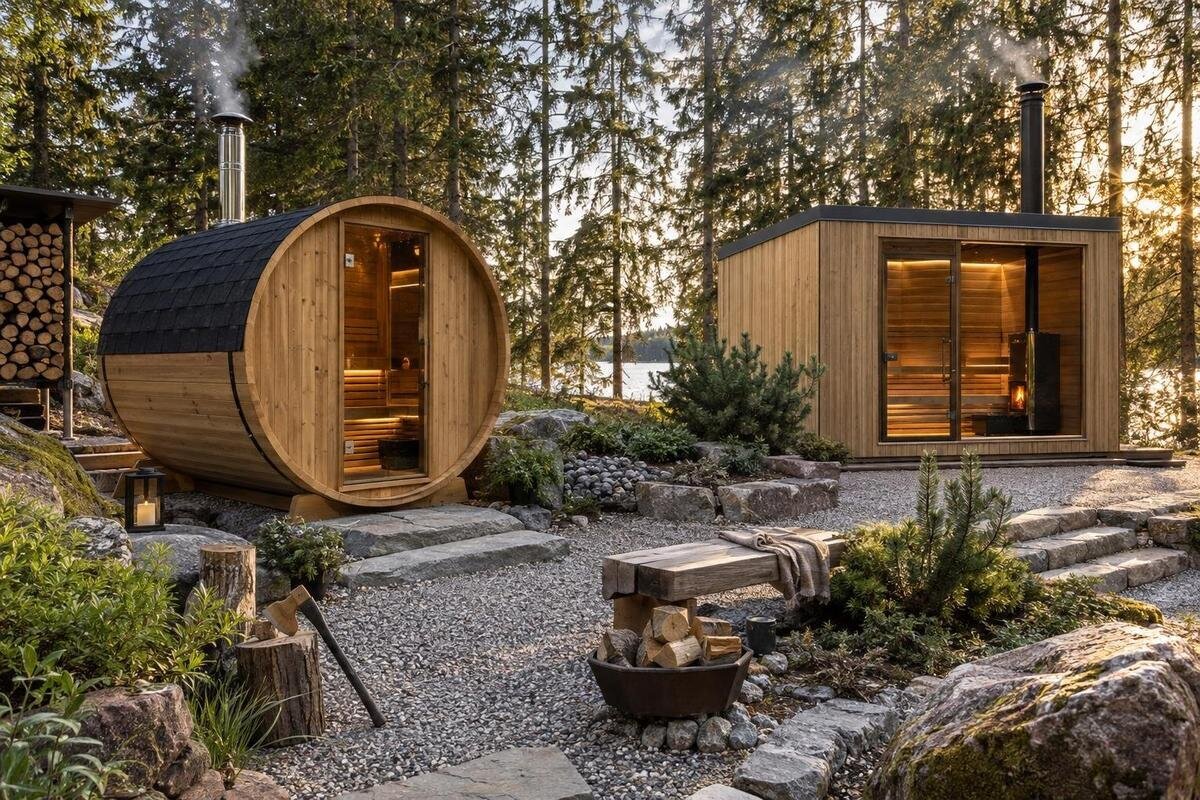
Sauna buying guide
Planning to buy a wood-burning sauna is not simply a choice between cabin designs. The sauna, heater, flue route and proposed site form one installation, and a mismatch in any part can change what you can order or where it can go. Before comparing models, find out which wood-burning heater the sauna manufacturer approves for the exact cabin, how its flue could reach a suitable outlet, and what the site allows. This guide covers the practical questions to resolve with the supplier and a qualified installer. It does not assume that a product listing includes a heater, flue or installation.
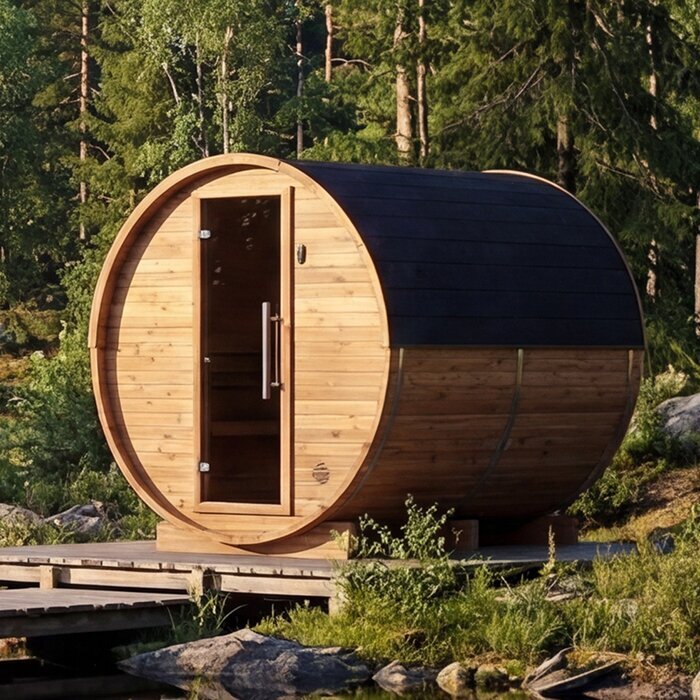
Is wood heat practical for your routine?
Wood heat suits buyers who are content to prepare fuel and tend a live fire in line with the heater’s instructions. Consider the whole routine: where suitable firewood will be stored, how you will carry it without blocking the entrance, who will tend the stove, and how you will handle ash and chimney upkeep. Estimate how often you expect to use the sauna and whether fuel will be easy to obtain. These tasks continue after installation, so include them in the purchase decision rather than judging only by the appearance of a wood burner. Choose a setup you can operate and maintain as specified.
Consider smoke and the operating setting, too. A garden site may feel secluded but still be close to open windows, neighbouring properties or outdoor seating; wind can affect where smoke travels. Have an installer consider the proposed outlet alongside those surroundings, rather than assuming that a cabin position which fits the available space also gives the flue a workable route. Think about access in poor weather, the path from fuel store to stove, and whether regular attention and maintenance fit how you plan to use the sauna. If practical fuel storage or a suitable flue route cannot be accommodated, reconsider the site or heating approach before comparing models.
Wood-burning heater compatibility
Do not assume that every sauna can take a wood-burning heater. The sauna manufacturer should identify a heater model approved for the exact cabin and provide installation information for that combination. A stove that fits physically may still be unsuitable if the cabin’s construction, layout, ventilation or specified clearances do not match the heater requirements. When reviewing the Thermowood Barrel Sauna S 140 listing, use the page to identify the cabin, then ask whether its manufacturer approves a wood-burning heater for that model. Get an answer for the configuration you plan to order, with the relevant documentation, before committing.
Read the package description line by line. Establish whether the sauna, heater, stove guard, hearth or heat-protection parts, flue components and ventilation provisions are included, optional or supplied by someone else. A photograph or a phrase such as heater available does not define the complete installation; request the exact heater model and a list of compatible flue parts. Find out who checks the sauna and stove instructions together, and whether the quoted work includes fitting. This matters when comparing products, because listings can leave different components or labour outside the purchase. Treat the setup as unresolved until you know what the complete installation requires.
Matching the heater to the cabin’s heated volume
Match the heater to the sauna’s heated internal volume, not its outside footprint or model name. Ask for the volume figure the manufacturer uses for heater selection and any assumptions behind its sizing guidance. The external length and diameter of a barrel-style cabin do not establish the volume by themselves. Glazing, openings, insulation or other configuration changes may affect the maker’s sizing method, so tell the supplier exactly what you plan to order. A broad capacity range shown for a heater is not a substitute for a recommendation covering that cabin and configuration. Avoid choosing a stove simply because its stated range seems close; have the recommendation checked against the relevant instructions.
For the HC 150 Thermowood Barrel Sauna listing, request the manufacturer’s stated heated volume and an approved wood-burning heater pairing; neither should be inferred from a product name or silhouette. If the seller suggests a substitute heater, ask for documentation that the sauna manufacturer accepts it and whether any associated flue parts, ventilation or protective arrangements change. Give this information to the installer before committing rather than buying a stove first and trying to make the cabin fit it. Keep the written recommendation with the order details so the approved combination remains clear if components are changed later.
Flue routing and the stove position
Work out where the stove can stand and how its flue could reach an appropriate outlet before buying the stove or flue components. The route may pass through a wall or roof, but it must follow the selected heater and flue system instructions and suit the materials along its path. A generic diagram, or the route that looks shortest on a sketch, does not establish that it will work at your property. Give a qualified installer the sauna layout, heater information and site plan so the actual route and possible conflicts can be assessed before you order. This may also affect where the cabin itself can sensibly sit.
Have the review include the flue terminal position, nearby openings and combustible surfaces, compatible components, and access for inspection and cleaning. Do not select diameter, height, bends or terminal details from generic online material; the chosen system and actual installation determine them. When checking the Thermowood Barrel Sauna HC 225 listing, use the exact cabin identity to ask whether your proposed site supports the heater’s specified flue arrangement. Clarify who supplies and fits each part, and who verifies the assembled route against the manufacturer’s instructions. Plan for future inspection access, rather than leaving it until after the cabin has been positioned.
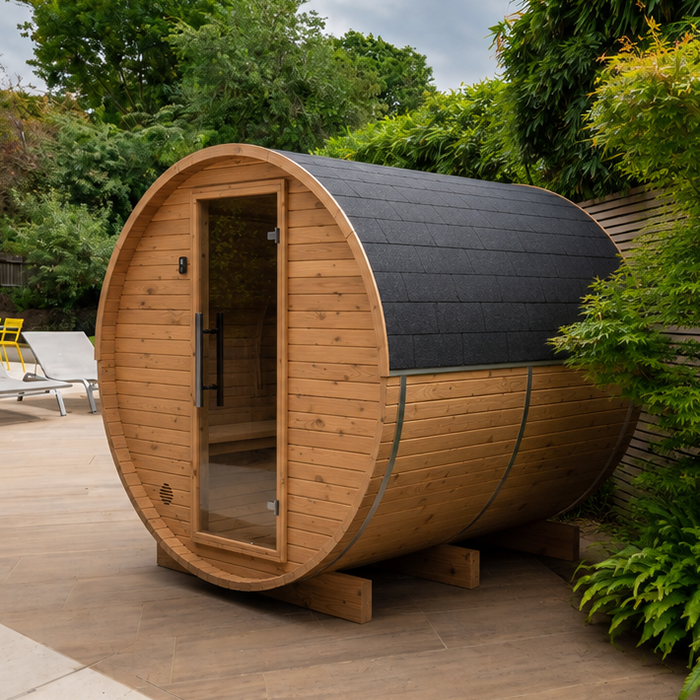
Site footprint, ground and surroundings
Walk the proposed site and note more than the area occupied by the sauna. Obtain the exact footprint and required installation clearances for the model, then allow for the entrance, stove tending and maintenance access. Establish whether a prepared base is needed, how the ground and drainage will be assessed, and where fuel can be stored without conflicting with the heater instructions. A simple plan with paths, doors, steps and site constraints is more useful than a photograph. Include the route from the property entrance to the final position. If ground conditions, drainage or base preparation are uncertain, have a suitable professional assess them instead of choosing an approach by assumption.
Buildings, fences, trees, overhanging branches, eaves, windows and neighbouring outdoor areas can affect a proposed flue position or the required clearances. Mark them on a sketch and give it to the installer with the heater and sauna information. Do not assume that the clearest corner of a garden is automatically suitable: smoke direction, openings, access and manufacturer requirements need to be considered together. For the Thermowood Barrel Sauna N 210 listing, request the exact model’s installation drawing and ask how it relates to your site layout. Confirm any local planning, fire-safety or smoke guidance with the relevant authority or a qualified professional before ordering.
Clearances, fire protection and safe access
Clearances and heat protection are part of heater compatibility, not cosmetic extras. The selected stove’s instructions should set out the required clearances and protective arrangements; have the sauna manufacturer and a qualified installer check these against the actual cabin construction. Request a layout showing the heater in relation to walls, benches, the entrance and flue, plus any specified hearth, guard or shielding. Do not infer that a decorative panel or improvised barrier provides adequate protection. Agree the complete arrangement before ordering parts, because changing the stove position can alter both the cabin layout and the flue route.
Think about safe day-to-day movement as well as the installation drawing. There should be practical room to load fuel, move around the stove, reach the entrance and carry out maintenance without blocking access or storing logs where the heater instructions prohibit them. Ask who will explain safe operation, ash handling and maintenance, and what fire-safety precautions or equipment the manufacturer recommends for the chosen arrangement. For the N 250 Thermowood Barrel Sauna listing, request the relevant layout and heater information instead of assuming a standard stove position or universal clearance. Do not plan the arrangement from a photograph alone.
Fuel, smoke and ongoing upkeep
Fuel is part of the purchase, not an occasional detail. Check the heater maker’s instructions for suitable fuel, any quality or storage requirements, and operating practices; do not burn treated or unsuitable material because it is convenient. Work out where fuel can be kept dry, whether it will be delivered or collected, how far it must be carried and whether the routine is practical for the expected frequency of use. Ask what ash handling and heater or flue inspection and cleaning involve. Include the recommended upkeep in your ownership budget, and obtain the relevant manuals before deciding that a particular stove will be straightforward to run.
Smoke is also a siting and neighbour consideration. Discuss the outlet position and surrounding openings with the installer, including windows, air intakes and neighbouring outdoor areas that could be affected. Check current local guidance or relevant restrictions with the appropriate authority before committing, rather than assuming a garden installation can be operated without constraints. If smoke cannot be directed acceptably or fuel storage is impractical, the site may not suit the routine you have in mind. Resolve that question before ordering the heater and cabin, not after the flue route has been chosen.
Delivery access and installation responsibilities
Access can delay a project even when the sauna appears to fit its final position. Ask how the sauna and heater will be delivered, how they are packed, whether assembly is included, and what the largest package dimensions and handling requirements are. Measure gates, turns, paths and any route under eaves or branches; note steps, slopes, soft ground or narrow passages that could affect moving items to the base. For the Thermowood Barrel Sauna LC 260 listing, obtain delivery and assembly information for that exact order rather than inferring it from the model name or an illustrative photograph. Check whether special handling equipment or a clear working area is needed.
Agree who is responsible for each stage: preparing the base, assembling the sauna, supplying and fitting the heater, providing and fitting the flue, and confirming the installation is ready to use. The retailer, sauna manufacturer and installer may have different roles, so do not assume a sauna purchase includes specialist stove or chimney work. Give the installer the chosen model details and manuals early enough to identify a conflict. Record what is included, who coordinates delivery and installation, what must be ready on site and who provides the handover and operating guidance. Written responsibilities make it easier to spot gaps before paying.
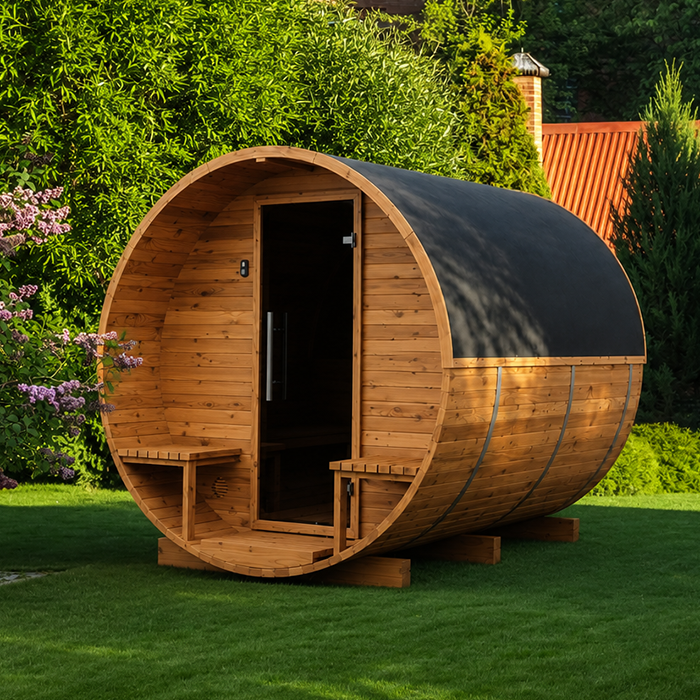
The full cost of a wood-fired setup
Compare the full project cost rather than a cabin price alone. A compatible stove, flue system, hearth or heat-protection items, base, ground preparation, delivery, assembly, installation labour and fuel storage may need separate allowances. Routine fuel, flue inspection or cleaning and general upkeep are ongoing costs, too. Ask for an itemised quote showing what is supplied and what is optional or excluded; do not assume that an advertised sauna price includes a wood-burning setup. The total depends on the exact cabin, route and site work, so obtain figures for your own plan rather than relying on a broad estimate.
Compare like with like: exact sauna and heater models, flue scope, preparation, delivery, and who supplies and fits each component. A lower initial quote can leave work unpriced, while a higher one may include items another supplier quotes separately; the line items matter more than a headline total. For the sauna listed as 6 89 m, use the product identity as a starting point and confirm current specifications, exclusions and delivery terms with the seller. Check whether a site visit or changes to the agreed route alter the quote, and keep it with your drawing so assumptions are visible before the order is confirmed.
Information to confirm before ordering
Bring the information that joins the sauna, stove, flue and site into one specification. The paperwork should name the exact sauna and heater models, confirm their approved compatibility, list package contents and identify the installation instructions that apply. Add the proposed cabin position and flue route, delivery access details, base requirements confirmed by the supplier or installer, and an itemised account of supply and fitting responsibilities. When reviewing the Thermowood Barrel Sauna HCF 225 listing, request those details for the exact model and intended heater; a listing title alone cannot establish compatibility. Keep the manuals and written answers together so the seller and installer are working from the same plan.
Resolve open issues in the order they can affect one another: the confirmed heater informs the flue system, the route and clearances affect cabin position, and the chosen site affects delivery and installation. If the supplier cannot confirm compatibility or the installer cannot assess a workable route from the available drawings, pause rather than choosing components by guesswork. Confirm what is included, who will complete the work and what must be ready on delivery day. If you later change the sauna or stove, repeat the compatibility and route check; an earlier answer may no longer apply. This gives you a clear basis for confirming the order.
Frequently asked questions
Can I add a wood-burning heater to any sauna?
No. The sauna manufacturer should approve a particular wood-burning heater for the exact cabin and provide the relevant installation information. Physical space around a stove is not enough: construction, layout, ventilation, clearances and the paired flue system also matter. Get confirmation for the model and configuration before buying either component.
Does a wood-burning sauna always include a flue?
Package contents vary, and the flue system must suit both the selected heater and its proposed route. Check the exact list of supplied parts, including any guard or heat-protection items, and establish who specifies, supplies and fits the rest. Do not infer what is included from a product photograph.
How do I choose the right size of wood-burning heater?
Use the sauna manufacturer’s stated heated internal volume and sizing guidance for the precise cabin configuration. Have the recommended heater checked against the manufacturer’s instructions and the proposed installation. Do not calculate from external dimensions or choose from a generic capacity range alone; tell the supplier about any planned changes to the cabin.
Can the flue go through a wall instead of the roof?
Possibly, but there is no universal route. The appropriate arrangement depends on the heater and flue system, the building materials, the site and the manufacturers’ instructions. Give a qualified installer the cabin drawings and site plan before buying flue components; a generic diagram cannot confirm what will work at your property.
What should I confirm before placing an order?
Have the exact sauna and heater models, written compatibility information, a proposed flue route and a site-access sketch ready. Confirm package contents, delivery arrangements and who handles the base, assembly, heater and flue installation. If compatibility or the proposed route is still unresolved, pause the order until the supplier or installer can assess it.
A wood-burning sauna is a considered purchase because the cabin, stove, flue and site have to work together, even when several suppliers are involved. Compare named components and written requirements, not just cabin appearance or headline price. When the manufacturer-backed heater match, proposed flue route and site have all been assessed, you can decide whether the setup suits the property and the way you intend to use it. If one of those pieces remains uncertain, keep the order open until it is resolved.
