
Buying an Outdoor Sauna: A First-Time Buyer’s Guide
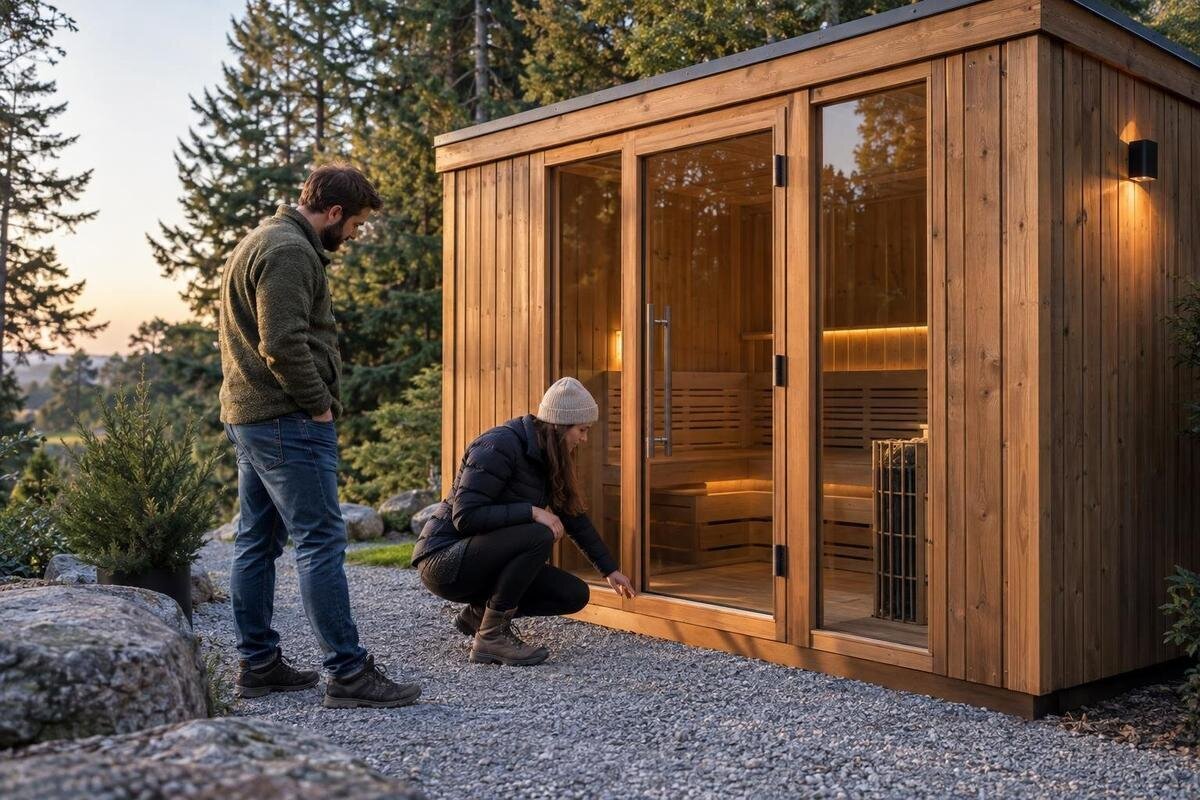
OUTDOOR SAUNA BUYING GUIDE
An outdoor sauna can become a regular part of home life, but buying one involves more than choosing a shape from a photograph. The right choice depends on who will use it, how much room the interior needs, how the heater can be accommodated and whether the garden can take the structure and its installation. This guide covers the main points to compare before you commit. Product names do not tell you a sauna’s capacity, full dimensions or installation requirements, so base decisions on stated specifications and ask about anything that remains unclear.
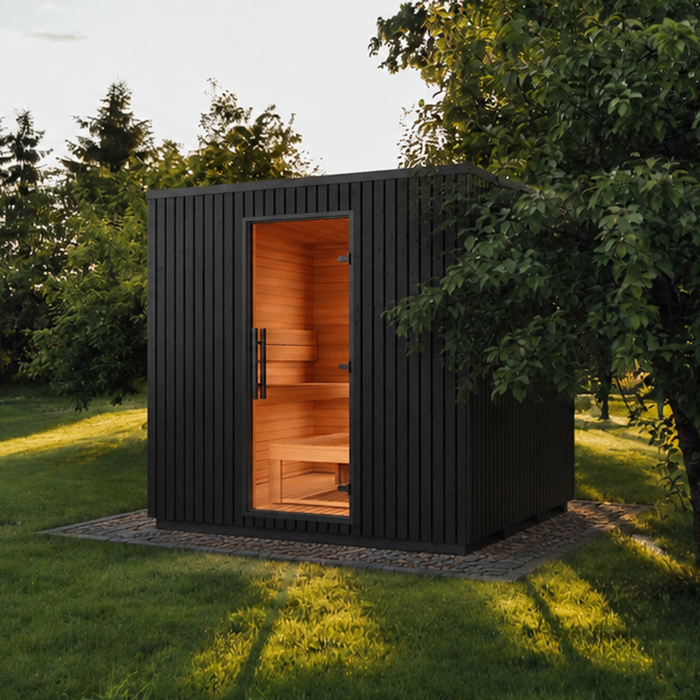
How you expect to use the sauna
Begin by picturing an ordinary visit, not the maximum number of people a brochure might mention. Will you usually use the sauna alone, with one other person, or with several household members? Is room to stretch out more important than adding another seat? Do you expect to invite guests, and if so, how often? These answers help you decide what capacity actually means for you. A stated maximum occupancy is not the same as room for everyone to sit comfortably, and a generous external outline may still enclose a more compact seating area. Settle the normal use pattern before comparing model names or exterior styles.
Include the approach and the rest of the visit in that picture. A place to change, store towels and footwear, or sit outside afterwards may be separate from the sauna but still take up garden space. Consider how often you will use it, when people are likely to arrive and whether the route from the house is practical in those circumstances. If people with different mobility or comfort needs will use it, note what matters to them, such as an easy entry, a particular bench arrangement or room to reposition. This gives you a clear brief to test against product dimensions and plans, rather than relying on appearance alone.
Choose capacity by the usable interior
Compare usable interior measurements, not just the length, width or overall footprint shown in a headline. Ask for internal dimensions and a bench plan, then check bench length and depth, the space between benches if there are two levels, and how much floor area remains for entry and movement. A nominal seat count may involve close seating; it does not tell you whether your household will find that arrangement comfortable. Decide whether everyone should sit, whether anyone needs room to lie down and whether the sauna will commonly be used by different group sizes. Put those needs beside the drawing rather than judging from a photograph.
Check how the door opens and where people step after entering, because these details affect the usable layout. A bench may be long enough on paper yet awkward for the people who need to reach it; in a smaller model, circulation space can matter as much as an extra seat. When comparing a listing such as Thermowood Barrel Sauna S 140, look for stated capacity and internal measurements, if provided, and ask for clarification where they are absent. Do not treat a model name or photograph as proof of occupancy. Use any supplied plan to check the route into the sauna and whether the arrangement works for the people who will use it most.
Compare the shape and the internal layout
Barrel and cabin-shaped saunas raise different planning questions, but shape alone does not determine which is better. A barrel profile has a curved wall, so the relationship between the bench, side wall and floor can differ from that in a design with more upright walls. Cabin-shaped units vary too, and neither outline tells you by itself how many people fit or where the benches sit. Compare the internal plan alongside the external proportions. Consider whether the sauna’s length and width suit the garden, how the entrance is oriented and whether its outline works with nearby paths and boundaries. Do not assume that a particular shape guarantees a certain heating result or level of comfort.
Read the product drawing for bench position, door position and internal room; if no drawing is available, ask for one before relying on a visual. For a listing such as the HC 150 Thermowood Barrel Sauna, check its stated dimensions and plan rather than guessing from the name. Consider the footprint from the viewpoint you will see most often, too: a compact-looking side profile may still be long in the garden, while a wider outline could affect where a path or seating area fits. Mark the proposed outer footprint and door approach on a simple site sketch so you can compare it with the space you actually have.
Choose a heating approach that suits the site
Choose a heating approach with the location and your preferred routine in mind. Electric and wood-fired heaters bring different practical requirements: an electric option depends on a suitable supply and correct installation, while a wood-fired option involves a compatible stove and flue, fuel storage, ash handling and attention to the manufacturer’s safety requirements. Not every sauna can accept every heater, so do not assume you can select one separately after buying the structure. Consider how you want to operate it, what services already reach the site and how much preparation you are willing to take on. This is a suitability decision, not a claim that one system is universally better.
Before comparing models, establish whether the heater is included, which type is specified, what controls come with it and what work is needed to connect or install it. If a product description leaves any of those points unclear, ask for details and the manufacturer’s installation requirements. Have a suitably qualified electrician assess proposed electrical work. For a wood-fired system, ask the manufacturer and a qualified installer about the compatible unit, flue route and required clearances; do not copy instructions intended for another model. Treat the Thermowood Barrel Sauna HC 225 as a candidate only once the heater information for that specific sauna is clear.
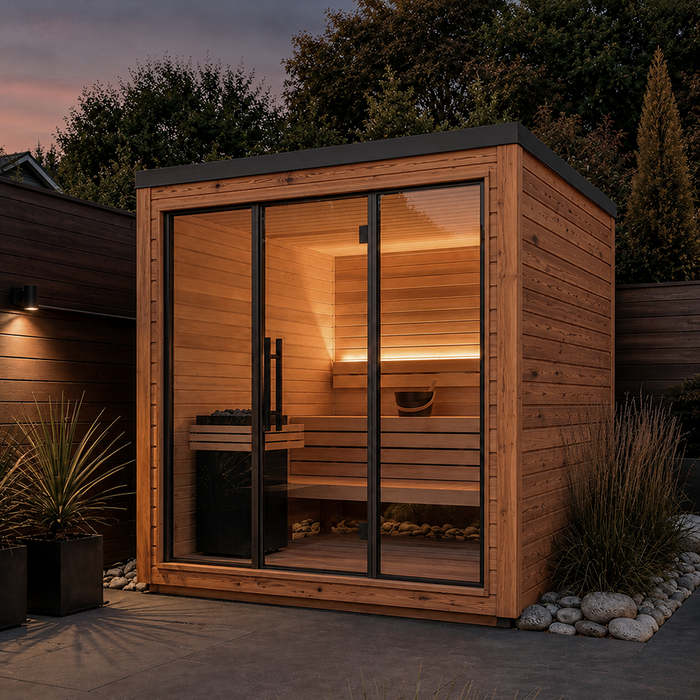
Check the footprint, base and site requirements
Measure the actual space before choosing a footprint. Use the manufacturer’s external dimensions, including any listed projections, and mark the outline on the ground; then allow for the working room needed at the entrance and the access space specified in the installation instructions. Include boundaries, gates, paths, windows, sheds and garden furniture on your sketch. Check the door’s opening direction and whether anyone can approach and leave without squeezing past a wall or stored items. A model that fits inside a boundary may still be awkward to reach, assemble or use. Do not infer its size from a code or image; use the measurements for the specific sauna.
Ask what kind of base or supporting surface the exact model requires and whether the site needs particular preparation. Do not assume that a patio, lawn or existing hardstanding is suitable just because it looks level; requirements depend on the sauna and installation. Check how rainwater runs across the area, whether water from nearby roofs or taps could affect it, and whether an installer can reach the site safely. If the ground is uneven or the support is uncertain, ask for the written requirements and have a qualified installer assess the location rather than using a generic rule. If you are unsure whether local permissions or other requirements apply, check with the relevant local authority. For Thermowood Barrel Sauna N 210, use its exact dimensions and installation information, not the model code, to assess the site.
Plan delivery and assembly around the access route
A sauna can be difficult to get into a garden even when the final position is spacious. Measure the route from the delivery point to the site: gate width and height, turns, steps, narrow passages, low branches and changes in level can all affect access. Ask whether the sauna arrives assembled, partly assembled or as a kit, and request the dimensions of the items that must pass through the route. The listed exterior size is not necessarily the delivery package size. Clarify where the goods will be left, whether unloading or moving them to the chosen position is included, and whether access restrictions affect the arrangement. Do not assume that lifting equipment or movement beyond a stated delivery point is provided.
Clarify who is responsible for assembly, what any installation service includes, and whether base preparation, heater connections and finishing the surrounding area are separate tasks. Ask what tools, access and assistance are expected from you; these details can change the practicality and overall cost of the purchase. Find out how components should be protected before assembly, following the manufacturer’s instructions. If a listing does not explain packaging, assembly or installation, ask before ordering rather than interpreting photographs as a promise of what is included. For the N 250 Thermowood Barrel Sauna listing, check the specific delivery and assembly terms and confirm anything that remains uncertain.
Choose a position that works in everyday conditions
Think about the sauna’s position as part of the garden rather than treating it as an isolated object. Consider privacy from nearby windows and paths, the view from inside and outside, and whether the route is practical at the times it may be used. Keep the entrance accessible; a cramped step-off or a path that is often obstructed can undermine an otherwise suitable layout. Allow room for any separate changing or resting space you plan to use. If the chosen heater produces smoke or requires a flue, consider the surroundings and have the position assessed against the manufacturer’s instructions by a suitably qualified installer. Do not decide clearances by guesswork or by copying another garden’s arrangement.
Consider weather exposure and ongoing access. The manufacturer’s information should explain what outdoor conditions the sauna is designed for and what care it needs; do not assume every sauna intended for outdoor use can be placed in any exposed position without preparation. Check that you can reach the parts that need routine attention and that nearby plants, stored items or planned landscaping will not block access. Think about runoff from surrounding surfaces and whether fallen leaves or garden work could affect the approach, without treating any one orientation as a universal answer. A convenient position balances privacy, access, maintenance and the installation requirements for the specific model.
Understand the materials and maintenance
Compare materials by asking what is used in the exterior, interior, benches and finish, rather than treating a product title as a complete specification. Wood species, surface treatment and supplied coatings can affect appearance and care, but a name alone does not establish how a particular item has been made or finished. Ask which surfaces are treated, whether treatment is supplied or expected to be applied later, and what cleaning methods the manufacturer recommends. Check whether the care instructions distinguish interior cleaning from exterior maintenance. Avoid relying on broad claims such as maintenance-free without product-specific information about the construction and finish.
Before buying, read the care guidance for the exact model and consider whether you can carry it out. Find out how to keep the interior clean, how to care for the exterior finish, whether periodic inspection is recommended and how to deal with wear or damaged parts. Ask what aftercare information and replacement components are available, without assuming that a generic manual applies to every design. A title such as Thermowood Barrel Sauna LC 260 contains a material term, but the title alone does not explain the full construction, finish or maintenance schedule. Confirm those details in the product information or documentation, then compare the likely tasks rather than relying on an unverified lifespan or performance claim.
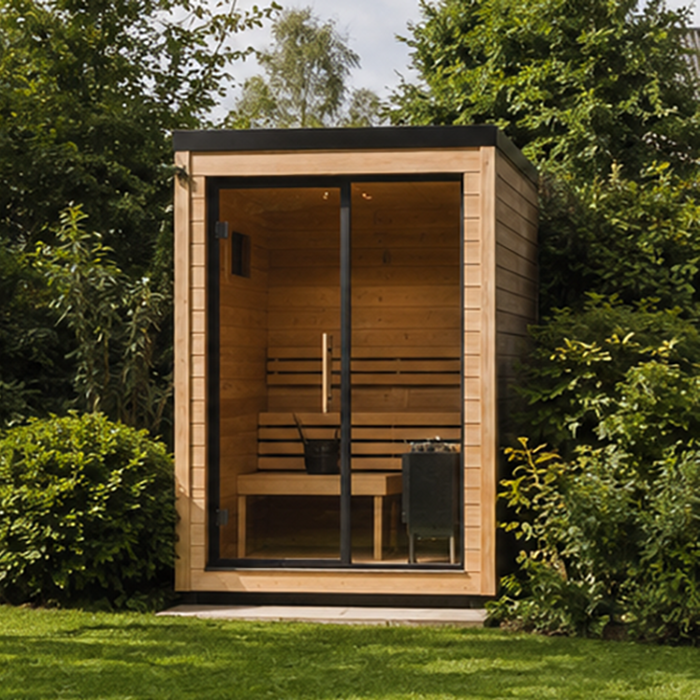
Compare the full cost of buying and using it
Compare the complete cost of getting the sauna ready to use, not just the headline price. Depending on the model and site, your budget may need to include a heater if it is not supplied, base preparation, electrical work or other professional installation, assembly, delivery and any accessories you actually want. Ask what is included in the package and what is optional; similar-looking listings may bundle different items. Include any costs the seller identifies as necessary for the chosen installation, and separate those from extras that simply improve convenience or appearance. You do not need to buy every accessory shown in a photograph, but you do need a realistic view of the essential outlay before committing.
Look beyond installation to the ongoing costs of use and care. A wood-fired setup may involve buying and storing fuel; with an electric option, ask a professional about any connection work rather than estimating it from a product image. Include cleaning and the maintenance described by the manufacturer, but do not assign costs or intervals where the seller has not provided them. Compare options using the same assumptions for package contents, heater, delivery, installation, base and required accessories. If a product title is unusual, as with the sauna listing labelled 6 89 m, treat it as a name, not a dimension, and compare its confirmed package details. A simple total-cost table can show whether two quotes cover comparable purchases.
Make a shortlist using confirmed details
Once the garden, capacity and heating choices are clear, reduce the options to a shortlist and compare like with like. Record each model’s overall dimensions, usable interior, seat arrangement, entrance position, heater type and what is included, together with its site requirements and documented assembly method. Add delivery access, care information and the costs of essential work. Mark facts that are missing instead of filling gaps from photographs or a model number. If the seller cannot confirm a point that affects fit or safe installation, pause the comparison until the relevant information is available. A short table is more useful than relying on memory after viewing several product pages.
Separate non-negotiables from preferences. Non-negotiables might be that the sauna fits through the access route, has enough usable bench space for its regular users and can be installed in line with the manufacturer’s requirements. Preferences might include a particular outline or finish. Assess the Thermowood Barrel Sauna HCF 225 and any other candidate against the same criteria, not assumptions drawn from its title. Before placing an order, make sure the specification, package contents and installation responsibilities match what you understood; keep written answers to important questions. This turns a broad choice into a reasoned decision without requiring every model to offer the same kind of experience.
Frequently asked questions
How do I choose the right size outdoor sauna?
Start with the number of people who will use it on a typical visit, then compare the manufacturer’s stated capacity with the usable bench dimensions and internal plan. Consider whether anyone needs room to recline. An external footprint or model name alone cannot tell you how comfortable the seating will be.
Is a barrel sauna better than a cabin-shaped sauna?
Neither shape is automatically better. Compare the actual footprint, interior layout, bench positions and entrance for each model. The shape can affect how the space is arranged, but it does not establish capacity or suit every garden; use the product’s measurements and drawings where available.
Can I put an outdoor sauna on an existing patio?
It depends on the sauna’s requirements and the site. Get the manufacturer’s written instructions for the base or supporting surface, and ask a qualified installer to assess the patio and location. Do not assume that paving is suitable simply because it looks level.
Can I install an outdoor sauna myself?
Assembly and installation requirements vary. Ask who is responsible for assembly and exactly what any installation service includes. Heater connections, a wood-fired stove and flue, or site preparation may require professional input. Follow the instructions for the specific model and consult a suitably qualified professional about relevant work.
Do I need planning permission for an outdoor sauna?
There is no single answer that applies to every property and installation. Before ordering, ask your local planning authority or a suitably qualified professional what permissions or other checks may apply to your particular proposal. Do not assume that the label outdoor sauna settles the question.
An outdoor sauna is a more considered first purchase when its interior suits everyday users, its footprint works on the site and its heater and installation needs are understood before ordering. Give as much attention to the route, base, package and care information as to appearance. Where product details remain unclear, get specific answers and compare confirmed facts. That way, your choice is not simply attractive on a page; it is a practical fit for the garden and the way you plan to use it.
