
Buying Windows Online: How to Check the Supplier Before You Order

UK window buying guide
An online window purchase often becomes difficult not at checkout, but when the existing openings, installer’s sequence and made-to-order specification finally meet. A replacement project may involve occupied rooms, restricted driveway access, scaffold, temporary weather protection and a narrow fitting window. That makes the supplier’s process as important as the appearance of the products. Before requesting a price, assemble an opening schedule and decide who will measure, who will install and who can approve technical choices. Then use the website, quotation and support team to test whether the supplier can turn that information into a clear order. The aim is not to resolve every site question remotely. It is to expose assumptions early, obtain answers that can be checked and avoid treating a gallery image or product title as the complete specification.

01 / Plan each opening
Begin with the retrofit plan, not the catalogue
Start at the property. List every opening by room, note whether it is a replacement or a new opening, and describe what the unit must do. A bathroom window may need accessible everyday ventilation; a stairwell unit may primarily provide daylight; a rear door must work around furniture and the outside route. Photograph each opening from inside and outside, including reveals, sills and nearby obstacles. Note upper floors, narrow passages, parking limits and any restricted unloading area. This information does not replace a survey, but it gives the supplier and installer one shared project map rather than a loose collection of dimensions.
Separate the schedule into fixed units, opening windows, entrance doors and patio doors. A fixed non-opening window describes a non-opening configuration, but the order still needs the applicable dimensions and selections confirmed. For an opening unit, record the intended operation, handle reach and clearance around the sash. For a door, sketch the direction of travel and usable standing space on both sides. Give each opening a unique code, such as Kitchen W1 or Rear Door D1, and use it on photographs, drawings and quotations. A supplier’s replies become much easier to audit when every choice relates to a recognisable place and purpose.
Verify the business before judging the brochure
Look for a coherent business identity before comparing styles. The legal or trading details, address, telephone number, email route, quotation and payment request should identify the same seller. Keep complete quotations, emails and revised drawings in one dated project folder. If a representative contacts you from an unfamiliar address or sends different payment instructions, verify the message through the supplier’s published contact route. Ask which team handles product questions, order administration, delivery arrangements and concerns after arrival. A credible process should show where responsibility moves, rather than leaving one salesperson as the only route for every stage.
Test the contact process with one focused question. Ask which dimensional reference the supplier requires, how opening direction is viewed in its documents, or what information is needed for an awkward upper-floor opening. Judge the substance of the reply rather than speed alone. A useful answer distinguishes confirmed information from an assumption and identifies what remains to be supplied. Ask how quotation revisions are controlled and whether superseded versions are clearly marked. If a supplier cannot connect a response to your unit code or current drawing, an apparently helpful conversation may still leave the production instruction uncertain. Written clarity matters more than broad reassurance.
02 / Verify the seller
Treat each product page as a starting point
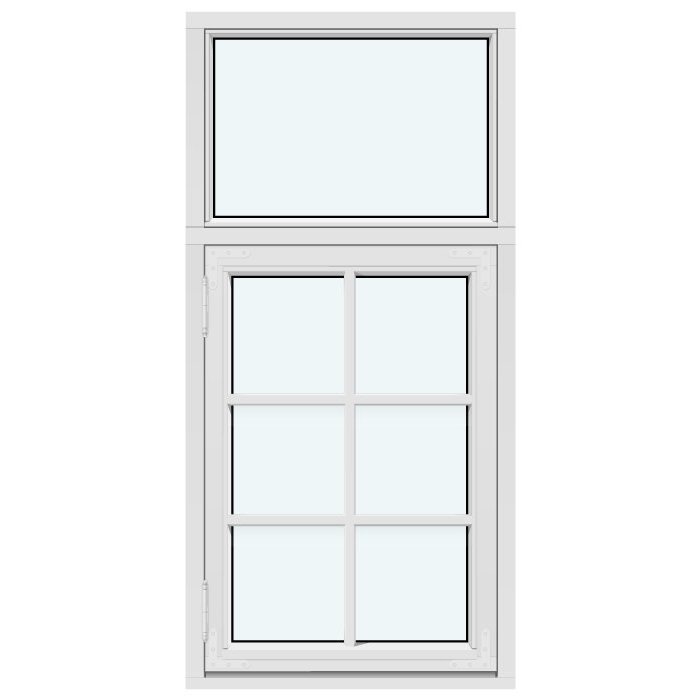
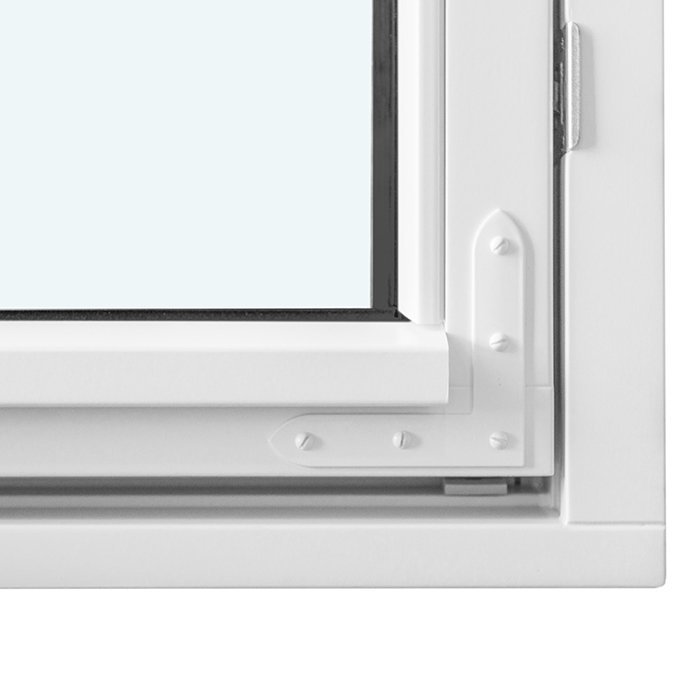
A product title establishes the named configuration, while photographs illustrate a presentation of it. Neither alone settles every choice for your opening. Read the page for the format and operation actually described, then list what still needs confirmation. Depending on the product, this could include ordered size, orientation, external and internal appearance, glazing arrangement, finish, handle, threshold or accessories. Do not assume that a visual detail shown in one image is automatically included. If bars matter, ask whether they are decorative bars or glass-dividing bars, how their layout is recorded and whether the order drawing reflects the elevation you expect.
Shape requires the same discipline. A round fixed non-opening window identifies a round fixed design, while a fixed triangular and angled non-opening window identifies an angled fixed format. Neither title determines your site dimensions, surrounding construction or chosen appearance. Ask for documentation in which the shape, orientation and measurement references can be checked against your schedule. For an asymmetric unit, confirm what the supplier means by left, right, top and bottom. Review shaped products separately from nearby rectangles instead of copying selections across. Also ask which document prevails if the webpage, an email, the quotation and a later drawing do not say precisely the same thing.
Make measurement responsibility explicit
Establish who takes the final dimensions and who accepts responsibility for them. Homeowner measurements may be adequate for an initial budget, while an installer or surveyor may need to verify the opening, levels, reveals and fitting allowances before the order is released. Ask exactly how dimensions must be expressed: what width and height refer to, where they are measured and whether the figure represents the product size or another reference. Do not round measurements or presume that two similar-looking openings are identical. Record every figure against its unit code, include the date and identify whether it is preliminary, checked or approved.
Dimensions cannot describe the whole opening. Tell the installer and supplier about uneven masonry, internal linings, external finishes, cills, drainage arrangements, structural alterations and anything else that may affect fitting. Ask which details are needed for quotation and which must be resolved before order confirmation. Agree how a discrepancy between an early schedule and the final site check will be documented. A sound online process does not pretend that photographs settle every site condition. It separates indicative information from approved information, names the person authorised to sign off the schedule and attaches any revised measurement sheet to the final order rather than leaving it in a separate conversation.
03 / Check every detail
Check operation at the actual opening
Opening terminology needs a physical test. Use the viewing side defined by the supplier and trace the proposed movement with masking tape or cardboard. Check curtains, blinds, radiators, taps, furniture and handle reach indoors, then paths, bins, planting and other obstructions outside. An outward-opening sash protects indoor space but requires a clear external arc; an inward-opening sash transfers the clearance requirement indoors. Ask how the supplier records handing and whether its drawing is viewed from inside or outside. Repeat that convention in the wording used on the order rather than relying on familiar labels that different companies may interpret differently.
Compare plausible formats by use, not appearance alone. A top-hung outward-opening window names one outward-opening arrangement, whereas a single-sash outward-opening side-hung window names a side-hung alternative. Confirm all project-specific dimensions and selections separately. Consider whether the user can reach the handle, control the opening and access the unit for routine cleaning. Check exposure and the space available for the sash without assuming one operation is universally preferable. For doors with more than one leaf, ask the supplier to mark the everyday traffic leaf and the action of the secondary leaf on the final documentation. Test the fully open positions against both the room plan and outside route.
Use drawings to coordinate function and appearance
Review a drawing against both the elevation and the room. Check the number and arrangement of panes, opening and fixed portions, mullion positions, decorative bars and relationships between adjoining units. Match every drawing code to the opening schedule. A Kombi combination window is identified by its combination format, but the buyer still needs to confirm which portions open and how the selected arrangement appears in the order documentation. If a photograph, quotation and drawing use different terms, ask for an explanation before approval. The drawing should provide a practical way to find a mismatch; it should not simply become another document signed without comparison.
Judge visual choices from normal viewing positions. Look at the proposed divisions from the garden or pavement and from where the window will most often be seen inside. A narrow opening portion can change the balance of a bay, while bars can alter the rhythm across an elevation. Record which features need to align with neighbouring units and which may differ because the rooms serve different functions. Do not infer that surrounding trims, finishes or construction details shown in a photograph are part of the product. For a traditional appearance, request the exact drawing and written description of the selected layout, then let the installer review how it meets the existing opening.
04 / Approve the order
Demand a quotation you can audit line by line
A useful quotation lets you reconcile every line with one opening. Check product type, quantity, dimensional reference, operation, opening direction, configuration, appearance selections and stated accessories. Ask for an undecided item to be marked as outstanding rather than silently assumed. Identify whether the quotation is supply only and what services or site work are excluded. Removal, making good, installation, access equipment and disposal should not be treated as included unless the documentation says so. Compare competing quotations by scope before comparing totals; a lower figure may represent a different measurement basis, configuration or division of responsibility.
Pay particular attention to large doors because small wording differences can affect circulation. A Patio Life side-sliding patio door is identified as a side-sliding configuration, but its ordered dimensions, selections and panel movement still need written confirmation. Ask how the direction of movement is represented and whether that convention remains consistent between the quote and drawing. Check any entrance-door swing against the approach route and interior layout. Whenever a material choice changes, request a revised quotation or order document and compare its date and revision number with the previous version. A telephone conversation may explain a point, but the final written order must record the agreed result.
Test support before you need a remedy
Ask how changes are requested, when they cease to be possible and whether each accepted change produces a revised confirmation. Use a realistic query from your schedule, such as an opening-direction concern or a discrepancy between drawing and quote. A controlled response should refer to the relevant unit and explain what document will change. Save that answer with the current order papers. The purpose is not to demand instant certainty from every contact. It is to see whether sales, order processing and technical support can preserve the detail as the enquiry develops. Record any answer conditional on a survey, installer check or new drawing and close the condition before approval.
Clarify which documents accompany the order and what you should retain afterwards. Ask how to report missing items, visible transport concerns or an apparent discrepancy on arrival, including which photographs, labels and order identifiers the supplier needs. Plan to inspect the delivery methodically with the installer where practical, retaining packaging and labels until contents have been checked. Bloomcabin states a five-year warranty for windows and doors. Request the applicable written warranty terms and claim procedure before ordering, so you understand the scope, records and contact route rather than relying on the duration alone. A supplier check should include the process followed when something needs investigation.
05 / Coordinate delivery
Coordinate payment, delivery and site access
A delivery estimate only helps if the site can receive the order. Discuss the address, vehicle access, unloading point, storage area, lifting needs and who will be present. Large units may require a planned route from the kerb to the fitting area; upper floors, narrow halls and exposed storage can alter the installer’s sequence. Ask when delivery arrangements become confirmed, who communicates changes and whether a packing list will identify each unit. Bloomcabin states delivery in four to six weeks, subject to order confirmation. Confirm the timing for your specific order before coordinating scaffold, trades or removal work around it.
Read payment terms before money is due, and confirm that the payee matches the supplier identity already checked. Retain the accepted quote, order confirmation and payment reference together. Do not schedule irreversible site work around an assumed arrival date. Agree with the installer when openings will be prepared, how products will be protected before fitting and what happens if delivery and site readiness diverge. Nominate someone to check labels and unit codes against the opening schedule as goods arrive. This prevents a correct unit being moved to the wrong room and helps identify a discrepancy before unpacking, movement or installation makes the sequence harder to reconstruct.
Bring the installer into the decision early
The online supplier and local installer perform different roles, so define the boundary between them. Ask the installer to review the opening schedule, proposed drawings, access plan and fitting sequence before approval. They can identify questions about existing reveals, tolerances, weather protection, lifting and finishing that a product page cannot answer. Give them the same revisions of the quote and drawings that you plan to approve, not isolated screenshots without unit codes. If the installer recommends a change, send it to the supplier in writing and obtain revised order information. Private notes on a printed drawing do not alter the supplier’s production record.
Collaboration is particularly important for doors affecting circulation. An outward-opening bifold door names an outward-opening bifold configuration, but its ordered arrangement, dimensions and site interface require project-specific confirmation. Walk through furniture positions, outside levels and the route available when the leaves are open. Where a project involves unusual openings, difficult roof access or alterations to the building fabric, seek advice from the appropriate qualified professional. The supplier’s contribution is clear product and order information; the installer’s is a realistic site and fitting plan. When both work from the same controlled documents, you have a firmer basis for approving an online order.
Frequently asked questions
What should I send an online window supplier for an initial quote?
Send an opening schedule with room codes, approximate dimensions, photographs from both sides, intended operation and access notes. State whether measurements are preliminary or checked. Include relevant drawings for new openings where available. Ask what additional information is required before order confirmation; an initial quotation should not be mistaken for a production-ready specification.
Can I rely on a product image to choose window handing?
No. An image can illustrate a configuration but cannot replace the supplier’s written handing convention and final drawing. Ask whether direction is viewed from inside or outside, then test the movement at the opening. Ensure the unit code, operation and direction on the order confirmation match the choice made at the property.
What should I check on an order confirmation?
Match every line to your schedule: quantity, dimensions, fixed or opening function, handing, pane arrangement, appearance selections and stated accessories. Check revision dates, assumptions, outstanding choices and exclusions. Review payment and delivery terms as well. Request written clarification or a revised document before approval if any material detail remains uncertain.
How should I assess a supplier’s warranty information?
Request the written terms, claim route and list of records you must retain. Bloomcabin states a five-year warranty for windows and doors; confirm how the applicable terms relate to your order. A duration alone does not explain scope, exclusions, required evidence or the process used to investigate and resolve a reported concern.
When should my installer review the online order?
Involve the installer before final measurements and again before approval. They can review access, opening condition, fitting sequence, interfaces and practical operation. Give them current drawings and the quotation, not only product links. Any recommended change should be sent to the supplier and incorporated into revised written order information before you approve it.
Before you order
Buying windows online is more controlled when the project is treated as a documented coordination exercise rather than a quick visual purchase. Identify the seller, map every opening, assign measurement responsibility and test operation at the property. Require a quotation and drawing that connect each selection to a unique unit code, and involve the installer before approval where access or existing construction adds uncertainty. Finally, understand payment, delivery, warranty and issue-reporting arrangements while there is still time to ask questions. A website helps you compare configurations; consistent written answers and an auditable final order are what let you buy with greater confidence.
