
Choosing a Hot Tub for Two: Comfort, Space and Practicality
Hot tub buying guide
Choosing a hot tub mainly for two people is less about finding a model with a two-person label than about whether both of you can settle into it comfortably and use it without turning preparation into a chore. A seat count offers an initial clue, not a reliable picture of posture, room to move, access or the space needed around the tub. This guide turns those questions into a practical comparison: define your usual use, then check the seating layout, internal room, external footprint and ongoing routine against your priorities.
Define what “for two” means in your household
Before comparing models, agree on what “for two” means in practice. Will the same pair usually use the tub together, or does one person often want room to stretch out alone? Is the usual occasion a brief soak after work, or a longer session where changing posture and moving about matter? Those answers affect comfort: an arrangement suited to sitting upright may not suit two people who want to recline, turn or keep their legs in different positions. Treat two users as the normal case, not merely a number on a label. Also consider whether you want to use the same positions every time or choose different places depending on who is in the tub.
Ask each person to name one thing that would make a soak uncomfortable: knees too close, too little room to shift, an unwanted recline or awkward access. These are prompts, not assumptions about either user. Compare height, preferred posture and how much movement each expects, then agree which requirements matter equally and where compromise is acceptable. One person may care more about stretching while the other values sitting close enough to talk; a seat-count badge captures neither preference. Discuss a typical week, too: regular shared use brings different priorities from solo use with a partner joining occasionally. Write down the shared must-haves before browsing, so the comparison reflects real habits rather than an idealised occasion.
What a stated seat count tells you
A stated occupancy figure tells you the supplier’s declared number of users, but not how comfortable those people will be together. It does not explain whether positions are side by side or spread around the tub, how much space lies between them, or whether the stated total relies on occupants using particular seats. Check whether the published count is a maximum, and read the accompanying wording rather than treating a single number as a promise of generous room. Two pairs may want very different arrangements: one may prefer sitting close together for conversation, while the other values separate positions and space to shift. If guests may join occasionally, assess that as a separate use rather than letting it determine the everyday choice.
Treat capacity as a first filter, then look for a seating diagram, interior measurements and a written explanation of the intended layout. When a listing gives little detail, ask the seller rather than guessing from the picture. On the Cove 2 product page, distinguish the model name from any stated occupancy: the number in the name does not establish capacity or suitability for two. Apply the same standard to every candidate. Keep a note of the stated capacity alongside the supporting layout information, so an easy-to-read label does not take the place of assessing how you would both sit.
Compare the positions each person will use
Seat layout is the bridge between a capacity label and the experience of sharing the water. Look for a top-down diagram or written description showing where each position faces and whether two useful places sit close together, opposite one another or apart. Side-by-side seating may make conversation straightforward; facing positions change how knees and shoulders relate. These are spatial effects to assess, not guarantees of comfort: contours, depth and orientation vary by design. Ask which places the supplier expects two users to occupy, instead of assuming every labelled seat works equally well for your pair. If positions differ in posture, note which one of you would use each and whether that arrangement still suits both.
If you can view the exact model, have both intended users try their preferred positions. Notice whether either has to twist, lean over the other or give up a comfortable posture. A product photograph cannot establish scale, and a display or drawing may represent a different version, so confirm what you are seeing. When assessing the Haven 6 seating layout, identify which two positions you would actually use rather than focusing on the total printed in a brochure. Where trying a tub is not possible, ask for a dimensioned seating diagram. Explain your preferred arrangement to the seller and ask about any details the drawing leaves unclear.
Legroom and elbow room for two
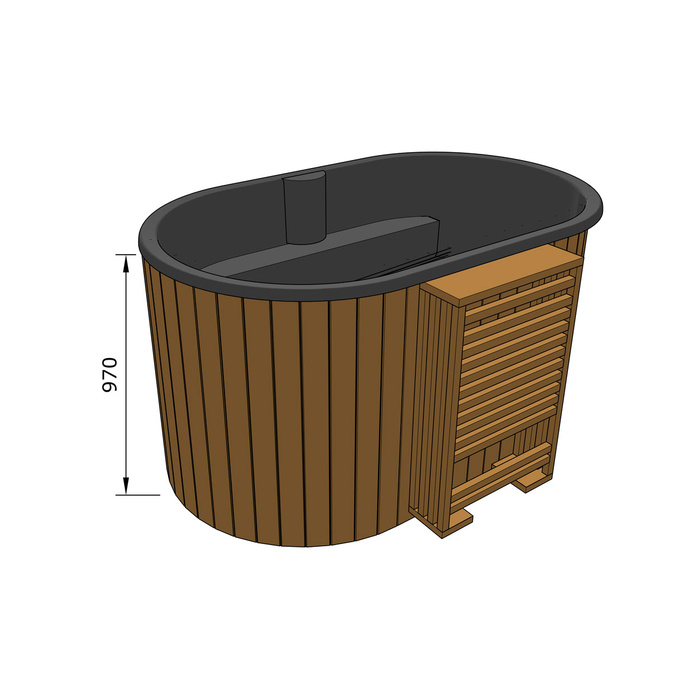
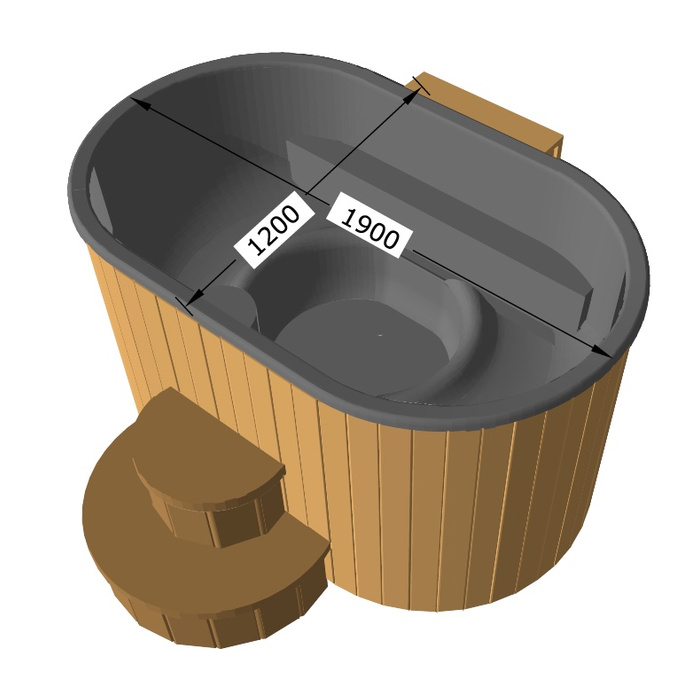
Legroom and elbow room are easiest to judge as shared space. Both users need somewhere for knees and feet, plus enough clearance to adjust position without repeatedly nudging each other. Ask whether interior dimensions account for shaped seat areas and how the footwell, if present, is meant to be used; one broad measurement can hide contours or a raised seat that changes usable room. A diagram with internal dimensions is more informative than an external measurement here, but it still cannot represent your bodies exactly. A stated internal length and width may also say little about where the seats narrow the space.
Imagine the two of you in your preferred postures at the same time. Can one draw a knee in, turn slightly or sit upright without making the other move? Are your arms comfortably close, or would they be pressed together? Two individually comfortable seats can still compete for shared floor space when occupied together. For Fjord 8, include internal dimensions and the seating arrangement in this comparison, rather than relying on how spacious a photograph looks. Ask whether each measurement refers to the shell or the usable interior if that is unclear. Record legroom and elbow room separately, because one may be adequate while the other is not.
Make getting in and out part of the comparison
Comfort includes the transition between outside and inside. Consider whether each person can approach, step in, turn and sit down without climbing across the other’s preferred position. Rim height, the access point and any required step or handhold are details to verify for the exact product, not features to assume from a sales image. If either of you prefers more room at the entry or additional support, make that a clear requirement and ask the supplier to explain what is included and what is separate. A path that works for the more confident person may not work for the other. A seating plan that feels right once settled can still be awkward if the route in does not suit both users.
Think through leaving as well: where will each person stand after getting out, and could a cover or another surrounding item obstruct that route? Ask how the cover is opened or moved and how much space that operation requires; do not assume a photograph shows the necessary clearance. If considering Aurora 10, compare its access arrangements with both users’ needs. If an accessory step is required, include its placement in the space check, not just the tub’s outline. Where product information does not answer an access question, ask the seller or a qualified professional rather than improvising around an unfamiliar component. The aim is an ordinary, unhurried entrance and exit for both people, not simply enough room once they are seated.
Choose between a compact fit and room to stretch
A compact tub can make sense when two people are the regular users and their preferred positions fit comfortably; compactness by itself is neither a guarantee of intimacy nor a drawback. Compare usable room inside with the space the unit takes up outside. A small exterior footprint can still have a layout one of you dislikes, while a bigger shell does not automatically create better legroom. Check both dimensions in the manufacturer’s specifications, and ask for an interior plan if published measurements cover only the outside. For two regular users, the practical question is whether the smaller configuration meets both people’s requirements without forcing a compromise every session.
Decide whether you need to sit upright, recline or extend your legs. If stretching is central to your routine, favour a layout documented to allow it rather than a model described simply as compact. If you both prefer a closer arrangement, unused extra space may not improve everyday use. When comparing Bloomcabin’s Cove 2 with another option, relate the internal layout to each person’s preferred posture. An interior plan helps explain how the space is arranged, while a paired trial lets you assess how it feels together. For a roomier alternative, name the comfort benefit you expect and the additional footprint it requires, rather than assuming more space is always better.
Allowing space for occasional guests
Occasional guests deserve a separate decision from the regular two-person fit. Think about the group that realistically visits and how often everyone would use the tub at the same time; a rare gathering may not justify choosing around a larger headcount, while regular evenings with friends may make extra positions worthwhile. Be specific about whether guests would share one soak or take turns, because those are different uses. Do not translate a stated seat total into a promise that every visitor will have equal space. Compare the actual arrangement for your likely group, including whether people can talk and enter or leave without disrupting one another.
A roomier model may also have a different footprint, water volume and operating routine, but those differences cannot be worked out from a seat count or model name alone. If Bloomcabin’s Haven 6 is on your shortlist, use its stated specifications to assess the space and care involved alongside its seating arrangement. Consider whether any additional room would be used often enough to matter. If visits are rare, prioritise the comfort of the pair who will use the tub most; if hosting is regular, weigh that pattern against the space and care needed between gatherings. A realistic use pattern is a better guide than planning around the largest group you might ever invite.
Match the footprint to the way you use the area
External footprint matters because two users need more than a place to sit: they need to reach the tub, get in and out and handle routine tasks around it. Compare the exact outer dimensions with the area available, then check the space required for the approach, cover movement and access to controls or service points. Those clearances are model-specific; do not assume they are included in the quoted length and width. A plan showing the exact unit and the room needed to use it is more useful than judging a catalogue photograph against the garden. Think about where both people stand, not just where the tub fits.
Walk through an ordinary shared session in the chosen spot. Can both people approach without one waiting in a cramped route? Can you move the cover without leaving it where the other person needs to stand? Is there space to handle supplies and routine cleaning without moving furniture each time? Pay attention to which side each person will approach from; the usable route can matter as much as the tub’s outline. When assessing the Fjord 8 footprint, include its stated clearances in your plan. Confirm site and operating requirements with the supplier, and ask a qualified professional about matters that depend on the exact installation rather than guessing from dimensions.
Include preparation, care and running costs
Two users do not automatically mean less preparation or care; the routine depends on how often you use the tub, its water volume, equipment and the manufacturer’s instructions. Before choosing, ask what the exact model requires before use, between sessions and at periodic intervals, including water care, cleaning and any maintenance tasks. A tub used by two people most evenings may need attention more often than one used by a larger group occasionally. Avoid assuming the number of bathers alone determines maintenance, and do not transfer instructions from another model. Ask where the current operating and care guidance is supplied so both people know what routine the purchase entails.
Running costs also have several variables, so do not estimate them from capacity or a model name. Ask the supplier for an estimate tied to the exact configuration, with its assumptions stated: frequency of use, typical operating settings, energy tariff, water volume, cover and insulation details, and the conditions where the tub will sit. Treat the figure as conditional, not a guarantee. If your use changes by season or week, ask how that affects the estimate. Clarify any consumables and cleaning tasks you should budget for, rather than inferring inclusions from a product photograph. It also helps to agree who will handle regular care, so the routine fits both people’s time as well as their budget.
Comparing your final shortlist
Build a side-by-side comparison from current information for the exact version being offered. Record declared occupancy, seating layout, internal and external dimensions, access details, water volume and operating requirements. Use the same units and separate confirmed details from unanswered questions. If a seller cannot provide an internal measurement or a clear description of the seating arrangement, mark it unknown rather than filling the gap with an assumption. Add the Bloomcabin Aurora 10 specifications to your comparison if you are considering that model. Check that every entry refers to the configuration being offered, and compare like with like: external dimensions against external dimensions, for example, rather than against another model’s usable interior.
Review the shortlist together, giving equal weight to each person’s essential requirements. Which options offer two suitable positions, room to move without persistent contact and comfortable entry and exit? Which leave enough space around the tub and have a care routine you are both willing to manage? Have a qualified professional confirm site or electrical requirements where the installation calls for it. If one candidate meets your shared needs in less space, it may be the more practical choice. If a roomier option offers a clear benefit, such as a preferred posture or space for regular guests, weigh that benefit against its footprint and upkeep. Resolve any unanswered question that could change the decision before choosing.
Frequently asked questions
Does a hot tub with “2” in its name automatically suit two people?
No. A number in a model name is not a capacity specification, and it says nothing about posture or room to move. Check the stated occupancy, seating plan and internal dimensions for the exact version, then consider whether the two positions work for you both.
Is a stated seat count enough to compare comfort?
No. It gives you a declared occupancy figure, but not the space between seats, the positions people face or how their legs fit together. Use it as an initial filter, then check the layout and dimensions and, if possible, try the preferred seats together.
Should I choose a roomier tub for occasional guests?
Only if the extra space serves a realistic use. Consider how often guests will use the tub at the same time, rather than planning around a rare gathering. A roomier option may also have a different footprint and operating routine, so check the exact specifications.
Which dimensions matter most for two users?
Check both the internal dimensions, which help you assess seating and legroom, and the external footprint, which affects access and space around the tub. Also confirm the area needed to open or move the cover and reach controls or service points.
Can I estimate running costs from the number of users?
Not reliably. Costs depend on the exact model and configuration, use frequency, operating settings, energy tariff, water volume and other details. Ask the supplier for an estimate with its assumptions stated, and compare estimates on the same basis.
For two regular users, the best fit is the tub that gives both people comfortable positions, enough room to move and straightforward access, without adding space or upkeep you will rarely use. Let the confirmed layout and dimensions guide the choice. A stated capacity is a useful starting point, but neither it nor a model name can tell you how comfortably you will use the tub together.
