
Condensation in a summer house: causes and practical remedies
Summer house advice
Condensation in a summer house is most noticeable after a cold night, but droplets do not automatically mean water is leaking in. Moist air, cool surfaces and limited air exchange can combine to cause it; rain entering through the roof, walls or base is a different problem. This guide explains how to distinguish the likely causes, reduce moisture during ordinary use and know what to check when choosing a summer house.

01
How condensation forms on cold surfaces
Condensation is liquid water formed when water vapour in the air meets a surface cool enough for the vapour to turn into droplets. The air can look clear while holding moisture from people, wet clothing, plants or damp belongings. When a surface temperature falls below the dew point, moisture collects on it. A surface may be cooler than the room air because of its material, position or exposure, so droplets can form locally rather than everywhere. In a summer house, that may be the inside of a pane, a metal fitting, a floor edge or a shaded corner. As the air cools, its relative humidity rises even when no extra water has been added, which is why condensation can appear overnight.
Look at when and where it appears. A light film across the inside of several panes, or beads on more than one cool surface after a cold night, can fit condensation, particularly after people have spent time inside. It may clear as the room and surfaces warm, but the resulting moisture still needs to dry; water trapped behind boxes or left on a surface should not be ignored. One damp patch beside a joint, or wetness that remains while the rest of the room is dry, deserves a closer look. These signs are not a definitive test: condensation can collect in one cold corner, and an external leak can spread. Note whether the building was occupied, shut or recently aired before deciding what to change.
Why summer houses are prone to condensation
An unheated or intermittently used summer house can cool close to the outdoor temperature, particularly overnight. The air inside cools too, while moisture added during the day remains; panes, fittings, floor edges and areas behind stored belongings may become colder than the surrounding air. A closed door and windows limit air exchange, so moisture has fewer ways to leave. Small enclosed rooms can reach high humidity more quickly when people or damp items add vapour. If cold surfaces stay hidden behind stored contents, they may remain damp after the visible room has aired. This does not prove that the building is faulty, but repeated wetting is worth managing because it can affect finishes and stored belongings over time.
Before ordering, consider how the building will be used across the year: occasional visits, regular gatherings, plant care or storage of outdoor equipment create different moisture loads. If it will remain shut for long spells, plan when and how it can be aired, and avoid leaving damp items inside. If you are weighing options, the Verdana 1 listing is one product page to consult; treat its name and photographs as identification, not proof of ventilation, insulation or condensation performance. Check the details provided for the exact version and ask the seller about anything that matters to your use. Do not treat a finish or glazing choice as a substitute for moisture management.
02
Moisture brought in or produced indoors
Moisture can come from ordinary activities even when no water is spilled. People release water vapour while occupying a small enclosed room; wet coats, boots, cushions, gardening tools and umbrellas bring damp in from outdoors. Watering plants, damp potting compost, wet floor cleaning and drying washing indoors can all add moisture. Several small sources can matter when a room is closed and cool. If the summer house doubles as storage, the contents count too: damp cardboard, textiles and garden or sports equipment can hold moisture near colder surfaces. Wet items may still release moisture long after the surface feels dry, so consider what has been left inside as well as visible puddles.
Take wet items back outside or dry them elsewhere, and allow fresh air through when conditions permit; avoid leaving wet coats or footwear in a shut room overnight. Do not use a closed summer house as a laundry-drying space unless it can be ventilated adequately, because evaporating water has to go somewhere. Deal with spills and pooled water promptly, and let washed surfaces dry before closing the building. If this kind of use is part of your plan, compare the Verdana 2 product page with the details stated for ventilation and layout, and ask the seller to clarify anything that affects your routine. Make room to remove wet gear instead of hiding it behind furniture.
Condensation or water getting in?
Condensation often appears on several cool surfaces at once: a misted inside pane, small beads on fittings, or dampness in a colder corner after the room has been occupied. Water entering from outdoors is more likely if one area becomes wet after rain, if there are tracks from a roof edge or joint, or if a stain remains after the room has aired. Water at the floor perimeter can have several causes, so it is not a reliable diagnosis by itself. Mould, a musty smell or damaged finish indicates that moisture has persisted, but does not identify the source. Treat these as clues, not a test that proves either condensation or a leak.
Keep a simple note of the weather, recent use and where wetness first appears; repeated patterns are more useful than a single inspection. An inexpensive hygrometer can help you notice changes in indoor relative humidity, but readings depend on temperature and cannot show whether water is entering through the building. If droplets are spread across cold surfaces or follow occupancy and chilly mornings, better air exchange and removing wet contents are sensible first measures. If a patch appears after rain, is confined to a joint or returns despite ordinary airing, check visible exterior areas and consult assembly or care guidance rather than painting over it. When assessing a site exposed to wind-driven rain, verify the installation and maintenance requirements for the exact building. The Durano garden house page identifies one listing to examine; it does not establish that a design suits every site or weather exposure.

03
Ventilation that clears humid air
Ventilation works by exchanging moisture-laden indoor air with outside air; warming a room without removing water vapour may only hide the problem until surfaces cool again. Use the windows, doors or purpose-made vents provided, opening opposite sides where available to encourage a through-flow rather than relying on a tiny gap at one end. Air the room after people have been inside, after wet items have been brought in and after cleaning. The useful period depends on weather, opening size and the room, so there is no fixed number of minutes for every summer house. Airing after use is usually more effective than leaving the building closed for weeks and opening it only once. Avoid letting rain blow in, and close openings when airing is no longer useful or secure.
Before ordering, find out what ventilation the chosen design actually provides rather than assuming a window or visible gap is enough. Check whether vents are included, where they are, whether the windows open and whether the manufacturer permits any changes to the openings. The Veltor 1 listing can be reviewed alongside instructions for its exact configuration; illustrations alone do not confirm vent positions or operation. If you expect the building to stay closed for security or weather reasons, ask how it should be aired after use. Do not cut new openings or block existing vents without appropriate product guidance, as either can undermine the intended arrangement.
Reduce moisture during everyday use
Make moisture control part of leaving the room. Take wet footwear, coats and tools outside or dry them elsewhere; wipe spills and visible droplets with a suitable cloth; and do not leave wet towels or freshly washed items hanging in a closed space. Keep plant pots and water containers tidy, and empty standing water from saucers after watering. If a floor or surface has been cleaned with water, let it dry with appropriate ventilation before closing the building. These habits reduce water vapour and liquid water available to condense, rather than simply treating droplets after they form. They are particularly useful after a busy visit when several people and belongings have added moisture.
Stored contents affect airflow too. Leave a practical gap around walls and windows, avoid stacking boxes against a cold or damp area, and keep any vents unobstructed. Put away dry cushions, books and fabrics; closed containers can protect belongings from dust, but contents should be dry before they are sealed in. Where large furniture has to sit near a wall, leave access to inspect and wipe behind it instead of covering a damp patch with a rug or panel. If a mat or cover becomes damp, take it out to dry rather than leaving it against the floor. Compare your intended storage with the product information for the Orello 1 summer house listing, and confirm exact dimensions and openings from the relevant specifications rather than judging capacity from photographs. A clear layout makes drying and inspection easier, but cannot correct a leak.
04
Site, base and water around the building
Not all damp comes from indoor air. Ground that stays waterlogged, runoff that pools beside the building or rain reaching vulnerable parts can keep the floor and lower walls damp; wet ground around the structure may also leave the interior feeling clammy. Before assembly, choose a site that does not collect standing water and follow the manufacturer’s requirements for the base, clearances and drainage. Keep leaves and plants from blocking openings or holding moisture against surfaces where the care guidance calls for clearance. Do not assume that a visually flat patch is the right base: the chosen product’s instructions set out the preparation required. Avoid placing stored material where it channels or traps water near the building.
Check these requirements before ordering, while you can still decide whether the site and access are suitable. For the Modano 1 product page, use the listing to identify one option, then find its own base and installation requirements instead of assuming they match another model. Consider where runoff from nearby roofs, paths or planting beds goes, and whether the route to the assembly area is workable. Follow any stated clearance for maintenance and keep external areas accessible for inspection. If the site frequently holds water or becomes saturated after rain, ask an installer or qualified building professional to assess it before assembly. Ventilation cannot substitute for addressing water that enters from below or outside.
Checks to make before ordering
Use the product description and assembly information to establish what is included: ventilation openings, windows or doors that open, base requirements and maintenance instructions. Check the exact configuration, not a neighbouring model or a lifestyle photograph, and ask how specified surfaces should be cared for in your intended pattern of use. A finish, where one is specified, is not a guarantee against condensation; it cannot remove moisture added by people or wet belongings. If you intend to heat or insulate the building later, raise that before purchase. Changes to temperature and building layers can affect how moisture moves, so the whole arrangement may need professional advice rather than an improvised retrofit.
The key buying question is whether the stated openings and upkeep suit your routine and site, not simply whether a listing uses the word ventilation. Review the Veltor 2 product page as one example, then verify details against the complete specification and the manufacturer’s instructions for the exact version. Ask whether features shown are optional, how the selected version is assembled, what the owner must maintain and whether any access must be kept clear. If you need the building for regular use, ask whether the stated information addresses that pattern of use. Make a short list of must-have features before comparing options; if a detail is absent, ask rather than infer it from the model name or a similar summer house. That keeps the decision based on confirmed facts.

05
Glazing, openings and storage
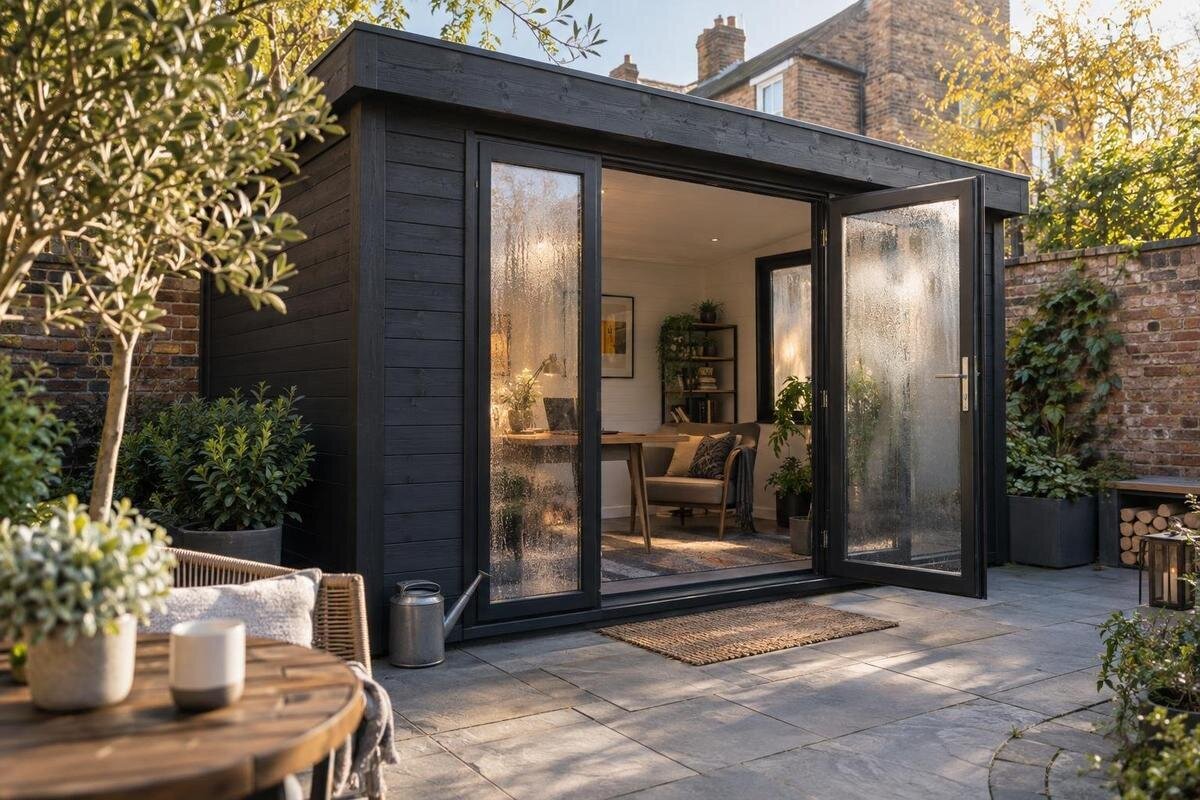
If the chosen design includes glazing, glass can be among the coolest surfaces in the room during cold weather, so moisture may show there first. Wiping the pane helps temporarily, but recurring beads suggest that indoor air is moist, the surface is cold or the room is not being aired enough. Check which windows and doors actually open and where they are positioned; a fixed pane brings daylight but does not ventilate. A product photograph is not a reliable guide to dimensions, opening direction or usable ventilation. When comparing layouts, verify these details in the specification and any drawings, particularly if the summer house will be furnished or used for longer periods.
Plan furniture and storage so access to openings and corners is not blocked. Leave room to wipe condensation, check the floor and see behind larger items; avoid pushing fabric covers, curtains or bulky belongings against a persistently damp surface. Before arranging the interior, review the actual layout; the Veltor 3 listing identifies one model to check, but its name alone says nothing about window performance or moisture control. Ask the seller for a drawing or clarification if you need an opening in a particular place. Make sure open doors and windows will not be blocked by furniture or stored things. This is a maintenance and usability check, not a promise that a particular arrangement will prevent condensation.
When damp keeps returning
If condensation returns despite a regular airing routine, look for a change in use, weather or an overlooked source of water. Note whether it appears after occupation, during a cold spell, after rain or beside one particular edge. Check for blocked vents, wet items stored inside and water collecting outside, then inspect visible roof edges, joints, windows and the base without taking the structure apart. If the building has been shut and unused, water appearing after rain deserves attention even if other surfaces are dry. Recurrent wetness in the same place, staining, softening or damage to stored contents calls for investigation rather than more frequent wiping. A short record of timing and location can help a builder or installer understand the pattern.
Deal promptly with surface water and let the area dry, using care methods suitable for the materials; avoid covering dampness with rugs, paint or stored goods. If a leak is suspected, water continues to appear, or damp and mould are widespread, ask a suitably qualified building professional to identify the cause and advise on repair. Cleaning guidance varies by surface, so follow the relevant product or manufacturer’s instructions rather than using a method that could damage the finish. Ventilation and moisture control can help with condensation, but cannot fix a damaged roof, a poorly managed base or another route for rainwater. Match the remedy to the source rather than treating a persistent patch as normal seasonal condensation.
Frequently asked questions
Is occasional condensation in a summer house normal?
Some condensation can form when a closed, unheated summer house cools overnight, particularly after people or damp items have added moisture. Occasional droplets do not by themselves prove a fault. Repeated wetting, damage or dampness linked to rainfall deserves a closer look.
Should I leave a window open all the time?
Not necessarily. Weather, security and the manufacturer’s instructions matter, and an opening left in rain may let water in. Air the building after use when conditions allow, use provided vents as intended and avoid altering them without guidance.
Will a dehumidifier help?
A suitable dehumidifier can remove some moisture from the air, but it will not repair a leak or deal with every source of damp. Check that the appliance is suitable for the conditions in the building, follow its instructions and continue to manage wet belongings and airflow.
Does heating alone solve condensation?
Heating may warm surfaces while it is on, but it does not remove water vapour from the room. Moisture may condense again as the building cools. Reduce moisture at source and provide air exchange rather than relying on heat as the only remedy.
How can I tell if damp is coming in after rain?
A mark that appears after rain or remains in one localised area is a clue, not proof. Condensation can also gather in a cold corner. Note the weather and location, check visible areas without dismantling anything, and seek professional help if water continues or the source is unclear.
The practical answer is to manage both sides of the problem: limit water brought into the room, give humid air a way out and keep external drainage and maintenance in view. Occasional droplets call for drying and better habits; recurring, localised or rain-linked damp calls for a closer investigation, not just more ventilation.
