
How to Calculate an Electric Sauna’s Cost per Use
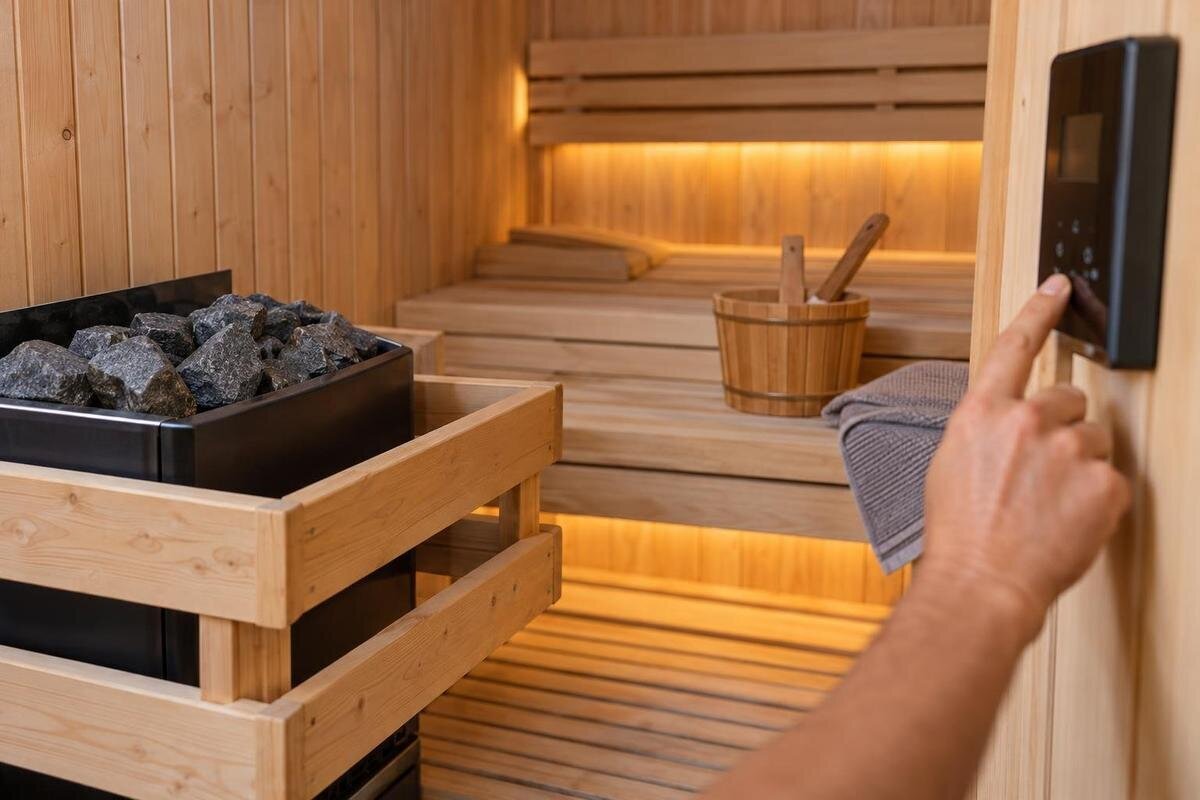
Sauna running costs
An electric sauna’s cost per use is best treated as a measured operating cost, not a figure guessed from the heater’s kilowatt rating. The amount on your bill depends on the energy the complete run uses, when that electricity is consumed and the unit rate on your tariff. Warm-up can be a sizeable part of the session, so timing only the minutes spent in the sauna gives an incomplete result. This guide sets a clear start and finish, shows how to handle flat and time-of-use tariffs, and separates a repeatable calculation from assumptions about a particular sauna.
The cost-per-session formula
For a single-rate tariff, use this formula: cost in pounds = measured kWh × unit rate in pence per kWh ÷ 100. A kilowatt-hour (kWh) is the energy unit on the meter; kW on a heater label is power, so it is not the number to insert directly. If the meter records 8.0 kWh and the applicable rate is 25p/kWh, the calculation is 8.0 × 25 ÷ 100 = £2.00. Those figures are purely illustrative, not a current tariff or a typical sauna result. Keep the inputs in your notes and round the estimate to the nearest penny; the calculation can then be checked or updated easily.
Decide what counts as a session before measuring. For the added cost of one use, include electricity from the start of preheating to the agreed endpoint after bathing; do not count the daily standing charge as if each session triggers it. If you want to allocate the whole household bill, show a share of that fixed charge separately rather than presenting it as the marginal cost of another run. When assessing an option such as the Sauna LC-260, keep a separate entry for its running-cost evidence alongside the purchase price. This prevents an attractive upfront quote from being mistaken for evidence of low electricity use.
Measure electricity used by the sauna
Choose a meter that can capture the sauna’s electricity and note its kWh before preheating begins. With a cumulative register, subtract the starting reading from the ending reading; do not subtract pounds or elapsed minutes. Write down the date, time, reading unit and start and end values, and keep the meter boundary identical at both ends. If the display rounds in large steps, one short test may appear to use no energy or may jump by a large amount, so repeat the test or use a more suitable measurement source rather than implying precision the display cannot show. The energy difference, not the run time, is the key input. If the meter has separate registers, retain their individual changes for tariff calculations.
A whole-property smart meter is convenient but also records other simultaneous loads. Cooking, space heating, appliances or other circuits can distort the change during a sauna run, so a whole-home increase is not automatically the sauna’s consumption. A dedicated meter or appropriately installed circuit-level reading is more useful for a fixed-wired heater. Do not open equipment or alter wiring to obtain a reading; ask a qualified electrician about suitable measurement where needed. If requesting consumption figures for the Sauna HCF-300, ask how the electricity was measured and which loads were included. If only a main-meter comparison is available, treat the result as an estimate and note its uncertainty.
Include preheating and time in the sauna
Begin measuring before the heater starts warming the cabin, not when the room first feels ready. Include the full preheat, the time spent using the sauna and any intervals between rounds when the heater remains on. If a timer or remote start is used, define the start as the point when it begins using electricity; if standby consumption matters to your definition, record it consistently as well. End at the agreed shutdown point. These boundaries make the result comparable and prevent a bathing-only timer from leaving out a material part of the electricity use. Write down your chosen boundary so you apply it in the same way next time.
Use the same boundary for every test, but record whether a run began cold or followed recent use. Starting conditions, settings, door openings and pauses can change the energy reading, as can leaving the heater maintaining heat for longer. Separate a short revisit to an already warm cabin from a full cold-start session instead of averaging them without comment. When discussing the HCF-225 barrel sauna with the seller, ask whether any supplied consumption example covers both warm-up and bathing. An example with no stated starting conditions cannot reliably represent your routine. If your usual use changes with the season, record that difference rather than treating one test as universal.
Apply the electricity tariff for the session
For a single-rate tariff, use the unit rate applicable on the session date, expressed in p/kWh, rather than a headline price from an old bill, comparison page or estimate. A fixed-price tariff is not necessarily a single-rate tariff: a time-of-use plan may have several rates even when those prices are fixed for a contract period. Match the rate to the actual times of the measured use, and note the tariff date alongside the reading. Check that you are using the amount charged per unit and have not added a tax or discount twice when the supplier’s displayed figure already accounts for it. Do not confuse the unit rate with the daily standing charge.
If the session crosses a change in rate, calculate each time block separately: kWh in that block × its p/kWh rate ÷ 100, then add the block costs. A total kWh reading alone is not enough to price a mixed-rate session exactly unless the energy split is known. Use interval data that identifies the periods, if available, or repeat the measurement within one rate window and label it accordingly. If a running-cost estimate accompanies a quote for the S-140 sauna, ask which electricity rate it assumes. Recalculate it using your own tariff rather than comparing pound figures based on different rates.
Worked example: convert kWh into pounds
Suppose an illustrative meter test records 5.4 kWh during preheat and a further 2.1 kWh while the sauna is in use. Together that is 7.5 kWh. At a hypothetical single rate of 26p/kWh, 7.5 × 26 = 195p, or £1.95. These figures are for the arithmetic only: the rate is not a current market claim, and the energy is not a typical value for a particular heater, cabin or session length. The split shows why leaving out preheating would understate the energy recorded for this example. If you only have a whole-session meter reading, you can still calculate the total without separately measuring each phase.
Keep the kWh result as well as the pound figure: at the same illustrative rate, a different measured total of 9.0 kWh would cost £2.34. This makes the reason for a changed result visible—energy use, price, or both—instead of hiding it in a round estimate. For a purchase worksheet covering the Sauna HC-150, leave the consumption field unconfirmed until you have relevant measurement evidence. You can use hypothetical values to explore a budget, but label them as assumptions and keep them separate from product information. Round the final amount to the nearest penny while retaining the meter reading in your log.
Why rated heater power is not measured consumption
Rated power is expressed in kilowatts (kW); electricity use over time is recorded in kilowatt-hours (kWh). Multiplying rated kW by session hours gives an exact energy total only if the heater draws that electrical input continuously throughout the whole period. For example, an illustrative 6 kW input sustained for 1.5 hours would equal 9 kWh, but that is a conditional calculation, not a measurement. It assumes the heater draws the stated power for all 90 minutes, including the time spent warming the cabin and the time after it reaches the desired setting. A rating alone cannot establish that pattern.
Depending on its controls, a heater may switch on and off or adjust its output as it operates; its average draw can therefore differ from its rating. The pattern depends on the actual heater, controls and conditions, so do not assume either continuous full-power use or a particular saving. Check the heater’s own documentation for its rated input, but use a meter for session consumption. When reviewing heater options for the Sauna HC-225, distinguish a stated electrical input from any claimed session energy use. The former describes power; the latter needs a duration, operating conditions and a clear measurement method to be useful.
Compare like-for-like sessions
To compare two runs, keep the measurement rules and operating conditions as similar as practicable. Note the heater and controls, whether the cabin began cold, the selected setting, preheat duration, time in use and any long pause with heat left on. Outside conditions and how often the door is opened can affect a reading; the point is not to hold every factor perfectly constant, but to describe what happened. A short session in a recently warmed cabin is not a fair direct comparison with a longer cold-start run. Keep unusual results in the record and explain them, rather than treating every reading as a fixed property of the sauna.
Take several readings across the pattern you genuinely expect to use, then divide the total measured kWh by the number of complete sessions for a simple average. For a flat tariff, multiply that average by the unit rate; for a time-varying tariff, calculate the session costs by rate period first and average those costs. Keep an unusually long or interrupted run as a separate category if it does not represent normal use. If comparing the Sauna N-210 with another cabin, seek measurements for each configuration under comparable conditions. Matching heater ratings or session lengths alone does not establish matching consumption, and one cabin’s reading should not be presented as a measurement of another.
Decide which electrical loads to include
Choose whether you want heater-only electricity or the total electricity used to run the sauna. A meter on one circuit includes the loads connected to that circuit, which may or may not be just the heater; controls, lighting or ventilation count only if they are within the measured boundary and drawing power during the test. Confirm the circuit and equipment arrangement from reliable product information or with a qualified electrician where it is unclear. Do not assume that every electrical item associated with the sauna is supplied on one circuit. State clearly whether your figure covers the heater alone or the whole measured setup.
For an all-in per-use figure, include the electricity of components used as part of the session if your meter captures them. If an external light, pump or household appliance is outside the metered boundary, either measure it separately and add it deliberately or state that it is excluded; otherwise you risk comparing unlike totals. Conversely, a heater-only estimate should leave unrelated loads out, not quietly absorb them. When requesting a quote for the Sauna N-250, ask for an itemised equipment list so you can identify which electrical components belong in your calculation. Do not add a component’s consumption twice if it is already captured by the main session measurement.
Estimate monthly and annual electricity costs
Once you have a representative cost per session, multiply it by the number of uses you expect. For example, if a hypothetical measured average were £2.10 and you expected six sessions in a month, the energy estimate would be £12.60 for that month. Both inputs are assumptions in this illustration, not a predicted bill. If use changes by season, make separate estimates for busier and quieter periods, then add them for the annual total rather than multiplying one month by twelve. This makes the forecast reflect your planned frequency instead of assuming the sauna is used at the same rate all year.
Review the estimate against actual metered sessions. A tariff change alters the pounds per use even if kWh stays similar; a different warm-up routine or longer session may change kWh even when the tariff is unchanged. For a time-of-use plan, use the rates and times you expect to use, not a single blended rate unless it is genuinely representative. Keep one-off purchase and installation spending, fixed daily charges and other ownership costs outside this electricity-per-session calculation, or show them as separate budget lines. Update the assumptions if your use pattern or tariff changes.
Confirm the sauna and heater configuration
Before relying on an estimate for a purchase decision, establish the exact configuration being considered: cabin model, heater model, controls and any included electrical components. A product listing may identify the cabin without confirming which heater, if any, is supplied in the version you are considering. Ask the seller or manufacturer to clarify the included equipment and compatible configurations; have a qualified electrician assess the electrical supply and connection for the proposed setup. Do not infer heater size, running cost or electrical compatibility from a cabin’s name, listed area or appearance.
Keep a compact test record with the date, model and confirmed heater, meter start and finish readings in kWh, session start and end times, warm-up and bathing durations, tariff rate or rate periods, and the loads included. State whether the result is heater-only or for the complete measured run, and label any estimate that relies on a whole-home meter. With those details, another reading can be compared fairly, the arithmetic can be checked, and a new electricity rate can be substituted without repeating the energy test.
Frequently asked questions
Can I calculate the cost from the heater’s kW rating?
Not for an actual session. Multiplying rated kW by hours assumes the heater draws that power continuously throughout the whole period. Use a meter’s kWh change for measured consumption; treat a calculation based on the rating as a clearly labelled illustration.
Should I include the warm-up?
Yes, if you want the cost of a complete session. Start measuring when preheating begins, then include time in the sauna and any pauses when the heater remains on. Use the same start and finish points when comparing sessions.
What if my tariff changes during a session?
Split the session into the periods covered by each rate. Multiply the kWh used in each period by its unit rate, then add the costs. A single total kWh reading is not enough to price a session across different rates unless you know how the energy was divided.
Should I add the daily standing charge to each use?
Usually not when you want the added cost of one more session: the standing charge does not normally change because you used the sauna. If you are allocating the whole household bill, show any share of that fixed charge separately.
Can I use a whole-home smart meter?
It can show the change in household consumption, but that change may include other appliances running at the same time. A dedicated or suitable circuit-level reading is more useful for measuring the sauna. If you can only use the main meter, label the result as an estimate and note its limitations.
A useful cost per session comes from two recorded inputs: the kWh used across a clearly defined sauna run and the tariff rate applying at the time. Keep warm-up in the measurement, separate fixed charges, and tie each result to the exact equipment and meter boundary. When your tariff or normal routine changes, update the calculation with a new rate or reading rather than relying on a universal price for every session.
