
Planning the Five-Year Cost of an Outdoor Sauna
Outdoor sauna costs
An outdoor sauna’s installed price is only a starting figure: it captures a defined purchase and setup scope, not five years of electricity or fuel, servicing, care and repairs. A useful ownership plan begins with one explicit purchase scenario and an honest use schedule, then prices later costs from your own quotes, instructions and bills. The example below assumes one sauna bought at the start of year one and two heating sessions a week; it uses no made-up product price or energy rate.
01
Installed price is not the five-year ownership total
An installed price answers what a defined project is expected to cost when it is set up; a five-year total asks how much cash you expect to spend from ordering through the end of year five. Advertised prices can have different scopes: some cover sauna supply alone, while others include delivery, assembly or specified connection work. Even an installation quote may exclude site preparation or other work you must arrange separately. Read the line items and exclusions, then label the amount accurately: supply only, delivered, or installed with specified work. None of these figures accounts for your future use or upkeep, so an installed price and an ownership forecast answer different questions.
Write the boundary before adding figures. The five-year cash forecast is one-off supply and setup, plus each of five annual operating and upkeep totals. Setup may include delivery, unloading, site or base preparation, assembly, electrical work where required, and chosen accessories, but only where relevant and not already included. Annual rows can hold energy or fuel, paid servicing, routine-care materials, actual repairs and planned replacements. Show a contingency reserve separately from forecast costs; if you want a cautious spending envelope, label it as forecast plus reserve. Keep financing, optional landscaping and resale proceeds outside the core scenario unless you add them as separate assumptions.
Define the purchase and use case
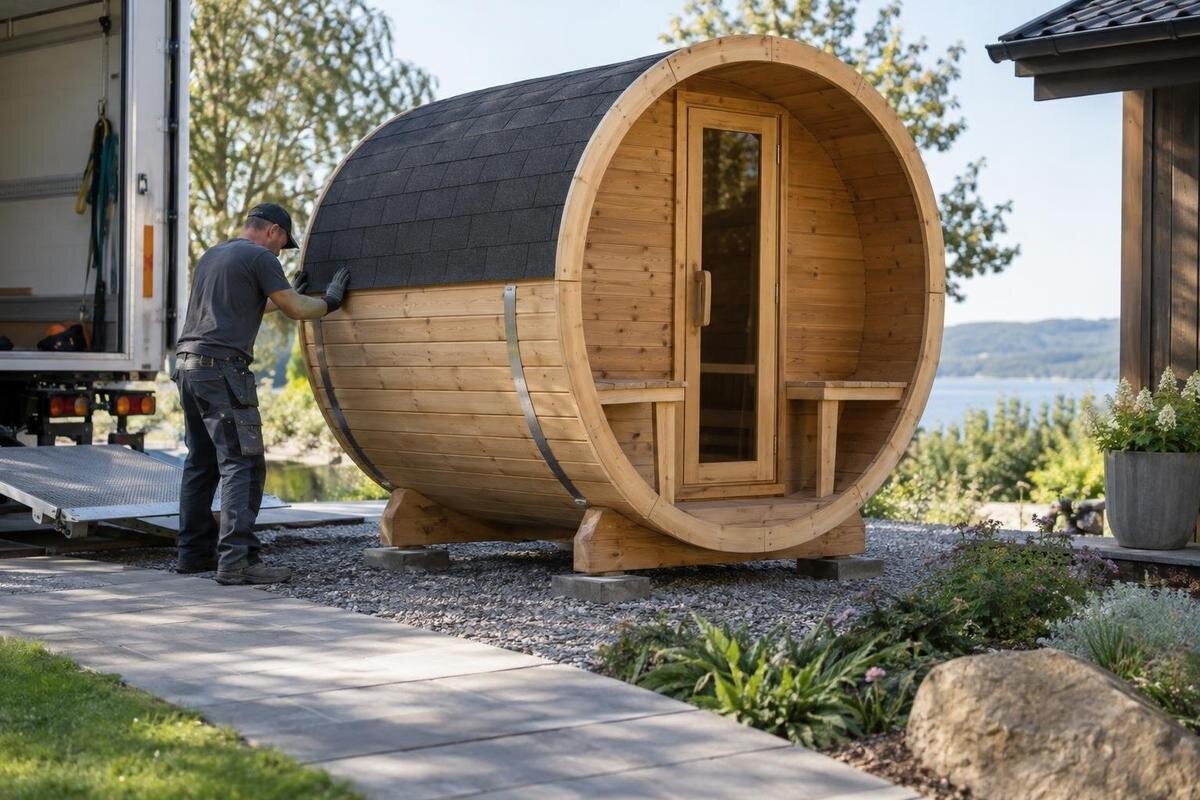
Make the example specific enough to test: one household buys one outdoor sauna at the start of year one. Delivery, site preparation and installation are separate cost lines unless a written supplier quote confirms they are included. Planned use is two complete heating sessions a week in all 52 weeks, with no weeks missed: 104 sessions each year and 520 across five years. This is a planning choice, not a claim about typical use. A candidate such as HCF-225 Thermowood barrel sauna can identify the model on your worksheet, but the catalogue listing is not a purchase or installed-price quote.
Use the current itemised quote for the exact product and configuration as the purchase input; do not substitute a headline amount for a package that may differ. For this baseline, assume one installation, no resale proceeds, no future price rise built into the total and no repair bill known in advance. Do not assume the site is ready or that delivery, assembly or a heater is included until the quote confirms it. Enter amounts in pounds sterling from current quotes and bills, and note when each figure was obtained. These boundaries keep unknowns visible rather than hiding them in an optimistic total.
02
Get an itemised quote for the exact configuration
Use the product amount as one defined line. Ask the supplier to state the exact model and supplied configuration, what equipment is included, whether delivery, unloading and assembly are covered, and which site or connection works are excluded. If options are shown on a product page, do not count them as included until the quote says so. Conversely, do not add an item twice because it appears within a package total and again as a separate allowance. Note the quote date and any validity or revision information, and ask what might change the amount if a site visit is still needed.
For example, keep the Sauna S-140 listing tied to its own written quote rather than shortening the worksheet row to “barrel sauna”. Exact naming matters when you compare equipment, delivery and installation: two offers are comparable only if their configurations and exclusions are clear. Give each quote a reference so that later revisions remain attached to the correct model and package. If an element cannot yet be priced, mark it as unknown and ask how it will be resolved; do not enter zero merely to complete the spreadsheet. Retain the earlier version alongside the revision so you can identify changes to both scope and price.
Price site preparation and installation separately
Site costs can alter the project total before the sauna is used. Ask what surface or base the selected installation requires, and have an installer or other appropriate professional assess the actual location, access route and ground conditions. Also check where components can be unloaded and moved, whether the assembly team can reach the position, and which service or electrical works apply to the confirmed setup. Do not assume a standard base, easy access or a connection is included. List any additional clearing or finishing work only if the site assessment shows it is needed; otherwise it can become an unnecessary allowance.
For a candidate such as the HC-150 thermowood barrel sauna, request the relevant manufacturer drawing and installation information, then let a qualified installer confirm what applies at the actual location. Record who supplies materials, carries out the work and completes any finishing. Ask for site-related amounts to be itemised so that a change to access arrangements or preparation does not obscure the sauna purchase price. Where work remains unpriced, keep it visible as an unresolved line rather than assuming it is covered elsewhere. If the assessment changes the scope, update both the installed-price subtotal and the five-year budget before comparing them with another offer.
03
Choose a realistic five-year session schedule
The two-sessions-a-week assumption is useful only if a session has a consistent meaning. For this budget, count one complete heating cycle as one session, not each person entering the sauna. If routines are seasonal, replace the all-year schedule with the weeks you actually expect to use it. A simple sensitivity check is one session weekly for 52 weeks, or 260 cycles over five years; three weekly gives 780. These are arithmetic alternatives, not predictions or benchmarks. The 52-week case assumes no holidays, closures or other missed weeks, so adjust it if that is unlikely for your household.
Link the schedule to the exact setup rather than assuming that every sauna uses the same amount per visit. If Sauna HC-225 is your candidate, record the heating equipment and controls confirmed in its quote alongside your planned use. Keep frequency, session duration and seasonal pattern as separate notes so that a later change can be traced to the appropriate cost line. More sessions can increase use-related costs, but they do not automatically double fixed site costs or every maintenance expense. If your household expects different summer and winter routines, calculate those periods separately using suitable consumption estimates, then add them to obtain the annual operating allowance.
Estimate energy or fuel from actual use
For an electric setup, use actual consumption if you can obtain it: meter readings or another method suitable for the installation over representative cycles. Include the whole heating cycle, such as warm-up and any period when the heater maintains conditions, rather than multiplying rated power by the entire visit as if draw were constant. If sessions vary, record more than one cycle and note when the readings were taken. If there is no measured data, ask the supplier or installer for an estimate based on the confirmed configuration and label it as an estimate. Multiply energy used by your applicable tariff; include a fixed charge only if the sauna genuinely adds one.
For a wood-fired arrangement, base the estimate on fuel actually used per firing and the price on your own local invoice or quote; retain the quantity and unit so you can update the calculation later. Do not assume one heating method is cheaper without comparing the same use pattern and local prices. If you are costing the N-210 Thermowood barrel sauna, first confirm which heater and configuration the supplier is quoting; energy use does not follow from the model name. If a fuel delivery is shared with other uses, count only the amount used for the sauna. Show any change in frequency or tariff by year instead of presenting today’s assumption as a fixed five-year bill.
04
Use the applicable guidance to price paid servicing
A paid servicing line belongs in the plan only when you know what is serviced, who recommends the work and when it is due. Read the instructions for the exact sauna and heating equipment, and ask the supplier or installer whether professional checks are specified, optional or outside the supplied package. There is no single visit interval or fee that applies to every model and installation. For the baseline here, include no recurring paid service contract unless the relevant instructions or your chosen arrangement calls for one. This is a way of defining the budget, not advice to skip care that the manufacturer requires.
Once the schedule is confirmed, enter each visit in the year it is expected, using a quote for the described work. Ask whether travel, labour and parts are included and whether a service visit excludes repairs; do not count a maintenance contract and the same visit twice. When requesting a service quotation for Sauna N-250, include the confirmed equipment details and installation location so the provider can define the scope. If a paid check is planned in years two and four, show those dates rather than spreading its cost evenly across five years. Record any optional contract’s coverage and renewal assumptions, including charges you would still pay separately.
Budget routine care and keep repairs separate
Routine care is different from a paid service visit: it may mean owner-performed work and consumables. Follow the exact instructions for cleaning, drying, ventilation and any exterior wood care or finish; do not budget for a treatment or timetable borrowed from a different product. Write down what the supplier recommends, when it is due and which materials are compatible. Price consumables from actual pack sizes and current local prices once you know what is needed, then place them in the relevant year. If a recommended task falls within the five-year period, add it in the year due rather than spreading the amount without explanation.
Keep repairs and replacements separate from routine cleaning and scheduled visits. The supplied information does not establish a failure rate or component lifespan, so avoid inventing a five-year replacement schedule. You can set a buyer-chosen repair reserve informed by an actual repair quote or by the cash buffer you want to hold, but label it as a reserve, not a predicted bill. For a candidate on the LC-260 sauna listing, request the maintenance directions and parts information for the quoted configuration and keep these with your budget records. If a repair occurs, enter the actual invoice as expenditure and reduce the available reserve accordingly; do not count both as spending.
05
Show tariffs and changing use as separate cases
Costs fall at different times, so lay out the estimate by year rather than presenting only one total. Show the one-off purchase and setup in the year of payment, then list energy or fuel, service, care materials, repairs and planned replacements in the year expected. Carrying today’s quote and tariff unchanged through the sheet can make a simple baseline, but label it as a no-change assumption, not a forecast. Build another case by changing assumptions you want to test, such as sessions, tariff, service quote or reserve. Keeping the cases side by side makes the main cost driver easier to see.
When comparing candidates, apply the same use schedule and cost boundaries to each, then replace unknowns with model-specific information. Give a candidate from the HCF-300 Thermowood barrel sauna listing its own comparison row and attach the current quote, availability confirmation and offered configuration. Keep the baseline assumptions consistent: comparing one model at two weekly sessions with another at one would obscure the reason for the difference. If one quote includes work that another excludes, show the difference explicitly; otherwise a lower initial total may simply be missing costs you still have to pay. Mark any future-price adjustment as your own scenario, not as market evidence.
Report separate installed and five-year totals
At the end, show the defined installed purchase and setup total separately from the five-year ownership forecast. Calculate the forecast as one-off supply and setup costs plus operating and upkeep lines for years one to five. Make sure a bundled installation charge appears once, a service plan is not duplicated as individual visits, and only sauna-related electricity or fuel is counted. Show a contingency reserve as a separate amount; if you combine it with the forecast to set a spending envelope, label that total clearly. A worksheet with an amount, source and year for each line makes the result easier to review.
For the base use case above, divide the five-year forecast, excluding any unspent reserve, by 520 planned heating cycles to estimate cost per cycle. You can also divide operating and upkeep alone by 520 to see recurring cost separately from the purchase. To calculate cost per person per visit, divide by total attendances: one person attending ten sessions contributes ten attendances, not one. State whether that figure includes the initial purchase so the result is clear. If your real schedule becomes 260 cycles or 780, recalculate the use-related costs and denominator. After the first year, replace estimates with bills and invoices, then update the remaining years rather than treating the original projection as fixed.
Frequently asked questions
Is the installed price the same as the five-year cost?
No. The installed price covers only the items and work specified in the initial quote. A five-year plan adds expected energy or fuel, paid servicing, routine care and any repairs over that period. Keep purchase and setup costs separate from ongoing costs so a complete installed quote is not compared with a supply-only figure.
How many sauna sessions should I assume?
Choose a schedule that reflects how you plan to use it; there is no universal figure. This guide uses two complete heating cycles a week for 52 weeks, or 520 cycles over five years. If you expect seasonal breaks, use fewer weeks and show a second case if your routine could change.
Can I calculate electricity costs from the heater’s rated power?
Not as a direct measure of every session. Use consumption measured over representative complete cycles, or ask for an estimate based on the confirmed configuration. Multiply the energy used by your applicable tariff and planned session count. A power rating alone does not show that the heater draws that amount continuously.
Should I include annual servicing?
Include paid visits at intervals specified for the exact sauna and heating setup, or based on advice you have chosen to follow. There is no universal annual schedule in this plan. Add the quoted fee in the year due, and keep the assumption visible if no paid visit is specified.
What belongs in the maintenance allowance?
List routine-care materials, actual repairs or replacements, and any contingency separately. Follow the relevant instructions for compatible products and timing; do not assume a treatment schedule or component lifespan. A reserve is a buffer, not a predicted invoice, so show it separately from the base forecast.
A useful five-year figure is an account of a stated plan, not a precise-looking amount built on guesswork. Keep the installed purchase and setup total separate from the five-year forecast, and show any repair reserve on its own. The example’s 520 planned cycles give you a consistent way to compare cost per use, but actual costs must come from the configuration, site, quotes and use pattern you choose. Update the plan with bills and invoices as ownership continues.
