
Hot Tub Covers: What to Look for Before Buying
Hot tub buying guide
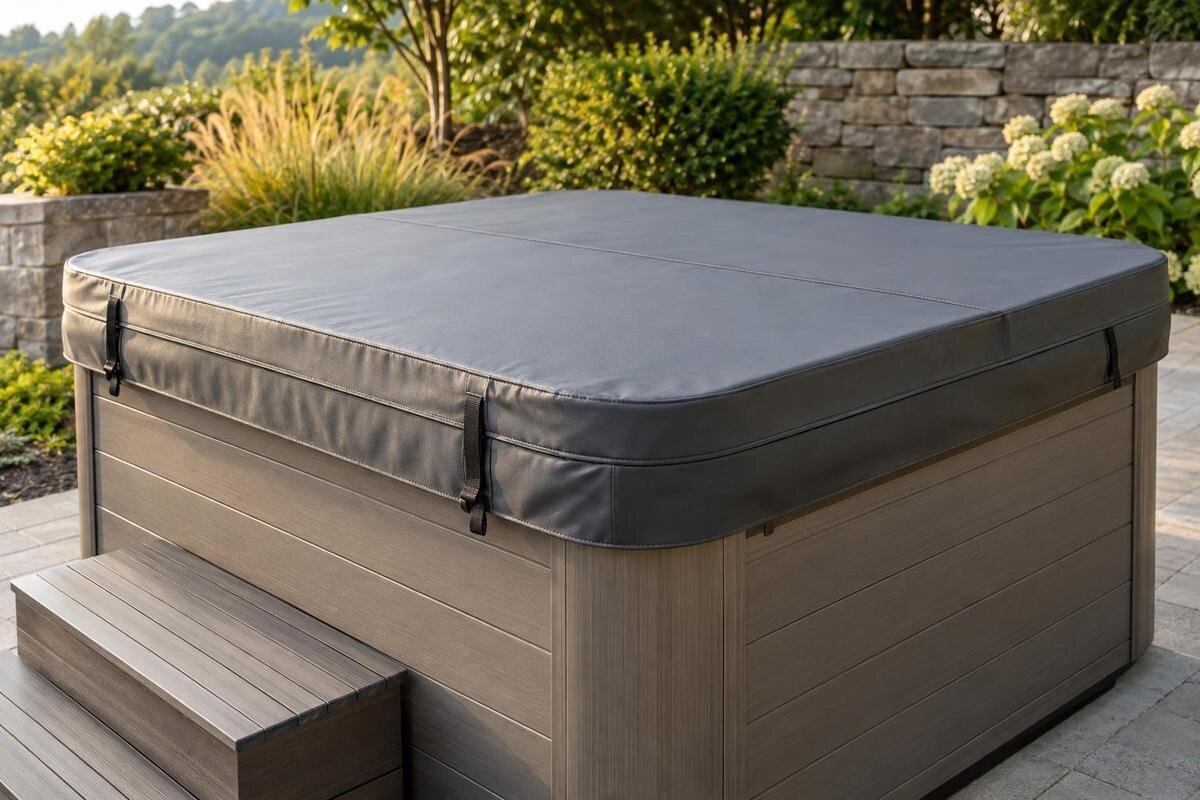
Buying or replacing a hot tub cover is a fit-and-use decision, not just a choice of colour or shape. The cover needs to match the tub’s exact outline, measurements, hinge position and any openings; its construction and weight also affect whether it is practical to lift, store and maintain. Product names alone do not establish compatibility, and features should not be assumed from photographs. Use the exact tub identity as a starting point, then ask the supplier for cover-specific confirmation before committing.
Before you order 1
Identify the exact hot tub
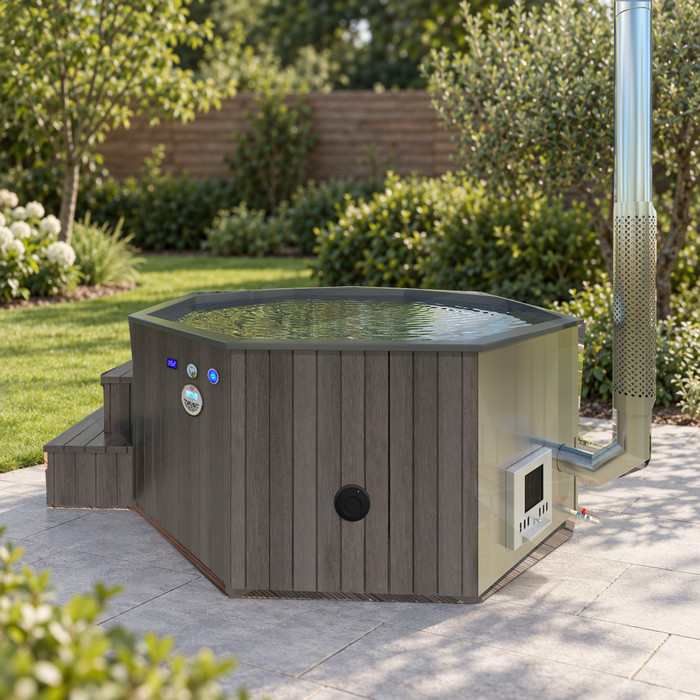
Start with the exact make, model and version shown on your purchase documents, product label or the supplier’s records. Add any product code or revision detail available: tubs within one range may change over time, and a similar outline or name is not proof that covers interchange. If you still have the old cover, photograph its label, top, underside, seam and edges, but treat it as supporting evidence rather than a template; age or damage may have changed its shape. A catalogue entry such as the Bloomcabin hot tub Cove 2 identifies a particular tub name, not a cover match for every tub that looks similar.
If documentation has gone missing, contact the seller or manufacturer with the details they request, such as a model code, invoice or photographs. Ask for the replacement-cover reference that matches your exact version, and check whether the answer depends on measurements you still need to provide. Mention changes near the rim, such as replacement trim or added fittings, rather than expecting the supplier to identify them from a product name. Save any written reply with its drawing or reference number. If a match cannot be confirmed, ask what further information is needed instead of choosing the nearest-looking cover.
Measure according to the supplier’s guide
Use the measurement instructions supplied for the cover you are considering. Ask which points define the length and width, whether the supplier needs a diameter, how to record corner radii and whether the edge profile matters. Do not assume that the outside edge of the tub, its rim or the old cover is the correct reference; the supplier should specify where each measurement begins and ends. They may also ask for the hinge line or an overhang measurement. Follow their requested units and label every figure, so that a list of numbers cannot be mistaken for a different set of dimensions.
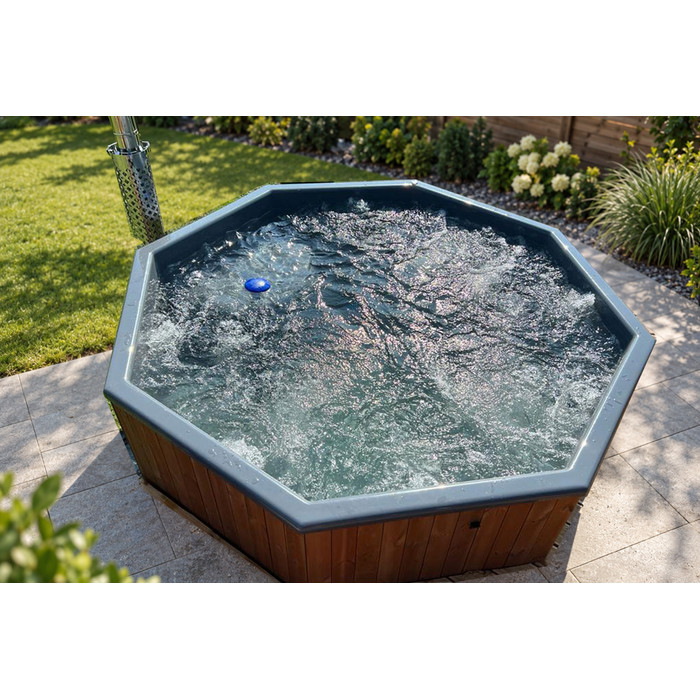
Make a simple top-down sketch or clear photograph and mark each measurement beside the relevant edge. Note which side the supplier should treat as the front, and show the hinge direction or any openings if requested. The Bloomcabin Hot Tub Haven 6 product page gives a model name to use in an enquiry; the cover supplier still needs to provide the relevant measuring method. Do not round a figure to fit a common size. If your measurements disagree with a specification you have been given, send both sets and ask which reference should be used before ordering.
Before you order 2
Match the outline, hinge and any openings
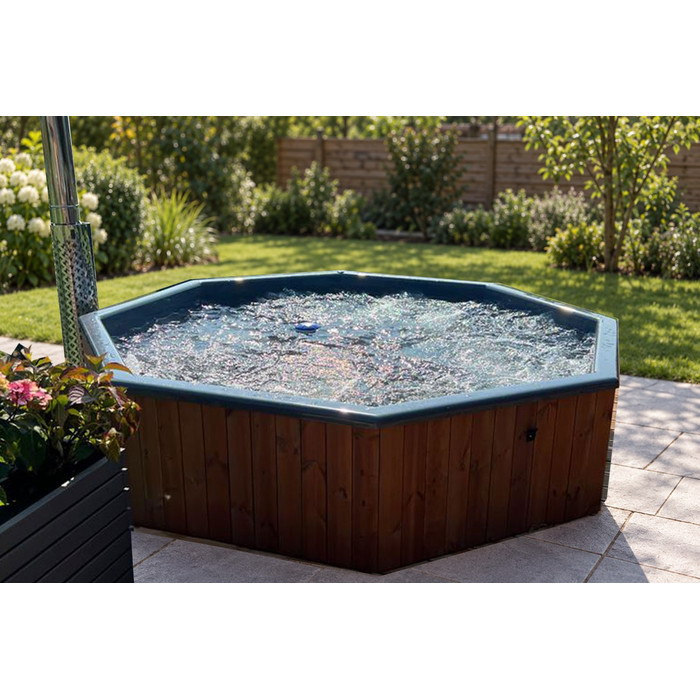
Length and width do not describe the whole outline. Check whether the tub has square, rounded, curved or otherwise irregular corners, and ask whether the supplier needs the corner radius or another detail to reproduce the edge. For a rounded or oval tub, confirm which overall measurements are required rather than assuming one diameter is sufficient. A cover’s central seam or hinge also needs to correspond to the tub’s layout. Use the exact product name, such as Bloomcabin Hot Tub Fjord 8, when labelling a sketch so the supplier can connect your notes to the tub being discussed.
Point out anything that could affect the cover’s shape or movement: a control panel, handle, pipework, raised rim or other obstruction. Ask whether the proposed cover includes a cut-out, where it sits and which direction the cover is meant to face. Do not assume an opening is unnecessary just because it is absent from a product photograph. Avoid cutting or modifying a new cover yourself unless its maker explicitly advises that; changes could affect the fit and may be relevant to the product’s terms. If the tub has been altered, describe the change and request a fresh compatibility check.
Compare construction, materials and insulation
Ask for a written description of the cover’s construction rather than relying on a general label. Depending on what the supplier offers, useful details may include the core material, whether the cover is hinged or made in sections, the outer skin, underside, seams and edge reinforcement. If insulation is claimed, request the relevant specification, such as the core type, thickness or density, and ask what each figure refers to. Thickness on its own does not explain the whole construction or provide a like-for-like comparison. For a model such as Bloomcabin hot tub Aurora 10, request specifications for the cover itself rather than relying on the tub’s general description.
When comparing alternatives, separate the material specification from descriptions of colour or finish. Ask the supplier to identify the materials used for the outer surface and underside, and to explain any differences between the options offered. Check whether the quoted construction applies to your required size and shape, rather than another cover in the same range. Record the answers under the same headings for each option, with gaps clearly marked. If one supplier provides a detailed specification and another gives only a broad description, ask for the missing information before drawing a comparison. A photograph alone cannot establish the material or its performance.
Before you order 3
Check the cover’s weight and handling
Ask for the weight of the exact cover size and construction, not an estimate based on the hot tub’s model name or a photograph. Check whether the figure is approximate, whether it includes handles or other parts, and whether it refers to a new, dry cover. If handling is important, ask the supplier to explain how the cover is opened and what assistance or equipment they recommend. Do not assume that a particular person can lift it from a weight figure alone: the cover’s dimensions, balance and grip all affect how it feels to handle.
Think about who will open and close the cover during normal use, and whether the suggested method is practical for them. Ask for a demonstration or handling guidance where available, and follow the manufacturer’s instructions rather than forcing a cover that feels difficult to move. When enquiring about a cover for the tub shown on the Bloomcabin hot tub Cove 2 product page, explain whether you expect to handle it alone or with help. If lifting is uncertain, ask about compatible aids before committing to the cover rather than assuming one can be added later.
Plan how the cover will be lifted and stored
If you are considering a cover lifter or other lifting aid, verify that it is intended to work with both your tub and the particular cover. Ask whether it is included, sold separately or unavailable for the proposed combination, and whether the supplier has instructions about clearance or placement. A lifter that appears suitable in a photograph is not necessarily compatible with your tub’s shape, cover hinge or surrounding space. For the tub shown on the Bloomcabin Hot Tub Haven 6 product page, ask which lifting arrangements are compatible with the proposed cover and what space each arrangement needs when fully open.
Allow for the space occupied by the cover when it is open, including the direction in which it moves and where it rests. Check whether that position would obstruct a path, doorway or access to equipment, and ask the supplier what clearances the chosen arrangement requires. If you will lift the cover without an aid, decide where it can be placed safely while the tub is in use. Ask how it should be supported and stored; do not leave the answer to a last-minute guess. These checks can reveal that a different lifting arrangement or cover design is more practical for your available space.
Before you order 4
Understand fastenings and safety claims
Find out which fastenings come with the cover and where they attach. Ask whether straps, buckles or other parts are included, adjustable and replaceable, and whether they are designed for the exact tub and cover being quoted. If a fastening is described as lockable, ask how it operates and what it is intended to do; do not assume that a lock or strap is included just because it appears in an image. When choosing a cover for the tub shown on the Bloomcabin Hot Tub Fjord 8 product page, check that you will be able to reach and operate its fastenings in the intended position.
Treat safety claims separately from ordinary fastening details. A cover should not be assumed to support a person, prevent access or act as a safety barrier because it looks sturdy or has straps. Ask the supplier to explain the intended use and limitations of any stated safety feature, and request supporting documentation before relying on it. Keep appropriate access measures in place for your household; a cover alone should not be treated as a substitute for them. Avoid making a purchase decision on a vague description such as secure or child-safe when the supplier has not explained what the wording means.
Check outdoor suitability and care
For a cover used outdoors, ask what the supplier says about exposure to sun, rain and wind, and whether those claims apply to the particular material and construction you are buying. Request the limits or test information behind terms such as weather-resistant, if they are used. Check whether the description covers seams, edges and the underside as well as the visible surface, and ask which conditions are excluded from any stated protection. Do not infer outdoor suitability from a photograph or assume that every cover material has the same care needs. Clear, product-specific information is more useful than an unqualified label.
Get the care instructions before ordering so you know how to clean and store the cover. Ask which cleaning products are permitted, whether rinsing or drying is required and how the maker recommends dealing with marks or surface damage. Do not use a cleaner or treatment unless the supplier says it is suitable for the material. Check whether any parts can be replaced, and what signs of wear should prompt you to seek advice. If the cover will be stored away for any period, ask how it should be supported and protected. Following instructions for the exact material is safer than applying a general cleaning routine.
Before you order 5
Confirm availability and what the price includes
Before comparing prices, establish whether the cover is available for your exact tub and whether it is included in the package or sold as a separate item. Ask for the cover’s own product reference and a written list of what comes with it. Straps, handles, a lifting aid or other accessories may be priced separately, so do not assume that every item shown or mentioned is part of the offer. If the supplier suggests a different design or a made-to-measure option, ask for its compatibility and specification in writing before treating it as an alternative.
Compare like with like by asking each supplier for the full amount payable and a breakdown of the quoted items. Check whether delivery, VAT and any additional charges for a non-standard shape or accessory are included; no current price or package should be assumed from a general product description. Ask about delivery arrangements and what to do if the item arrives with a different specification from the one agreed. If the cover is made or ordered to your measurements, get the supplier’s terms for changes or a fit issue before you pay. A clear quote helps distinguish the cover itself from optional extras.
Get the final specification and terms in writing
Ask for the cover warranty terms separately from any information about the hot tub. Check what parts are covered, the duration, exclusions, how to raise an issue and whether the terms depend on following particular care instructions. Do not assume that a warranty on the tub automatically applies to its cover. If the cover is a replacement or made to order, ask what the supplier will do if it does not match the confirmed dimensions or configuration. If you are ordering for the tub shown on the Bloomcabin hot tub Aurora 10 product page, make sure the quote names both the exact tub version and the agreed cover reference.
Before confirming the order, bring together the model and version, measurements, outline, hinge direction, openings, construction, stated weight, fastenings, care instructions and any lifting aid. Check that the quote says whether the cover is included, lists any separate parts and records the agreed price and terms. Save the supplier’s confirmation, drawing and order record in one place. When the cover arrives, compare its reference and visible configuration with what you ordered before using or modifying it. If a key detail differs or remains unclear, pause and ask the supplier to resolve it rather than trying to make the cover fit.
Frequently asked questions
Can I use my old cover as a template?
Use it as a clue, not as the only measurement reference. Wear, damage or a previous mismatch may affect its shape. Photograph it and share those images with the supplier, but follow the measurement method they provide for the replacement.
How do I know a replacement cover will fit?
Ask the supplier to confirm compatibility with your exact hot tub model and version. Provide the measurements and details they request, including the outline, hinge position and any openings. A similar-looking cover or matching product name is not enough to confirm fit.
Is a thicker cover always better insulated?
Not necessarily. Thickness alone does not describe the full construction or establish how insulation claims were assessed. Ask for specifications for the particular cover, what the figures mean and whether they apply to your tub’s size and design.
Do locking straps make a cover a safety barrier?
Do not assume so. Ask the supplier what the fastenings are designed to do, and do not treat a cover as something that supports a person or prevents access unless its intended safety use is clearly documented.
Does a hot tub purchase include a cover?
Package contents can vary, so check the specific offer and written quote. Confirm whether a cover is included, whether it is a separate item and whether any straps, lifting aid or other accessories are part of the price.
A suitable hot tub cover is one that the supplier confirms against your tub’s exact geometry and that you can lift, store and care for in your setting. Compare documented construction and material information alongside weight, fastening, care and price, rather than choosing by appearance or one headline feature. Keep the cover reference, fit confirmation and warranty terms with your order record. If measurements, compatibility or a safety claim remain unclear, wait for a clear written answer before buying.
