
How Many People Are Needed to Assemble a Summer House?
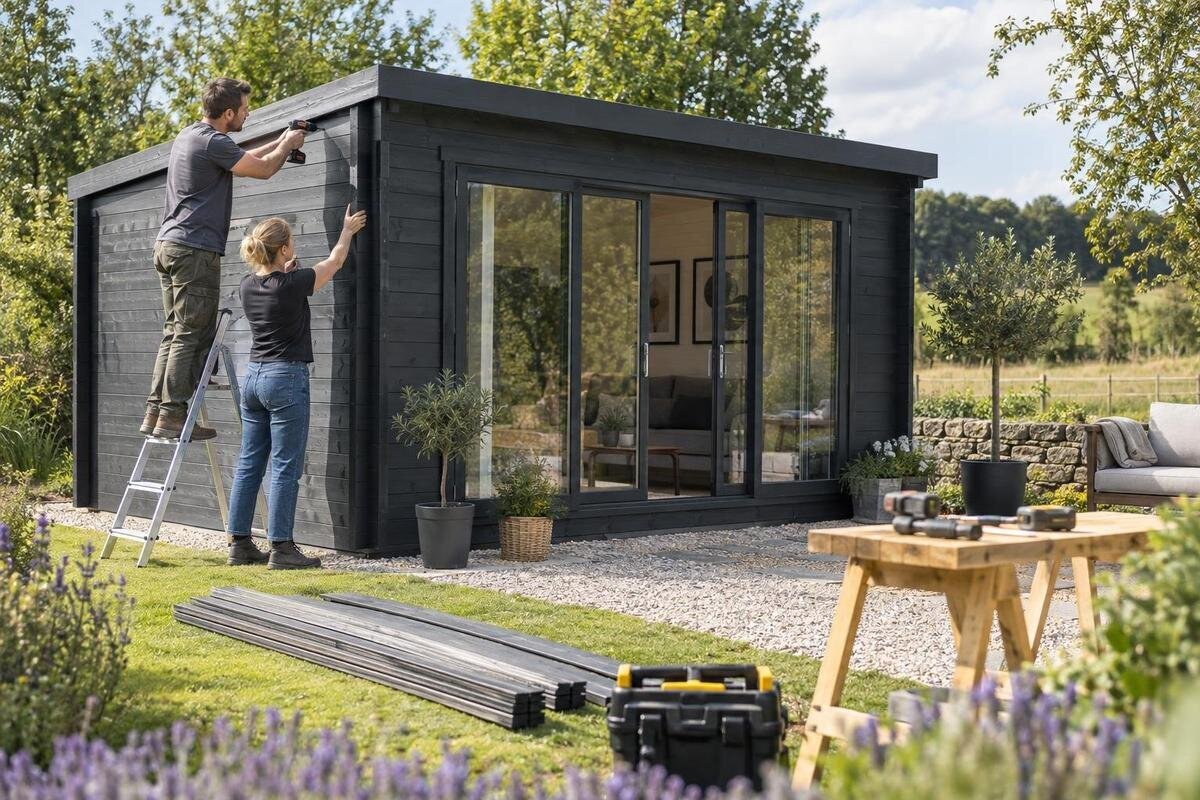
Summer house assembly
The number of people needed to assemble a summer house depends on the exact kit and the work set out in its instructions. A single figure for every model would be misleading: handling a package, holding parts in position and completing the assembly are different tasks. If you are choosing a model or arranging an installer, find out the stated team size before booking time or promising help.

01
There is no single team size for every summer house
There is no single number that works for every summer house. The required team depends on the exact kit, the sequence in its instructions and which parts need to be moved or held while they are joined. Two models that look similar in a photograph may have different components or assembly steps. Equally, an apparent floor size tells you little about whether a particular part is manageable. Use the manual for the exact model and version you plan to order; a generic guide, product image or informal estimate cannot replace it. If you cannot get the manual before buying, ask the seller how to obtain it.
If the manual states a number, treat it as the requirement, not an optional suggestion. If it gives no headcount, do not infer that one-person assembly is intended. Having two capable adults available is a cautious starting point, but it is not a guarantee that two will be enough; the handling details or supplier may call for more. Nor is a larger group automatically preferable: extra people need room and clear roles. Ask how many people are required at each stage, and whether a helper is needed for unloading, a particular task or the full assembly. That is more useful than inviting people without knowing when their help is needed. Also consider whether the people you have in mind can attend at the same time. A plan that depends on separate, short visits can fail if a task requires continuous support. Agree a fallback contact before delivery day, particularly if the instructions identify a stage that cannot safely be paused.
Read the instructions before you book help
Read the assembly instructions before you buy, if the seller can provide them. Look for an explicit team size, a note that certain steps need two people, or an explanation of a stage where a component must be held while another operation is completed. Check whether that direction applies to the whole build or only to a named task: a request for help at one step does not necessarily mean an extra person is required throughout. Record the exact model name and version the document covers, and compare it with the listing in front of you. This avoids planning around instructions for a similar-looking but different kit. Read the document from beginning to end rather than searching only for a number. Notes about preparation, component identification and the order of work can explain why help is needed at a particular point. Make a short list of those points so that a helper understands the commitment before agreeing a date.
If the manual is not available, ask the seller to provide it or confirm the required team in writing, and check that the answer applies to the version you intend to order. A listing name helps identify a product, but it does not settle the staffing question: the garden house Verdana 1 listing does not, by its name alone, reveal how many people assembly requires. Getting the answer early gives you time to arrange help, check an installer's availability or reconsider your timetable. It also makes conversations with the seller more precise than asking about a general size or style of summer house.
02
How component size and handling affect the team
Do not judge the team size by the house's footprint alone. The assembly may involve parts that are long, broad, heavy or awkward to turn, and their dimensions and handling guidance matter as well as the total size of the kit. Packaging may divide the parts into several units; access through a gate or around a corner can make a component harder to manoeuvre than the build area itself. Consult the packing information and manual for details about individual parts. If dimensions or weights are not shown, request them rather than estimating from a photograph. Consider where each package can be set down temporarily without blocking the route or creating repeated carrying. A clear, level area near the build site can reduce unnecessary handling, but it does not replace the manual's directions. Plan this before delivery, while you can still change the arrangement for receiving the kit.
Moving a kit to the site is different from handling parts during assembly. A helper may be needed to steady or align a component while another person follows a fixing step, even if the part is not exceptionally heavy. Adding more people does not automatically solve a handling problem: a crowded working area can restrict movement and make it harder to follow the instructions. When asking about the garden house Verdana 2 page, request information about component handling and assembly staffing. The model name alone is not evidence of dimensions or a suitable team size.
Identify the stages that need extra help
Read each stage of the manual for points where work has to be held in position while another operation is completed. Depending on the supplied design, the instructions may describe joining sections, positioning upper parts or fitting components that need alignment; do not assume the same order or tasks apply to every summer house. If the manual says a second person must support or position something, have that person available before you reach the step. An illustration or video of a different build is not a substitute for instructions for your model.
Plan who will read the next step, who will position or hold a part as instructed, and when the helper can leave. Follow the stated sequence and do not improvise a prop, substitute a different method or rush because someone is waiting. If you are considering the Durano garden house listing, ask for its exact assembly instructions rather than inferring how any stage works from the model name or a product image. Clear roles can reduce confusion without bringing extra people into a limited work area.
03
Include the delivery route in your plan
Getting the kit to the assembly area is a separate planning question from joining it together. Before ordering, consider the route from the expected delivery or unloading point to the prepared site. Gates, corners, steps, an uneven path, distance and narrow passages may affect whether packages can be moved as planned. Ask the seller where items will be left and what the delivery service includes; do not assume that delivery means the kit will be carried to its final position. Check the route before deciding how many people you need at the site. Measure awkward pinch points rather than relying on a general impression of access. Note overhead obstructions, changes in level and places where a package would need to turn. This practical check helps you explain the route accurately when requesting information, and prevents the assembly team discovering a foreseeable handling difficulty on the day.
Count people for separate jobs. Someone who helps with handling at delivery may not need to stay for assembly, while the people building the house may not be available when the kit arrives. Check package dimensions and weights, whether parts arrive in separate units, and the practical route before arranging help. For the Veltor 1 product page, use the model name to ask about relevant delivery and packing information, not to infer what a courier will carry or how the kit can be moved. If access looks difficult, ask the seller or a suitable handler about options before ordering.
Choose helpers who can take part in the work
A useful helper is someone who can follow instructions, communicate clearly and be available for the relevant task. Agree roles before starting: one person might read the next step and check the parts, while another carries out the task or holds a component as the manual directs. The person leading the build can pause the work if anyone is unsure what comes next. Someone without assembly experience may still be able to help with a straightforward task when guided, but do not count on a person who cannot manage the handling they are assigned.
More people are not automatically better. A crowded area can leave little room to position parts and make it harder to see whether the work is following the manual. Estimate the team needed for each stage, then decide whether another person adds practical help instead of inviting everyone for the full day. If the Orello 1 product page is one of the models you are considering, find out its stated requirements before deciding whether friends, family or an installer can cover them. Do not assume that a particular model needs a particular team.
04
When a professional installer may be useful
Consider an installer if the manual calls for more people than you can reliably arrange, you are unsure about the sequence, or the route to the site makes moving components difficult. That does not mean the work is impossible to do yourself; it is a way to match the job with the time and experience available. An installer can give a more relevant estimate after seeing the exact model instructions and understanding the proposed assembly location. Ask whether the estimate assumes a prepared site and clear access, rather than treating a general installation service as covering every task.
Before booking, ask how many people will attend, whether that team is based on the instructions for your exact model, how long the work is expected to take and what the booking excludes. Clarify whether site preparation, finishing or packaging removal is outside the assembly service rather than assuming it is included. If you have not yet ordered, give the installer the exact identifier, such as the Modano 1 model listing, and request an estimate based on the relevant instructions, not on the name alone. Confirm the access arrangements and agreed scope before fixing a date.
Allow time for the full job, not just the assembly
A headcount does not predict how long assembly will take by itself. Use any timing information in the model instructions or ask the seller or installer for an estimate based on the actual kit and team. Allow separately for tasks such as moving the components to the site and familiarising everyone with the instructions. If several people are helping, agree the date and likely working period early; availability for an hour may not match a task that needs assistance at a particular point later in the build. Also allow time to check that the required people are present before a stage begins. A schedule is easier to manage when it identifies dependencies, such as waiting for delivery or a helper's arrival, rather than treating the build as uninterrupted work. Avoid setting a fixed finish time when the relevant estimate is uncertain.
Build some flexibility into the timetable for interruptions or a change in conditions, and avoid promising that helpers can stay indefinitely if the work overruns. Arrange for someone to be available for any stage the manual says needs extra support, rather than relying on them turning up at the right moment by chance. The Veltor 2 listing identifies a model but is not an assembly timetable. Check the relevant instructions or ask for an estimate before choosing a day and asking others to reserve their time.

05
Questions to settle before you place an order
Before ordering, ask which assembly instructions apply to the exact version, whether they specify a team size and whether any stage needs help from a second person. Ask what is known about the dimensions and weights of the packaged parts, where delivery items will be left and whether the route to your site is likely to affect handling. If you expect to hire an installer, find out what information they need to provide a useful estimate. These answers help you compare the practical work involved, not just the appearance or stated size of different summer houses.
Check your own availability too: who can help, on which day and for which tasks? If the number of helpers is fixed, see whether the instructions and an installer can confirm that your plan is workable before you commit. If comparing the Veltor 3 product page with another listing, use the model name to request the correct manual and staffing details; do not infer either from the page title. Unclear information is a reason to ask more questions before ordering, not to assume that the assembly will be straightforward.
Make a clear staffing plan for assembly day
Once you have the instructions, turn them into a simple staffing plan. Note the team size stated for the overall build and mark any individual steps that need extra support. Separately record who will be available to receive or move the kit, and check that the route and working area are ready for the planned tasks. Tell each helper when they are needed and what role they will take. This is more reliable than counting everyone present at the start and assuming the same people will be required throughout.
Keep the manual available during the work and make sure the person leading the build can check a step before the team moves on. If the instructions are unclear, a component does not match what is described or the planned team is no longer available, pause and ask the supplier or installer for advice rather than asking people to improvise. The final number may be one, two or more, depending on the exact kit and work involved. A plan based on the instructions lets you arrange that help before the assembly begins.
Frequently asked questions
Can one person assemble a summer house?
Only plan to do so if the instructions for the exact model make clear that one person can complete the work. A small-looking house is not proof that every part can be handled alone, and a helper may be needed for a particular stage or to move components. If the instructions are unclear, ask the supplier before starting.
Are two people always enough?
No. Having two capable adults available is a cautious planning assumption when no team size is stated, not a guarantee. The exact instructions, the components and access to the assembly area can all affect the numbers needed. Follow any stated requirement and ask for clarification if you cannot find one.
Does a larger summer house always need more people?
Not necessarily. Overall size is only one consideration; the length and shape of individual parts, the assembly sequence and the available space can matter too. Compare the model-specific instructions and handling information rather than using the floor area or a photograph to estimate the team.
Do all the helpers need to be there for the whole build?
That depends on the instructions and on the work involved. Some assistance may be needed only for unloading, moving parts or a particular assembly stage. Identify those tasks in advance and agree when people need to be available; do not assume a helper can leave during a step that calls for their support.
When should I consider hiring an installer?
Consider asking an installer for an estimate if the instructions call for a team you cannot arrange, you are unsure about the work, or the route to the site makes handling difficult. Give them the exact model details and ask how many people will attend, what the service includes and what preparation is expected from you.
The useful answer is not simply one or two people; it is the team required by the instructions for the exact summer house, with enough support for handling and access. Get the relevant manual before ordering if you can, separate delivery tasks from assembly, and reserve helpers for the stages when they are needed. If you cannot confirm the team size, include that uncertainty in your plans and ask the seller or an installer for model-specific guidance before committing your time.
