
How to Plan Water Supply and Drainage for a Garden Hot Tub
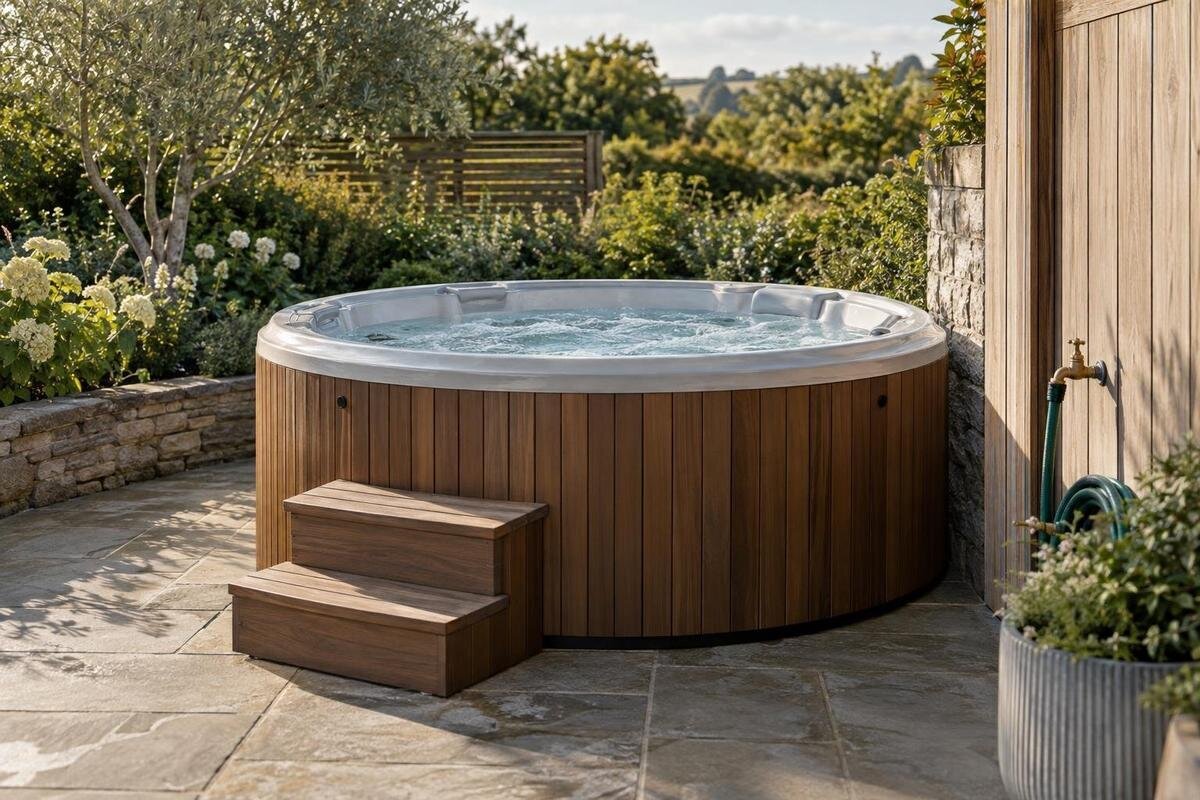
Garden hot tub planning
A garden hot tub may fit its intended position yet be awkward to fill or empty if no suitable water supply is reachable or the discharge route is unresolved. Check both journeys before ordering: from the tap to the filling point, and from the drain outlet to a confirmed destination. The exact connection, outlet position and emptying method depend on the chosen model; names and photographs do not establish them. Use current model instructions for the physical details, then confirm the proposed discharge route with whoever is responsible for the relevant drain or wastewater system.
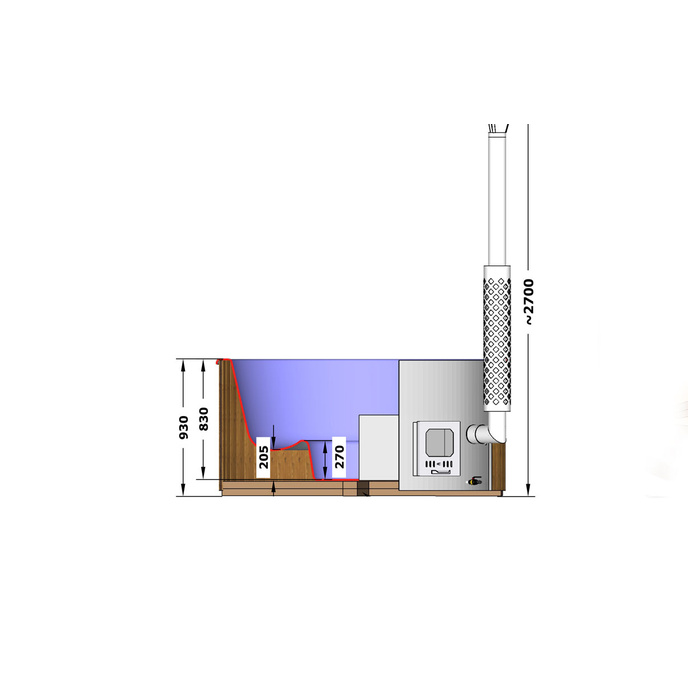
Check the chosen model’s filling and emptying instructions
A product name or photograph identifies a model; it does not establish how that model is filled or emptied. Before choosing a position, obtain the current instructions for the exact model and find the filling and draining information. Check whether filling uses a hose, a specified connection or an adaptor, and where the instructions say to stop filling. Look for the stated position of the drain outlet and the described emptying method. Do not infer capacity, connector type or outlet position from a model number, a photograph or instructions for a different tub.
Ask the manufacturer or retailer to clarify anything the instructions leave open: which accessories are required, whether they are supplied, and whether emptying relies on gravity, a pump or another specified arrangement. Request a drawing showing the inlet and outlet in relation to the tub, including any access space needed. If the Bloomcabin hot tub Cove 2 is on your shortlist, request details for Cove 2 specifically. If the current instructions are not available, ask when they can be provided rather than planning around an image or a general answer about hot tubs.
Find a usable water supply point
Identify the tap or other supply you can actually use, not merely the nearest one on a sketch. Check that it is accessible when the tub is filled, that a hose can be connected without disturbing other equipment and that you have permission to use it. In a rented home, shared garden or communal building, establish who controls the tap and how its use is paid for. If the only available source is indoors, note every doorway and passage the hose would have to cross; the practical distance is the route it follows, not a straight line through the garden.
Ask the supplier what water source and connection the chosen model requires. Do not assume that a standard hose end, a particular tap adaptor or a fixed water connection will suit it. If the instructions give a flow or pressure requirement, compare it with the available supply or ask a plumber to assess it rather than guessing. Request the stated fill volume too, so you can judge how much water is involved. For Bloomcabin Hot Tub Haven 6, get the information for that exact model. Consider access to the tap throughout filling, not just when attaching the hose: could a locked gate, parked vehicle or another household’s use of the space prevent you from reaching it? If new plumbing is needed, seek a site-specific assessment and quote before treating it as a minor accessory.
Measure the filling-hose route
Measure along the path the hose would actually take, including corners, gates, steps and the distance around walls or planting. A straight-line measurement can understate the length required. Check that the hose reaches the model’s specified filling point with enough slack to connect without pulling on the tap or fitting. Include any connector in the plan. A route that works only with a stretched hose or one bent sharply around an edge is not a dependable arrangement.
Walk the proposed route with the tap and tub positions in mind. Note thresholds, narrow side passages and places where a door, gate or vehicle could pinch the hose. Also consider where people need to pass: a temporary hose across a path may be awkward even if it reaches. Include both setting out and putting away the hose in this check. Where would you keep it between uses, and can you carry it to the tap without having to move garden furniture each time? If the route passes through the house, consider whether it leaves essential doorways usable while filling is in progress. Ask the manufacturer whether hose length or supply performance matters for the specified filling method. Before settling on Bloomcabin Hot Tub Fjord 8, compare its confirmed instructions with the route you have measured.
Keep the drain outlet accessible
Find the outlet position on a drawing for the exact model before deciding that an emptying route will be possible. A sales photograph cannot confirm where the outlet is or what access it needs. Check that you will be able to reach it once the tub is in place, attach any specified hose connection, operate the mechanism described in the instructions and disconnect it afterwards. A screen, step, planting bed or other fixed feature could make an outlet difficult to use, even if the nearest possible discharge point is close by.
Ask whether the outlet accepts a hose directly or needs a separate fitting, whether that fitting is supplied, and whether the instructions specify a pump or limits on the route. Avoid a plan that depends on moving heavy objects or dismantling a fixed surround each time the outlet is needed. Consider the space needed to handle the connection, not simply whether you can see the outlet. Can you reach the fitting, operate it as instructed and withdraw the hose afterwards without working awkwardly around a screen or step? If Bloomcabin hot tub Aurora 10 is a candidate, request its outlet position and access information rather than relying on another model’s layout. An annotated drawing or clear written instructions are more useful than a general assurance that drainage is straightforward. Use those details to check any proposed surround before its layout is finalised.
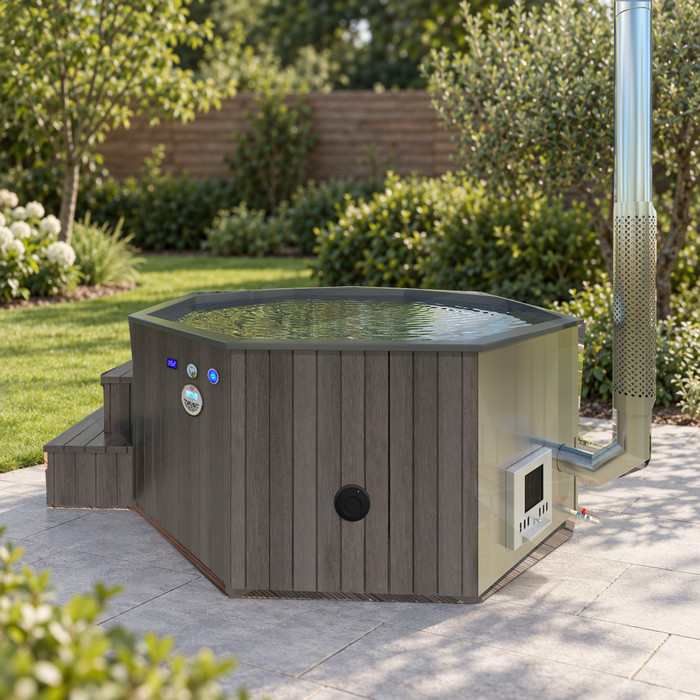
Trace the route from the outlet to the discharge point
Map the emptying route from the outlet to the proposed destination, measuring the actual path and noting turns, steps, doors, boundaries and changes in level. A hose that reaches the edge of the garden may not reach a suitable place to discharge water. Ask the manufacturer whether the emptying method is gravity-fed or requires a pump, and whether it sets limits on hose length or routing. Do not guess at a required slope, pumping method or emptying time; check those details for the selected model.
Consider how the hose will be connected, positioned and removed, and whether you can use it without sending water across a shared path, neighbouring land or towards a building. If it has to cross paving or a walkway, decide whether that can be managed in practice or whether another route is better. Check the destination end as carefully as the tub end: is it accessible when needed, and can you position the hose there using the agreed arrangement? A route that depends on access through someone else’s gate needs agreement before it becomes part of the plan. The filling and draining routes need not be the same: it may be easy to reach the inlet but difficult to guide water away. When reviewing the Bloomcabin hot tub Cove 2 listing, use your route sketch to frame specific questions about its emptying method and connections.
Is garden discharge an option?
A patch of garden is not automatically a suitable place to empty a hot tub. Consider where the water would flow and whether the ground can take the amount involved without pooling or running towards a boundary, building, public path or watercourse. The answer depends on the actual place and its conditions, so do not treat a lawn, border or gravel area as acceptable just because it is outdoors. Confirm the destination with the relevant local body and whoever is responsible for the property’s drainage before relying on it.
The condition of the water may also matter. If it has been treated, ask the manufacturer and the relevant local body whether that affects the proposed route; clear-looking water does not prove that every destination is suitable. Give them the stated volume, the intended discharge point and a description of where water could run. For Bloomcabin Hot Tub Haven 6 product details, request the current instructions and fill-volume information. Distinguish the spot where the hose would end from the wider area the water might reach, so the discussion covers the whole proposed discharge route. If you cannot tell whether the ground drains towards a gully, ditch or watercourse, resolve that before discharging water there.
Identify a drain before using it
A gully, channel or inspection point may look like an obvious outlet, but its appearance does not show where it leads. It may connect to a surface-water network, foul drainage, a combined network or a private system; arrangements vary between properties. Do not use the nearest drain, street gully or inspection chamber until you have identified the route and confirmed that it can receive water from a hot tub. A drain that handles rainwater is not automatically a suitable destination for another discharge.
Ask the water and sewerage provider or other organisation responsible for the network, and contact the relevant local authority or environmental regulator where appropriate. The right contact can depend on the UK nation and the network serving the address, so ask who can give an answer for your site. Explain where the water comes from and where you propose to discharge it; ask whether that destination is acceptable and whether any conditions or prior permission apply. Keep the response with your planning notes. Another household’s practice is not confirmation. For the Bloomcabin Hot Tub Fjord 8 model, obtain the model’s emptying instructions separately from any decision about the drain.
Check private and shared wastewater arrangements
If the property uses an on-site wastewater system, such as a septic tank or package treatment plant, do not assume it can accept a hot-tub discharge. Ask the system’s owner, maintainer or installer whether the proposed volume and the water’s condition are compatible with its instructions. The hot tub manufacturer can explain the tub’s emptying method and stated volume, but cannot confirm the capacity or requirements of a separate wastewater system. If nobody can identify the system, ask a competent drainage professional or the relevant authority for advice before relying on it.
Shared drains, rented homes and communal gardens raise a practical question of responsibility: who can approve the route and who pays for water or plumbing work? Check with the landlord, managing agent, property owner or residents’ representative before relying on shared pipework or a communal tap. Separate permission to use the shared space from confirmation that the drainage system can accept the discharge; establish who is responsible for each answer. If the plan involves a new connection, alteration or inspection, ask a qualified plumber or drainage specialist to assess the actual site and scope. For Bloomcabin hot tub Aurora 10, request the current emptying instructions from the supplier and share the relevant details with that professional. Make clear which parts of the proposed route are private and which are shared, so the discussion addresses the correct responsibilities.
Estimate water use, equipment and plumbing costs
Budgeting depends on the tub’s actual fill volume, how water is charged at the property and what work the route requires. Obtain the volume for the chosen model from its current instructions or supplier. If the property has a water meter or shared billing, check the supplier’s current charges and how the account handles additional use. Where the volume or billing arrangement is unclear, ask before estimating rather than applying a national average. Keep the stated volume and the charging basis alongside your estimate so you can see what it includes. When comparing models, use the same billing assumptions for each and leave unknown figures clearly marked rather than entering a guess. This separates a difference in water use from a difference caused by inconsistent assumptions.
Separate possible equipment from site work: a longer hose, compatible connectors, a pump if the manufacturer’s method calls for one, a new tap, plumbing work, drainage tracing or professional advice are different potential costs, not confirmed requirements for every tub. Ask which parts are included and obtain quotes against the measured route and a confirmed destination. Record one-off and recurring amounts separately. If a landlord, neighbour or shared account is involved, agree how water use will be accounted for instead of treating the supply as private.
Resolve these points before you order
Put the model and site details in one note. Record the filling method, required supply and connections, stated fill volume, hose route and any limits in the current instructions. Then note the drain outlet’s position, access needs, emptying method, required fittings and route conditions. Mark the tap, inlet, outlet and proposed discharge point on a simple sketch. This is not a substitute for manufacturer guidance or professional advice, but it can expose practical gaps early: a tap that is too far away, an obstructed outlet or a route that depends on an unidentified drain.
Get an answer for the proposed destination from the person or organisation responsible for it, including any private-system operator, property owner or network provider involved. Ask who would arrange and pay for plumbing or drainage work, and whether the advice applies to the water and route you have described. A sketch or annotated photographs can help explain the site, but they do not prove that a drain is suitable. If the connector, emptying method or discharge destination remains uncertain, treat it as unresolved before ordering. A different water point, route or shortlist may prove more practical.
Frequently asked questions
Can I fill a garden hot tub with an ordinary hose?
Only if the instructions for your chosen model allow that method and the hose connection is compatible. Check whether an adaptor is needed and whether the water supply meets any stated requirements. Measure the real route to the filling point; a hose that reaches only when stretched or pinched is not a practical solution.
Can I empty hot-tub water onto the lawn?
There is no universal answer. Check whether the ground can take the water without pooling or running elsewhere, and ask the relevant local body or drainage contact whether that destination is acceptable. If the water has been treated, confirm whether that affects the answer. Do not assume a lawn is suitable simply because it is outdoors.
Can I use the nearest outside drain?
Not until you know where it leads and have confirmed that it can receive this water. A grate or gully does not, by its appearance alone, identify the connected system. Ask the organisation responsible for the drain or a competent drainage professional to clarify the route and the applicable requirements.
Do I need permanent plumbing for a garden hot tub?
Not necessarily. The model’s filling instructions, the available water point and the emptying method determine whether a hose arrangement is practical or whether plumbing work may be needed. Confirm the required connections and outlet access first, then get a site-specific opinion if a fixed connection or drain alteration is being considered.
What should I ask the supplier before ordering?
For the exact model, ask for the current filling and draining instructions, the connection and accessories required, the outlet position, the emptying method and the stated fill volume. Separately, confirm with the person or organisation responsible for your proposed discharge destination that it can accept the water. Model details and drainage permission are different questions.
The practical test is whether you can connect the tub as instructed, reach its outlet when needed and guide the emptied water to a destination confirmed for your property. A measured hose route and model-specific instructions answer the equipment questions; an address-specific drainage check answers a separate one. If either route still depends on a guess, resolve it before committing to the chosen position.
