
How to Reduce Hot Tub Heat Loss and Running Costs
Costs and equipment
Heat loss is a normal part of keeping water warm outdoors, but avoidable losses can mean the heating system has more work to do. The most useful checks are whether the cover closes properly and remains in sound condition, how much wind reaches the tub, what insulation and heating details the manufacturer documents, and what your own energy readings show. A change that helps one installation will not guarantee the same result elsewhere: weather, routine, settings and equipment all matter. This guide focuses on retaining heat, not on a complete annual budget or a prescribed heating schedule.
Where hot tub heat can escape
Heat leaves a hot tub in several ways, and the balance varies with its construction and surroundings. An uncovered water surface loses heat to cooler air; evaporation and moving air add to that exchange. Heat can also pass through the shell, cabinet, base and exposed pipework, while a gap around the cover lets air move over the water. The heating system works to replace lost heat and maintain the chosen water temperature. Which route matters most depends on the actual design and conditions, so a general list is a prompt for checks, not evidence that a particular part has failed.
Start with what you can observe without dismantling anything: does the lid sit as intended, are there obvious gaps, and do you leave it open for long periods? Note whether a concern appears after use or continues while the tub is closed, then check the manual for normal operation and warning indicators. Feeling warmth near an outer panel or seeing vapour is not a reliable test of energy loss; weather, humidity and recent use affect what you see. Do not open the cabinet or touch equipment to look for a leak. If an inspection requires access, ask the manufacturer or a qualified professional for advice.
Check how the cover closes
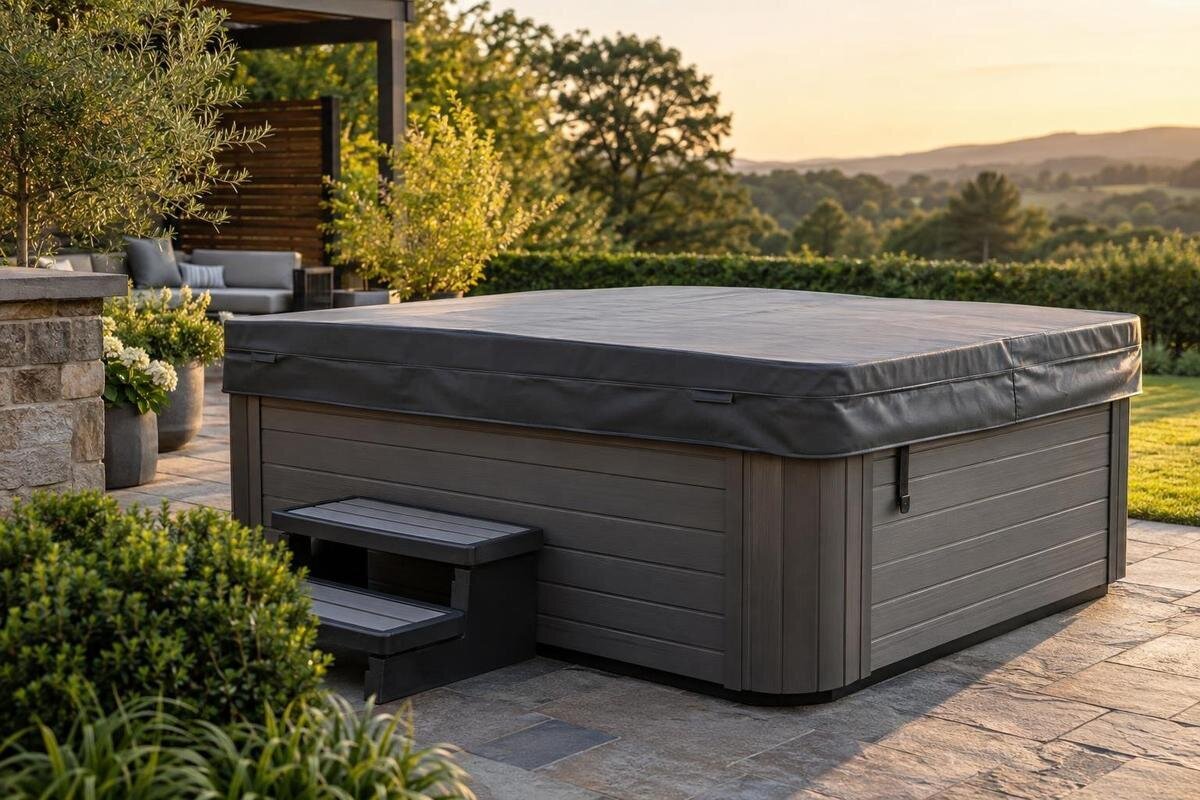
Check the perimeter with the lid in its normal closed position. Do the edges sit as intended, is the hinge in its usual position, and can any fitted fastenings be secured without pulling or forcing them? Look for a corner that lifts, a visible strip of uncovered rim or a gap that remains in ordinary conditions. Check each side, rather than only the one you approach from; a problem may be less obvious from one angle. Use the cover exactly as its maker describes. Do not add boards, weights or extra layers to force it down: they may affect how it fits or is handled, and do not establish that the surface is properly closed.
Do not assume that a cover sold for a similar-looking tub will match its rim, shape, hinge or any openings. Check the exact tub version and follow the supplier’s measurement or compatibility instructions before ordering. Ask whether a cover is included or available separately. The Bloomcabin hot tub Cove 2 listing can help identify the model in a discussion with the supplier; its catalogue name alone does not confirm a cover’s size, fit or insulating construction. If you cannot identify the tub, take measurements only as directed by the cover supplier rather than guessing from a photograph.
Inspect the cover for signs of damage
Condition matters as well as fit. Examine the outer surface, hinge and fastenings for tears, cracks, split seams, broken fixings, persistent sagging or distortion. Note water pooling if it appears alongside a change in shape or other damage, rather than assuming all covers drain in the same way. A cover that has become unusually heavy or waterlogged may have internal damage, but the visible surface cannot confirm its condition. Avoid lifting or handling it in a way the maker does not recommend. A neat exterior is not proof that the internal insulation is dry or intact, so appearance alone is not a performance test.
Follow the maker’s care and inspection instructions; unsuitable cleaners or improvised wrapping can damage a cover or stop it closing properly. If it has deteriorated, ask whether a repair is appropriate or a replacement is needed, and get confirmation of exact compatibility before paying. When identifying the tub, the Bloomcabin Hot Tub Haven 6 listing can help you refer to the right model. Ask the supplier for the relevant cover information rather than assuming a cover is included or that replacements are interchangeable. A sound, better-fitting cover may address a real gap, but the condition of the rest of the system also affects heat retention.
Compare insulation specifications, not labels
Insulation descriptions deserve closer reading than a single label. Ask which parts are insulated: the shell, cabinet, base and accessible pipework may be described separately. Check whether a stated material or thickness refers to the whole tub or just one layer. If a supplier gives an energy-use or heat-retention figure, ask for the test method and conditions, including ambient and starting water temperatures, target setting, cover position, duration and which equipment was running. These details matter because figures gathered in different conditions cannot fairly rank models. Phrases such as well insulated do not provide a useful comparison without supporting, model-specific information.
The Bloomcabin Hot Tub Fjord 8 name identifies a catalogue model, not its insulation build-up, heating method, control functions or consumption. Check the current specification and manual for the exact version you are considering, and ask the supplier to clarify anything that is not stated. More insulation is not automatically a practical retrofit: changes around a cabinet or pipework can affect ventilation, access or moisture management, depending on the design. Do not pack voids with loose material or alter panels on the strength of general advice. Obtain manufacturer guidance before modifying anything.
How wind affects heat retention
Wind can carry warmed air away from the tub and increase cooling where water, the shell or gaps are exposed. A fully closed cover limits direct contact between the water and the air, but it cannot correct a poor seal or make an exposed installation identical to a sheltered one. Look at the tub’s actual position: does wind reach it from one direction, are there recurring gaps around the cover, or does the lid lift? A simple note of windy and still periods can help put a suspected problem in context, but a short observation is not a measurement of energy use.
A suitable screen may reduce direct airflow, but do not enclose a hot tub or block vents, service access or drainage routes unless the manufacturer confirms the arrangement is suitable. Requirements vary by equipment, and a screen placed too close can change airflow or make inspection difficult. Before planning a windbreak around a model such as the Bloomcabin hot tub Aurora 10, check its current siting and clearance instructions. A name or product photograph does not establish that a tub is designed for an enclosure or a particular shelter. Ask a qualified installer if a proposed change affects the installation.
Review open-cover time and operating settings
Routine can create avoidable losses from an exposed water surface. Lift the cover only when preparing to use or attend to the tub, and close it again promptly afterwards, following the maker’s instructions for positioning and fastening. If several people are using it, avoid leaving the lid open during a long pause; make sure everyone knows how it should be returned to its closed position. If cleaning or maintenance requires the tub to remain open, follow the relevant instructions rather than improvising a cover over people or equipment. This habit reduces unnecessary exposure, but it cannot fix a damaged lid or poor insulation.
Control settings need more care than generic energy-saving tips often allow. Lowering the chosen water temperature can reduce the difference between the water and colder surroundings, but the appropriate operating range and any hold, sleep or timer function depend on the model and its instructions. Do not copy another tub’s schedule, switch systems off or assume a long cool-down is cheaper overall: recovery, weather and use all affect the result. If you are considering the Cove 2, ask which controls are fitted and what operating guidance applies before planning a heating routine.
Measure energy use before changing several things
Establish a baseline before changing several things at once. For an electric tub, use an existing meter, display or monitoring arrangement only if it covers the tub’s relevant consumption and can be read safely; an ordinary household meter may include the rest of the home. For a setup using another fuel, record the quantity actually used over a defined period, in a consistent unit, rather than estimating from how long a heater appeared to run. If you cannot isolate the tub’s use, ask the manufacturer or a qualified installer about an approved way to measure it. Do not fit a meter or open electrical equipment yourself.
Alongside each reading, note the period’s outdoor conditions, cover-open time, chosen setting, number and timing of uses, and any unusual events such as refilling or servicing. Keep the normal routine as consistent as possible. The aim is a fair comparison, not a perfect laboratory test. Weather changes can overwhelm a small improvement, so compare periods of similar length and conditions and repeat the comparison if practical. When requesting energy-use information for the Haven 6, ask whether any supplied figures describe the whole system’s consumption and how they were measured.
Compare heat costs with like-for-like figures
Turn measured use into a cost only after choosing the correct unit and tariff. For electricity, multiply recorded kilowatt-hours by the unit rate on the bill for the same period; if the rate is in pence, convert pence to pounds for a cash total. Use the actual unit rate, not an average monthly payment. For another fuel, multiply the quantity used by its delivered price per matching unit, including relevant delivery charges and any unit conversions. Do not compare a price per bag with a price per kilogram unless you know the bag weight. Where applicable, keep a standing charge separate: it usually does not fall simply because the tub uses less energy.
To estimate the effect of a change, compare the costs for comparable periods and subtract; the observed difference does not prove the cover alone caused it. Note the unit rate, fuel, measurement method, weather and usage assumptions beside the calculation. If the tariff changed, first compare energy use at a common rate, then price current use using the current rate. For a prospective purchase such as the Fjord 8 product listing, ask for data on a comparable basis for the heating method and setup concerned. Check whether figures are measured or modelled and what conditions were used; without that context, a precise UK-wide saving would be misleading.
When a replacement cover or insulation work is worth considering
A replacement cover is worth investigating when the current one no longer fits as intended, has visible damage or may have waterlogged internal material. First ask whether repair is possible and which replacement matches the exact tub. Check the proposed cover’s fit and construction with the supplier, and ask what supports any insulation claim. If you own an Aurora 10, use the exact model and version when enquiring about a replacement rather than choosing by appearance alone. A compatible replacement may close an identified gap, but that does not establish how much energy it will save in your installation.
Consider insulation work only if the manufacturer or a qualified professional identifies a relevant route for improvement and explains what is approved for that design. Compare the full cost of the work with a realistic estimate of the difference in heat input over the period you expect to use the tub, allowing for uncertainty in both figures. A payback calculation based on a vague marketing claim is not useful. Without verified model-specific consumption data and your own current tariff, you cannot reliably rank products by cost or estimate a retrofit’s payback. A clear baseline can help you decide whether further investigation is justified.
Which changes need manufacturer advice?
Keep routine checks non-invasive: close the lid as designed, look for visible damage and gaps, read the current manual, and note operating displays and usage. These checks can help you describe a concern, but they cannot identify hidden insulation defects or establish that a heater is inefficient. If the controller shows a fault, follow the manufacturer’s response instructions rather than bypassing a warning or opening a panel. If taking measurements requires access to equipment you are not qualified to handle, ask an appropriately qualified professional. An energy comparison is not a reason to take risks with electrical work.
Seek manufacturer advice before changing settings beyond the stated range, programming a timer, replacing a cover, adding insulation or building a wind screen close to the tub. Ask specific questions: which cover and fastening method are approved for this version; what heating method and controls are fitted; where must air circulate; how should energy use be measured; and what clearance or service access must remain? If an installer is involved, ask them for site-specific guidance. This can prevent spending on a change that does not suit the equipment or makes routine operation harder.
Frequently asked questions
Does a hot tub cover stop heat loss?
No cover stops all heat loss. A correctly fitted, closed cover limits heat escaping from the water surface, but heat can still pass through other parts of the tub, and gaps or a damaged cover can reduce its effectiveness. Check the fit and condition against the manufacturer’s instructions.
Should I turn the temperature down or switch the tub off between uses?
There is no setting or schedule that suits every hot tub. A lower water temperature can reduce the difference between the water and the surrounding air, but the controls, recovery time and operating requirements vary. Follow the instructions for your exact model and compare measured use before drawing conclusions.
How can I tell whether my cover needs replacing?
Look for damage, distortion, persistent gaps, failed fastenings or signs that the cover has become waterlogged. These are reasons to ask the supplier about repair or replacement, not proof of the condition of the core. Confirm exact compatibility before ordering.
Can a windbreak reduce hot tub running costs?
Reducing direct wind exposure may help limit cooling, but the result depends on the installation and conditions. Do not enclose the tub or obstruct vents, access or service areas without manufacturer guidance. Compare energy use over similar periods to see whether a change made a measurable difference.
How do I estimate the savings from reducing heat loss?
Compare measured energy or fuel use over similar periods, then price the difference using the relevant unit rate. Keep the measurement method, weather, usage and tariff assumptions with your calculation. The result is an estimate if those conditions differ, and it is not a guaranteed saving.
Reducing heat loss starts with a cover that closes properly and remains in sound condition, suitable insulation, less unnecessary exposure to wind and open air, and a routine that follows the manufacturer’s instructions. Make the checks you can carry out safely, then record energy use before spending on replacement parts or changes to the installation. If the figures are not comparable, treat them as clues rather than evidence of savings. A compatible cover or a change in routine may help when it addresses a real source of heat loss, but the result depends on the tub, weather, use and energy price.
