
How to Inspect a Summer House After Strong Winds or Heavy Snow
Summer house safety
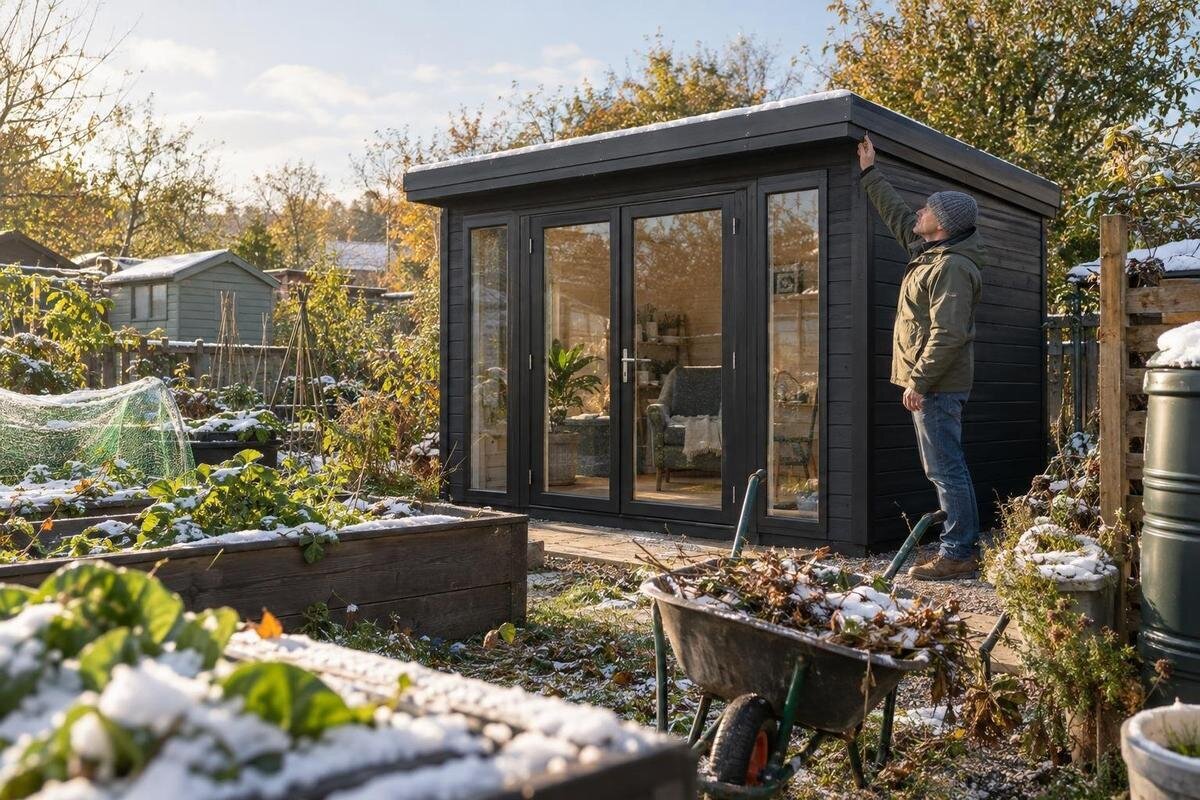
Strong winds and heavy snow can leave a summer house looking intact while loosening roof coverings, shifting walls or affecting its base. Do not begin by opening the door or climbing a ladder. Wait until the weather has settled and the route is free of falling branches, ice and other hazards, then assess what can be seen from safe ground. This guide covers the first visual checks, signs that mean you should keep clear, when to seek a professional assessment, and what to verify if damage leads you to consider a replacement.
01
Wait until conditions are safe
An inspection can wait; an unstable roof or a falling branch cannot. Do not go into the garden while strong gusts continue, snow or ice is falling, or debris is still moving. Once the weather eases, check the route as well as the summer house: branches overhead, a damaged fence, slippery paving, pooled water, loose roofing or fallen wires can make a routine approach unsafe. Keep children and pets away from the area. If a power line is down or another immediate hazard is present, stay well clear and contact the appropriate emergency or utility service instead of trying to move it. Poor light also makes changes to the roofline and ground difficult to judge, so postpone a close look until visibility is good.
Heavy snow calls for particular caution because snow may remain on the roof after snowfall stops, and damage can be hidden beneath it. Do not stand beneath the eaves, climb up to clear snow, shake the building or enter for a closer look. If the summer house is visibly leaning, the roofline has dipped, parts are hanging loose, or you hear cracking, withdraw to a safe distance and keep others out. Arrange an assessment by a suitably qualified building or roofing professional. A view from outside can identify warning signs, but it cannot establish that a suspect structure is safe; a quiet garden and stopped snowfall are not proof that it is ready to use.
Start with a ground-level visual check
Once the route is safe, begin with a broad view from firm, level ground. If conditions allow, look at each accessible side without walking beneath suspect eaves or branches; there is no need to circle the building if one side is unsafe. First note the overall outline: whether the roofline still appears even, whether a wall leans or bulges, and whether the summer house seems to sit as it did before. Then notice loose roof coverings, displaced pieces, broken glazing and impact damage from branches. Familiarity with the building helps, but memory alone is not a precise before-and-after comparison. If a fence or tree now blocks a clear view, do not climb it or move unstable debris to get a better angle.
Take dated photographs from a few safe, repeatable positions, using camera zoom rather than getting closer to inspect a high point. Include enough context to show where damage sits, and write a short note for each observation: for example, 'new gap at rear corner' rather than a guess about its cause. An earlier photo can help, but differences in light or viewpoint may create apparent changes, so compare cautiously. Do not move branches or loose material, test a wall by pushing it, handle broken glass, or climb on a nearby structure for a better angle. The first pass is a record and a triage step, not proof that hidden parts are sound.
02
Inspect the roof without climbing
Look along the roof ridge and edges from ground level, where they are visible. After strong winds, note coverings that are missing, lifted, torn or hanging, new openings, and gutters or edge trims that appear displaced, if fitted. After heavy snow, look for a new dip, bowed appearance, separation or a roof surface that no longer seems level. Snow can obscure the covering and hide how much has shifted, so a clean-looking edge is not proof that the whole roof is intact. If possible, view it from more than one safe position, but do not stand directly below the eaves to inspect them.
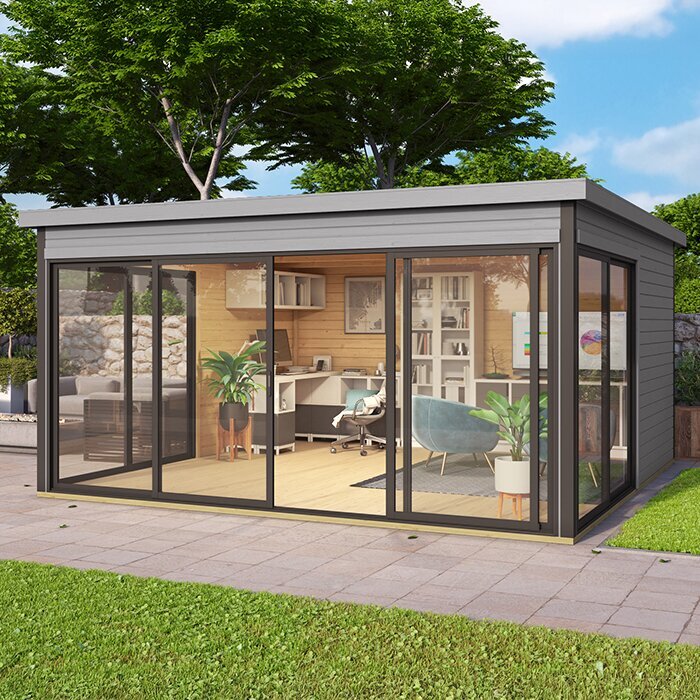
Do not climb a ladder, lean over the roof, poke at loose material or try to clear snow or debris yourself. A leak inside may point to roof damage, but no visible leak does not rule out a problem. Do not estimate how much snow a roof can bear or assume that one apparently intact area represents the rest. If anything is sagging, hanging, open or newly displaced, keep out and ask a roofing or building professional to assess it. If roof damage leads you to consider a replacement, use the Verdana 1 listing only as a place to review published details: verify roof construction and any stated suitability for your exposure with the seller, rather than assuming the name or photographs show weather performance.
Look for movement in walls and joints
Look at each wall from a safe distance and compare its line with the roof and adjacent walls. After strong winds or snow, a fresh lean, bulge, panel shifted out of place, gap at a corner, or visible separation where wall and roof meet deserves attention. Check how one section meets another, not only the broad face of a wall; a corner or junction can make movement easier to spot. Where fixing heads or brackets are visible, note any missing or pulled component without touching it. Timber can have existing marks and irregularities, so use earlier photographs if available and focus on a new change in alignment rather than inspecting every small crack. Appearance may show movement, but it cannot tell you which connection has failed.
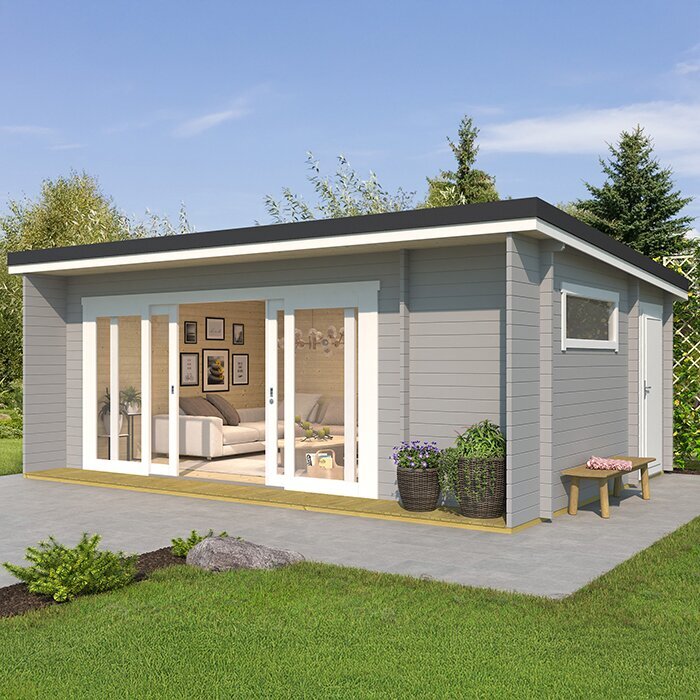
Do not push a wall, tighten fixings or try to pull a displaced section back into position. If a wall has moved, the roof-to-wall junction has opened, or you cannot tell whether the structure is stable, keep people clear and arrange a professional assessment. If a rebuild or replacement is being considered, check the information actually published for a candidate such as the Verdana 2 listing: confirm dimensions, construction and assembly requirements with the supplier where they are not clear. Ask for site-specific advice; a product name or image cannot show whether a particular building suits your ground or weather exposure.
03
Check doors and windows without forcing them
Inspect doors and windows from outside first. Look for a frame that is visibly out of square, a gap that has appeared, hinges or catches that have shifted, a door leaf hanging unevenly, or cracked or missing glazing. Wind can force an opening or shift its frame; movement in the surrounding wall can also make it stick. A door that still opens does not establish that the house is stable, and a tight latch may result from movement rather than a fault with the latch. Note whether a visible change continues into the adjoining wall or roof junction. Do not reach through broken glazing or touch loose fragments.
Do not force a stuck door or window, pry it open or test the frame by leaning on it. If it opens freely and no exterior warning signs are present, you may be able to look through without exerting force; if not, stay outside and seek help. For a future replacement, check exact opening sizes, positions and clearance against your site in the supplier's information. A candidate such as the Durano listing should be assessed from its written specifications, not a photograph or model name. Do not measure a damaged opening until a professional says it is safe, and note which openings appear affected for the person assessing the building.
Look for signs of damage inside
Only look inside if the outside check shows no sign of instability and an entrance opens without force. If the roof sags, walls lean, pieces hang loose or the frame has shifted, do not enter to check the ceiling or contents. From a safe doorway, look for a newly sagging ceiling lining, fresh water marks at the roof or wall junction, debris, broken glazing on the floor, or objects moved by water. Do not walk beneath a suspect roof just to inspect a mark more closely. If the interior cannot be checked safely, leave that part of the assessment to a professional.
Water near electrical equipment or visible damaged wiring creates a separate hazard: keep away and ask an appropriately qualified electrician to assess it, rather than touching switches, plugs or wet equipment. Photograph visible marks from a safe place and note whether they appeared after the weather event, but do not assume every stain is new or that a dry room rules out roof damage. If damage makes replacement a possibility, use the Veltor 1 listing as a comparison only after confirming that the page or supplier provides the information you need on construction, openings and installation. Ask about anything important that is not stated.
04
Check the ground and base around the building
Inspect the area around the summer house at ground level, and only where it is safe to walk. Look for a fresh gap between the structure and its base, a section of base that appears shifted, washout or displaced soil, a newly uneven threshold, pooled water and impact marks from branches or other debris. These observations can show that something has moved, but they do not reveal how the building is supported or establish the extent of any damage. Do not dig, lift a corner, remove a support or enter a confined gap to inspect underneath. Photograph what is visible and keep clear of anything that seems unstable.
Check whether the entrance is blocked or made slippery by debris, and whether a fallen branch remains caught against the wall or roof. Do not move it if doing so could disturb the structure. Ask a building professional to assess any movement at the base or ground before reuse. If replacement is under consideration, verify the actual footprint and base-preparation information for each option. The Orello listing is one page to compare, not evidence that a new summer house can sit on an existing platform; ask the supplier or installer to confirm compatibility with your site.
Decide whether to keep the summer house out of use
Treat any sign of structural movement as a reason to keep the summer house closed and unused until it has been assessed. Particularly concerning observations include a sagging roof, leaning or bulging wall, separated roof-wall joint, shifted base, hanging roof material, a jammed opening accompanied by visible frame movement, or widespread water ingress. A broken window also leaves sharp debris and an opening exposed. Keep others away rather than making a quick visit to retrieve furniture or tools. If there is an immediate risk of collapse or a serious hazard nearby, remain at a safe distance and seek appropriate urgent help.
If no warning signs are visible, do not treat that limited view as a structural guarantee: a ground-level check cannot reveal every hidden fixing or roof defect. Where you are uncertain, or the door, walls or roof appear to have moved, get professional advice before using the building. If an assessment concludes that replacement is needed, a page such as the Modano 1 listing should be checked for explicit, relevant specifications and installation conditions. Its appearance does not demonstrate how it will perform at an exposed site or under snow.
05
Arrange an assessment before choosing repairs or replacement
Separate the immediate safety decision from the repair decision. First keep people out of an unsafe building and record visible signs; then ask a building or roofing professional to determine whether damage is local or affects the roof, walls, connections or support. Give them dated photographs, note whether the event involved strong wind, heavy snow or both, and point out changes in doors, windows and ground. Ask what needs repair, whether the cause has also been addressed, and what conditions must be met before the building can be used again. Do not cover or alter damage before the assessment if that would hide evidence the professional needs.
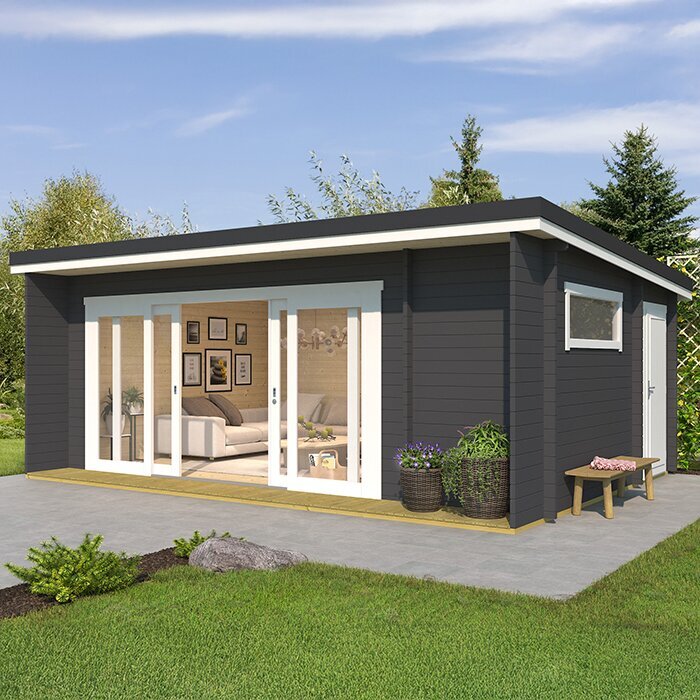
Repair may be reasonable where a professional confirms that the structure remains suitable and the work can address the damage; replacement may be more practical when damage is extensive. Do not make that call from outside appearance alone. Compare possible replacements against the intended use, size, site constraints, assembly, base requirements and documented weather suitability. The Veltor 2 listing can be included in that comparison, but verify each relevant specification with the supplier or installer and ask what remains uncertain. Do not assume a model name or image shows that it suits your site.
Check replacement details and keep an inspection record
Before ordering a replacement, confirm the overall dimensions, door and window positions, required base or foundation, site preparation, and assembly method and responsibility. Check the intended location against the instructions and any published guidance on exposure to wind or snow; where information is missing, ask the seller for a clear answer and have an installer review site-specific requirements. A listing such as the Veltor 3 product page is a starting point for reading the stated details, not a substitute for confirmation. Never assume the existing base, access or clearance will suit a different summer house.
Plan the practical arrangements too: whether the delivery route and storage area are accessible, whether the old structure must be removed first, and what the product and installation information says is included. Confirm these points with the supplier before committing; do not infer delivery, assembly or included components from photographs. Keep a simple record of the inspection date, weather, safe-distance photographs, professional findings and any answers about a replacement. This helps distinguish what you observed from what was confirmed and gives you a clear basis for later decisions.
Frequently asked questions
Can I climb a ladder to check the roof?
No. A ladder does not make a damaged or snow-covered roof safe to approach, and it can put you close to loose materials or unstable eaves. Look from firm ground instead. If you suspect roof damage, keep clear and arrange an assessment by a suitable building or roofing professional.
If the door still opens, is the summer house safe?
Not necessarily. A door that moves normally cannot confirm that the roof, walls, fixings or base are sound. Conversely, a jammed door may be a sign of movement, particularly if its frame looks distorted. Treat visible changes as a reason to pause and seek advice, rather than relying on the door as a test.
Should I remove snow from the roof once the storm has passed?
Do not climb onto the roof or stand beneath it to clear snow. Snow may conceal damage, and a structure that has been weakened could be unsafe to approach. If you see a dip, sagging or other change, keep people away and ask a suitable professional what action is safe.
When should I call a professional?
Arrange an assessment if you see a sagging roof, leaning or bulging wall, separated joint, shifted base, hanging material, significant water ingress or damage you cannot judge safely. Keep out while you wait. Use an appropriate electrician for visible electrical damage or water near electrical equipment.
What should I confirm before ordering a replacement?
Check the written dimensions, opening positions, base and site-preparation requirements, assembly arrangements, and any stated suitability for your exposure to wind or snow. Confirm delivery access and what the order includes with the supplier. If important details are missing, ask for clear answers before committing.
After strong winds or heavy snow, the most useful inspection is a safe, careful record of what has changed. A ground-level check can identify warning signs, but it cannot certify a building that appears to have moved. Keep clear when in doubt, get the right professional assessment, and make any repair or replacement decision from confirmed information rather than a quick impression.
