
Insulated or Uninsulated Outdoor Sauna: What Changes?
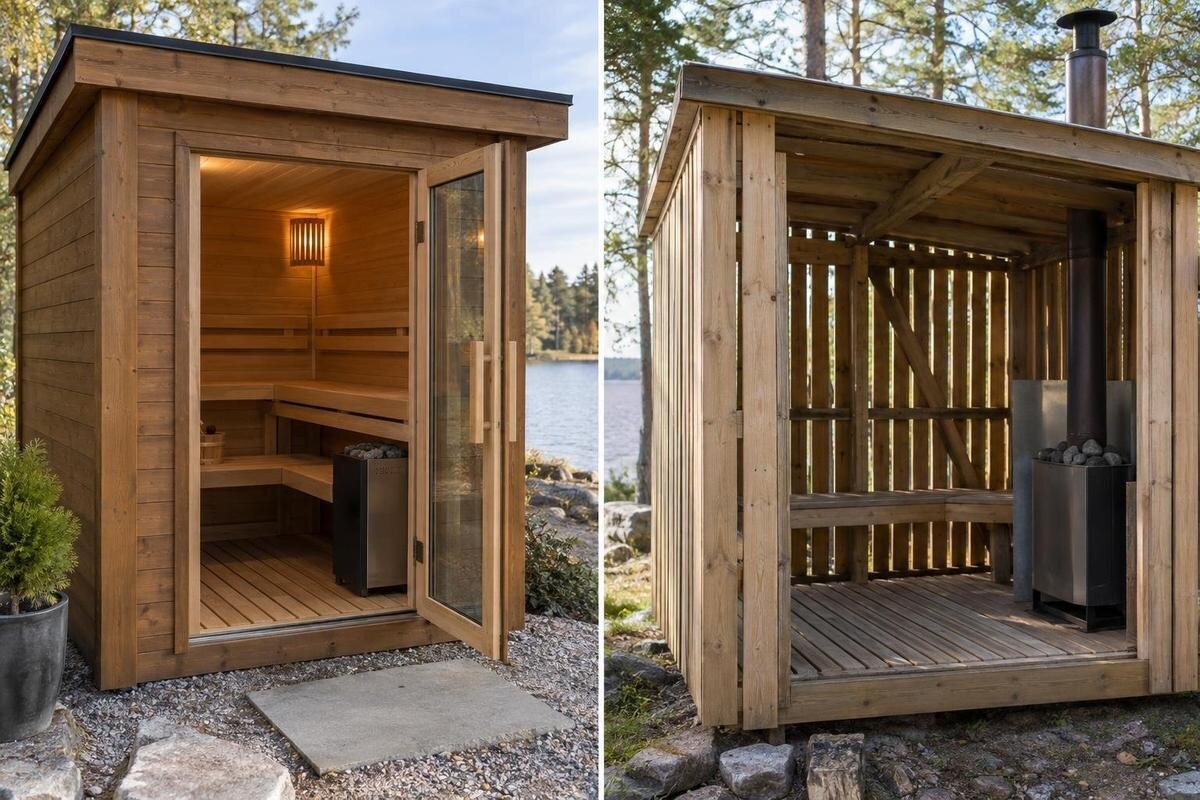
Outdoor sauna buying guide
An outdoor sauna can be described as insulated or uninsulated, but that label does not tell you how the whole building is put together or what using it will feel like. Insulation is one part of the shell; timber, joints, glazing, weather protection, ventilation and heater choice also affect the result. The useful comparison is not a simple promise of lower running costs or quicker heat-up. It is a check of the intended pattern of use, the site’s exposure and the actual construction documents for the exact model and configuration.
01
What insulation means in an outdoor sauna
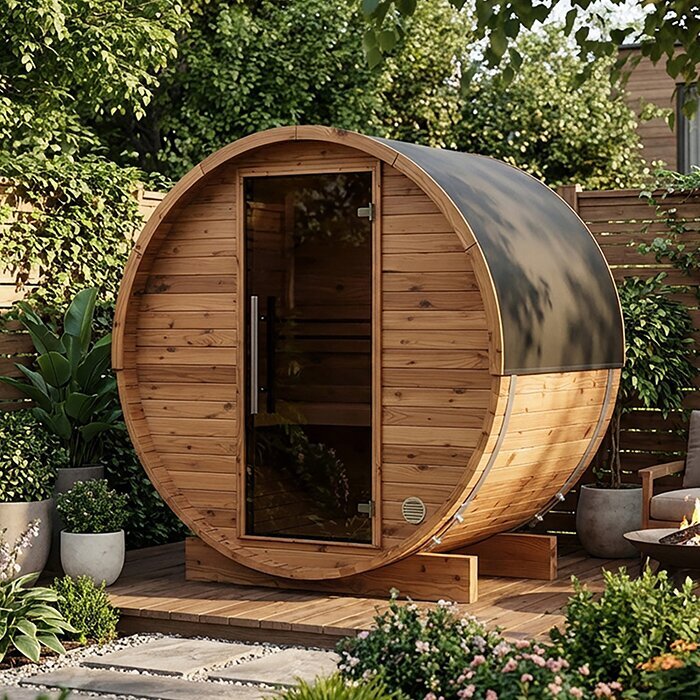
Insulation is material placed within a building assembly to resist the transfer of heat. In an outdoor sauna, ask whether that description applies to the walls only or to the complete envelope: roof, floor, door, windows and the junctions between them. A cabin sold as uninsulated may still have substantial timber, carefully fitted boards or other features that affect its thermal performance; the word usually indicates the absence of a separate insulation layer, rather than an absence of thermal resistance. Equally, a single insulated panel does not prove that the whole room has a continuous insulated shell. The relevant comparison is the material and its place in the assembly, not the thickness of the outer board by itself. Ask the supplier to define the term for that particular model and configuration.
The most useful evidence is a section drawing and a model-specific specification, not a headline adjective. Look for the layers shown in each part of the shell, how edges and openings are treated, and whether insulation is included in the configuration being offered. A product page can identify a model but may not set out every layer: use the Sauna HC-225 product page to locate the option, then request its construction drawing and manual. Check that the documents match the exact version; a picture, range name or general leaflet for a similar cabin cannot confirm your build-up. If the supplier describes one wall as insulated, ask what the description covers elsewhere.
Why the complete thermal envelope matters
Heat does not leave only through the broad face of a wall. Roof and floor construction, door and window frames, corners and service openings all form part of the boundary between the hot room and outdoors. If insulation stops at an edge, or junctions are poorly described, the headline may tell you little about the complete assembly. This is why a cutaway of one wall cannot answer every question. Ask whether the drawing covers the roof and floor as well, and how the wall connects to each. Clarify whether the door and any glazing are included in the same specification; their size and construction can affect the total envelope. Ask separately about air leakage and the detailing around openings.
Construction must also be considered alongside the heater and the room it is intended to serve. A maker may base heater selection on room volume, exposed surfaces, glazing and its own construction assumptions. Changing one part of that package can make a generic heater recommendation unreliable, even where the exterior dimensions appear similar. Do not size a heater from a rule of thumb or infer it from a model code. When considering Sauna N-210, establish which heater guidance applies to the configuration offered. In particular, check whether that guidance accounts for the specified glazing and wall construction, rather than referring only to nominal room volume. Have installation requirements assessed by an appropriately qualified professional.
02
How insulation can affect heat-up and heat retention
Insulation changes the rate at which heat passes through the shell, not the sauna’s heat capacity in isolation. A well-designed insulated envelope can slow heat loss to cooler surroundings, which may help a room hold its temperature once warmed. It does not make the cabin instantly hot, and it cannot automatically compensate for an unsuitable heater, frequent door opening, a leaky assembly or cold surfaces inside. Warm-up depends on several features working together, including the room’s size and shape, its construction and the chosen heater. Wall materials and their thermal mass can also influence the room’s response, so insulation alone cannot predict the result. Treat ‘warms quickly’ as a claim needing conditions and evidence, not as a consequence of the word insulated.
Uninsulated construction can respond more to the temperature and exposure around it, but that does not make every uninsulated sauna slow or every insulated one consistent. Timber thickness, fit, cabin volume, glazing and heater operation all matter, and designs differ. A cold start after a long idle period is different from maintaining a pre-warmed room, so ask which use case any performance claim describes. Consider how long you are willing to allow for preparation and whether steady heat during use matters more than initial warm-up. For a candidate such as Sauna N-250, distinguish evidence about heating from cold from evidence about maintaining temperature. Neither tells you the other without further information about the conditions and operation.
Match the construction to your pattern of use
Begin with the real pattern of use: how often the sauna will be used, whether sessions are planned only in milder weather or throughout the year, and whether it will be heated from cold before each visit. These details affect how important heat retention and preparation time are to you. An insulated shell may be worth investigating where regular use and cooler, exposed conditions make heat loss a central concern; an uninsulated design may still be acceptable for occasional use if its documented operating expectations fit. Neither conclusion follows from the label alone. Include the time you can realistically allow for preheating, rather than assuming every visit starts under ideal conditions. Think about the experience you want, not an imagined universal energy saving.
Also consider the rhythm within a visit. A sauna used for several rounds with short breaks has different priorities from one switched on for a single brief session; repeated door opening, changing users and waiting time all shape perceived convenience. Insulation is only one influence, and personal schedules vary, so record a realistic use pattern before comparing options. In your notes for Sauna LC-260, separate how often you expect to heat it from cold from how long you expect to keep it ready for use. This gives the supplier a more useful basis for discussing your expectations than simply saying you want a sauna for winter. Include quieter periods too, rather than basing the choice entirely on occasional gatherings.
03
How the site affects the comparison
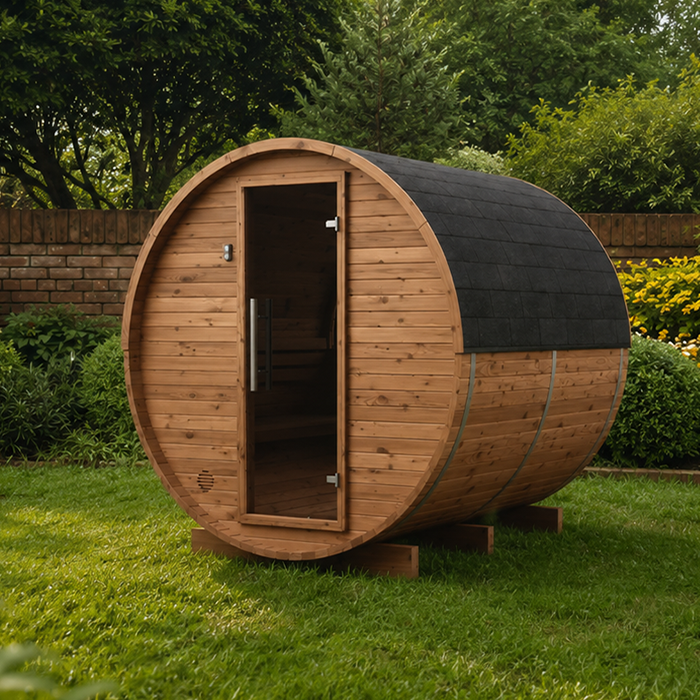
An insulated sauna still needs an exterior suited to its site. Wind exposure, rain splash, overhead runoff, shade and the condition of the ground can affect the building and the way its surroundings feel; insulation does not make a roof weatherproof or protect timber from standing water. Nor does a sheltered position prove that the shell is insulated. Weather resistance, air tightness and thermal insulation are related to comfort but are not interchangeable properties. Treat drainage, roof covering, exterior finish, base and the thermal layer as separate questions. On an exposed plot, ask what the manufacturer specifies for the complete exterior assembly and how the product is meant to be sited, rather than assuming any outdoor cabin has the same weather resistance.
Walk the proposed position before choosing a construction type. Note which sides face the most exposure, where water may collect, whether branches or nearby buildings affect access, and whether there is space to inspect and maintain the exterior. These observations do not replace the maker’s siting instructions, but they make your questions more precise. When reviewing Sauna HCF-300, compare those observations with its documented siting requirements. A sheltered corner may offer protection from wind yet leave awkward access for inspecting the roof or exterior joints. Consider the route to the sauna in wet weather as well as the building itself. If ground preparation or structural suitability is uncertain, get site-specific advice from a qualified installer.
Moisture management in an insulated sauna
Insulated construction has to manage moisture as well as heat. During sauna use, warm air and moisture meet surfaces and layers at different temperatures; a poorly designed assembly can allow moisture to collect where it is difficult to dry. The answer is not simply to add more insulation or fit a generic reflective sheet. Interior lining, any vapour or air-control layer, joints, ventilation and drying provisions need to work as one design, and the right arrangement depends on the manufacturer’s construction. Ask for the specified layer sequence for this sauna rather than copying a detail intended for another building. Moisture can collect out of sight, so a neat-looking interior finish does not confirm how the hidden layers are arranged.
Confirm how the supplied cabin is ventilated and what the maker expects after use so moisture can be managed as intended. Ventilation and insulation have different jobs: an insulated envelope is not a substitute for ventilation, and ventilation does not resolve shortcomings in the wall assembly. For Sauna HCF-225, include post-use drying guidance in your comparison alongside the construction details. Establish which provisions are built into the cabin and which depend on actions by the user, so you can judge whether the routine is practical for you. Check whether membranes, sealants and linings are supplied or left to the installer. If the proposed build-up is being altered, seek the manufacturer’s advice and a qualified building professional’s assessment.
04
Insulation, timber treatment and weather protection are different
Insulation, timber treatment and weather protection answer different questions. Insulation describes a layer or assembly intended to slow heat transfer. Timber treatment describes how the wood has been processed or protected; it does not establish that insulation is present. Weather protection concerns how the exterior handles rain, splash and exposure, and is not proved by an insulating layer. A product’s timber species, treatment label or range name therefore cannot tell you whether the walls, roof and floor are insulated. Keep these properties separate in your comparison so a word used for one part of the product is not mistaken for evidence about another. A cabin can have weather protection without a separate insulation layer, or insulation within a design that still needs suitable exterior protection.
Keep three separate entries in your comparison: insulation and its location; timber and its maintenance requirements; and exterior weather protection. For Sauna S-140, as for any other candidate, do not fill one entry using information that belongs in another. A care instruction for exposed wood says nothing about hidden insulation, while an insulation specification does not tell you how the roof sheds rain. This separation also helps you recognise what a proposed option actually changes. An exterior finish, a different timber specification and an additional insulation layer should not be treated as equivalent upgrades. Judge each against its stated purpose and the manufacturer’s documentation, rather than giving an option credit for benefits it does not establish.
Check dimensions, access and services separately
Insulation can affect dimensions, but the amount of space it takes depends on the design. If two cabins have the same external footprint, an internal lining and insulated wall build-up may change the clear space inside; another model may be designed around the layers from the outset. Do not compare a stated floor area with usable bench or changing space as though they were the same measurement. Request dimensioned plans that distinguish external size, internal room dimensions, bench layout and door opening. Check the usable space after allowing for the benches, not just the overall floor footprint. Also check access from the delivery point to the proposed position; a cabin that fits on paper may still be difficult to bring into place.
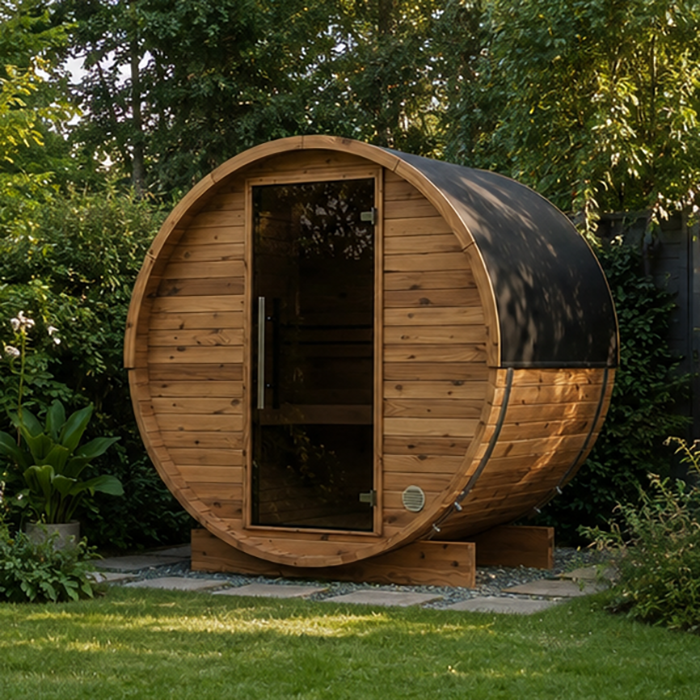
Plan the heater and any associated services as part of the chosen configuration, not as an afterthought to an insulation decision. The sauna maker’s documentation should identify what heater options are intended and what must be confirmed for installation; electrical work and other specialist requirements need assessment by an appropriately qualified professional. For Sauna HC-150, keep the dimensioned plan and equipment schedule together when discussing installation. This helps distinguish usable interior space from areas needed for the heater, its specified clearances and access. Establish whether the quoted configuration includes the equipment shown in any illustration. A photograph is useful for appearance, but it cannot establish those dimensions or the service arrangement.
05
Compare construction evidence on equal terms
For each candidate, collect the model-specific manual, a dimensioned drawing and a written specification for the configuration being offered. The documents should make clear whether insulation is present in the walls, roof and floor; which layers are included; how doors, glazing and joints are described; and what is optional. Record the heater model or selection assumptions separately, along with interior dimensions and any stated requirements for ventilation and siting. Check that drawings refer to the same model version and options as the product you are considering. If one supplier provides a wall cross-section while another provides only a product headline, mark the missing information instead of treating the better-described product as automatically superior. You are assessing evidence as well as design.
Claims about energy use or heat-up time need comparable test conditions. Ask what starting temperature, outside conditions, room configuration, heater, target condition and operating pattern were used, and whether the figures come from a test, calculation or estimate. Without a shared method and setup, a number for one cabin cannot fairly predict what another will do at your site. Do not convert a claim about insulation into a guaranteed bill saving. If there is no comparable data, use the construction documents to understand the design and make a cautious qualitative comparison. Ask the manufacturer or supplier to explain what any performance claim actually covers.
Weigh heat retention against construction complexity
An insulated option may suit a buyer who expects frequent or colder-weather use and values retaining heat, provided the whole assembly and moisture design are documented. An uninsulated option may suit a different use pattern where the manufacturer’s operating guidance and the buyer’s expectations align. These are prompts for comparison, not rules: site exposure, cabin dimensions, heater choice and build quality can change the result. Insulation introduces additional layers whose junctions and moisture-control details need to work together. That complexity is not inherently a drawback, but it deserves attention alongside the potential thermal benefit. A simpler assembly is not automatically better either; it must still meet your expectations for use and weather exposure.
Use your main priority to resolve the trade-off. If preparation time matters most, insulation alone is insufficient evidence: look for relevant warm-up information for the complete sauna and heater combination. If retaining heat between rounds matters more, consider the whole envelope alongside ventilation and door use. If you expect occasional seasonal use, decide how much importance to place on thermal performance outside that pattern. Keep running-cost expectations separate unless comparable energy-use evidence is available. This approach lets you make a preference-based choice without declaring either construction universally superior. Where a key benefit remains unverified, treat it as an open question rather than the deciding reason to buy.
Frequently asked questions
Does an insulated outdoor sauna always heat up faster?
No. Insulation can reduce heat transfer through the shell, but warm-up also depends on the heater, room volume, materials, glazing, air leakage and starting conditions. Ask what conditions underlie any comparison; the label alone cannot predict a precise preheating time.
Can an uninsulated sauna be used in colder weather?
That depends on the specific construction, heater and manufacturer’s stated intended conditions. The word uninsulated alone neither rules it out nor confirms it will meet your expectations. Ask for guidance on the exact model’s use, warm-up assumptions and moisture management in the conditions you expect.
Does Thermowood mean a sauna is insulated?
No. A timber or treatment description and a thermal-insulation layer describe different properties. A range name or timber label cannot establish which parts are insulated. Request the model’s construction drawing and timber documentation separately.
Can I add insulation to an existing outdoor sauna?
Do not assume that adding a layer is a simple upgrade. It can change wall thickness and affect moisture movement, ventilation and the way joints and finishes perform. Check with the original manufacturer; if the change is not covered by its guidance, ask a qualified building professional to assess the complete assembly.
How can I compare energy-use claims?
Ask how each figure was produced, including the starting and outdoor conditions, room configuration, heater, target condition and operating pattern. If these differ, the figures are not a like-for-like comparison and may not predict use at your site. Do not treat an insulation label as a guarantee of lower bills.
The practical difference is the behaviour of a complete, documented envelope in your conditions—not the label on its own. When the construction and use assumptions are clear, you can judge whether the added layers matter to the way you plan to use the sauna. If they are not, the comparison is still incomplete.
