
New vs Second-Hand Outdoor Saunas: What to Check

Outdoor sauna buying guide
Choosing between a new and a second-hand outdoor sauna is less about age on its own than about what you can verify before committing. With a new purchase, you can ask the seller to set out the specification, inclusions, delivery and support terms in writing, but those details are not automatic. For a used sauna, the price is only one part of the decision: condition, missing parts, heater history, paperwork and the feasibility of removal and reinstallation all matter. Compare evidence and responsibilities side by side. If the unit cannot be identified or a professional cannot confirm a viable move, treat that uncertainty as a real part of the decision.
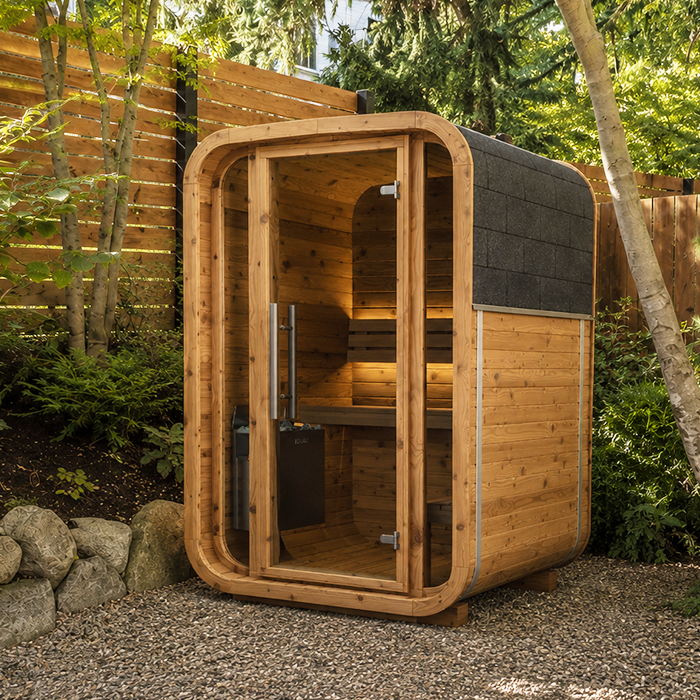
What changes when you buy new rather than second-hand
With a new purchase, you have the opportunity to agree the exact model and configuration before the order is placed. Ask for a written schedule showing what is included, which heater and controls are specified, whether delivery, assembly or installation is part of the arrangement, and what paperwork or after-sales support the seller undertakes to provide. If the seller offers configuration choices, make sure the selected version is named rather than relying on a broad product description. These are points to settle, not features that come automatically with a new sauna. Use a product page such as the Sauna S-140 listing to identify the model you are enquiring about, then obtain a quotation that records the equipment and services offered for your order.
For a second-hand unit, record whether it is assembled, partly dismantled or supplied as loose components, and whether the heater and each accessory remain. Note disclosed faults, repairs and exclusions, and ask the seller to confirm the inventory in writing. Compare how much can be verified: a new quote can still leave gaps, while an older sauna may have a useful paper trail. Put removal, transport, reassembly and professional assessments on the same comparison sheet as the purchase price. Do not compare a new quote that includes assembly directly with a collection-only price without accounting for the difference. If a component is missing at collection or a described service is excluded, the calculation can change.
Inspect the sauna’s condition in person
Arrange an in-person inspection before removal wherever possible, with access to both the interior and exterior. Check the shell or panels, lower edges, joints, floor or base where applicable, benches, door, windows and any roof or weather covering used by that design. Look for soft or crumbling timber, persistent damp, signs of leakage, marked distortion, loose fittings, damaged glazing and a door that does not close as intended. Photograph concerns and ask what caused them and when any repair was made. These observations are prompts for further assessment, not a diagnosis: surface marks or small cracks can have different causes, and sound-looking outer boards do not reveal concealed areas.
Ask to see areas obscured by stored items, covers or the sauna’s position, but do not dismantle construction to investigate unless an appropriate specialist advises it. A musty smell or discolouration deserves a question, not a conclusion; look for supporting signs and records. Request recent photographs of areas you cannot inspect and compare them with what is present at collection. When comparing a used offer with a new model such as Sauna HC-150, keep the condition assessment separate from the product comparison: catalogue photographs cannot show the used unit’s weather exposure or repair history. If it cannot be inspected while assembled, ask whether an installer or other suitably experienced person can view it before dismantling; otherwise, inaccessible areas remain unknown.
Match the exact model and configuration
Begin with the maker’s identification plate, stamped mark, serial or product number, or original paperwork rather than a broad description such as barrel sauna. Record the manufacturer and exact model, and ask for a receipt or other evidence linking the documents to the unit. Check that the details agree across the label, manual, service record and sale description. Use the full name when making enquiries: Sauna HC-225, for example, should not be shortened to a description that could refer to several models. Record any version or production details shown on the unit as well. If markings are missing or unreadable, do not guess from the shape; ask for supporting evidence and contact the maker or an experienced installer if identification affects your decision.
A sauna may have been altered since it left its maker. A heater might have been replaced, controls changed or parts repaired; previous owners may also have made adjustments that are absent from the original description. Obtain the assembly drawing and instructions for the identified version, then ask whether the present setup matches them. A similar model’s manual or a page with a close name is not a substitute when a question concerns fit, connections, removal or missing pieces. Record known modifications, who carried them out and when, with receipts where available. Exact model identity is a starting point for finding documents, not a condition grade; the records and inspection of this particular unit still matter.
Check every component included in the sale
Ask for an itemised list of everything that stays with the sauna. Depending on its design and the seller’s arrangement, this might include the shell or panels, base or floor pieces, door and glazing, benches, heater, controls, stones, guards, ventilation components, lighting, fasteners and a flue or other stove parts. Not every sauna has all these items, and the list is not a standard package. Have the seller mark each item as present, absent, damaged or of uncertain operation; note accessories and spare parts separately. A photograph of a complete-looking sauna does not show whether loose components, controls or small fittings are part of the sale.
Where it is assembled, compare the inventory with the exact manual and ask the seller to identify anything removed or replaced. For a dismantled unit, request labelled photographs of component groups and a count of bags or boxes, so you can see whether fasteners and fittings have been separated and identified. For a new option such as Sauna N-210, request an equally detailed schedule of inclusions so that both offers can be compared item by item. Confirm which items are being kept, which must be sourced separately and who has checked them. Ask for the used unit’s inventory to be confirmed again at collection, before loading, so that components set aside during dismantling are not overlooked. Missing pieces can affect whether reassembly is practical.

Ask for manuals and paperwork
Request the documents that explain how the sauna is assembled, operated and maintained: the sauna manual and drawings, plus separate manuals for the heater, controls and any stove or flue components if fitted. Look for the exact model or version on each document, and ask whether it matches the installed equipment. Installation or commissioning records, supplier invoices and a clear record of previous owners’ work can help distinguish the original arrangement from later changes. If the seller has only a generic booklet, ask for the correct document rather than assuming similar products use the same assembly or heater instructions. Keep copies of labels and records with the purchase details.
Ask for service and repair paperwork, dates, parts changed and who did the work, as well as any warranty or support documents the seller says apply. A record is useful when it identifies the unit and describes the job; an undated statement that it was maintained is harder to assess. When enquiring about a new Sauna N-250, ask which documents will accompany the order and whether assembly information can be reviewed before purchase. For a used sauna with missing paperwork, check whether the manufacturer, previous supplier or a sauna professional can identify suitable documents from the model and equipment labels. Resolve inconsistent dates or model details where possible, and treat anything you cannot confirm as unknown.
Review the heater and service history
Assess the heater as a separate part of the purchase rather than accepting a general statement that the sauna works. Record its maker, model and identification details, approximate age if evidenced, and whether it is original or a replacement. Ask about faults, repairs, servicing, controls and other component changes, then compare the answers with receipts and manuals. Electric heaters, controls and electrical connections need assessment by an appropriately qualified professional; a wood-fired setup calls for a suitable professional to assess the stove and flue arrangement. Do not dismantle equipment or rely on a brief demonstration instead of an inspection. For a new model on your shortlist, such as Sauna LC-260, have the seller identify the proposed heater and controls in the quotation so that you can compare the equipment as well as the sauna.
Look at the service history as a sequence: when the sauna was installed, how long it was used or stored, what problems occurred, what work was completed and whether an issue returned. Ask for dated invoices, service notes and the name of the provider, then have the information interpreted by a qualified person if it raises questions. The absence of records does not prove the equipment is faulty, but it leaves more to verify and may make an inspection or repair estimate necessary. Ask about intermittent problems too, as a short demonstration may not reveal them. Find out which parts were changed, whether the work is documented and whether unresolved issues need a professional assessment before you compare costs.
Plan removal before agreeing a price
Agree a removal plan before committing to a collection date or price. A second-hand outdoor sauna cannot be assumed to move safely as one unit, to come apart cleanly or to be suitable for reassembly after dismantling. Its construction, condition, connections and maker’s instructions all matter. Ask the manufacturer, sauna installer or specialist mover to assess the actual model and condition, and to say what information or inspection they need before quoting. A generic online video or a successful move of a different sauna is not evidence that this one can be handled in the same way. If the seller cannot identify the unit, a professional assessment becomes especially important.
Agree who disconnects services, dismantles, labels and protects each part, loads it, arranges any lifting equipment and accepts responsibility for damage during collection. Electrical or fuel-related connections should be dealt with by an appropriately qualified professional. Check the access route at both properties: gates, turns, overhead obstructions, parking, unloading space and secure storage if the sauna cannot be reinstalled at once. Confirm that the seller permits the proposed removal arrangements and whether the quote includes clearing the site. Keep this collection work separate from the delivery costs quoted for a new alternative such as Sauna HCF-300. A new purchase and a used purchase may involve different handling arrangements, so ask each provider to price the actual work rather than comparing transport charges alone.
Separate delivery from reassembly and commissioning
Delivery is not the same as removal, unloading, placement or reassembly. Ask each provider to state where its responsibility begins and ends, what access it needs, how components will be protected and who unloads them. Use the exact maker’s drawings for packed and assembled dimensions and check the destination route; a model code or photograph is not enough to judge gates, turns and overhead clearance. For a new Sauna HCF-225 order, ask the seller to confirm how the sauna will arrive and provide the corresponding delivery information before you book other work. If either purchase arrives dismantled, agree how parts will be counted and where they can be kept dry and secure before work begins.
Obtain a separate written scope for site preparation, reassembly, connection of services and commissioning, including any work the seller or carrier excludes. Check the base, clearances and service arrangements against the relevant maker’s instructions and the actual site; ask an appropriate installer or other qualified professional about anything uncertain. Confirm who will assess the heater after transport and what they need before reconnecting or testing it. A seller who can deliver components may not be arranging installation, and a transport firm should not be assumed to provide technical work. If different firms divide the job, have each confirm the handover: who receives the parts, who stores them and who checks that the inventory is complete.

Confirm support, parts and warranty terms
Ask who will answer questions after purchase: the seller, manufacturer, installer or another service provider. Contact the relevant party with the exact model and heater details before buying, and ask whether manuals, spare parts and technical support can be provided for that particular unit. Do not assume a manufacturer still supports every model or that all parts are available; equally, do not assume that a second-hand purchase has no support. If parts are essential to the repair or reassembly plan, confirm availability and compatibility with the supplier or professional who will fit them. Make assurances specific: who provides support, for which components and on what terms.
Read any warranty or service terms in writing. For a new sauna, check the seller’s stated coverage, exclusions, duration and process for getting help; the word new alone does not define them. For a used unit, ask whether any stated cover applies to a second owner, what proof is needed and whether it relates to the whole sauna or an individual component. Verify the answer with the organisation responsible rather than relying on a previous owner’s assumption. Separate parts supply, advice, inspection, repair and call-out work: these are different kinds of support and may have different terms. If help is only offered by the seller, establish what work, if any, is included and how to reach them.
Compare the full cost of each option
Compare the full route to a reinstalled sauna, not just the asking price. Put the purchase price beside specialist removal, transport and unloading, any inspection, missing components, repairs, installation, commissioning and site work. Include storage or a second journey if the arrangements require it. Ask for written estimates where a professional can provide them. For costs that cannot yet be quoted, name the unknown and state what needs checking rather than entering zero or treating a guess as a confirmed saving. A second-hand sauna may still represent value, but only if its condition and likely work are supported by enough evidence to make the comparison meaningful.
Set a practical threshold before paying: can you identify the model and heater, inspect or professionally assess the condition, confirm what is included, find the correct documents, and secure a feasible removal and reinstallation plan? If an answer is no, decide whether further evidence or a professional quote can resolve it. If the seller will not allow a reasonable inspection, cannot explain missing parts or offers no way to verify a complicated move, pause rather than treating uncertainty as a bargain. A new sauna can suit someone who wants a clearly specified order; a used one may suit someone able to verify its history and organise the work. Neither is automatically the better choice.
Frequently asked questions
Can I move a second-hand outdoor sauna in one piece?
There is no safe general assumption. Whether it can be moved intact depends on its construction, condition, connections, site access and the manufacturer’s guidance. Ask a sauna installer or specialist mover to assess the actual unit and route; a photograph or seller’s assurance is not enough.
What should I check about the heater?
Record its make, model and identification details, ask about servicing and repairs, and request the relevant manual. Arrange an assessment by an appropriately qualified professional before reconnection or use. The sauna’s model name, or a claim that it worked previously, does not verify the heater’s condition.
What paperwork should I ask a used-sauna seller for?
Ask for the exact model details, assembly and operating manuals, heater and control instructions, service and repair records, installation paperwork and an itemised list of what is included. If documents are missing, check whether the manufacturer, supplier or an experienced professional can identify the correct ones.
Does a new sauna automatically include delivery, installation and a warranty?
No. Check the seller’s written terms for what is covered, any exclusions, and whether delivery, unloading, assembly, connection or commissioning is included. The word new does not define the scope of the order or the support available.
How should I compare the price of a new and second-hand sauna?
Compare the purchase price with the cost of removal, transport, unloading, missing parts, inspections, repairs, reassembly, commissioning and site work. Use written estimates where possible, and list unresolved costs as unknown rather than counting them as zero.
The better choice is the one whose identity, condition, included equipment, route to reinstallation and ongoing support are clear enough to assess. If a second-hand sauna cannot be inspected or its removal plan confirmed by an appropriate professional, treat it as an uncertain project rather than an assumed saving. A new order still needs a written check of its specification and responsibilities. The useful comparison is not simply new versus used, but how much of the purchase can be verified before you commit.
