
How Much Maintenance Does an Outdoor Sauna Really Need?
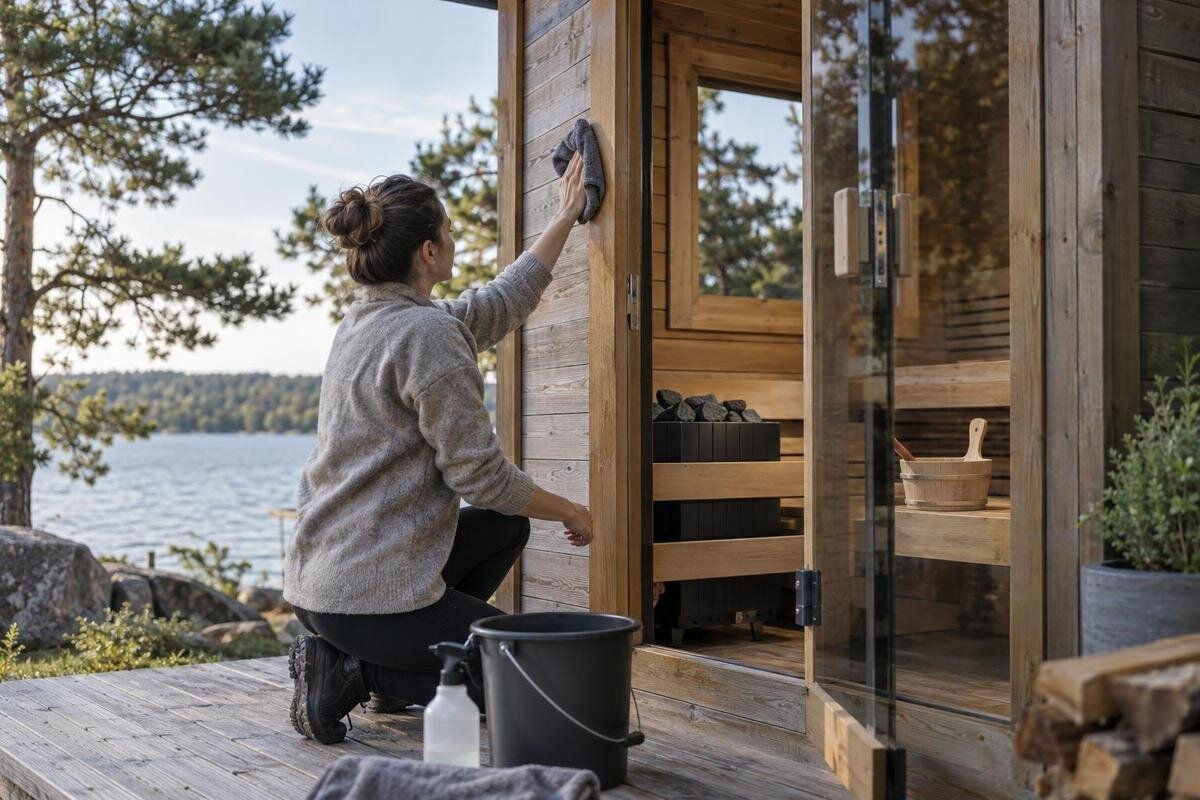
Outdoor sauna care
Outdoor sauna upkeep is a combination of small routine tasks and occasional, model-specific checks—not a fixed number of hours or a universal treatment schedule. The real workload depends on the construction and finish, how often the sauna is used, and how exposed its setting is. This guide separates everyday cleaning from exterior care, equipment checks and work to clarify with the maker or a qualified professional.

What outdoor sauna maintenance involves
Outdoor sauna maintenance is best understood as three kinds of work: routine tidying after use, checks on the building and its surroundings, and material- or equipment-specific care. The first deals with towels, dust and moisture left by sessions; the second helps you notice changes to the exterior, fittings or ground; the third may involve approved cleaning products, finish renewal or repair. These tasks do not share one universal timetable. Effort depends on the exact model, how often it is used, its finish and how exposed the site is. A sauna used frequently by several people may need more interior cleaning than one used occasionally, while leaves or recurring splashback can make its surroundings harder to keep clear.
Treat phrases such as low maintenance as a starting point for questions, not as a care schedule. A catalogue entry such as the Sauna S-140 listing gives you a precise model reference for requesting the relevant owner manual; the name by itself does not establish which cleaners, surface treatments or service intervals apply. Ask which tasks belong to the owner and what, if anything, requires a qualified service professional. Check whether the guidance covers the configuration you intend to buy. The same model can face different conditions in different gardens, so neither its product title nor a general estimate can promise a fixed annual workload. A model-specific care guide is a more reliable basis for planning than a maintenance-free claim.
Cleaning the interior after use
A straightforward repeated task is to leave the interior tidy rather than let grit, leaves, hair or damp towels accumulate. Remove personal items and loose debris, then clean benches and the floor only in the way the manual permits. A soft brush or cloth may suit one surface, while another may need a different approach; do not assume a wet wipe, vacuum attachment or detergent is appropriate everywhere. If the maker gives a drying routine, follow it, including any directions about doors or ventilation. The aim is to remove everyday residue and let surfaces dry as instructed, not to soak the room or add a treatment after every session.
More sessions or several users can mean more residue to remove, but neither gives you a reliable minute count for cleaning. Keep tools for the interior separate from garden cleaning equipment, and do not leave wet cloths or bottles on hot surfaces. When considering the Sauna HC-150, ask for its after-use cleaning and drying instructions so you can judge how those tasks would fit into your routine. Check whether the instructions distinguish between benches, floors and other surfaces rather than assuming one method suits them all. Having suitable tools to hand makes routine cleaning easier and avoids interrupting the job to find out what is permitted.
Deeper cleaning and stubborn marks
A deeper clean is usually prompted by visible deposits, marks or residue, rather than by a calendar date that applies to every sauna. Check which interior surfaces are present and whether the manufacturer specifies a cleaner, cloth, dilution or drying method. Do not assume that an outdoor timber cleaner is safe in a heated cabin, or that a bathroom product belongs on sauna surfaces. Avoid sanding, bleaching, oiling, varnishing or applying disinfectant unless the exact instructions permit it. An unapproved product can alter a surface or leave residue, and may make a later assessment more difficult. Use the product-specific method instead of experimenting with household remedies.
If a mark returns, a surface stays damp or an unusual odour persists after approved cleaning, look for a continuing source of moisture or dirt rather than covering it with fragrance or a fresh coating. Record where the change appears; a stain by itself is not enough to diagnose a fault. For a model you are considering, such as the Sauna HC-225, ask how the care guidance distinguishes ordinary marks from changes that need assessment. A clear photograph and a note of the cleaning product already used can help the supplier advise you. Knowing when to stop cleaning and seek advice is part of managing the workload, not a reason to try progressively stronger products.
Caring for the exterior finish
The outside needs a separate plan because its exposure and finish differ from the interior. Confirm whether the surfaces arrive untreated, factory-treated or finished in another way; a name for the timber type does not settle the care requirement. Do not assume that a model described as thermowood needs no further attention, or that it should be stained or sealed on a standard cycle. Rain, sunlight, shade and local debris can affect how an exterior looks, but a colour change alone does not tell you which product to apply. Look for changes such as peeling, cracking or areas that repeatedly stay wet, and note their location rather than trying to diagnose them.
Ask which cleaner is suitable, whether a protective treatment is recommended, what signs mean it is due and whether all exterior faces are treated alike. When comparing the Sauna N-210 with other options, request finish-specific care instructions rather than relying on advice for an unrelated shed or fence coating. If treatment is recommended, the preparation, application and drying requirements matter as much as the product itself when estimating the work involved. Confirm those requirements with the maker before starting, including any suitable weather conditions stated in the instructions. Keep a note of what was applied and where, so any later treatment can be checked for compatibility with the existing finish.

Keeping the space around the sauna clear
Keeping the area around the sauna in order makes exterior checks and routine care easier. Clear loose leaves and accumulated debris from places the manufacturer says should remain accessible, and keep plants from obscuring surfaces you need to inspect. Notice where rainwater runs, whether splashback or standing water repeatedly affects the same area, and whether the base is visible enough to check. The surrounding garden is part of the practical upkeep: obstructed access can hide changes and make it harder to clean or maintain components. At the same time, do not move or cut back anything that forms part of the supplied assembly without understanding its purpose.
Before purchase, ask for the model’s siting and clearance guidance, including access and ventilation requirements. For the Sauna N-250, useful questions include which areas must remain accessible for inspection and whether the proposed position allows that access. Think about carrying cleaning tools around the structure and reaching the surfaces that the instructions require you to maintain; a position that looks tidy can still make upkeep awkward. If you later notice recurring pooling, erosion or water against the structure, report it to the installer or manufacturer rather than improvising a new support or drainage arrangement. Changes to the base or surrounding ground need advice specific to the installation.
Checking doors, windows and fittings
Doors, windows where fitted, vents and other moving fittings deserve simple observation because they affect everyday use and can show visible changes. Check that parts operate as the manual describes; notice a new rattle, sticking movement, cracked pane, changed seal or visible gap rather than forcing anything back into place. Clear debris from openings only as instructed, and use a suitable cleaner for glass and seals. These are observations, not a DIY adjustment checklist: a door that no longer closes properly may need someone qualified to determine why. Avoid tightening, lubricating or replacing a part by guesswork, since a well-meant fix can affect its fit or sealing.
Ask which fittings are included in the configuration you plan to buy and whether the maker describes an owner check for them. If a window or vent is optional, base your maintenance plan on the actual version, not a photograph of another setup. When considering the Sauna LC-260, request the relevant hardware care instructions and find out how damaged fittings are assessed or replaced. A useful care document distinguishes ordinary cleaning from adjustments that need support. It should also help you identify whom to contact if a component becomes loose or difficult to operate. Do not count replacement parts as routine consumables unless the manufacturer confirms that they are.
Heater and control maintenance
Heating equipment and controls have their own instructions, so include them in your estimate rather than assuming that cabin cleaning covers everything. The heater, controls and associated electrical parts can vary by product and configuration. Ask the manufacturer what a user may inspect or clean, how to keep the equipment clear of dust or debris, and what work is restricted to service personnel. Do not remove covers, handle hot components or improvise a cleaning method. Keep the heater information and manuals with the sauna’s other documents so the relevant instructions are easy to find, especially if equipment is supplied separately or has its own support contact.
For the Sauna HCF-300, confirm which heating components and controls are included in the proposed configuration and request their care documents. Separate any owner tasks from servicing, and ask whether technical support comes from the sauna supplier or the equipment manufacturer. This helps you account for both hands-on upkeep and the possibility of arranging a professional visit, without assuming a service interval or cost. If a cable or control looks damaged, the heater behaves unexpectedly or an electrical fault is suspected, stop using the equipment and contact an appropriately qualified professional or service provider. Do not open electrical parts or attempt a repair; follow the maker’s procedure for reporting the problem.
How use and exposure affect the workload
Site conditions and patterns of use change the balance of tasks. A location under trees may collect more leaves; a shaded, persistently damp corner may need closer observation of visible surfaces than a dry, open area; and wind can bring debris against the structure. How often people use the sauna affects how frequently the inside needs tidying. None of these observations sets a universal interval: two owners with the same product may reasonably have different routines. Consider surrounding vegetation, water movement, access for cleaning and the number of users when assessing the work. An outdoor location is not a guarantee that every exterior surface can be left unchecked.
Base your routine on the manual and what you observe at your site rather than adopting an arbitrary monthly or seasonal checklist. When comparing a model such as the Sauna HCF-225, describe the proposed location and ask whether its exposure changes any care requirements. After purchase, record how long ordinary cleaning takes and which exterior areas collect debris or stay damp. These observations can help you estimate your own workload more accurately than a general annual figure. Keep any manufacturer-specified tasks separate from additional checks you choose to make, so your notes do not become a substitute for the instructions. Ask for advice about visible damage or changes following unusual weather.

Noticing wear and arranging repairs
Pay attention to change rather than trying to diagnose it. Examples worth recording include a new water mark, finish that is lifting, an opening that has become harder to close, a fitting that shifts, a crack in glazing or a patch that remains damp. A mark can have several causes, and an appearance change does not by itself prove a defect; conversely, dismissing persistent moisture as cosmetic may miss a problem. Compare the same area over time and refer to the manufacturer’s description of normal upkeep. If a condition affects safe operation or involves electrical equipment, stop using it and seek appropriate professional advice rather than continuing to test it.
When contacting the retailer, maker or installer, provide the exact model, a clear photograph, when the change appeared, relevant site conditions and any cleaning or treatment recently applied. That context can help them say whether routine care, an inspection or a repair is appropriate. Avoid filling, sanding, repainting or sealing over a symptom before you know its cause; a cosmetic patch can obscure evidence and may be incompatible with the finish. Keep a record of advice and work carried out, so a future owner or service professional can see what product was used and when. Use the documentation for your actual configuration, not instructions borrowed from a different sauna.
Questions to ask before you buy
Request the maintenance manual for the exact sauna and ask whether you can read it before ordering. Find out what surfaces and finishes are supplied, which cleaning products and tools are permitted, whether the exterior needs treatment and how the manufacturer defines any trigger or interval. Ask which checks an owner can carry out. Discuss the heater and controls separately, including whether their care instructions come from the sauna maker or the equipment supplier. These details determine whether your routine is mainly cleaning and observation or includes treatment or paid service. A clear answer should distinguish manufacturer instructions from general suggestions and state which configuration it covers.
To compare options fairly, separate tasks associated with each use from occasional cleaning, finish care and any professional-only work. For each one, note the permitted method, tools needed and whether you can carry it out yourself. Where the manufacturer specifies an interval, include it; where care depends on condition, record the signs to watch for instead of inventing a date. Ask how to obtain replacement parts and product-specific support without assuming these are included. If a seller cannot provide a clear care guide, treat the gaps as uncertainty to resolve. This comparison shows whether the likely work suits your available time and skills without disguising unknowns as a precise annual total.
Frequently asked questions
How often should I clean an outdoor sauna?
There is no universal interval. Remove everyday debris and follow the after-use routine in the instructions for your sauna. Deeper cleaning should suit the actual surfaces and level of use. Ask the manufacturer about any set intervals rather than borrowing a schedule from another model.
Does a Thermowood sauna need exterior treatment?
The category name alone does not answer that. Confirm the finish supplied, whether the manufacturer recommends a protective treatment, which products are permitted and what indicates that renewal is due. Do not assume the surface is maintenance-free or apply a generic fence stain.
Can I use ordinary household cleaners?
Only if the instructions approve them for the surface you want to clean. Some cleaners may be unsuitable for a heated interior or a particular exterior finish. Follow the maker’s method, and do not use bleach, abrasives, oil or varnish unless the instructions allow it.
Will I need professional servicing?
That depends on the heating equipment and the manufacturer’s instructions. Routine cleaning may be an owner task, while faults or electrical work should be referred to an appropriately qualified professional. Ask who supports each component and what, if anything, needs specialist attention.
How can I estimate the annual time involved?
Request a model-specific list of routine tasks, less frequent care and any specialist work. Then consider how often you will use the sauna and how exposed its location is. There is no reliable annual time estimate that applies to every outdoor sauna.
An outdoor sauna does not come with one universal maintenance burden. Day-to-day work centres on keeping the interior clean and dry as instructed, while exterior, equipment and repair tasks depend on the supplied finish, configuration and site. When the care guide sets out permitted methods and owner responsibilities, you can plan realistically. If those details are vague, the uncertainty is part of the purchase decision—not evidence that care will be unnecessary.
