
How Long Does an Outdoor Sauna Last? Construction and Care Factors
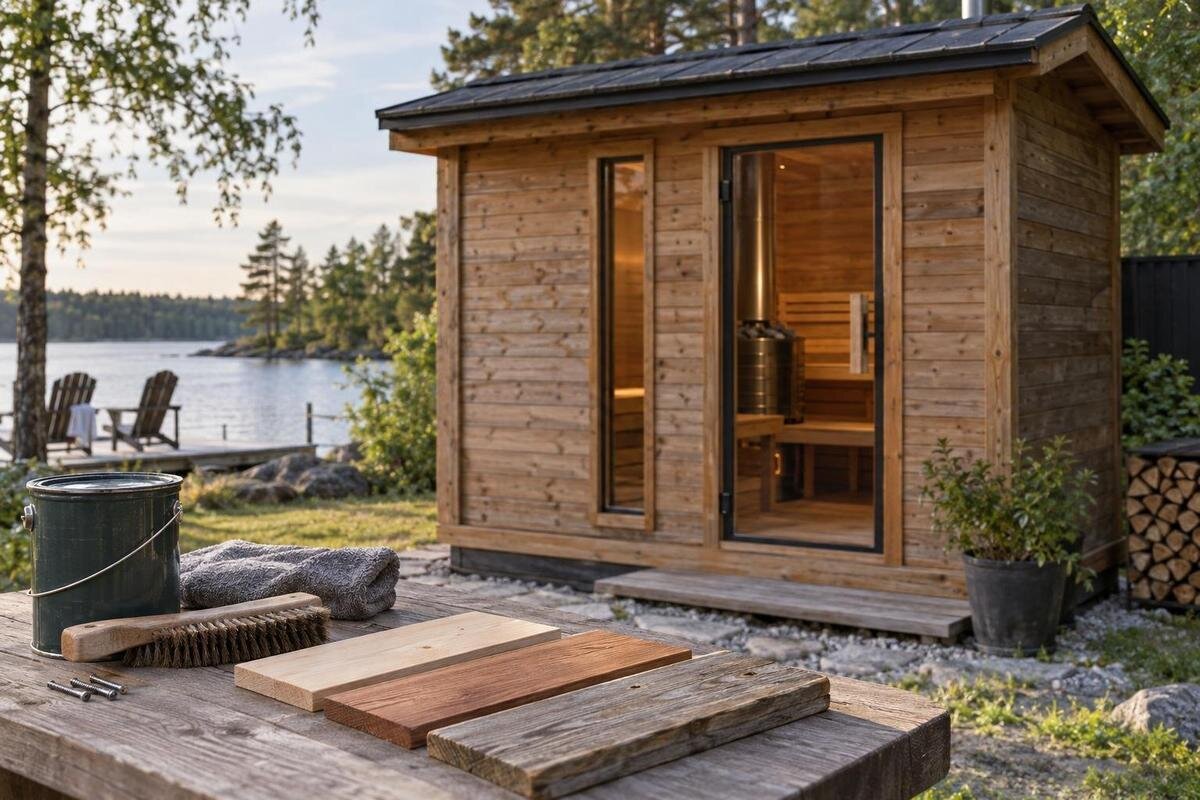
OUTDOOR SAUNA BUYING GUIDE
An outdoor sauna is exposed to weather as well as repeated changes in heat and moisture, so there is no dependable universal lifespan to quote. Two cabins with similar names can differ in timber specification, joints, roof protection, support and care requirements. The setting and pattern of use matter too. A useful comparison looks for evidence about the actual construction, care instructions, repair options and warranty terms—not a year figure detached from its conditions.
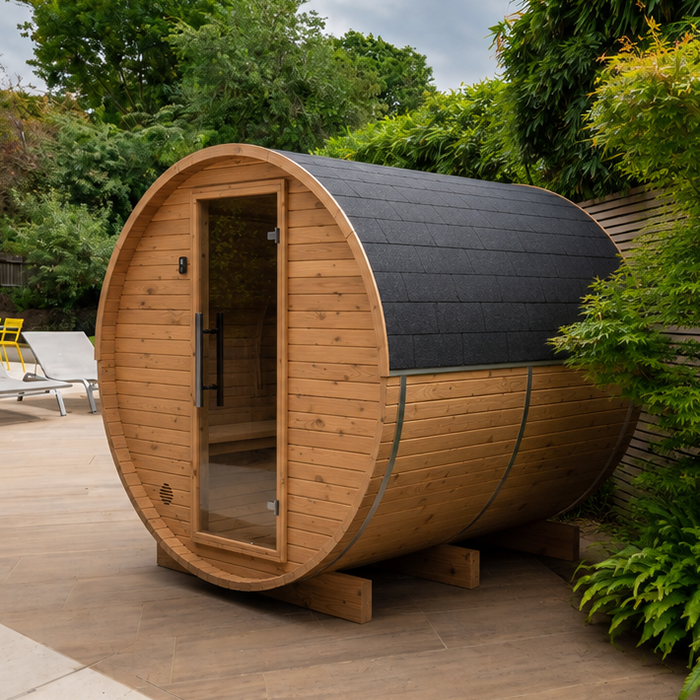
What does an outdoor sauna’s useful life mean?
There is no dependable single number of years that applies to every outdoor sauna. Buyers may mean how long the cabin remains weather-tight and structurally serviceable; someone else may mean when the exterior needs attention, a component needs replacing, or the installation no longer suits its intended use. These are different milestones. Surface fading can occur without making a cabin unusable, while concealed moisture or movement can matter before an obvious cosmetic change appears. Separate parts may also age at different rates. A useful lifespan claim should say which component and what standard of condition it refers to.
Think of useful life as the period in which a sauna continues to serve its purpose with acceptable upkeep and repair. The roof covering, seals, door hardware, internal surfaces and any heater or controls can have different maintenance or replacement needs. Replacing one part does not necessarily mean the cabin has reached the end of its useful life; conversely, a shell that looks sound may be impractical if water gets in or essential parts cannot be serviced. A listing such as Sauna HCF-300 identifies the model being considered, but its name alone is not evidence of a service-life figure.
Timber specification and construction details
Timber changes as it takes up and releases moisture, and an outdoor sauna is also exposed to heat during use. How the materials respond depends on details such as the timber specified, the dimensions and profiles of the parts, how they are joined and what finish is used. Fasteners and connections matter too. A broad material label does not explain all of this. For a meaningful comparison, request a material specification and drawings that match the exact model and version. Check that the information relates to the configuration being sold, rather than assuming a description for a product range covers every design in it.
If a listing uses a name such as Thermowood, ask for the precise material description and care requirements rather than treating the label as a service-life guarantee. Find out whether a finish is factory-applied, whether any surfaces need additional treatment and which products are suitable. Separate the exterior treatment requirements from those for the interior: do not assume one product is appropriate throughout the cabin. When comparing Sauna HCF-225 with another design, note which material and finish details are documented and which remain unanswered. If descriptions differ, ask whether they refer to different components or optional finishes before treating them as equivalent. Obtain the care instructions before ordering so you can understand the work involved, including preparation and any restrictions on treatment. This makes the comparison more useful than choosing by a material name alone.
Why joints and openings matter
Water and movement can expose weaknesses at connections between parts, not just across a broad wall or roof surface. Areas worth understanding include corners, door openings, the meeting of roof and walls, the connection to the base and any penetrations, where fitted. Ask how these details are assembled and protected, and whether seals or other components need periodic attention. A neat-looking joint in a photograph does not show how it is constructed or maintained, so drawings and written instructions are more useful evidence when comparing designs.
Ask who is responsible for assembly and whether the supplied instructions cover the exact version you are buying. Once assembled, check that doors open and close as intended and that there are no obvious gaps or signs of water entry. This is not a substitute for following the manual or obtaining an assessment if something seems wrong. If movement or misalignment appears, seek guidance rather than forcing a door or trying an improvised repair. For Sauna S-140, request the model-specific assembly information before drawing conclusions from the product name or appearance.
Roof protection and exposure to weather
The outer roof covering and the way its edges and joins are finished help determine how rain reaches the cabin. Ask what roof protection is included in the quoted configuration, how water is intended to run off and what maintenance or renewal it may need. Do not assume that a product photograph shows every included layer or that the visible outer shape, by itself, proves the cabin is weather-tight. The manufacturer’s drawings and care guidance should clarify which parts protect the structure and how to look after them.
Rain is only one part of exposure. Wind can drive water against surfaces, while direct sun and debris from nearby trees can affect finishes or add to upkeep. Dense shade and limited airflow may slow drying; an exposed position can bring more weather to the cabin. Consider which sides of your proposed site receive wind-driven rain and where leaves collect, rather than assessing the roof in isolation. These observations help you ask more specific questions about protection and maintenance. Siting can reduce some exposure, but cannot remove it. When looking at Sauna HC-150, establish how the roof should be inspected and whether routine care is possible from accessible positions. Do not plan to climb onto a sauna roof without confirmation that it is designed for access and suitable professional advice.
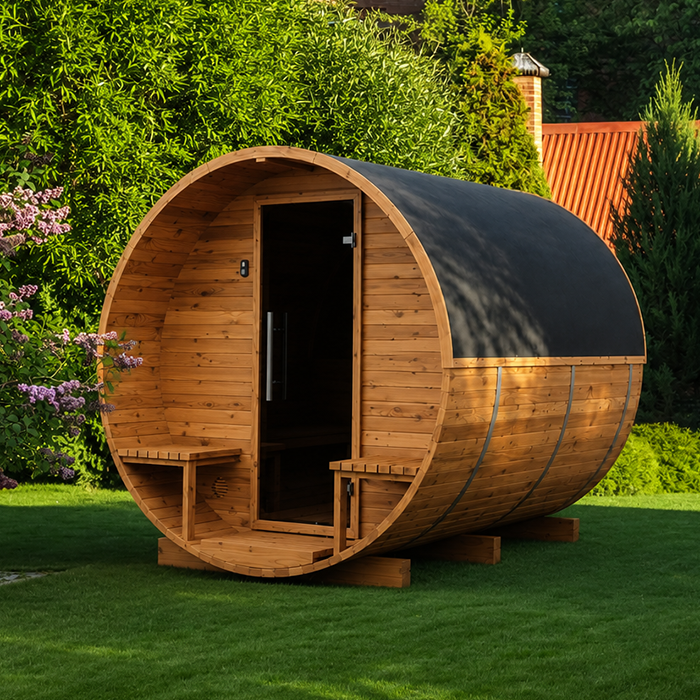
Ground, drainage and the chosen site
A durable installation needs support that meets the manufacturer’s requirements for the particular sauna. Do not assume one base type suits every model. Poor support or ground that settles can affect the assembly and may contribute to misaligned doors or stressed joints. Water that regularly pools beside the base or splashes back onto the cabin can also leave parts damp for longer. Check what the instructions say about support and drainage; if the site is uneven or its condition is uncertain, ask a suitably experienced installer or site professional rather than guessing at a solution.
The surroundings matter after installation as well. Allow room to inspect and maintain the cabin, and consider where roof runoff goes, whether plants may crowd surfaces and whether water tends to collect nearby. Clearance needs vary, so use the model’s own drawings rather than inventing a distance. Before choosing Sauna HC-225, check the installation and access requirements for the version you are considering. Think beyond fitting the cabin into the available space: will you be able to see the lower surfaces, reach areas needing treatment and arrange repairs without dismantling neighbouring features? A narrow gap against a boundary may make those tasks difficult even if the sauna fits. Observe the site after rain to identify pooling that might not be obvious in dry weather, and discuss any concerns with the installer. A position that looks tidy on day one should still allow routine care later.
Moisture, ventilation and routine care
Moisture from use can remain on internal surfaces, and drying conditions vary with the sauna’s design and surroundings. Follow the manufacturer’s instructions for ventilation and airing after use; do not block designed openings or add new ones without guidance. Manage moisture in the way the cabin was designed to work, rather than relying on a universal routine. Check any removable accessories as well: wet items left inside can make it harder to identify where moisture is coming from. If staining, damp patches or a persistent musty smell develop, investigate the cause instead of treating the surface alone. Note whether the problem appears after use, after rainfall or during periods when the sauna is unused. That distinction can help the manufacturer or installer decide whether to examine cleaning, drying or weather protection.
Set a regular inspection routine based on the care instructions, and check again after severe weather. Look over the roof finish, joints, seals, door, external surfaces and base for changes such as water marks, flaking finish or loose-looking parts. Use only cleaning products and finishes approved for the relevant surfaces; a product suitable for a fence may not suit a sauna. Check the recommended cleaning method as well as the product: do not assume that pressure washing, soaking or abrasive scrubbing is permitted. Keep a note of maintenance and any changes you observe. For Sauna N-210, obtain the operating and care instructions before planning your routine. If the sauna will stand unused for a season, ask whether the manual specifies any preparation and reopening checks. Occasional use does not remove exposure to weather, so an unused cabin still needs the inspections its manufacturer recommends.
How frequency of use affects wear
Repeated warm-up and cool-down cycles, opening and closing doors, and cleaning all contribute to use over time. More frequent use can mean more handling and a greater need to keep up with care, but it cannot be converted into a reliable number of years without evidence about the design and conditions. The same sauna may face very different demands in a quiet private garden and in a setting where many people use it regularly. Consider the real pattern of use you expect, not just how often you hope to use it at first.
Ask the manufacturer whether the intended use includes your expected frequency and whether any care or warranty conditions change with that pattern. If guests or repeated sessions are planned, do not assume that a model is intended for that duty simply because it is an outdoor sauna. Confirm the point in writing for the exact version. Also establish what servicing is recommended for any heater or controls included; faults with those components should be assessed by an appropriately qualified professional. When reviewing Sauna N-250, check the stated intended use rather than inferring it from the model name.
Repairability, maintenance records and spare parts
A small problem is easier to assess when you know when it appeared and what has already been done. Keep the manual, purchase and installation documents, and a simple record of maintenance or repairs. Dated photographs can help show whether a mark or gap is changing; they do not replace an inspection, but give you a clearer account to share with the manufacturer or installer. If a leak, movement or other fault returns after attention, record that too and seek guidance on the underlying cause rather than repeatedly covering the symptom.
Before buying, ask which parts can be replaced separately and whether the manufacturer or supplier can advise on repairs. Depending on the design, relevant items might include seals, hinges, roof components, interior boards or heater controls. For Sauna LC-260, establish how replacement parts are identified and ordered, and retain any component references supplied with the documentation. Ask whether replacing a worn part requires access to surrounding assemblies or specialist work; the part itself is only one element of a repair. Clarify whether alternatives can be approved if an original component becomes unavailable, rather than assuming a visually similar item will fit or perform correctly. No supplier enquiry can guarantee indefinite availability, but a clear repair process is useful evidence when assessing long-term ownership. It also helps distinguish a straightforward component replacement from work that could disrupt the whole installation.
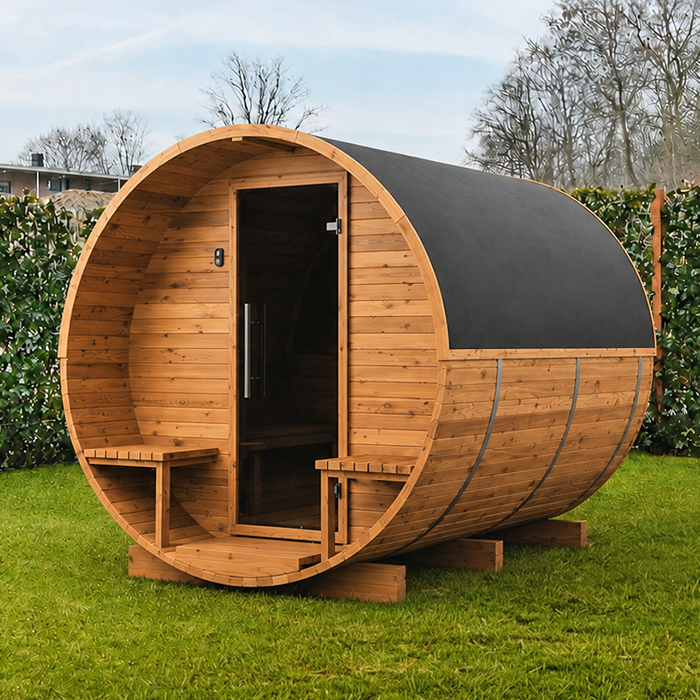
Understanding an outdoor sauna warranty
A warranty is a defined coverage promise, not a forecast of how long a sauna will remain usable. Its length does not, by itself, describe the condition the cabin will be in after the covered period. Terms can distinguish between parts of a product, so do not assume the cabin, finish, heater and controls all have identical coverage. Read the written terms for the model and configuration you are buying, rather than relying on a general statement about a brand or product range.
Check what the warranty covers, how long coverage lasts, when it begins and what conditions apply to installation, maintenance and intended use. Look for stated limits or exclusions, and find out whether parts, labour or both are addressed and how to make a claim. Clarify who handles a problem where the cabin and heater have separate suppliers or warranties. Keep the terms supplied with your purchase, along with any written clarification, so you are not relying on a later version of a product page. If a claim requires maintenance records or installation evidence, knowing that before purchase helps you retain the relevant documents. These details must come from the actual terms, not assumptions. A longer period does not prove a longer service life, and a shorter one does not establish that the sauna will wear out sooner. Compare coverage separately from construction and repairability, including the upkeep and repairs you may need to fund outside that coverage.
When visible wear needs a closer assessment
Age alone is a poor reason to decide that a sauna has reached the end of its useful life. Fading or a worn-looking finish may be cosmetic, while recurring leaks, persistent damp, opening joints, unexpected movement or timber that appears softened deserve closer attention. A door that begins sticking can also be a sign to investigate, but it does not identify the cause by itself. Check the manufacturer’s guidance and look for whether the change is new, getting worse or returning after a previous repair.
If a concern persists or involves the structure, ask the manufacturer, installer or an appropriately experienced professional to assess it. For faults with a heater or electrical controls, seek advice from a qualified professional rather than attempting a repair yourself. Base a repair-or-replace decision on the condition of the whole installation, the work required and whether parts can be serviced, not on age alone. That gives a more useful picture of remaining serviceability than a single mark, an assumed lifespan or the warranty period.
Frequently asked questions
Is there a standard lifespan for an outdoor sauna?
No single figure applies to every model or site. Any estimate is useful only if it explains what part it covers and the assumptions about construction, exposure, use and care. Treat an unsupported year range as a generalisation, not a promise.
Does a Thermowood label guarantee a longer life?
A material name alone cannot establish how long a complete sauna will last. Ask for the precise timber specification, construction details, finish and care instructions. Roof protection, assembly, siting and maintenance also affect how the cabin performs outdoors.
Does the warranty period tell me how long the sauna will last?
No. A warranty sets out coverage for a defined period and under stated conditions. It is not necessarily an estimate of useful life. Compare the written terms for the cabin and any separate components, including exclusions and care requirements.
How can I tell whether wear is cosmetic or a more serious problem?
Fading or surface changes do not automatically mean the sauna has failed. Recurring leaks, persistent damp, movement, opening joints or softened timber deserve investigation. Use the manufacturer’s guidance, and ask a suitable professional to assess concerns that persist or affect the structure.
Can I extend a sauna’s life by applying a protective coating?
Only use finishes or cleaning products that the manufacturer approves for the specific surfaces. An unsuitable coating or cleaner may cause damage or conflict with care instructions. Check the manual before treating timber, seals or other components.
An outdoor sauna’s useful life is shaped by its construction, weather protection, location, use and the care it receives. Compare model-specific documents and warranty terms, and find out how repairs and replacement parts are handled. Once installed, follow the manufacturer’s care instructions and investigate recurring problems early. That approach gives a more realistic basis for judging durability than a material label or warranty period on its own.
