
Choosing an Outdoor Sauna for Long, Cold Winters
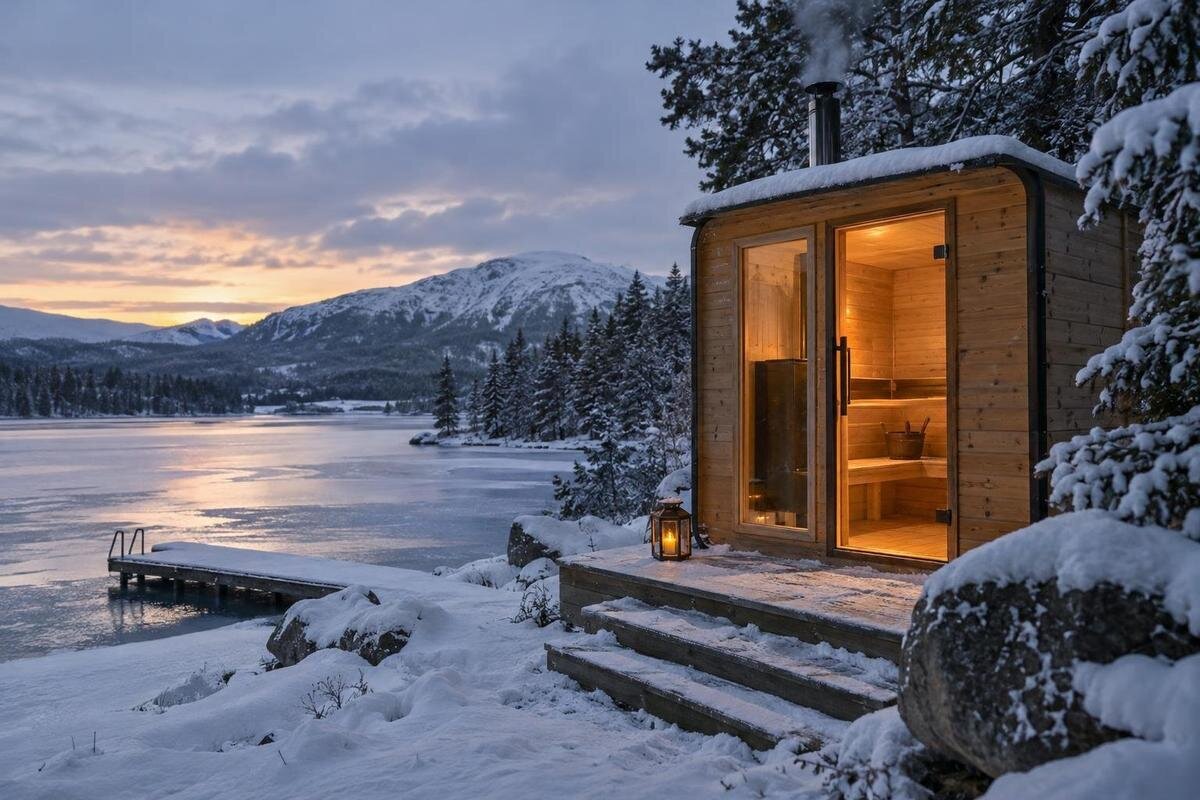
Outdoor sauna planning
Planning an outdoor sauna for a long, cold winter means looking beyond the cabin’s appearance. Prolonged frost, thawing ground, rain, drifting snow, short daylight and slippery paths can affect the base, weather protection, heater, services and the simple question of whether the sauna is practical to reach. The right choice depends on the specific model and installation, not a general claim that an outdoor sauna is winter-ready. Use the manufacturer’s current drawings and operating instructions to pin down limits, then plan the site and route around the conditions you actually experience.
01
What a long, cold winter changes
Begin by describing the winter your site actually gets, rather than choosing from a broad label such as cold-climate use. Note how long frosts tend to last, whether snow stays on the ground or melts quickly, where water runs during a thaw, and which paths become icy. Include wind exposure and the hours when you are likely to use the sauna; a sheltered garden with a clear route presents different practical questions from an exposed corner reached across a dark, wet lawn. These observations do not establish a product rating. They help identify which manufacturer limits and site details you need to check before shortlisting a model.
Review the cabin position and its approach together. Mark the proposed entrance, surrounding buildings and trees, gates, drains and any existing service routes on a simple site sketch. Consider where snow will be piled after clearing, whether meltwater crosses the approach, and whether a roof edge or higher ground could send water towards the base. Visit after rain and in winter conditions if possible; otherwise, ask someone familiar with the plot about recurring drifts, pooling or access problems. Record anything you cannot yet establish, including conditions in parts of the garden you rarely visit in winter. A view of the site in mild weather may not reveal its most difficult conditions.
Check the documented operating limits
Check the manufacturer’s operating limits before shortlisting a sauna. Request the current manual for the exact cabin and heater configuration, and ask what external conditions it is intended to operate in, including any stated lower ambient limit or restrictions during snowfall, frost or strong winds. Check whether the guidance covers year-round outdoor installation as well as use in cold weather; those are separate questions. If you are considering Sauna HC-225, use its model reference when requesting the relevant documents and confirmation of the available configuration. The supplied catalogue information identifies the product but does not establish whether it can operate in your site’s winter conditions.
Ask for clear answers in writing when a point affects the project: which parts of the installation the stated limits apply to, whether they depend on a particular heater or enclosure option, and what precautions apply when the sauna is unused for several days. If the documents do not state a minimum ambient condition, ask the manufacturer rather than borrowing a figure from another model or an online discussion. A general assurance that a product is suitable for all seasons is not a substitute for model-specific instructions. If essential limits remain unclear, compare it with an option whose documentation answers your questions.
02
How the sauna is built affects weather protection
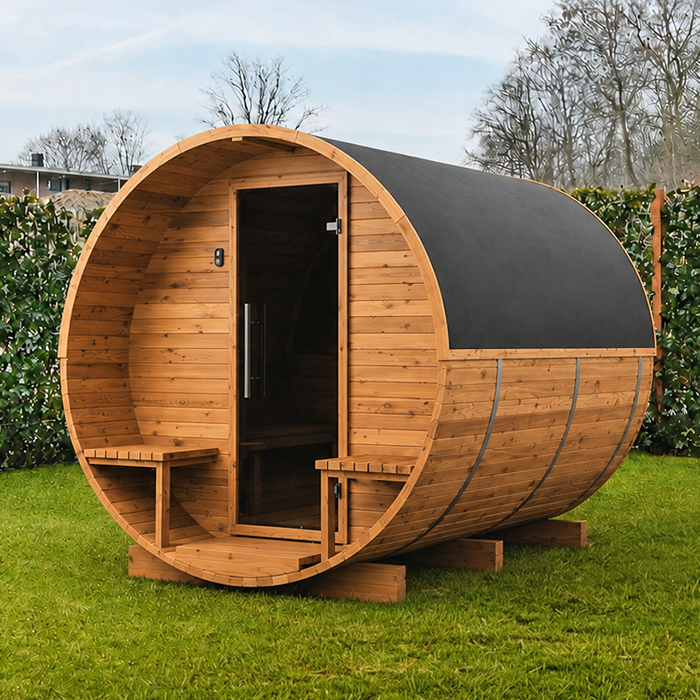
Cold-weather performance depends on the construction as a whole, not on the visual impression of thick boards or a rounded profile. Check the drawings and component description for the roof covering, wall and floor build-up, insulation if any, joints, door and window details, and the way the cabin meets its base. Ask how rain is kept from vulnerable joints and whether the intended arrangement lets water drain rather than collect. A model name, finish description or exterior photograph cannot show how every layer is made or assembled. Request the construction details for the precise configuration you would buy, especially if insulation or glazing is presented as an option.
Look closely at openings because seals, latches and frame details affect comfort and maintenance, but do not judge them from a photograph alone. Ask which parts are exposed to weather, how they should be checked, and whether replacement parts are specified. For Sauna N-210, request the roof specification alongside the door and window details. Ask whether documented snow-load limits are available and what the manufacturer requires when snow accumulates. Have a qualified professional assess whether the documented roof capacity is appropriate for the site if this needs further evaluation. Any snow-removal method should follow the manufacturer’s instructions and allow the work to be carried out safely.
Match the base and drainage to the site
Ask what base arrangement the manufacturer requires, using the drawing for the exact model rather than a generic picture. Confirm the external footprint, support points, entry level and access needed for assembly before groundworks begin. If Sauna N-250 is on your shortlist, request its current installation information before deciding on a base. Ground conditions matter: slope, soft or disturbed soil, drainage routes and recurring standing water can affect what support is suitable. A competent local groundworks or structural professional can assess the actual plot and determine whether design work is needed. Do not choose a base type or size by copying advice for a different sauna.
Plan for freeze–thaw and water movement as well as the sauna’s weight and geometry, without trying to resolve engineering questions from a general article. Consider the base alongside the route taken by rainfall and snowmelt: roof runoff should not be left to soak the approach or collect beside the structure. Ask the installer how the selected arrangement deals with drainage and what site preparation is included in the project scope. If the garden has a retaining edge, a significant slope, a known drainage problem or ground that shifts, bring that information into the professional assessment early. A visually level patch does not prove that conditions will remain suitable through winter.
03
Choose a position that remains accessible
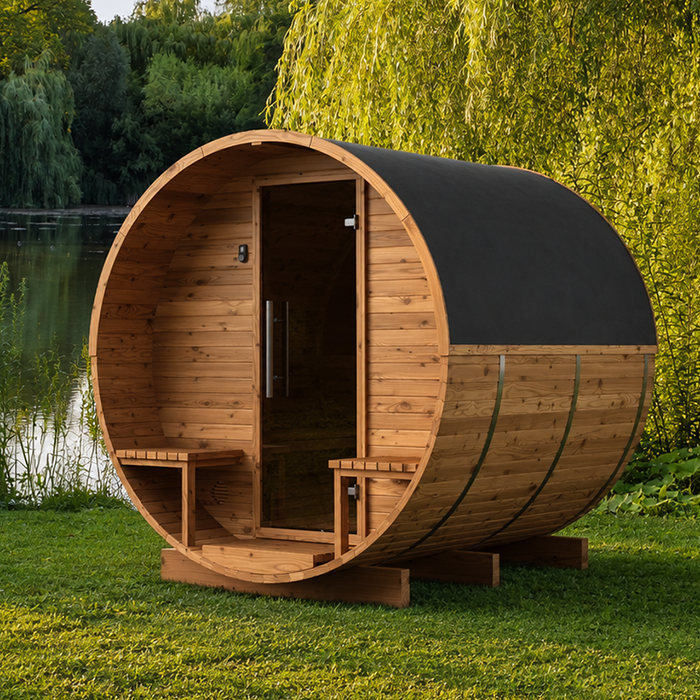
Exposure changes from one garden corner to another. A fence, hedge or neighbouring wall may reduce wind in one direction but also alter drifting snow or trap damp air; it does not give the sauna a verified weather rating. Look at the open sides, likely wind-driven rain, shade, tree cover and places where snow can accumulate, then compare these observations with the manufacturer’s siting instructions. Avoid a position directly below a roof edge where snow or meltwater could fall unless the manufacturer and installer confirm it is suitable. Keep any required vents and inspection points accessible, and do not add a screen or enclosure that conflicts with stated clearances.
Use the product’s layout drawing to check space around doors, service points and the roof, and to plan how snow can be cleared without blocking the entrance. For Sauna LC-260, confirm the configuration and dimensions before marking out the site. Include the door’s opening space and the working room specified for installation and routine inspection, rather than marking only the cabin footprint. Think about where cleared snow will go, so it does not end up against the cabin or across the path. A spot among established planting may look sheltered but can make maintenance harder when snow, wet leaves or ice gather around the structure.
Plan a clear winter route to the entrance
An outdoor sauna is only convenient in winter if the route remains usable. Walk it from the house in the conditions you expect to encounter: consider distance, changes in level, gates, steps, turning space and any point where runoff or shade could leave ice. Choose a surface that can be maintained and cleared with the equipment you expect to use, and plan lighting so the route and entrance are visible in early darkness. These are practical checks, not a claim that any one surface is slip-proof. If you need a mat, step, handrail or shelter, confirm how it can be added without obstructing the door, ventilation openings or manufacturer-specified clearances.
Make a place for snow-clearing equipment and wet outdoor clothing that does not narrow the route or interfere with the sauna. A path may be fine in summer yet become awkward when a gate is difficult to open in gloves or a cleared snow pile limits the approach; think through those tasks before finalising the layout. When planning access for Sauna HCF-300, request a drawing showing the entrance and service access, then check how these connect to the path. Confirm separately whether any porch, changing area, lighting or access equipment is included. If you want a sheltered place to remove outdoor footwear, allow for it in the layout and budget as a separate element unless its inclusion is confirmed.
04
Check the heater and services as a complete system
Confirm how the heater and sauna are supplied as a package. The cabin model name does not establish which heater, controls, flue parts, electrical items or other accessories are included, or whether they suit your site. Obtain the specification and installation documents for the exact combination, and ask the manufacturer or seller which operating conditions and clearances apply. For an electric arrangement, ask a qualified electrician to assess the supply and installation requirements; for a solid-fuel arrangement, have a suitably qualified installer review the appliance, flue and site-specific requirements. Do not estimate cable sizes, clearances or chimney details from generic advice. Keep the sauna and heater instructions together for the installer.
Ask how controls and external components are accessed in the weather, and what the manufacturer says about starting, shutting down and leaving the system unused during a cold spell. For Sauna HCF-225, confirm which heater package, if any, is included in the proposed order and obtain its installation documents. Check who supplies and installs each item, who coordinates any separate trades, and what must be ready at the site before work begins. Record the agreed configuration so the installer works from the correct specifications. If the heater option changes later, ask whether the original siting and service plan still applies. Settle these details before ground preparation.
Ask how the sauna operates in cold conditions
Do not assume that a sauna will take the same time to heat up during a prolonged cold spell as in mild weather. The starting temperature, cabin construction, heater choice and installation all matter, so ask the manufacturer what to expect under your anticipated conditions and whether there are limits on operation. Compare like-for-like configurations: changing the heater, glazing or enclosure can change the instructions. For Sauna S-140, request any available warm-up and energy-use information for the selected cabin-and-heater pairing, including the conditions under which it was measured. This lets you distinguish documented results from estimates and judge whether the expected preparation time fits the way you intend to use the sauna.
Follow the manual for ventilation, drying, cleaning and any water use, both during regular winter use and after a period out of service. Do not block a vent or change the operating sequence to keep heat in unless the manufacturer specifically instructs you to. Ask whether the sauna needs particular steps after use to manage moisture, and which products, if any, are suitable for its finish. Consider where damp towels, footwear and other wet items will be left so they do not obstruct ventilation or the next visit. If the instructions distinguish between routine use and seasonal shutdown, understand the difference before deciding how often the sauna will be used.
05
Plan maintenance for difficult weather
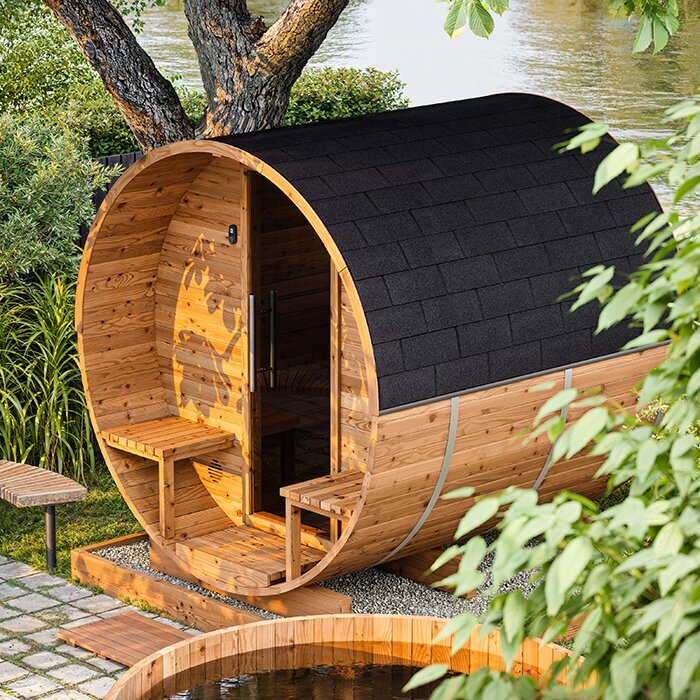
Maintenance needs to be practical when the weather is poor. Ask for the model-specific schedule and find out which checks concern the roof, weather-facing joints, door operation, surface finish and any heater or flue components. Request the manufacturer’s instructions for the exact model and finish, such as Sauna HC-150, rather than relying on guidance for a different product. Clarify which cleaning or treatment products are permitted, how often inspections are recommended and what signs should prompt a service visit. Do not assume a treatment suitable for one timber or coating can be used on another, or that an optional cover is appropriate over a heated sauna.
Think about who will do the work and how they can reach the relevant parts without climbing over snowbanks or moving stored equipment. Keep access to inspection points and service areas required by the installer; if checks involve working at height or around electrical or combustion equipment, arrange them through an appropriate professional rather than improvising. Ask how the sauna should be left during an extended unused period, including any limits on covering or sealing it, and where manuals and service details will be kept. A maintenance plan that fits your actual winter routine is more reliable than an ideal schedule that is difficult to carry out.
Comparing the full installation scope
Compare complete installations using the same evidence. For each candidate, record the documented ambient operating limits, construction and weather-protection details, heater configuration, base requirements, drainage considerations, entry and service access, and maintenance instructions. Separate what is confirmed for your chosen model from what is an assumption based on a photograph, sales description or a different variant. Treat unanswered items as unresolved rather than scoring them as positive. Ask for the installation drawing, current manuals and a written description of what is included. This makes it easier to see whether two apparent alternatives are genuinely comparable, rather than judging them only by shape or the space they seem to occupy.
Finally, agree who is responsible for each part of the project: site preparation, delivery access, assembly, heater installation, any electrical or flue work, and ongoing maintenance. Check what the scope excludes and what must be ready before installation; responsibilities depend on the supplier and installer, so get them confirmed rather than assuming. Where the plot, services or permissions raise a question, consult the relevant local authority or a qualified professional before committing to the layout. Ask how to contact support if a winter fault occurs, and retain the product identity and instructions for your installation. This helps catch missing decisions while changes are still manageable.
Frequently asked questions
Can I assume an outdoor sauna is suitable for year-round use?
No. An outdoor design does not, by itself, establish a minimum operating temperature or show whether the heater is suitable for every winter condition. Ask for the current instructions for the exact cabin and heater, including any restrictions on cold starting, snowfall or extended periods out of use. If a relevant limit is not documented, get a clear answer before relying on the sauna through a long cold spell.
Does a solid-looking cabin retain heat better?
Appearance alone cannot tell you how the walls, roof and floor are built, or how well openings are sealed. Ask for construction details, including whether insulation is used, and check the door, window and joint specifications. Then compare the documented heater-and-cabin combinations rather than drawing conclusions from a photograph or a material description.
What foundation should I use?
Use the manufacturer’s instructions and drawing for the exact model, then have the plot assessed by a suitable local groundworks or structural professional. Soil, slope and drainage affect what support is appropriate, so there is no universal foundation choice in this guide. Arrange that assessment before groundworks begin.
Should I choose a more powerful heater for cold weather?
Do not size a heater by guesswork. Ask the manufacturer to confirm the intended heater for the exact cabin and options, and check its instructions for your expected conditions. A larger unit is not automatically the right choice: the appliance, controls, installation requirements and services must work as a complete system. Have a qualified installer assess the installation.
What is the most important winter access check?
Walk the route from the house to the entrance and consider how it will be lit, cleared and drained in poor weather. Check for steps, gates, shaded patches and places where runoff could leave ice. Also plan where cleared snow will go, without blocking the entrance, ventilation openings or access needed for maintenance.
The most dependable choice is the one with operating limits documented for your winter conditions and a site that can be reached, drained and maintained through the season. If a key detail about the construction, heater, base or access is missing, treat it as an open question rather than a promise. A sauna that is straightforward to use and service in poor weather is a more practical winter choice than one that merely looks robust.
