
Outdoor Sauna Roofing: Weather Protection and Maintenance
Outdoor sauna guide
An outdoor sauna roof is more than its visible covering. Weather protection depends on the covering, its supporting layers, the details at edges and openings, and the route rainwater takes off the cabin. A material name or product photograph cannot establish whether a particular design suits an exposed, tree-lined or sheltered site. Compare the specified assembly and its upkeep instructions, then check that the information applies to the exact model and configuration you plan to buy. This guide explains what to ask before deciding and what to maintain afterwards.
How the roof protects the sauna
An outdoor sauna roof has to shed rain and protect the joins beneath its visible covering. These are connected tasks, but a word such as waterproof does not describe the complete construction, its installation or the conditions it is intended for. Wind-driven rain may test an exposed edge or junction even when the centre of a roof looks sound. Consider the roof as an assembly: the outer covering, any specified support or secondary layer, fixings, overlaps and the parts that meet the cabin walls. Each item can affect how water is kept out and directed away.
That assembly is only one part of the sauna’s wider weather protection. Water can track at a wall junction, fall from an edge and splash against the lower cabin, or collect around the base; changing the top material alone will not resolve every route. Use whole-cabin drawings to see how roof water leaves and whether you can reach the edges for later checks. Ask where the manufacturer expects run-off to go, rather than assuming the roof finish takes care of drainage by itself. Nearby walls, overhangs and ground levels can also affect the water reaching or leaving the cabin.
What the covering specification should say
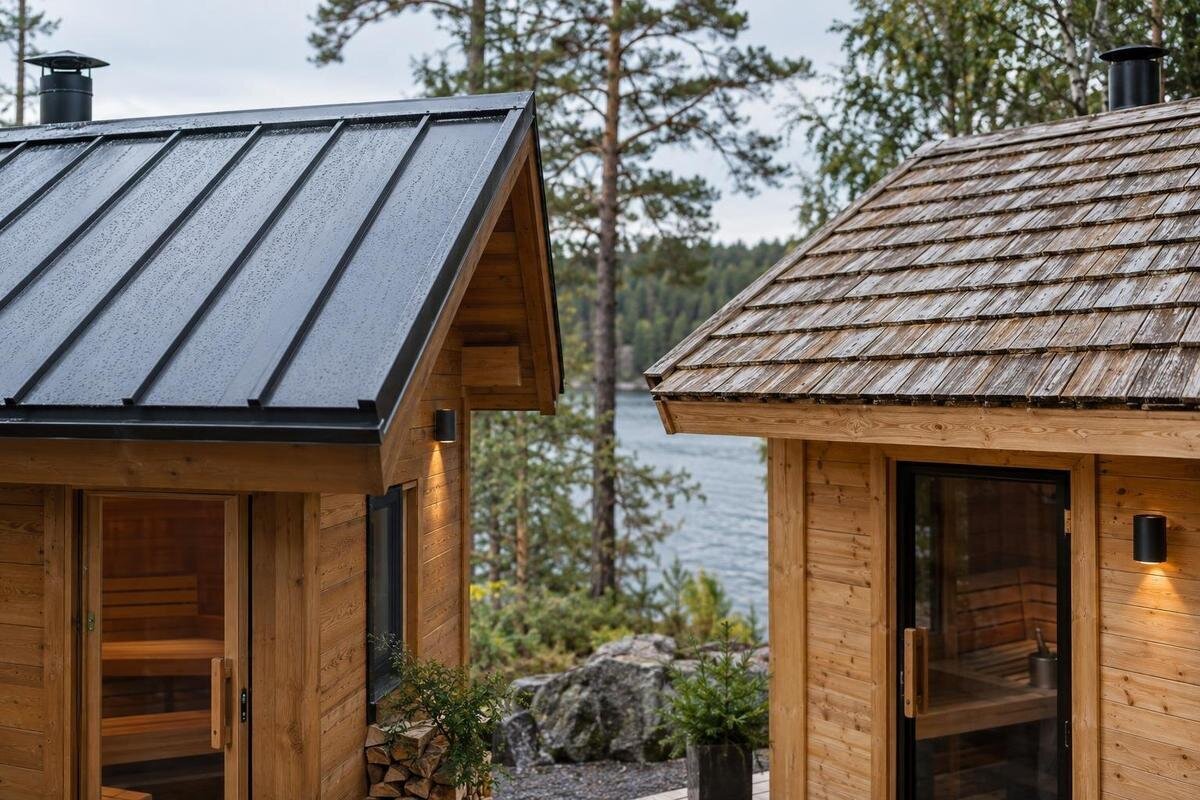
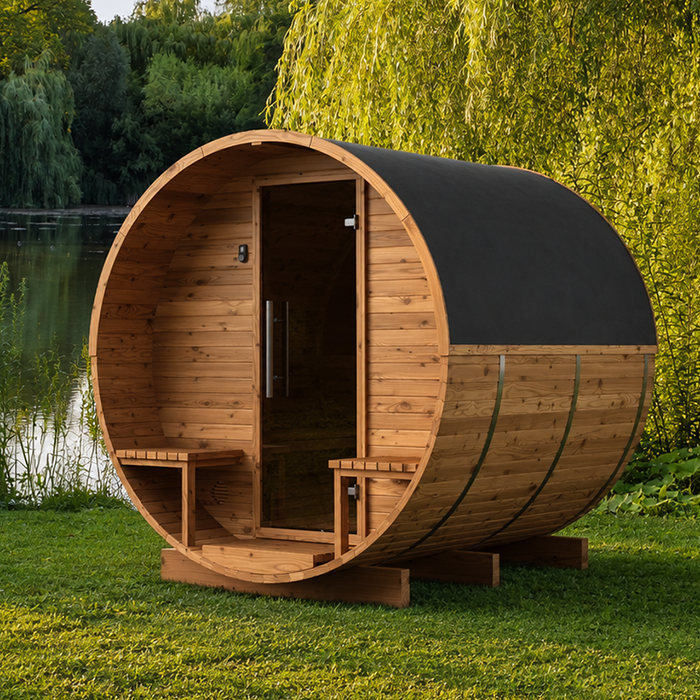
Broad categories such as roofing felt, other bituminous membranes, bituminous shingles and profiled metal are not complete specifications. Variants can differ in their finish, backing, fixings, overlaps, supporting layers and edge treatment. A product photograph may not show these details, and two roofs that look similar are not necessarily assembled in the same way. Ask for the exact covering and layers supplied, whether any part is optional, who installs it and whether the manufacturer states conditions for its use. Compare written information for the full assembly, not just the material name. The specification should also explain how the covering suits the roof’s shape. For a curved roof, ask which covering is specified for the curve and how it terminates at the ends; for a pitched roof, ask how the meeting point at the top is finished. These are questions about the proposed construction, not reasons to prefer one shape automatically. Establish whether the visible surface is the weather-protective layer or a finish over another specified layer. That distinction helps you understand what needs attention if the surface changes or is damaged.
For a model such as Sauna HCF-225, use the product name to identify the candidate, then ask the supplier to specify the covering and all layers included in the configuration you are considering. The model name itself does not identify the material or establish a weather rating. Request an answer tied to a drawing or instruction, and check whether any finishing work is needed and who is responsible for it. If two options share a broad material label, compare their exact construction and approved details before treating them as equivalent.
How to compare maintenance needs
Maintenance involves more than cleaning. Ask which parts need inspection, what signs of damage to look for, which cleaning methods are permitted and how repairs should be handled. A note to keep a roof clean leaves practical questions unanswered: whether debris should be removed dry or washed away, for example, and whether a damaged area needs a specialist repair. Check whether the maker gives an interval for inspections and whether routine care differs between the covering, its edges and any rainwater goods. Record the instructions before comparing different designs.
Compare the work involved as well as the finish. Consider whether the roof can be viewed safely, whether routine care needs specialist access, and whether compatible repair materials or replacement components are identified. A surface that looks simple to maintain may still have junctions that need attention; equally, the material family alone does not tell you how demanding upkeep will be. For Sauna S-140, ask for the care guidance for the exact configuration and note which tasks the owner can carry out safely and which should go to an installer. This gives you a more useful comparison than appearance alone.
Trace the path of roof run-off
Ask for a drawing or written description showing where rain leaves the roof. Check whether it falls freely, meets a gutter or is carried away by downpipes; do not assume rainwater goods are included with the sauna. Confirm where any outlet discharges and whether that point works with the proposed position, paths and surrounding ground. The aim is not to calculate a drainage system yourself, but to see the intended route and spot obvious clashes with a doorway, a neighbouring structure or a low area where water may collect. Consider the approach to the sauna as well as the cabin itself. Will someone entering or leaving pass directly beneath an edge that sheds rain? Could run-off land on a step or on furniture beside the sauna? Mark these points on a simple site sketch for discussion with the installer. If you intend to collect roof water, ask whether the proposed arrangement is compatible with the design and where excess water would go when the container is full. A container alone does not resolve the discharge route.
Look at lower edges, end caps, overlaps and transitions between the roof and end walls. A tidy trim is not automatically a water-shedding detail, so ask to see the relevant section drawing and how the edge is intended to direct water. If gutters or outlets are included, find out how they can be inspected and cleared safely. When enquiring about Sauna HC-150, ask the supplier to identify the drawing for the exact model and clarify whether the drainage details shown are standard or an addition. Avoid guessing at changes to the roof or run-off arrangement.
Edges, joins and roof openings
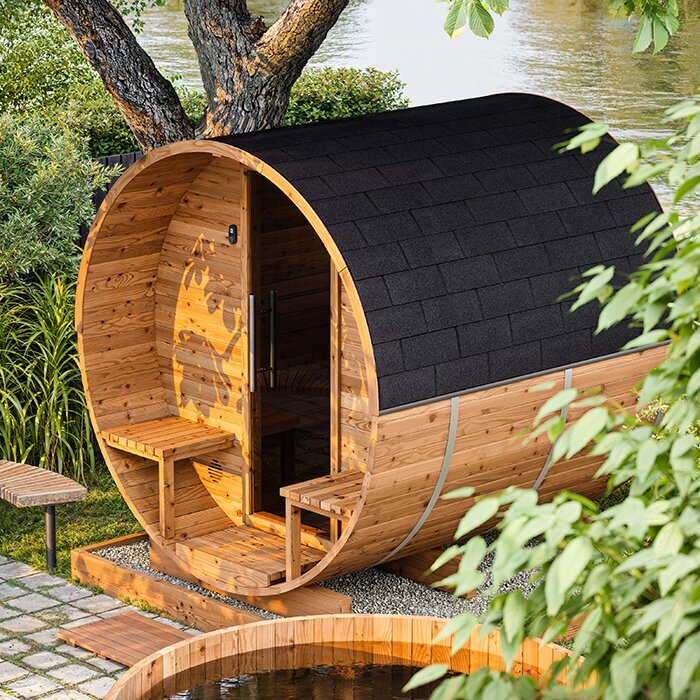
Pay close attention to places where one surface meets another: roof-to-wall junctions, panel seams, perimeter trims and any opening through the roof. Even a well-specified covering relies on compatible components and details at these points. Check whether the drawings show each junction clearly, rather than relying on a distant perspective image. Ask which seals, flashings and fixings form part of the design and which are supplied separately. A generic instruction to add sealant does not explain how the complete roof junction is meant to be constructed or maintained.
If the chosen configuration has a flue, vent or cable route at or near the roof, its treatment needs to be specific to that design. Do not improvise a cut-out, seal or fixing; follow the manufacturer’s instructions and have specialist work assessed or carried out by a suitably qualified installer. Confirm who is responsible for the junction and what should be checked afterwards. When enquiring about Sauna HC-225, name the exact model and ask for any roof openings and their approved details to be identified, rather than relying on a photograph of a different build.
How the site changes weather exposure
Assess the proposed position, not just the roof in isolation. Where practical, notice how wind-driven rain reaches the site, whether nearby buildings or fences shelter or redirect it, and whether trees could drop leaves, seed pods or twigs onto the roof. Consider whether adjacent structures change the route that water can take and whether you will be able to reach the roof edges for inspection. If the site is coastal or particularly exposed, ask whether the specified covering and fixings are suitable for those conditions; do not assume that all finishes respond in the same way. Look beyond the conditions on the day you visit. Deciduous trees change through the year, and an apparently clear position may receive falling leaves later. Note any overhanging branches and whether a neighbouring roof sheds water towards the proposed sauna position. Take photographs from several sides so the supplier can see these relationships. If the sauna will stand close to a wall or fence, explain that spacing when discussing maintenance access: seeing the roof from the garden is not the same as being able to reach every edge safely.
Use any manufacturer-stated siting conditions for the exact design, and ask for clarification where the documents do not address your site. Do not infer waterproofness, wind performance or other ratings from the covering’s appearance, from a different model, or from a garden structure with a different design. A model such as Sauna N-210 is a reference for your enquiry, not proof of suitability at a particular plot. Describe the exposure and surrounding features to the supplier or installer so they can respond against the relevant specification.
Documents to request for the chosen model
Useful documents include a roof plan, elevations and any section drawing that shows layers, edges and junctions. Ask for the specification of what is included, the assembly instructions and the maintenance guidance for the exact model and configuration. If a document mentions an optional finish or component, ask how to identify it in the order details. Where the manufacturer states permitted conditions or other performance information, make sure the statement applies to the chosen design rather than a similar-looking product. Check the model reference and revision information on each document, especially if a quotation and an assembly manual show different details. A parts list can help establish whether trims, fixings and other roof components are supplied, but it does not replace a drawing showing their positions. If the instructions refer to separate roofing guidance, request that document too. Clarify who supplies any items marked as required but not included, and who completes the roof if cabin assembly and roofing are separate parts of the installation. This identifies gaps in the agreed work before materials arrive.
Keep the answers together so you can compare like with like: model and configuration, covering and layers, drainage details, any roof openings, maintenance tasks and who installs or repairs the roof. Check that instructions are current for the version being offered, and ask who to approach if the supplier and manufacturer provide different information. For an enquiry about Sauna N-250, include the model name when requesting its drawings and care instructions. If a document or detail is unavailable, treat that point as unknown rather than filling the gap with an assumption.
A safe, practical inspection routine
Follow the maintenance interval in the manufacturer’s instructions rather than inventing a schedule. A visual check from a safe position can help you notice lifted or displaced covering, cracks, loose trim, trapped leaves, blocked gutters if fitted, or changes around a junction. After severe weather or a build-up of debris, look for new signs of damage without assuming that every mark indicates a leak. Note what you see and compare it with the guidance for the roof type; a record makes it easier to spot whether a condition is changing.
Use only cleaning products and methods the manufacturer permits. Do not assume pressure washing, solvents, abrasive tools or overpainting are suitable, and do not walk on the roof unless the instructions explicitly allow it and safe access is provided. Work at height or repairs to unfamiliar components are better assessed by a suitably competent contractor. For Sauna LC-260, ask the supplier what routine care applies to the exact configuration and how to arrange any specialist inspection. Keeping the manual and relevant order information together makes later maintenance easier to plan.
Recognising roof trouble and arranging repairs
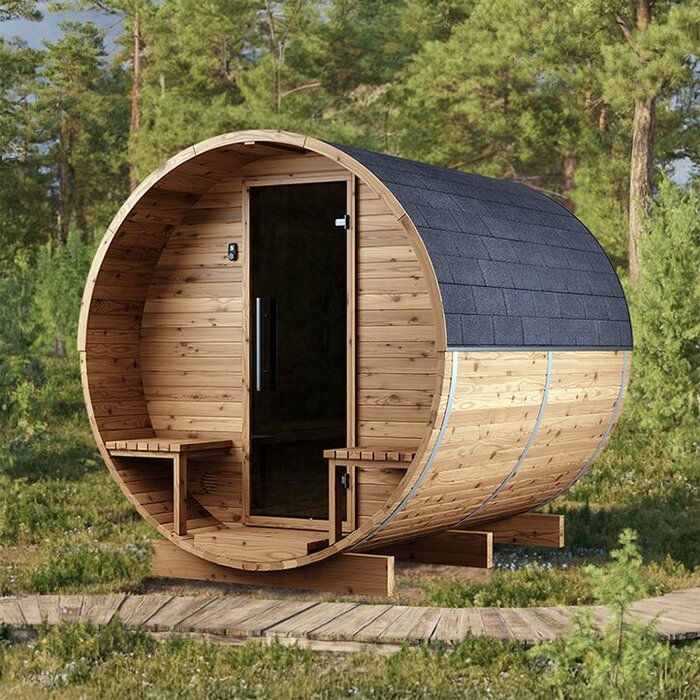
Possible warning signs include a displaced or lifted covering, a split, loose trim, debris trapped at an edge, or water marks on an interior surface. A sign inside does not automatically identify the roof as the source: dampness may have more than one cause, including condensation. Note where it appears, whether it follows rain or sauna use, and whether it changes over time. These details help an installer or other suitable specialist investigate, but a stain or damp patch on its own is not a diagnosis.
Photograph any visible change from a safe position and record the date, recent weather and when the problem became noticeable. Avoid applying a generic sealant or patch material before checking the manufacturer’s repair instructions; an unapproved fix may obscure the source or complicate later work. Ask who should assess the issue and whether the repair needs a specialist familiar with that roof assembly. If the chosen listing is Sauna HCF-300, use its model name when asking which instructions apply. Keep any repair record with the product documents.
Make a like-for-like roofing comparison
Use the same questions for each sauna you are considering. Write down the named covering and layers, what is included, which drawings show the edges and openings, where water runs off, what site conditions are stated and what maintenance is required. Separate confirmed information from assumptions, and note who supplied each answer. This avoids comparing a clearly described assembly with a broad material label or a photograph that does not show the relevant junctions. When comparing quotations, distinguish the supply of roof components from the work needed to finish the roof. Check whether each quotation covers the same agreed scope, including any optional rainwater goods, access arrangements and specialist work already identified. Do not assume a lower headline total includes all these items, or that an optional covering necessarily offers better protection. Record unanswered questions alongside each option rather than treating missing information as either an advantage or a defect. This keeps the comparison fair while showing which details still need clarification.
Then consider how practical the roof will be to inspect and maintain at your site, whether repairs require specialist access, and who is responsible for installation and follow-up work. If an important detail is missing, ask for it before relying on a general assurance. A well-matched choice is one whose roof construction, drainage route and care requirements you can understand and relate to the conditions around the sauna. That is a sounder basis for comparison than appearance alone.
Frequently asked questions
Can a product photograph show whether a sauna roof is weatherproof?
No. A photograph shows appearance, not the layers, fixings, joints or conditions the roof is designed for. Ask for the specification and installation information for the exact configuration, and do not treat a general claim as proof of how it will perform at your site.
Which outdoor sauna roof covering is best?
There is no universal best choice. Compare the complete assembly, its suitability for the stated site conditions, the details at edges and openings, and the maintenance and repair instructions. A material name alone is not enough to judge those factors.
Should I add a gutter or another layer of roofing?
Check with the manufacturer before adding anything. Changes can affect how water runs off and how the roof is assembled, so confirm that the proposed addition is compatible and have any specialist work assessed by a suitably competent installer.
How often should I inspect the roof?
Follow the inspection interval in the instructions for your exact model. If no interval is given, ask the supplier what they recommend. A visual check after severe weather or debris build-up can help you notice changes, but do not climb onto the roof unless the instructions and safe access arrangements permit it.
What if the sauna is damp inside but the roof looks intact?
Dampness can have more than one cause, including water entry and condensation. Note where and when it appears, whether it follows rain or sauna use, and take photographs. Those clues help a suitable installer or specialist investigate, but a stain alone does not identify the source.
Compare the roof as a complete system: its specified covering, the details that keep water moving away from vulnerable joins, the exposure at your chosen site and the care the manufacturer requires. Keep each answer tied to the exact model and configuration. If a material, junction or maintenance method remains unclear, ask for the relevant instruction rather than relying on appearance or a broad assurance. A roof you can understand, inspect and maintain is a more dependable basis for choosing an outdoor sauna.
