
Can Your Home’s Electricity Supply Support a Sauna?
Sauna electrical planning
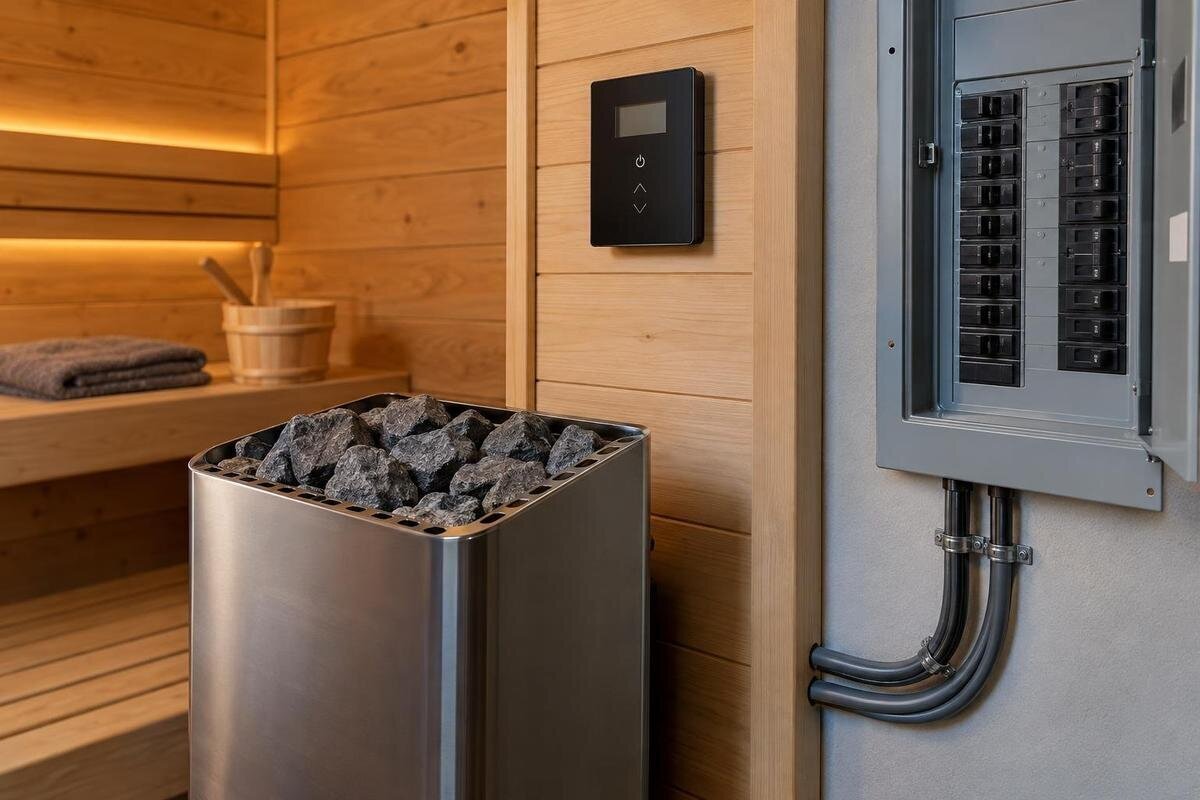
An electric sauna heater adds a new load to a home’s electrical demand. Suitability cannot be inferred from cabin size, property type or a glance at the consumer unit: it depends on the exact sauna and heater configuration, the home’s supply and existing loads, and the proposed location. You do not need to design a circuit yourself. Gather model-specific manufacturer information and a clear picture of how the property is used, then ask a qualified electrician to assess them before committing to a purchase. This helps establish whether the plan works as proposed or needs reviewing.
Why check electrical suitability early?
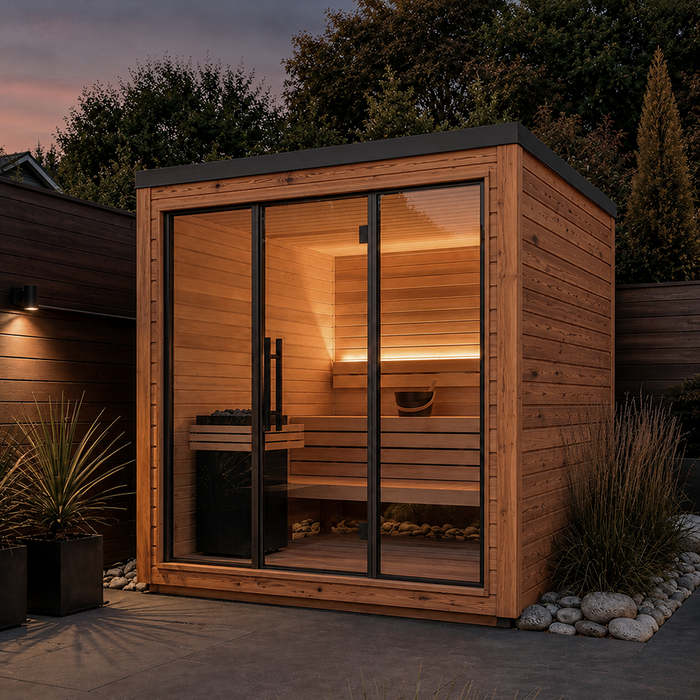
Check electrical suitability early because your sauna choice and the property’s electrical assessment depend on one another. The heater’s requirements may narrow which configurations can be considered, while the route from the property’s supply to the proposed location can affect what work is feasible. If you ask only after ordering or site work begins, a change of model, position or project sequence may be harder to manage. An early discussion can identify missing information while choices are still open. It is a planning conversation, not confirmation that an unselected heater will work at the property. It also leaves time to investigate alternatives before settling on a layout.
Do not treat a small cabin, a new-looking consumer unit or an unused-looking switch as proof either way. None establishes the incoming supply’s available capacity or confirms that the manufacturer’s requirements can be met. Nor can an electrician assess a project from the generic phrase ‘outdoor sauna’. The useful question is whether this home’s installation can support this exact proposed equipment under your intended pattern of use, and what conditions or changes might apply. A neighbour’s experience can prompt useful questions, but it is not an assessment of your property. The same caution applies to an earlier assessment carried out for a different appliance or project.
Get the exact sauna and heater specifications
Start with current, model-specific manufacturer information for the exact cabin and heater pairing. Ask which heater the manufacturer specifies or recommends for that cabin, and request its data sheet and installation manual. The documents should identify the electrical input and supply requirements, along with any compatible controls or other equipment required for the stated configuration. If more than one heater option is offered, do not assume the options share requirements because they suit the same cabin. Ask the supplier or manufacturer to name the exact option in writing. Use information for the products being quoted, rather than relying on a general brochure or photograph that may show a different configuration.
Give the electrician product model numbers and include any manufacturer information about room volume, openings, glazing or other features used to select a heater. If the sizing guidance asks for internal measurements or details about surfaces, provide those too rather than reducing the question to floor area. For example, Sauna HC-150 identifies a candidate cabin, but its name alone does not identify the heater in a particular order. Ask for the exact heater model and its requirements for that configuration, then keep those instructions with the cabin information. Leave interpretation of technical figures to the relevant professionals; do not estimate heater suitability from the cabin’s outside dimensions.
What to tell the electrician about your home
Give the electrician a clear account of what you know about the home’s supply and existing installation. Helpful information may include earlier inspection or upgrade paperwork, details supplied by a previous electrician, and the approximate positions of the consumer unit and proposed sauna. You do not need to remove covers, disturb seals or take measurements; if a label or record is not safely accessible, leave it for the electrician to inspect. Say plainly if there are no records, and mention any known electrical issue without trying to diagnose it. This background provides a starting point, but it cannot establish that spare capacity exists or replace an assessment of the installation’s current condition.
Ask the electrician to identify the relevant supply arrangement, available capacity and condition of the installation as part of the assessment. Do not infer those details from the house’s age or style, the number of consumer units, or the fact that another large appliance works. In your enquiry, name the precise cabin candidate, such as Thermowood Barrel Sauna HC 225, and attach its proposed heater documents when available. A product listing helps identify what you are considering; it cannot describe the electrical condition of your home. If the sauna or heater is still undecided, say so and ask what information is needed to compare realistic options.
Include existing and planned electrical demand
Make a list of high-demand equipment already in the home and anything planned, especially items that may operate at the same time as the sauna. Depending on the property, this could include an electric shower, cooker or induction hob, electric vehicle charger, heat pump, hot tub, workshop equipment or a planned extension. Include future projects, not only what is connected today: an additional charger or heating system may change the overall picture. The electrician, rather than the homeowner, should decide how these loads affect the assessment. You do not need to add nameplate figures, calculate a total or guess how much capacity each item uses.
Explain whether the sauna might be used while cooking, charging a car or using electric heating, and be realistic about the busiest periods. If you expect to schedule use differently, mention that as a preference, not a guaranteed way to overcome a supply constraint. When considering Sauna N-210, provide the proposed heater’s requirements alongside your household equipment list; the cabin’s listed area cannot establish spare electrical capacity. Describe any existing arrangements for managing demand, such as scheduled vehicle charging, and identify the equipment involved. The electrician can then distinguish your usual habits from any technical controls that would need to be assessed.
Show the proposed site and route
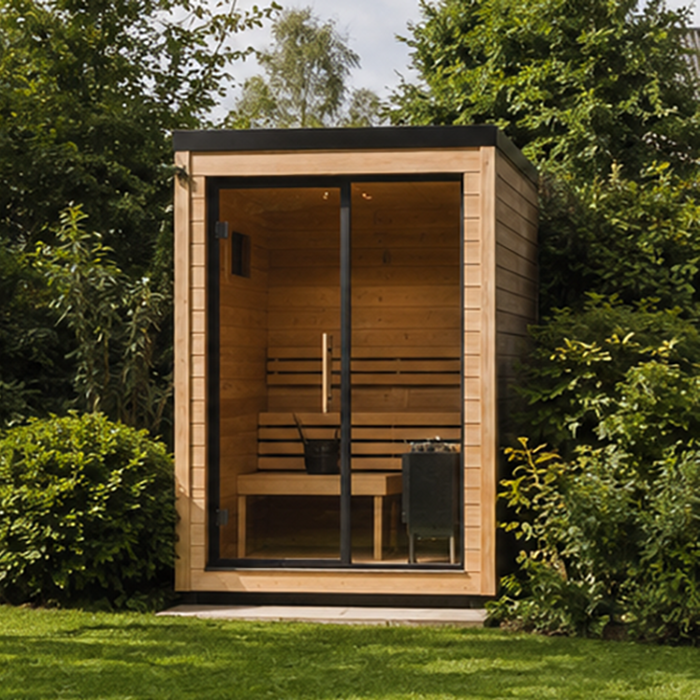
Prepare a simple site plan or annotated sketch before the discussion. Mark the proposed sauna position, the consumer unit’s approximate location, fixed buildings or obstacles, and any surfaces or structures that could affect a possible route. Note whether the sauna is planned indoors or outdoors and whether paving, landscaping, an extension or other building work is planned. A photograph can help explain the setting, but may not show all the route or access details; a rough plan is a starting point, not an installation drawing. Keep the sauna’s orientation and access points clear so the electrician can understand the layout without guessing.
Ask the seller or manufacturer for a dimensioned drawing for the exact model and share it with the electrician. If N-250 thermowood barrel sauna is on your shortlist, use the confirmed drawing to show where it would sit; a catalogue area figure alone does not describe the route or conditions at your property. Do not design the electrical route yourself or assume that the shortest-looking path is feasible. The professional can consider the actual building, outdoor exposure, access and any coordination with other trades. Raise a possible change of location early, because moving the sauna after an assessment can change the information the electrician needs.
Confirm what equipment the proposed package includes
Confirm what the proposed quote or order actually describes. It might refer to a cabin alone, a cabin paired with a named heater, or a configuration with separately selected controls and accessories; do not infer the contents from a photograph, category page or the word ‘complete’. For electrical planning, identify every powered item that will form part of the finished sauna, with its make and model if known. Ask the seller to distinguish included items from optional or separately purchased equipment, and request current documents for the parts you intend to use. This is about defining the equipment and its requirements, not comparing package value.
With a candidate such as Sauna LC-260, make the enquiry about the actual proposed configuration, not the cabin name in isolation. Confirm whether a heater has been selected, which controller or accessories are in scope, and whether any separate powered items need to be disclosed. The seller or manufacturer can clarify product compatibility and provide instructions; the electrician assesses the home’s supply. If you later change the heater, controls or other electrical equipment, send the revised information for review. An assessment made against an unspecified or superseded setup may not answer whether the final version is suitable.
Solar panels, batteries and electricity tariffs
Tell the electrician about any solar panels, home battery or energy-management system already installed or planned. Provide the equipment names and available documentation, and explain what you expect the system to do when the sauna is running. Generating or storing electricity does not, on its own, establish that the proposed heater is compatible with the installation. Ask what information is needed about the existing system and whether its installer should contribute to the assessment. If you are considering adding storage alongside the sauna, have both proposals considered together rather than treating the battery as an assumed solution to an unidentified supply constraint. This gives the professionals a defined proposal to assess.
Keep questions about electricity costs separate from questions about electrical suitability. A cheaper tariff period may influence when you prefer to use the sauna, but the tariff does not establish the capacity of the supply or change the heater’s specified requirements. Likewise, do not assume that a battery’s backup function can power the sauna during an outage; ask the electrician and system supplier to confirm what that arrangement supports. For a shortlist including Sauna HCF-300, obtain the exact heater data before discussing either normal operation or backup use. Any proposed timer or energy-management device also needs to be checked for compatibility with the selected equipment, rather than purchased as a presumed workaround.
If the electrician identifies a constraint
If the electrician finds that the proposal cannot be supported as presented, ask for the reason and for the options actually assessed. The issue might concern the incoming supply, existing installation, selected heater or route to the sauna; do not assume one change will solve it. The electrician can explain whether another configuration or location is worth investigating and whether additional professional input is needed. If an external supplier or specialist needs to be involved, ask who should make that enquiry and what information they need. Avoid commissioning property or supply work on an informal guess; first establish what outcome the assessment requires.
Switching to a cabin with a smaller catalogue area, choosing another heater or hoping to use the sauna at a different time is not automatically a solution. Each changes one part of the proposal and must be checked against the manufacturer’s requirements and the property’s circumstances. If Sauna HCF-225 becomes an alternative, obtain its exact heater pairing and current technical documents; do not carry assumptions across from another model. Ask the electrician to separate confirmed limitations from questions that still need information. That gives you a factual basis for deciding whether to revise the plan or set it aside.
Questions to settle before choosing
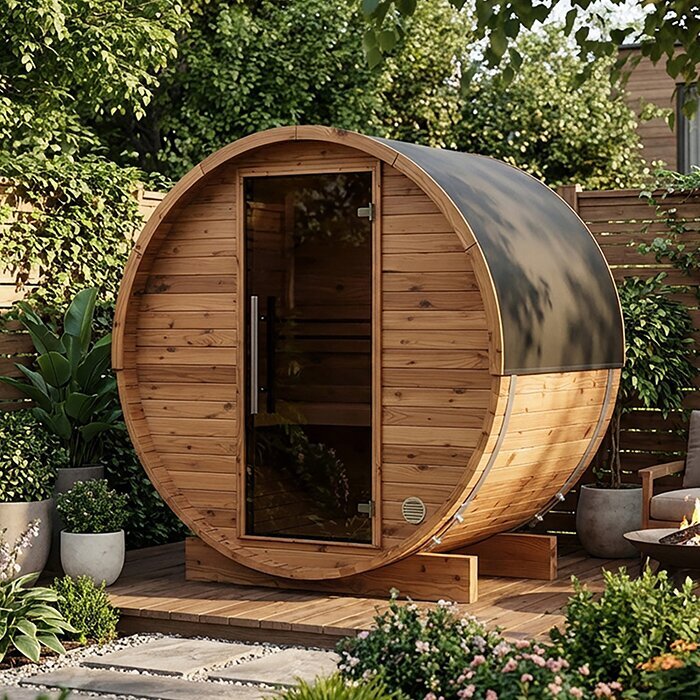
Before the assessment, prepare a few direct questions: Which manufacturer documents are missing? What supply requirements apply to the exact heater and any electrically powered accessories? What has been considered about the home’s supply and other loads? Does the proposed position or route need a site visit or further information? If changes are needed, what work or additional professional input has been assumed? Asking these points helps distinguish the heater’s requirements from the property’s constraints. It also makes clear which conclusions are confirmed, which remain provisional and which new facts could alter the result.
Ask the sauna seller or manufacturer to confirm cabin-to-heater compatibility and provide the relevant documents; ask the electrician to assess the property and proposed installation. Request a written summary that names the exact cabin, heater and any assumptions still to confirm. If Sauna S-140 is your choice, the summary should refer to that model and the selected heater pairing, rather than a generic description such as ‘small sauna’. A clear record is easier to revisit if the product, location, household loads or scope changes before installation, and helps prevent an early provisional view being mistaken for a final assessment.
Keep the assessment matched to the final model
Once the electrician has assessed the proposal, compare the conclusion with the exact product information you intend to order. Make sure the cabin, heater, controls and any powered accessories in the final quote match the documents used for the assessment. If a seller proposes a substitute, request its own manufacturer information and ask whether the change affects the electrician’s view. Keep the site plan, household load notes and written response together, and note which product documents they refer to. If construction or landscaping alters the position or route, tell the electrician rather than assuming the earlier review still applies.
Resolve any outstanding conditions before treating a provisional assessment as approval to proceed. If the electrician still needs a site visit, manufacturer clarification or input from another specialist, record who will obtain it and when the proposal can be reviewed. Distinguish the early feasibility assessment from the later installation work: ask what further checks and handover documentation will form part of the agreed scope. Keep the final equipment instructions and project records accessible for future maintenance or changes. This preserves the basis of the decision without expecting you to interpret technical requirements or carry out electrical checks yourself.
Frequently asked questions
Can I tell from my consumer unit whether my home can support a sauna?
Not reliably. An unused-looking switch or the age of the unit does not show the available supply capacity, the installation’s condition or the requirements of a particular heater. Do not remove covers or try to test it yourself. Give an electrician the proposed sauna and heater details and ask for an assessment.
Does a smaller sauna necessarily need less electrical capacity?
No. Cabin area alone does not establish which heater is suitable or what its electrical requirements are. The manufacturer’s instructions for the exact cabin and heater pairing matter, as do any features the manufacturer uses when specifying the heater. Ask for compatibility to be confirmed rather than comparing models by area alone.
Can I plug an electric sauna heater into an ordinary socket?
Do not assume so. The connection requirements for the exact heater need to be checked against the manufacturer’s instructions and your property by a qualified electrician. A socket that looks suitable, or an extension lead, is not evidence that a particular sauna heater can use it.
Will solar panels or a home battery make the sauna suitable?
Not on their own. Generation, storage and tariffs may affect how a household uses electricity, but they do not replace checking the heater’s requirements, the property’s supply and other loads. Tell the electrician what equipment is installed or planned and ask whether it changes the assessment.
When should I ask an electrician to assess the plan?
Before ordering, ideally while you are still comparing sauna and heater options. Provide the exact manufacturer information, a proposed site layout and what you know about the home’s supply and other major loads. If the model, heater, location or equipment changes later, ask whether the assessment needs updating.
Electrical suitability is a match between a specified heater and a particular property, not a general judgement about whether homes can have saunas. Gather the manufacturer’s requirements, describe the real household demand and proposed location, and use the electrician’s assessment to guide your choice. If any part of the plan changes, check whether the assessment still applies to the final configuration.
