
Remote-Controlled Sauna Heating: Compatibility and Safety Features to Check
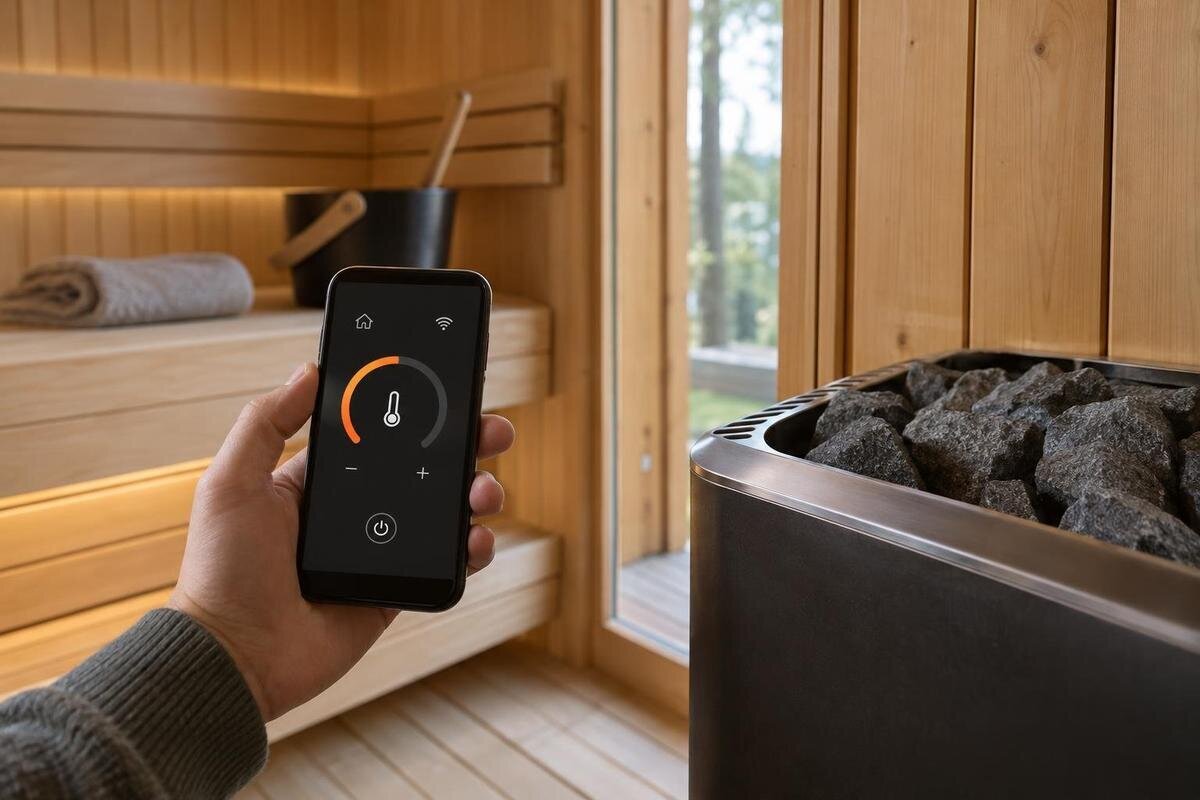
Sauna heating and controls
Remote control can make sauna heating easier to manage, but a phone connection does not by itself make a heater suitable for unattended starting. The important question is whether the exact heater, controller, sauna configuration and every required safety device are approved to work together—and under which operating conditions. An app is only one part of that arrangement. Before ordering or enabling remote operation, establish what the system can do, what its manufacturer permits and which safeguards must be present and working. This guide focuses on compatibility and operating checks, not on fitting or wiring equipment.
01
Remote control can mean several different things
Remote control is a broad label: it may mean viewing a temperature or status, switching a heater off, starting it from outside the sauna, or setting a start for later. Those functions are not interchangeable. A monitoring app may show information while leaving heater operation local; a timer can act without a live phone command. Starting, stopping and changing settings can also have different permissions and consequences. Ask the supplier to explain exactly which actions are available, and whether each is remote or local. Words such as “connected”, “smart” and “app-compatible” do not, on their own, establish that remote starting is supported or permitted.
Write down what you want the control to do, when it would do it, who may issue the command and how the result is confirmed. If you are considering the Thermowood Barrel Sauna N-210, use that model reference when asking which heating and control options can be supplied. Separate essential functions from conveniences: viewing status is different from starting heating, and a one-off delayed start is different from a recurring schedule. Ask for a demonstration of the intended function, supported by the applicable instructions. This gives the supplier a specific requirement to answer without treating a cabin listing or an app demonstration as evidence of compatibility.
Check compatibility for the complete equipment combination
Compatibility needs to cover the actual equipment chain: sauna configuration, heater model and variant, controller, communications module, software or firmware version where relevant, and every required sensor. Request precise model or part references and a written compatibility statement or manufacturer’s combination table. An answer about a brand or broad product family may not cover every version. A remote interface could communicate with its own controller while remaining unsuitable for a different heater. Physical connection, wireless pairing or an app recognising a device does not prove that the combination is approved for heater operation. Ask who is responsible for confirming the complete system, rather than just each item separately.
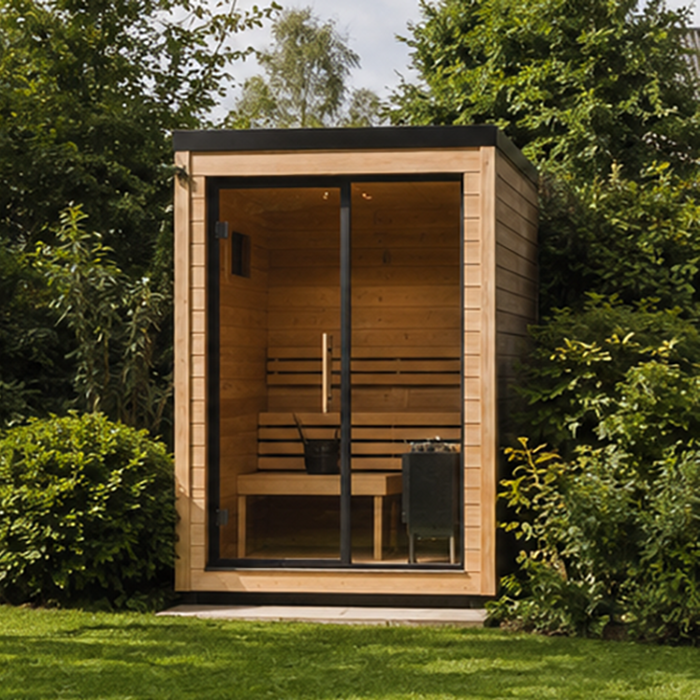
Include the sauna model and the manufacturer’s stated sizing information in the enquiry, but do not turn floor area alone into a heater or controller selection. The Sauna N-250 product record identifies a thermowood barrel sauna with an area of 5.27 m². Ask what further cabin information the heater supplier needs to assess the proposed configuration, rather than assuming that this figure settles the choice. If the heating equipment is offered as an option, request its exact references before accepting the package. Where a component has several variants, ensure the compatibility response covers the one on the quotation, not a similarly named alternative.
02
What certification and conformity documents cover
Treat words such as “certified”, “approved” and “compliant” as claims to clarify, not as substitutes for model references. Ask which product or system a certificate, declaration or conformity record covers, including its exact model and revision where shown. Documentation for a controller or communications module may not address the heater or the installed arrangement. A mark on one component does not automatically establish the suitability of every possible combination. Where a particular certification or conformity assessment is required or claimed, request the relevant manufacturer or supplier documentation and have the installer confirm that it applies to the equipment being proposed.
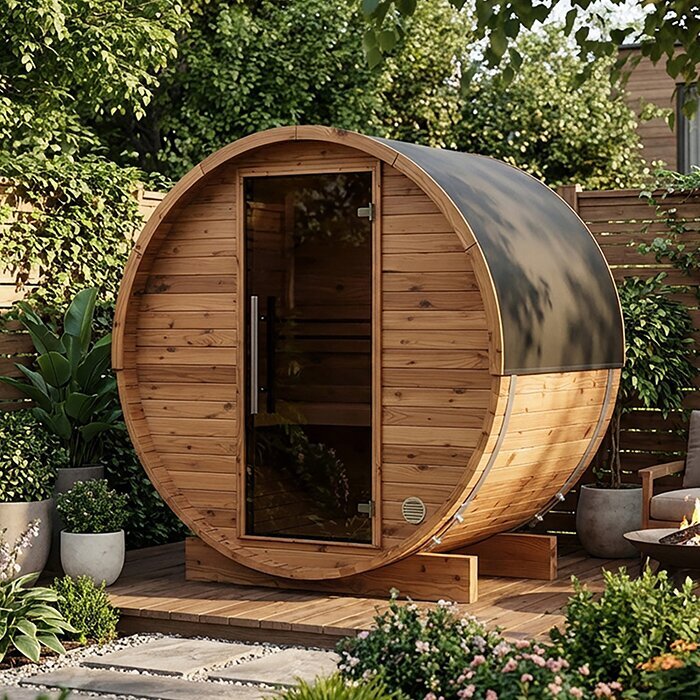
When requesting a heating package for the Thermowood Barrel Sauna LC-260, ask the supplier to identify which documents relate to the cabin and which relate to the proposed heating equipment. Compare their model references with the quotation rather than relying on a photograph or a retailer’s general category description. Read any stated conditions, such as specified accessories, sensors, operating modes or installation requirements. Also look for qualifications or exclusions that limit the scope of the claim. If a document covers only one component, ask what establishes compatibility with the other components. Separate documents should not be presented as evidence of assessment of the complete installed system without an explanation.
Confirm every manufacturer-required safety device
Use the heater and controller instructions to identify the safety features required for the proposed remote function. Establish which are included, which must be supplied separately and who is responsible for confirming they are present in the chosen configuration. Depending on the system design, instructions may specify an interlock or a sensor that reports a door state, monitors temperature or protects the heater area. These are examples, not a universal package. Ask what each device is designed to detect, what condition prevents a start and how the system reports a fault. A general description such as “safety sensor” does not answer those questions.
Ask how a disconnected, damaged or failed sensor is handled, and who is authorised to test or replace it. A door-closed signal should not be treated as proof that nobody is inside: it reports only what the specified device is designed to detect. Do not bypass, relocate, substitute or disable a safety feature to make a remote command work. For a proposed Sauna HCF-300 package, request an itemised list of the required safety accessories alongside the heater and controller. Establish whether each accessory is supplied with the equipment or must be ordered separately. Have the installer resolve omissions and confirm the manufacturer’s required checks before remote starting is enabled.
03
Check start schedules, timers and operating limits
Find out whether the proposed control offers an immediate remote start, a delayed start, a recurring schedule or only a local timer. Each function may have different restrictions. Read the manufacturer’s instructions for any maximum operating period, lockout, restart condition or requirement for a user to enable the feature locally. Do not choose a setting by guesswork or assume that a limit used by another heater applies. The controls should make it clear what has been scheduled and when it will run. If the interface does not explain this clearly, ask the supplier to demonstrate the function and point to the relevant instructions.
Ask what happens to a pending schedule after a power cut, a lost connection or a change to the system clock, and whether a cancelled start stays cancelled. Consider how schedules interact with cleaning, maintenance and periods when the sauna is not in use; an automatic start should not take anyone by surprise. If you are comparing control options for the Thermowood Barrel Sauna HCF-225, ask for the instructions for each proposed controller so you can compare scheduling functions on the same basis. Record how users can view and cancel pending starts, together with the permitted modes and limits. Never work around a manufacturer-set restriction because an app appears to offer more flexibility.
Understand the app, network and local controls
Ask how the system behaves when the home network or internet connection is unavailable. A remote command may fail, be delayed or appear to have been sent without a clear confirmation; find out what the manufacturer documents for these cases. Distinguish a command acknowledgement from reliable information about the sauna’s physical condition. A screen showing “off” should not be treated as proof that the equipment is isolated or that every safety condition has been checked. Confirm whether local controls remain usable and how the manufacturer says to stop operation if the app cannot be reached.
Check who can access the account, add users or issue a start, and what happens if a phone is lost or an account must be closed. For a heating proposal associated with the Sauna S-140, establish whether remote access requires a separate communications module, an account or an ongoing service, and whether these are included in the offer. Ask what happens if that service becomes unavailable and how software updates affect compatibility. Do not add a generic smart plug, relay or third-party hub unless the heater manufacturer expressly approves that exact arrangement. Keep remote access within the functions and permissions described in the instructions, rather than assuming that any connected device can provide equivalent control.
04
Plan remote use around access and occupancy
Remote starting changes who may cause the sauna to heat and when, so agree who is allowed to use the control and who checks the cabin before a start. Follow the manufacturer’s conditions for occupancy and preparation; do not use a remote command if you cannot meet them. A phone cannot see whether someone has entered, whether an item has been left near the heater or whether the cabin is otherwise ready. Sensor readings only help with the specific conditions those sensors are designed to report. They do not replace a clear operating procedure for the people using the sauna.
Shared households need rules that are understandable to every authorised user: who may schedule heating, how to cancel an unwanted start and how to communicate that the sauna is in use or unavailable. When planning a shared HC-150 thermowood barrel sauna, consider whether the proposed controller lets each person use their own account and whether access can be withdrawn individually. Those are questions for the control supplier, not features established by the cabin listing. Agree how people without app access will know that heating is scheduled. Review permissions when household access changes, and make sure everyone understands the manufacturer’s restrictions rather than relying on the confidence of the person who set up the app.
Have the system verified and documented at handover
Remote heating involves equipment that should be selected and checked against its manufacturer’s instructions. Have a suitably qualified installer confirm the proposed heater, controller, required sensors and sauna configuration before work begins. This is not a suitable place to improvise wiring, modify controls or test an unsupported combination. Ask the installer to explain which parts are being supplied, which instructions apply and what checks are needed before remote operation is enabled. If the planned equipment differs from the documented combination, pause and get the manufacturer or responsible supplier to resolve it.
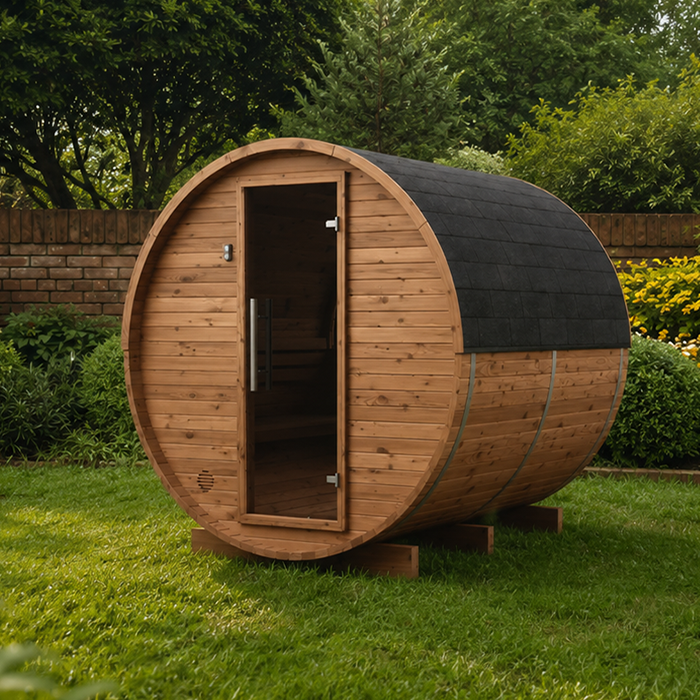
At handover, request a record of the actual model and part references, the remote functions enabled, the safety devices required and the operating limits explained to users. For an installation using the Thermowood Barrel Sauna HC-225, keep the cabin reference alongside the separate heater and controller details so future service enquiries identify the complete arrangement. Ask for a demonstration of the documented user controls, including cancellation of a pending start and recognition of a warning. Establish which checks or servicing the manufacturer specifies and who to contact after a fault. Keep the applicable manuals with the handover record, and record later component changes rather than leaving future owners with an outdated equipment list.
05
Check the quotation and responsibilities before ordering
Compare offers by the complete scope of supply, not just by whether they mention remote control. The quotation should identify the heater, controller, communications equipment and required safety accessories, with a clear distinction between included items and optional extras. Establish whether configuration, commissioning and a user demonstration are part of the proposed work or need a separate arrangement. Ask whether app access has any service charges and whether those charges are explained before purchase; do not assume either that access is free or that a subscription is required. A detailed offer lets you compare the same intended functions across proposals and spot missing items before committing to an order.
Check that the quotation and product descriptions match the written compatibility information. A low-level detail can matter: a different control version, omitted sensor or unlisted accessory may change whether the intended remote function is supported. Ask who supplies missing items and who is responsible for checking the complete installation; do not assume responsibility passes automatically between the sauna retailer, heater supplier and installer. If the seller cannot identify the required combination or provide the documents behind a safety claim, treat that as an unresolved issue rather than filling the gap with assumptions. Keep a copy of answers and manuals for the person who will install and maintain the system.
When to keep to local controls
If the manufacturer does not document remote starting for the exact equipment, keep the heater on its supported local controls. A separately documented monitoring function may still be useful, but establish whether it is read-only or can also issue heating commands. If you are postponing a remote-control upgrade, ask which equipment details would need reassessment before adding it later. Do not assume that buying a connected controller now guarantees future remote-start capability: support may depend on the heater variant, additional safety devices or the installed configuration. Choose the functions that are documented for the current system rather than buying on the strength of an unspecified future upgrade.
Remote operation is not a requirement for choosing or enjoying a sauna. If compatibility evidence, required safeguards or operating restrictions remain unclear, do not enable remote start while waiting for an answer. Use the documented operating method and ask the manufacturer, supplier or suitably qualified installer to resolve the gap. If the system is confirmed, make sure authorised users know what it can do and when they must not use it. The decision should rest on a verified equipment combination and understandable controls—not on the convenience promised by an app.
Frequently asked questions
Can I add remote control to any sauna heater?
No. Remote operation should only be used when the heater manufacturer documents compatibility with the exact controller and required safety devices. Do not assume that a Wi-Fi switch, generic relay or app can safely operate a heater simply because it can switch power to another appliance.
Does app control mean a heater is safe to start remotely?
No. An app is an interface, not proof that the heater, controller and safety features form an approved system. Confirm what the app can do, which conditions must be met before a start, and what happens if a sensor or connection fails.
Does a door sensor confirm that the sauna is empty?
Not unless the manufacturer explicitly documents that function. A door sensor ordinarily reports the condition it was designed to detect; it should not be treated as proof that nobody is inside or that the heater area is clear.
Is a scheduled start the same as remote starting?
Not necessarily. A schedule may start heating at a preset time, while remote start requires a command from a user. Check whether each function is supported, what limits apply and how a schedule behaves after a power or network interruption.
What should I ask for before ordering a remote-control system?
Request the exact compatible heater and controller references, the manufacturer's instructions, details of required safety devices and operating limits, and the scope of any certification or conformity claim. Ask a suitably qualified installer to confirm the proposed configuration and explain its handover checks.
Remote sauna heating is a system feature, not simply an app setting. Before using it, confirm the documented heater-and-controller combination, the required safety devices, the operating limits and the behaviour of the controls when something goes wrong. If any part remains uncertain, keep to the manufacturer’s supported local operation until the supplier or a suitably qualified installer can resolve it.
