
Sauna Delivery and Crane Costs: What Can Increase the Final Price?
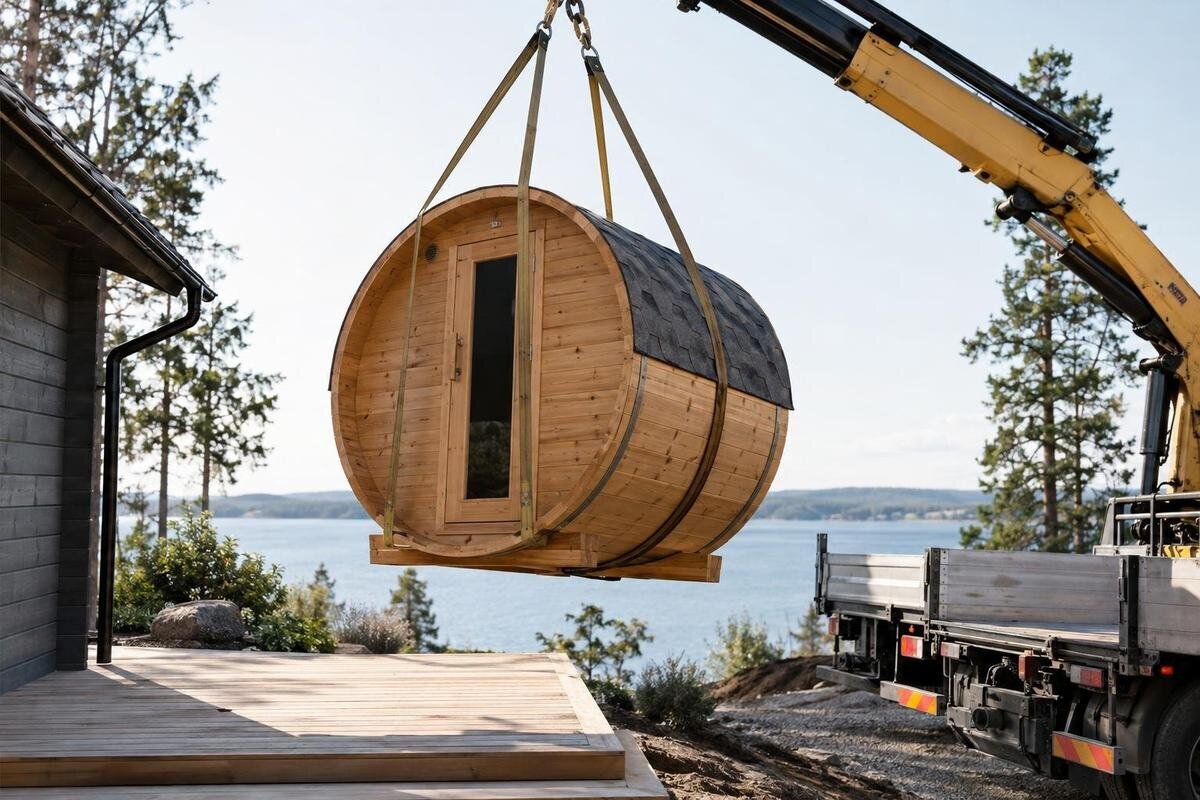
Sauna delivery planning
Sauna delivery can involve more than the distance between the supplier and your postcode. The final quote may depend on how the sauna is packaged, which vehicle can reach the property, where it can stop, how the load is removed and whether a crane or separate lifting contractor is needed. A price described simply as “delivery” may cover transport only. This guide explains the details that can change freight and unloading costs, the questions to ask the supplier and carrier, and how to compare written quotes without assuming crane work is included.
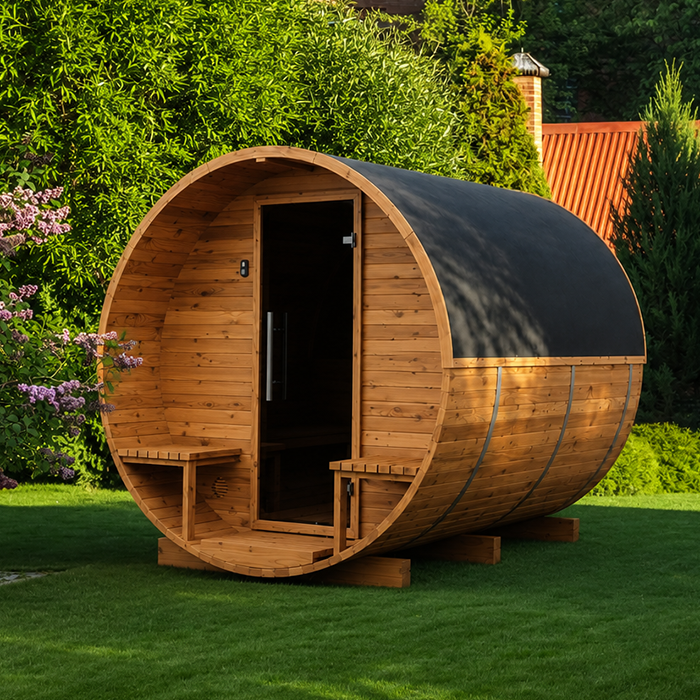
What a sauna delivery quote includes
Treat the sauna price, freight, unloading and final placement as separate parts of the budget unless the seller confirms they are bundled. Freight means moving the consignment from its dispatch point to the agreed destination; it does not automatically include lifting it over a fence or placing it on a prepared base. Unloading might be the driver’s responsibility, a crane vehicle’s task, a separate contractor’s work or yours, depending on the booking. Installation is a further service. Ask whether “delivery” ends at the property entrance, at the nearest suitable stopping point or somewhere else, and get the exact scope in writing.
Ask for a written total that states whether VAT is included, what destination the haulage price covers, and whether the amount depends on a site survey or the information you supplied. Request separate lines for transport, offloading, crane work, final set-down, waiting time and extra handling, even when some costs are grouped. Check for exclusions such as storage, re-delivery, packaging removal, installation or traffic arrangements, and who would organise each. A phrase such as “crane available” is not confirmation that a crane lift is included. Ask which equipment, operator and lift are priced, whether the quote has a validity period, and what new information could change it.
How packaging affects freight and unloading
Confirm how the sauna will be dispatched before requesting transport. Depending on the supplier’s actual configuration, it could arrive as one assembled load, several sections or multiple packages; these are possibilities to check, not assumptions about a particular model. A long or bulky load may need a different vehicle or unloading method from smaller separate packs, while more pieces can mean additional handling or a need to receive more than one delivery. There is no universal rule that a kit costs less to transport. Use the exact product reference—for example, the listing for Sauna HC-225—to identify the order, but do not treat the model name or a product photograph as evidence of its packed dimensions, total weight or delivery format.
Ask for current packing information for the configuration being quoted: the outside length, width and height of each package, its gross weight and the total package count. If the supplier can provide a packing list or dispatch drawing, pass it to the carrier and any lifting contractor rather than using finished-sauna measurements to estimate the load. Ask whether the packaging has specified handling points and what equipment the supplier expects, then have the carrier confirm what it can handle. Check whether all parts will arrive together or in separate consignments. If the order or configuration changes, recheck the information: the freight quote may need revising if the actual load differs from the assumptions used to price it.
Vehicle access from the road to the site
A postcode helps a carrier locate the destination, but it does not show whether the booked vehicle can reach the unloading point. The relevant vehicle may be longer, wider or taller than a car, and its route can be affected by narrow lanes, sharp bends, low branches, overhead services, steep approaches, weight restrictions, restricted turns or a lack of room to reverse. Describe the approach from the main road, not only the last few metres of a driveway. The carrier should decide which vehicle suits its load and route requirements; do not assume a smaller vehicle can complete the delivery without an extra transfer.
Measure gates and pinch points, note overhead clearance, and send recent photographs of the entrance, turns and intended stopping place. A simple route sketch can show where the driver would need to turn or wait, while the carrier can confirm which measurements matter for its vehicle. Mention time-limited access, parking constraints and any changes since the address was first supplied. When requesting delivery for Sauna N-210, ask the supplier to pass the shipment details to the carrier alongside your access information. If the approach requires a smaller shuttle vehicle, establish where the transfer would take place, who arranges it and whether both journeys and the extra handling are covered by the price.
The unloading point and final position
Separate the place where the lorry can stop from the place where the sauna must end up. “Delivery to site” could mean unloading at an accessible point, not taking the load through a side gate or across a lawn to the prepared base. Tell the supplier how far the final position is from the stopping point and describe steps, slopes, loose or soft surfaces, narrow passages, walls, fences and changes in level along the route. Mention doors or other access points that would have to be passed through. These details can affect whether the quoted equipment can reach and whether extra plant or handling needs to be arranged. If the route cannot be checked from photos, ask whether a site visit is appropriate.
Agree a named drop-off point in the quote and ask who is responsible for moving the load beyond it. For an order of Sauna N-250, for example, the booking should distinguish the accessible unloading area from the requested final position. Mark both on a site sketch so that “driveway” or “garden” cannot refer to several different places. If delivery ends at an intermediate point, ask whether the load can remain there until onward movement is arranged and obtain the supplier’s storage and handling guidance. Check that leaving it there would not block the access needed by the next contractor. Any temporary unloading plan should account for the additional handling, equipment booking and time involved.
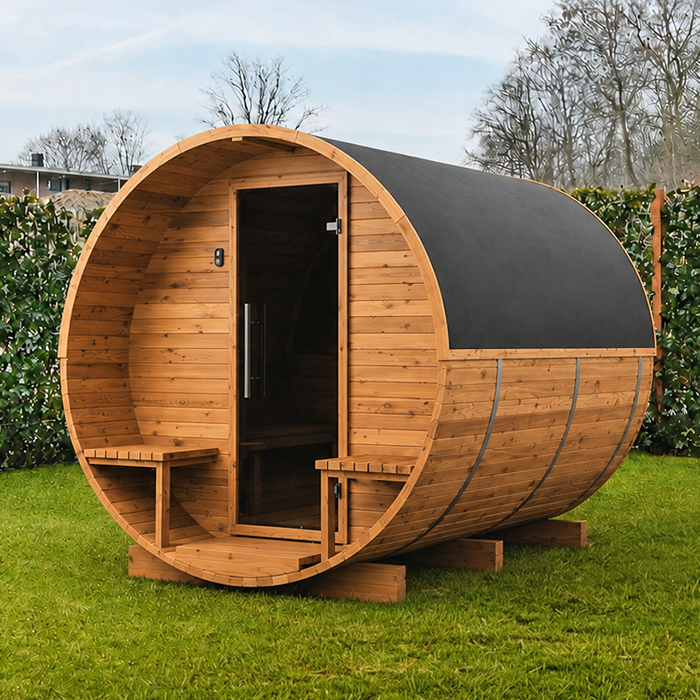
When a crane may be needed
A crane may be relevant when the load cannot be unloaded or moved to its agreed position using the carrier’s ordinary arrangement. The question is not simply how far the sauna is from the road: the lift may depend on the packed size and weight, required reach and height, buildings or trees in the way, and where the crane can set up. A lorry-mounted crane and a separate mobile crane are different arrangements, and neither should be presumed suitable from a product photograph. Ask the supplier and a competent lifting contractor to assess the actual load and site before you commit to a lift. The contractor can also say whether there is enough suitable space for its proposed equipment.
Provide the latest package dimensions and gross weight, intended set-down point, access route, overhead obstructions and clear photographs from more than one angle. For Sauna LC-260, request the dispatch information for your selected configuration before seeking a lifting quote. The contractor can advise whether the proposed equipment can reach the location, whether a site visit is needed and what site or traffic arrangements fall within its scope. Identify any neighbouring land or shared access that the proposed arrangement might use, so permission and access can be resolved before booking. Do not estimate crane reach from a straight-line distance or expect the driver to improvise on the day. A changed set-up or set-down point needs a fresh assessment.
What a crane quote may include
Crane charges can cover more than the time spent raising and lowering a load. Depending on the contractor and arrangement, a quote may list travel or mobilisation, minimum attendance, operator time, set-up, specified equipment or mats, waiting, and additional crew or site services. Ask which items apply, what period the time allowance covers, when waiting or extra time becomes chargeable, and what could trigger a return visit. These are quote terms, not standard inclusions: one provider may bundle some costs while another lists them separately. Request a price for the specific lift you need, including the set-up location and final drop point, rather than relying on a general crane-hire description.
For illustration, a crane quote might state “one attendance for the specified load; waiting charged after the included period”. Ask whether that period starts when the crane arrives, when it is ready to lift or when the delivery vehicle reaches the site. For a consignment of Sauna HCF-300, the supplier must confirm the shipment data so the contractor can define the work being priced. If the haulier and crane contractor are booked separately, establish who coordinates their arrival windows and what happens if one is delayed. Also ask whether an additional attendance would be a new booking rather than an extension of the first. This is an illustrative quote clause, not an actual offer or a guide to current charges.
Waiting time, unloading and failed delivery
Unloading time may add cost even when a crane is not required. A delivery slot might assume that the vehicle can stop near the drop point, the route is clear and the agreed unloading equipment is ready when the driver arrives. If access is blocked, a gate is locked, customer-provided equipment is unavailable or the load cannot be received, the carrier’s terms may allow charges for waiting, a failed attempt, re-delivery or storage. Ask how much waiting is allowed, how the driver will contact you and who must be present to accept the load. Put the arrival window and a day-of-delivery contact in the booking, and agree what happens if the vehicle is delayed.
Define “offload” and “place” separately. A tail lift, forklift, lorry-mounted crane or mobile crane may be quoted for different stages and site conditions; having one available does not mean it can move the package along the whole route. If you are expected to provide equipment or labour, have the supplier state the requirement in writing and ask a suitable provider to confirm it can handle the specified load. For an order of Sauna HCF-225, ask how the consignment will be identified on arrival and who signs the delivery paperwork. Confirm the procedure for recording a missing package or visible packaging damage, including whom to contact. Receiving the goods and completing their onward movement are separate responsibilities that need clear allocation.
Reasons a quote can change after booking
Ask whether the transport price is fixed for a defined shipment or provisional until packing and routing are confirmed. A quote prepared before dispatch may rely on estimated package data, an assumed vehicle or a proposed delivery date. Find out which assumptions remain open, who will confirm them and when you will receive the final charge. If you switch to Sauna S-140 after obtaining a quote for another model, request a revised transport assessment rather than assuming the earlier price still applies. Changes to quantities, accessories or delivery arrangements should also be reported. Ask whether the revised total needs your approval before dispatch and whether the original booking terms still apply.
Check what happens if a contractor arrives and cannot proceed, an appointment is missed, or weather or another operational condition prevents the planned lift. The provider’s terms may distinguish waiting, cancellation, storage and a return journey, so obtain the applicable terms and who pays before booking. Tell the seller promptly if a gate, driveway, access time or drop point changes; it can affect the vehicle or lifting arrangement. Keep the site information with the quote, and ask for a written revision if the description changes. A general statement that “access is suitable” is less useful than confirmation that the named carrier has assessed the relevant route and equipment.
Information a site-specific quote needs
Bring the information together in one dated delivery brief rather than scattering it across messages. Include the full address and postcode; labelled photos of the approach, entrance, narrow points, unloading area and final location; measured clearances; and notes about surfaces, slopes, parking and access times. For Sauna HC-150, attach the supplier’s current packing information for the configuration ordered. Number the photographs to match a simple route sketch, and distinguish measurements you have taken from details still awaiting confirmation. Name a contact who knows the site and can answer the carrier’s questions. If an obstruction is difficult to show, describe it explicitly rather than expecting the person preparing the quote to infer it from a photograph.
Ask for a written quote that states the delivery point, vehicle assumptions, unloading method, crane or lifting scope, included time, VAT treatment and excluded services. It should say whether the carrier will take the load to the final base or stop at an accessible point, who supplies extra equipment, and how waiting, aborted delivery, storage, re-delivery and changes are charged. Ask whether a site visit is needed, who arranges it, how long the quoted terms remain valid and what new information could change the price. Give the same brief to each provider. If access remains uncertain, ask whether the quote is conditional on a survey rather than treating a provisional figure as confirmed.
Comparing delivery quotes and setting a budget
Compare quotes line by line rather than choosing from the headline transport figure. Imagine one written offer prices freight to a kerbside point and leaves unloading to you; another includes a crane offload to the driveway but excludes moving the sauna to its base. The second covers more of the task but may still leave work to arrange. Ask both providers to price the same destination, package information, access description and lift, and list exclusions beside the total. If a quote says “all in”, ask which services that phrase covers and where the load will be left. These examples illustrate differences in scope; they are not current prices or promises about any supplier’s service.
Budget for the confirmed transport and handling scope, plus any unresolved item you choose to arrange separately, such as a site assessment or additional lift. There is no reliable universal percentage to add: an appropriate allowance depends on what remains unknown and the contractors’ written terms. Resolve the main uncertainties—package data, vehicle route, unloading point and crane assessment—before confirming the delivery plan. Record who coordinates the seller, haulier and lifting contractor, and who needs to be on site. If the quote uses provisional package information, ask who will confirm the final details and when any price revision would be made. A dependable final figure is tied to a defined load, route, unloading method and set-down point.
Frequently asked questions
Does sauna delivery usually include a crane?
Not necessarily. A delivery quote may cover transport only, or specify a particular unloading method. Ask whether a crane, its operator and the lift to your agreed drop-off point are included, and get any exclusions in writing.
Can I tell whether I need a crane from the distance to my garden?
Distance alone is not enough. The load’s packed dimensions and weight, the height and reach required, obstacles and the crane’s set-up space all matter. Give these details to the supplier and a competent lifting contractor for an assessment.
What should I measure before asking for a delivery quote?
Record the narrowest access points, gate and overhead clearances, turning space, approach route, vehicle stopping area and route to the proposed drop point. The carrier should confirm which measurements are relevant to its vehicle and unloading method.
Does kerbside delivery mean the sauna will be put on its base?
No. Kerbside delivery normally describes a delivery point near the vehicle, but the exact meaning depends on the quote. Confirm whether the price includes unloading, movement across the site and placement at the prepared base.
Can the delivery price change after I book?
It can if the actual load, access or requested drop point differs from the details used for the quote, or if the provider’s terms allow charges for waiting or a failed delivery. Check those terms and request a written revision if the plan changes.
Delivery costs are easier to plan when the quote identifies the actual consignment, route, unloading method and exact drop-off point. Treat freight, crane work, waiting and any movement beyond the unloading point as separate until the written scope says otherwise. Once the carrier has checked access and any lifting contractor has priced the agreed job, the final figure is less likely to leave an unexpected delivery cost to resolve on the day.
