
Sauna Heater Stone Capacity: What Does It Change About the Experience?
Sauna heating and equipment
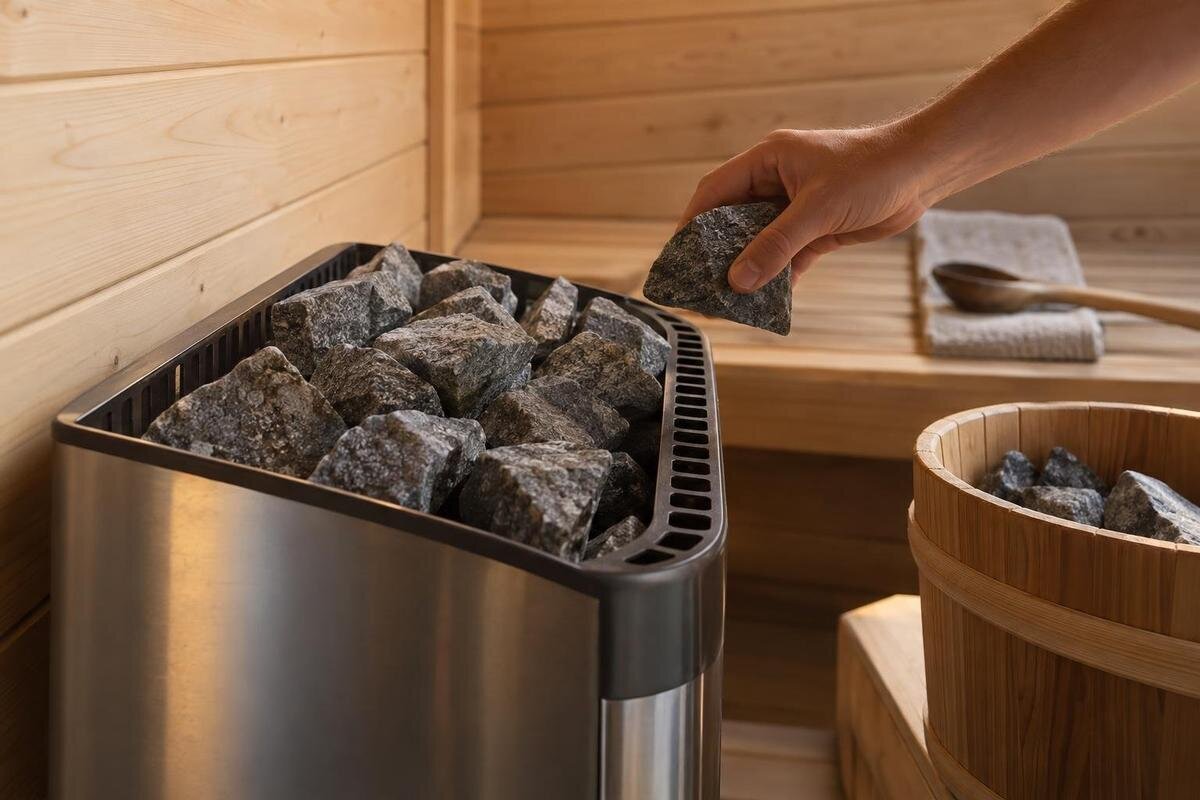
Stone capacity is one of the easiest sauna-heater figures to compare, and one of the easiest to misread. The stated load tells you something about the heater’s intended stone bed, but not how quickly the cabin will warm, how powerful the heater is or whether it suits your sauna. Stone mass can affect the way a heater stores and releases heat, but its effect depends on the construction and loading instructions. Read capacity alongside stone arrangement, heater output and the cabin’s stated requirements rather than treating a larger number as a verdict on performance.
What a stone-capacity figure measures
First establish exactly what the manufacturer means by capacity. The figure may describe a recommended stone load, a maximum load or another model-specific amount; do not assume that different brands use the same definition. Read the heater manual and any loading diagram, not just a short specification line. If the quantity is given in kilograms, it is the mass of the stone charge, not a measure of electrical input, heat output, sauna seating capacity or the surface available for water. It also does not say how much stone will be exposed when loaded correctly.
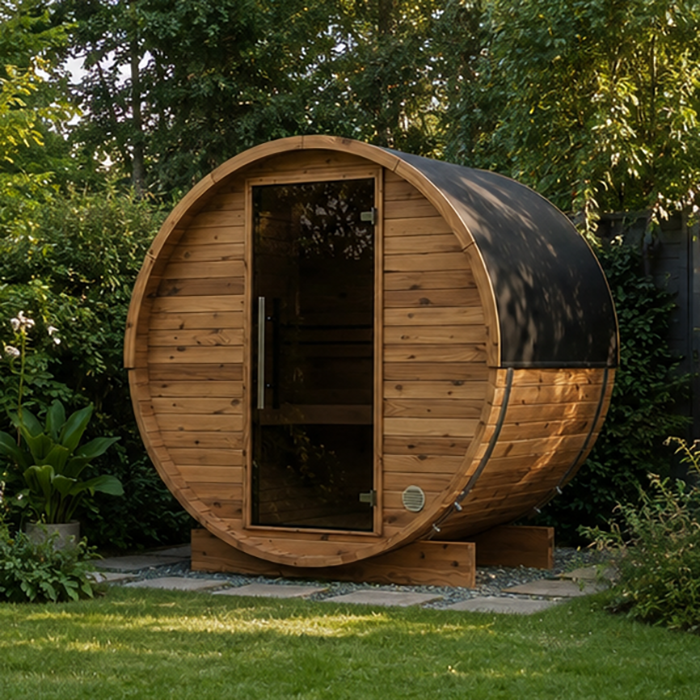
Capacity is different from the quantity included in the purchase. A heater may have a designed load while stones are sold separately, or its instructions may specify a range rather than one target. For a cabin such as the Sauna N-250, establish which heater, if any, is included in the configuration you are considering before comparing stone loads. The supplied catalogue evidence identifies the cabin but does not specify a heater or its stones. Ask for the exact heater model and the corresponding manual, rather than assuming that every configuration has the same capacity. This also prevents a common comparison error: attributing the stone load of an optional heater to the sauna itself.
Stone mass and heat storage
Stones absorb heat from the heater and release some of it to the sauna. For the same stone material at the same temperature, a greater mass can hold more thermal energy. A larger designed stone bed can therefore offer a greater potential heat reserve, but the capacity figure cannot tell you how that reserve will be used. The heat source, stone-to-source contact, exposed surfaces and air movement all affect how heat reaches the room. Stone capacity is a clue to the design, not a standalone rating of the warmth a person will feel.
Do not turn a higher figure into a promise of faster preheating, a higher cabin temperature, lower energy use or better efficiency. Those outcomes cannot be ranked from stone mass alone: heater output and controls, room volume, construction and heat loss also matter. When considering the Sauna LC-260, separate questions about its proposed heater from questions about the cabin. If a supplier provides a warm-up estimate, ask which heater, stone load and starting conditions it assumes. An estimate for one configuration is not evidence for another. Likewise, a claim about energy use needs a stated basis for comparison; the amount of stone does not reveal how long the heater operates or how its controls regulate the heat supply.
Why stone size and arrangement matter
The kilogram figure says little about how the stones sit around the heat source. Their size and shape, the basket openings and the manufacturer’s loading pattern can all affect air paths and which surfaces are exposed. A tightly packed load is not automatically better: filling intended gaps or using oversized stones may alter airflow and heat transfer. Adding stones to a basket that looks sparse can also cover areas the maker intended to remain clear. Follow the specified type, size and placement rather than trying to maximise the weight.
The same capacity can describe different stone arrangements, so it does not make two heaters equivalent. A loading diagram can show whether stones occupy a shallow compartment, a taller basket or several defined areas, and where the maker requires gaps. Use that diagram to understand the design, not to devise a different loading method. If the Sauna HCF-300 is on your shortlist, request documentation for the heater actually proposed with it. A cabin photograph may help you visualise the space, but it cannot establish the hidden stone arrangement or approved load. Even a heater photograph is no substitute for instructions: the visible stones may not reveal the full bed, and appearance alone cannot confirm correct placement.
How stone capacity relates to water and steam
When water is added to hot stones as the heater’s instructions allow, heat transfers to the water and turns some of it into vapour. The result depends on factors such as stone temperature, the surface that the water meets, the amount added and the way air moves through the heater. Total stone weight does not tell you how much surface is accessible to water or how hot that surface will be. A larger capacity therefore cannot, by itself, predict the amount or character of steam.
Check the exact heater instructions for whether water may be used and how it should be added; do not infer permission or a suitable amount from the load rating. For a sauna such as the Sauna HCF-225, ask which documented heater options permit the water-on-stone use you want. Descriptions such as ‘gentle’ or ‘intense’ steam are qualitative, not standard measures that let you rank stone capacities. If you have an opportunity to experience a heater, note the cabin and heater configuration as well as your impression. That can help you describe your preferences to a supplier, but it does not prove that a different heater with the same stone weight will produce an identical result.
Check stone requirements and package contents
Once you understand the capacity figure, check what you would actually need to purchase. The heater specification and the package contents answer different questions: one describes the intended load, while the other identifies what is supplied. Confirm the approved stone material and size range, whether the package contains the required quantity, and whether any stones are supplied separately. Do not assume that a bag described as suitable for sauna heaters is approved for every model. If the maker lists different requirements for different parts of the stone bed, ask how the supplied stones meet those requirements. This is a purchasing check, not a reason to improvise an alternative load.
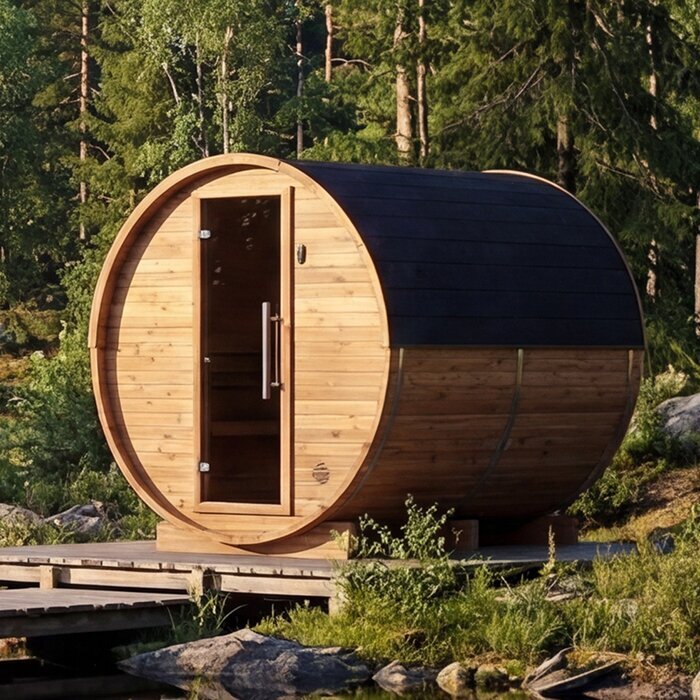
When reviewing the Sauna S-140, keep the cabin, heater, controls and stones distinct in the quotation or order description. A photograph of a furnished sauna does not establish that every pictured item is included. Ask for the exact configuration in writing so that a stone-capacity comparison does not conceal a difference in what you are buying. If stones are an additional purchase, compare the complete proposed package rather than the heater alone. Also ask how to identify approved replacement stones later: a clear product reference or specification is more useful than a vague description such as ‘large sauna stones’. Retaining that information with the heater manual makes future purchases easier without assuming that the original stones will remain available.
Match the heater to the sauna
Choose a heater against the manufacturer’s guidance for the cabin, not by selecting a stone capacity first. Heater documentation may specify a room-volume range and explain how construction features affect the assessment. Internal dimensions, ceiling height and surfaces that lose heat can be relevant, but follow the exact maker’s method rather than using a generic calculation. The stone load is one part of the heater design; it does not establish that the heater is suitable for a particular room.
The Sauna HC-150 is listed at 2.97 m², but floor area alone is not enough to establish a heater match. Two rooms with the same floor area can have different internal volumes, and the heater maker may require additional information about their construction. Obtain the relevant internal dimensions and cabin details rather than substituting an external footprint or a catalogue area. Then have the proposed heater assessed against its documented room guidance. If the pairing is unclear, ask the supplier or a suitably qualified professional to confirm it. Keep the result tied to the exact heater model: a change to another heater with a similar stone load does not automatically preserve the suitability of the original proposal.
Heater construction gives capacity context
The design behind a stone bed matters as much as its stated load. Electric and wood-fired heaters, for example, use different heat sources and have different construction and installation requirements; even heaters of the same type can arrange stones differently. A matching kilogram figure does not guarantee matching heat behaviour, water access or airflow. When comparing models, look at capacity alongside the maker’s description of the heater, its stone arrangement and the sauna conditions it is intended to serve.
Think about practical access as well as the number. A stone bed that is easy to see is not necessarily easy to inspect or reload, and appearance does not show which parts must be removed for maintenance. When considering the Sauna HC-225, ask for the care instructions for its proposed heater and check what access those tasks require within the cabin layout. Distinguish routine stone checks from work on the heater itself, which may require a professional. The useful comparison is how the documented care can be carried out, not whether one basket looks simpler than another. Also establish whether replacement stones can be handled in stages as the instructions allow; total capacity alone does not describe the practical handling involved.
Installation requirements still apply
A high stone capacity does not override the heater’s installation requirements. Depending on the model, the manufacturer may specify clearances, ventilation, a suitable support or requirements for an electrical supply or flue. These affect whether a heater can be used in the planned position and configuration; they cannot be judged from the stone-load figure. Use the exact heater and sauna documentation rather than relying on general advice for a different model.
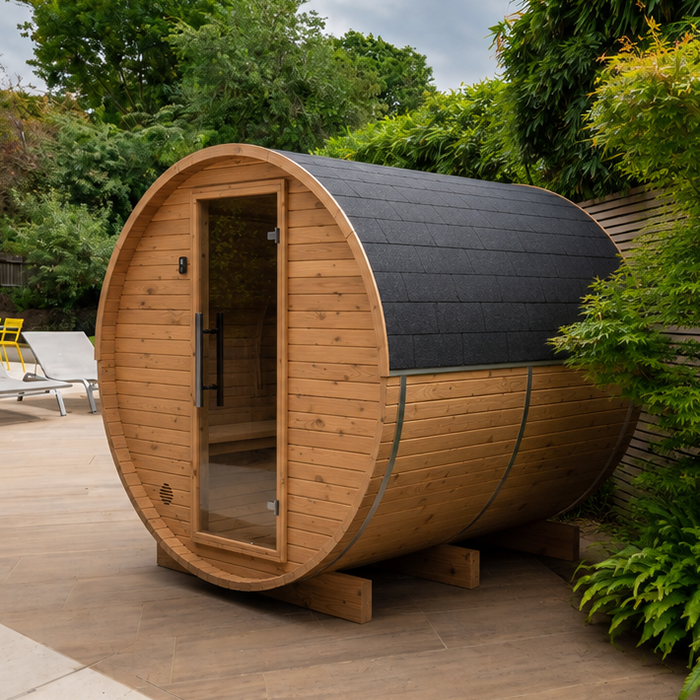
For the Sauna N-210, ask for confirmation of the precise cabin and heater combination, including any proposed guard, support or other required component. A heater's own dimensions do not describe all the space its installation needs, and a large stone basket should not be judged by whether it appears to fit beside a bench. Have electrical, flue and other specialist requirements assessed by a suitably qualified professional. Ask that assessment to cover the documented loaded configuration rather than the empty heater alone. If a proposed layout differs from the manufacturer's arrangement, obtain confirmation before treating it as an option. This keeps installation feasibility separate from your preference for a particular stone capacity, without attempting to calculate clearances or structural requirements yourself.
Consider the kind of sauna experience you want
Describe the experience you want in practical terms. Are you mainly interested in the warmth of the room, or is adding water to the stones an important part of using the sauna? For permitted water-on-stone use, remember that producing vapour draws heat from the surfaces the water reaches; the heater then supplies further heat. The total stone load does not show how those surfaces respond during repeated use. Ask what the manufacturer documents about the exact design rather than treating a large heat reserve as a guarantee of consistent steam. Your preferences can help narrow the choice, but they should be matched to an approved operating method, not used to justify extra stones or different loading.
The stone load may also affect how much material has to be handled during stone care, but weight alone does not reveal how often attention will be needed or how difficult access will be. The basket design, the manufacturer’s maintenance instructions and the condition of the stones matter too. Ask what routine care the exact model requires and what signs call for attention. That gives a more useful picture of ownership than assuming a large capacity means either more or less maintenance.
Compare heater specifications on equal terms
A useful comparison separates confirmed facts from preferences and unanswered questions. Record the documented stone capacity and its definition for each heater, then note any differences in approved stones, construction and package contents. Compare only configurations that have been confirmed as suitable for your sauna. Among those options, consider which design best addresses your priorities, such as permitted water-on-stone use or accessible stone care. There is no need to turn every difference into a numerical score: a feature you will not use is not automatically a buying advantage.
Leave missing information marked as unknown rather than filling it with assumptions. If two heaters have similar stated capacities but only one has clear loading and care documentation, the unresolved questions about the other still matter. Equally, fuller documentation does not prove superior performance; it makes the proposed configuration easier to assess. Before choosing, resolve the questions that could change suitability or what you need to buy. Treat a higher stone-capacity figure as one characteristic of a heater, not a reason to overlook an unsuitable room rating, uncertain inclusions or impractical access.
Frequently asked questions
Is a heater with more stone capacity always better?
No. A larger load may be part of a heater design you prefer, but it is only an advantage if that design suits the cabin and the way you intend to use it. The figure alone does not promise higher output, quicker warm-up, more even warmth or better steam. Check the manufacturer’s room guidance, heater rating, stone arrangement and instructions. A lower-capacity heater that is correctly matched to your sauna may be the more suitable choice.
Does greater stone capacity make a sauna heat up faster?
You cannot tell from the capacity figure alone. It does not state the heater’s output or how quickly energy reaches the cabin. The stone load, heater design and controls all play a part, as do the cabin’s volume and heat-loss characteristics. A larger stone mass also means more material being heated, but that does not provide a reliable warm-up time by itself. Compare manufacturer information for the exact heater and the conditions it specifies.
Can I compare kilogram ratings from different heaters directly?
Only with care. First check whether each figure means a recommended load, a maximum or something else. Then compare the approved stone type and size, loading arrangement and heater construction. The same weight can be arranged differently, with different air gaps and exposed surfaces, so it does not necessarily describe the same operating design. If a product page gives a number without explaining its basis, look for the manual or ask the manufacturer for clarification.
Can I add extra stones or use larger ones to increase capacity?
Do not change the specified load, stone size or arrangement to chase a larger capacity. Stones that are too large, too small or packed differently can alter the intended gaps and contact with the heat source. Use only the stone type and loading method specified for the exact heater. If you are unsure whether a stone load needs replacing or rearranging, follow the manufacturer’s instructions rather than adapting another heater’s guidance.
How often do sauna stones need replacing?
There is no single replacement interval that can be inferred from a heater’s stone capacity. Follow the maker’s care instructions and check the stones as directed, since their condition and the heater’s arrangement matter. If stones are damaged or no longer fit the specified loading pattern, use the manufacturer’s guidance on replacement. A larger stated load does not, by itself, tell you how often the stones will need attention.
Stone capacity is most useful as a design clue: it describes the intended stone load and, alongside the arrangement, can help explain how a heater stores and releases heat. The number alone cannot establish warm-up speed, efficiency, room suitability or the experience of adding water. Compare its meaning, approved stones and loading instructions with the heater rating, cabin requirements and installation guidance. A well-matched heater with a lower stated capacity can be a better choice than a larger load selected on weight alone.
