
Sauna Kit or Fully Assembled Sauna: Which to Order?
SAUNA BUYING GUIDE
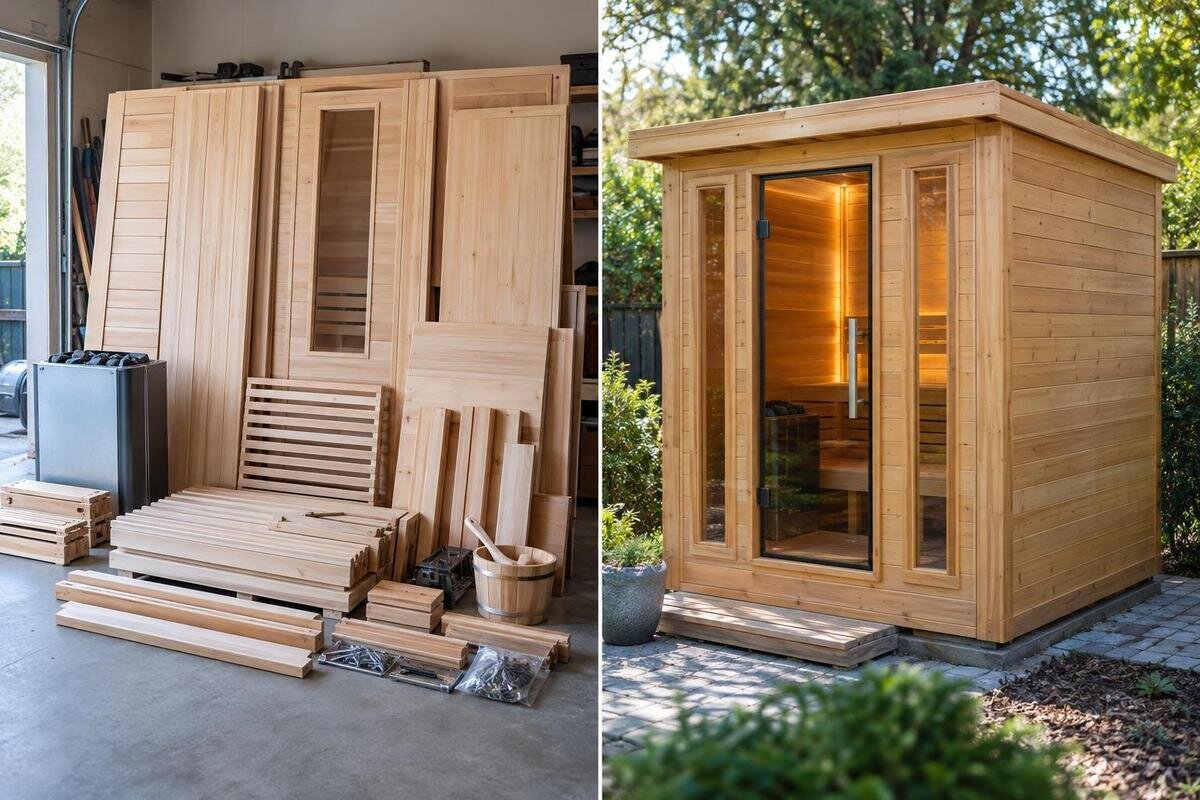
Choosing between a sauna kit and one delivered assembled is not simply a choice between doing everything yourself and doing nothing. The delivery state, unloading, final positioning, site preparation and equipment installation may all be separate responsibilities. This guide explains what to ask before ordering, how to check access against the real delivery dimensions and how to compare the work each format leaves for you.
01
What ‘kit’ and ‘fully assembled’ mean
Start by asking what the supplier means by “kit”. It could arrive as individual components, pre-cut parts or larger factory-assembled panels; those forms create different handling and assembly jobs, even when they carry the same label. “Fully assembled” should describe the condition of the structure, but it does not necessarily include accessories, service connections or installation at your property. If separate structural modules still need joining, clarify that distinction rather than treating the delivery as one complete unit. Ask what condition each major part will be in when it arrives and what work remains before the sauna can be used. A phrase such as “easy to assemble” does not answer those questions.
Request a written description of the delivery state and the assembly stages, ideally supported by the manufacturer’s manual or drawings for the exact configuration. Check which parts arrive assembled, which are joined on site, whether components are supplied separately and whether any finishing work remains. Also distinguish assembly of the structure from preparing the base, unloading and connecting equipment: these may be separate jobs whichever format you choose. If a seller uses “ready-made” or “ready to use”, ask what those words include. Clear definitions make it possible to compare the two options on the same basis.
How delivery format affects transport
A kit may be divided into several packages or sections, while an assembled sauna may travel as one large unit or as a number of modules. A kit can leave more assembly work on site; a larger assembled section can reduce some of that work but call for more clearance along the route. Neither format is automatically easier to deliver. The number, shape and size of the actual packages matter more than the label, and fittings or optional equipment may be packed separately. Ask for the delivery configuration that applies to the model and options you are considering.
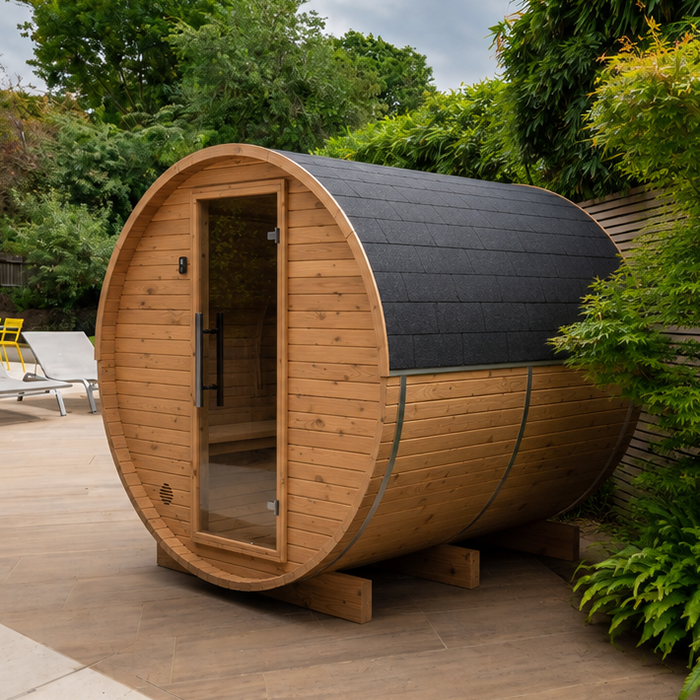
For the Sauna LC-260 product page, first confirm which delivery formats are currently offered for your chosen configuration. Then request the shipping dimensions, package count and unloading details, including whether options arrive in the main package or separately. Finished-sauna dimensions do not tell you how much space a package needs to pass through a gate or turn along a path. Ask for the dimensions in their intended transport orientation, and whether protective packaging is included in those measurements. Do not assume that a package can be turned on its side or unpacked at the roadside to make it fit; the supplier must confirm any permitted handling changes. Record the delivery format on the quotation so that the access assessment relates to what you will actually receive, rather than to a different version of the same model.
02
Measure the route to the final position
Walk the whole route from the planned delivery point to the prepared base. Include the driveway or access area, gates, narrow paths, steps, corners and the final approach. Note overhead obstructions such as branches or eaves, as well as anything that reduces the clear space when a gate is open. A delivery point that is easy for a vehicle to reach does not necessarily mean a large package can be moved from there to the sauna site. If the route changes direction, measure and describe the turn rather than recording only the width of the gate.
Compare your measurements with the largest package or section, using the supplier’s figures rather than the assembled product dimensions. For HCF-300 delivery enquiries, request the shipping details for the version you intend to order and ask what clearance its handling method requires. Include photographs of corners and changes in level, with measurements clearly labelled, so the provider can understand the route rather than guess from a close-up of the gate. Record any temporary obstacles you expect to remove, but do not count on moving fences or crossing neighbouring land without an agreed arrangement. Also identify soft ground or surfaces whose suitability needs assessment by the delivery provider. If a measurement is close, ask for a route review before committing; a small amount of apparent spare width may not allow room for packaging, handling equipment or the people moving the load.
Agree who unloads and who arranges lifting
Clarify what delivery includes in practical terms. Ask where the vehicle will stop, where the order will be left and whether unloading or moving packages to the final position is included. Do not assume that delivery to the property means the sauna will be placed on its base. A kit may still need to be moved from a drop point in several stages; a large assembled unit may need a different handling arrangement. Make sure the person receiving the delivery knows what to expect and that there is a clear plan for the distance between the vehicle and the site.
If the route or delivery unit might call for lifting equipment, raise this before booking. For Sauna HCF-225 handling enquiries, establish the delivery format and obtain the supplier’s handling information, including the weight of each delivery unit where relevant. Ask who arranges and operates any equipment, and whether a separate contractor needs to assess the proposed lifting position. A photograph or rough estimate is not a safe basis for choosing equipment. Have a qualified lifting contractor assess the specific job, including vehicle access, the proposed standing area and obstructions along the planned movement. Agree who coordinates the delivery and contractor’s arrival, and what happens if either appointment changes. Do not book a lift independently on the assumption that the delivery vehicle can wait indefinitely or stop wherever the lifting team would prefer.
03
Prepare the base and working space
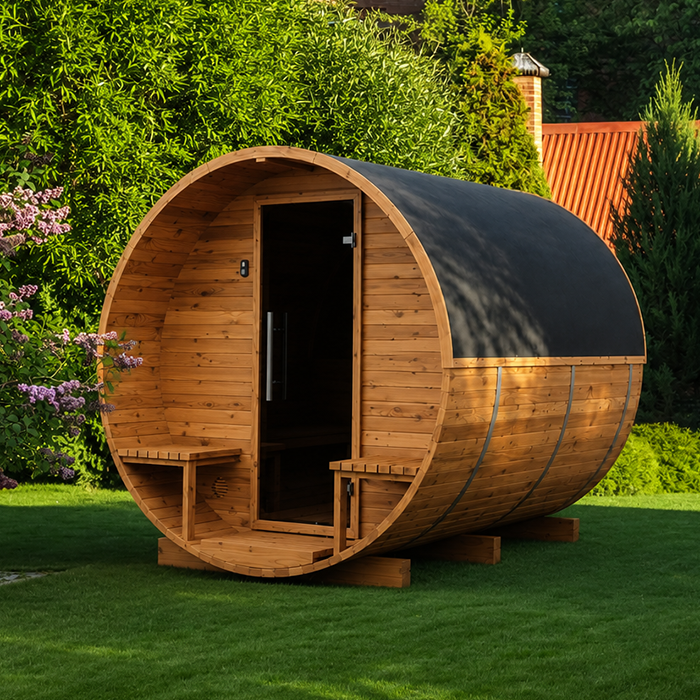
Use the manufacturer’s drawings and instructions for the chosen configuration to establish what the base must provide. Confirm the required type and condition of the supporting surface instead of selecting one by habit or from a product photograph. Check the proposed location for its surface, drainage and nearby services, and resolve any uncertainty with an appropriately qualified professional. Site preparation can be needed whether the sauna arrives as parts or as an assembled structure, so do not leave it until the delivery date to find out what needs to be ready.
Allow for more than the sauna’s footprint. Plan the door’s opening space, a route in and out, and room to reach parts that may need inspection or maintenance, following the supplied instructions. For Sauna S-140 site planning, obtain the current drawings for your chosen configuration before fixing the position of the base. Check whether the drawings show the overall dimensions, support positions and required clearances, and ask about anything left unclear. Think through the heater position and connection routes with the relevant installer rather than attempting service installation yourself. Distinguish permanent access space from the temporary working space needed during assembly or placement. A location may accommodate the finished sauna yet leave too little room to complete the installation. If another contractor prepares the base, give them the same current drawings used by the assembly or delivery team.
Set out the assembly responsibilities
With a kit, establish who will assemble the supplied structure, what tools the instructions call for and whether you have the time and suitable help to complete the work. Ask for the manual before ordering so you can understand the sequence and identify any stage you are not equipped to handle. Do not judge the task only by a short description such as “simple assembly”: the amount of work depends on what arrives pre-assembled and what remains to be done on site. If you expect to use an installer, confirm the scope they are willing to take on.
If the sauna is delivered assembled, ask which, if any, assembly or joining work still falls to you. When considering the HC-150 model, request the instructions that match the offered delivery format and use them to agree an installer’s scope. Establish whether their work includes fitting supplied accessories, making final adjustments and checking the completed structure against the manual. For either format, nominate someone to receive the delivery, check packages against the order and report missing or damaged items through the supplier’s stated process. Ask how components are labelled and whether the contents list can be checked before assembly begins. Keep labels and relevant photographs until any discrepancy is resolved. If several people are involved, agree who can answer questions during the build, rather than leaving the assembler to make decisions about unfamiliar parts or changes to the supplied design.
04
Confirm equipment and connections
Check the itemised contents rather than assuming that everything shown in a product photograph is included. Ask whether the sauna structure, benches, heater, controls, stones, lighting and any relevant fittings are supplied, included as options or sold separately. The precise list depends on the model and configuration, so request confirmation for the one you intend to order. A delivery that includes an assembled structure does not, by itself, confirm that heating equipment or other accessories are part of the package.
Separate the question of what is supplied from the question of who installs it. For HC-225 equipment details, request an itemised list for the exact configuration and identify anything that must be ordered separately. Ask which connections or finishing tasks remain and have a suitably qualified installer assess electrical or fuel-related work using the manufacturer’s instructions. An assembled shell does not establish that services are connected or that the sauna is ready for use. If the heater or other equipment comes from a separate supplier, ask the sauna supplier and installer to confirm compatibility before purchasing it. Agree who checks that the completed installation meets the relevant instructions and who explains the controls and routine care. This gives you a clear handover point: delivery, structural assembly and readiness for use are separate milestones, even when one company undertakes several of them.
Plan for packaging and a safe work area
A kit may require space to sort and stage several packages before assembly, while an assembled unit may arrive with transport packaging that needs to be removed. Ask how many packages to expect, where they can be placed and how they should be protected if delivery and installation do not happen on the same day. Follow the manufacturer’s storage instructions; do not assume that leaving components outside is suitable. Make sure the planned staging area does not block the route needed by the assembly team or prevent other site work from being completed.
Ask who removes the packaging and what happens to it, rather than assuming it will be taken away with the delivery. For Sauna N-210 package information, request the expected package sizes and any instructions for opening them or storing their contents. Agree where an assembly contractor can lay out parts without blocking the route to the base. Keep small fittings and labelled components together so they remain identifiable throughout the work, and retain the contents list for checking. If installation spans several days, decide how the unfinished work area will be kept separate from normal garden use, particularly where children or pets have access. Avoid opening every package immediately if that would leave parts exposed or difficult to move. The sequence for unpacking should support the assembly instructions and the available space, not simply clear the delivery area as quickly as possible.
05
Compare the work and exclusions in the quote
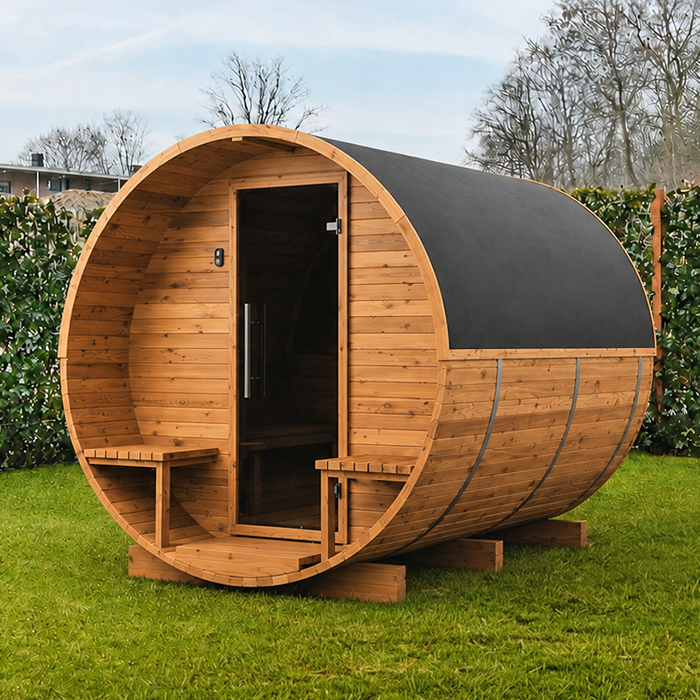
Compare each option using a written scope, not just a product description or headline price. List delivery, unloading, moving the sauna to its final position, any lifting arrangement, assembly, base preparation, equipment, connections and packaging removal. Ask which items are included, which are optional and which are outside the supplier’s service. A kit is not automatically less expensive overall, and an assembled format is not automatically all-inclusive: the work and services attached to a particular order determine what else needs to be organised.
Check what happens if access is unsuitable, the site is not ready or delivery has to stop at a different point from the one agreed. When requesting an N-250 quotation, ask for the current delivery options and a written breakdown of included and excluded services. If you obtain a separate assembly or lifting quote, give that contractor the same configuration and delivery information so both quotations cover the same job. Ask whether repeat visits, temporary storage or changes to the agreed unloading arrangement would need a separate quotation; do not assume they are included. Establish which appointments depend on earlier work being completed, and who confirms that the site is ready. Compare the total scope you need rather than adding unlike headline prices. This reveals whether an apparently simpler delivery option merely transfers work to a different contractor or to you.
Choose the format that fits the site and your capacity
A kit may suit you if its largest packages can follow the measured route, the site can accommodate the assembly work and you are comfortable with the instructions and remaining tasks. That does not make every kit suitable for a restricted path: confirm the dimensions and handling plan first. An assembled format may be a better match if you want less construction on site, but only if the actual delivery unit can reach the final position and the unloading plan is clear. Either choice still depends on a suitable prepared base and a plan for equipment and connections.
Before ordering, bring together the exact model and configuration, delivery state, package dimensions, drop point, route measurements, unloading arrangements, assembly scope and equipment list. Name who is responsible for each task that remains, including any specialist installation or lifting work. If a key detail is still unknown, resolve it before scheduling delivery rather than relying on an assumption that can only be tested when the order arrives. The right format is the one whose documented delivery can reach the prepared site and whose remaining work has a clear owner.
Frequently asked questions
Is a sauna kit easier to get through a narrow gate?
Not necessarily. Compare the narrowest clear point and any turns with the dimensions of the largest package or section, not just the finished sauna. Ask the supplier and delivery provider to confirm the handling plan for your route before ordering.
Does a fully assembled sauna arrive ready to use?
Not always. The main structure may be assembled while unloading, final positioning, equipment, connections or other installation work remain separate. Ask for a clear list of what is included and what still needs to be completed by you or a qualified installer.
Can I assemble a sauna kit myself?
That depends on the specific kit, its instructions and your skills, tools, available help and time. Request the assembly manual and confirm which stages are expected on site. If any part is outside your experience, ask whether a suitable assembly service is available.
Will I need lifting equipment?
It depends on the delivery unit, route, vehicle and final position. Do not assume a driver will move the sauna to its base, or choose lifting equipment by appearance alone. Ask the supplier and delivery provider to clarify responsibilities; have a qualified lifting contractor assess the job if needed.
What should I confirm before placing an order?
Get the current delivery format, package or module dimensions, unloading point, assembly scope, equipment inclusions and site requirements in writing. Also confirm who handles any lifting, assembly, services and packaging removal, and what happens if access or site preparation is not ready.
Make the decision only after matching the current delivery format to your route, prepared site and capacity for the work that remains. A kit can leave more assembly to organise; an assembled format can still require careful unloading, positioning and installation. Written details about package sizes, inclusions and responsibilities make the comparison concrete. When those details are clear, you can choose a format that suits both the route to the sauna site and the time and expertise available to complete the job.
