
How to shade a summer house with a large glass front
SUMMER HOUSE PLANNING
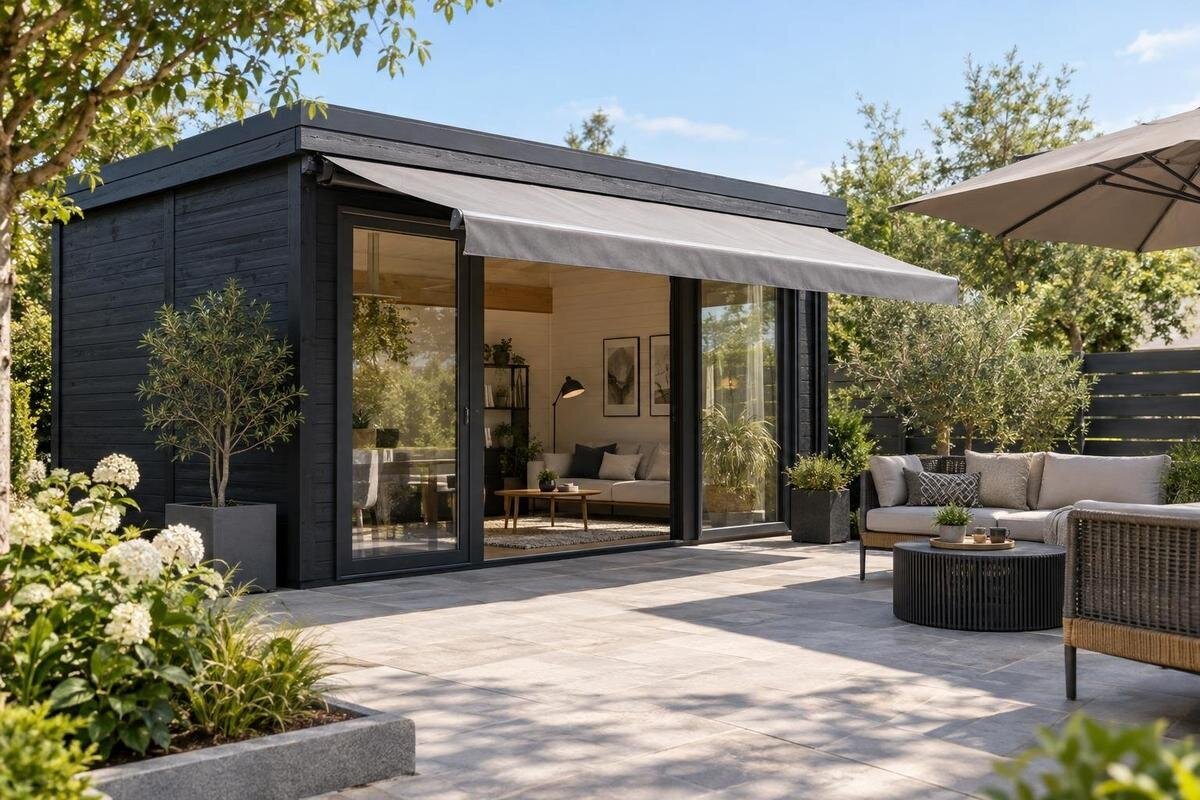
A large glazed front can bring daylight and an open view into a summer house, but direct sun can cause glare and make the room feel warmer. A useful shade plan depends on when the light reaches the glass, what you do in the room and how the front opens. Consider the site and the building details before choosing a blind or external screen; the darkest option is not automatically the most practical.
When the sun reaches the glass
Orientation is a useful clue, not a complete plan. The sun moves across the sky and its angle changes during the year, so a front that feels comfortable in the morning may be exposed later. Observe the intended position on several clear days, noting when direct sun reaches the glass, how far it travels across the panes and how long the brightest patch lasts. Include the hours you expect to use the room: a brief beam on a computer screen or reading chair may matter more than a longer patch on unused floor. Repeat the check at different times rather than basing a permanent purchase on one afternoon. If the house is not yet installed, assess its proposed position, not just the light at a nearby window.
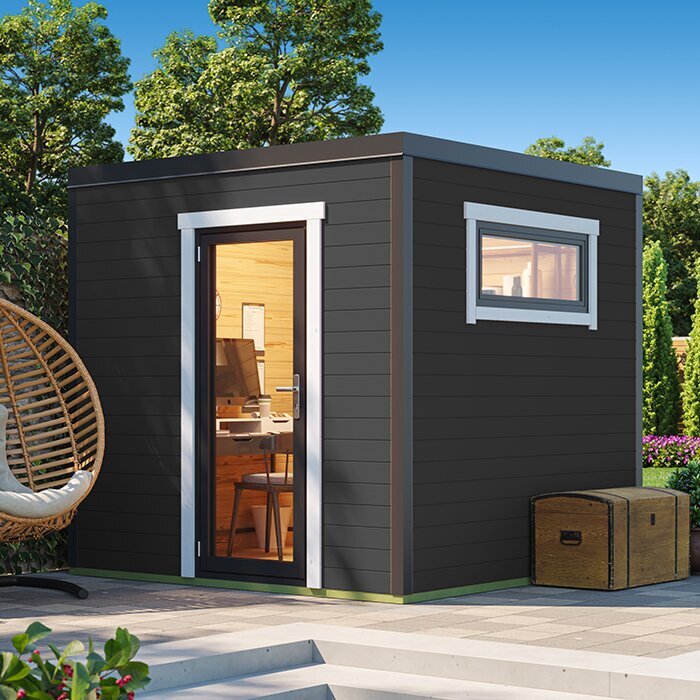
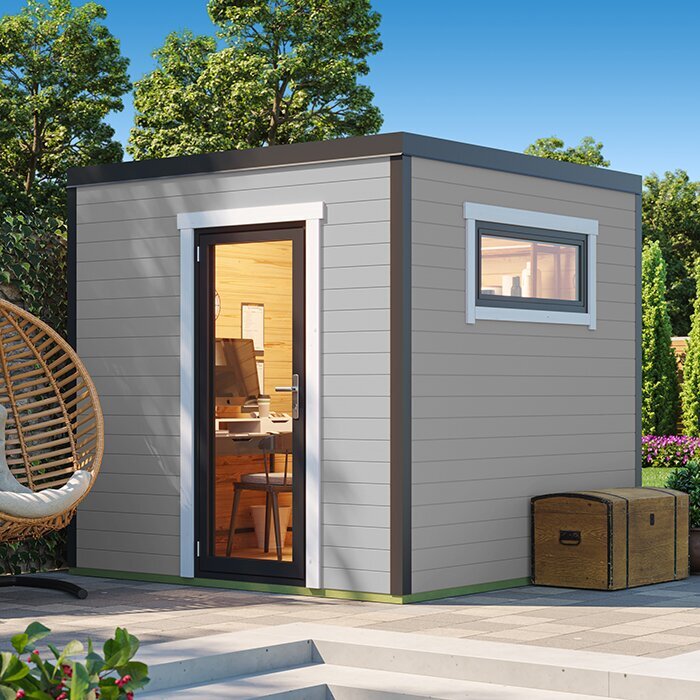
Record nearby influences too. A fence, neighbouring building, hedge, tree or existing eaves can cast shade, and leafy cover changes with the seasons. A sketch and photographs from the same viewpoint make conditions easier to compare; note whether low sun enters below an overhang or arrives from one side. For a shortlist, review the listing for the Verdana 1 garden house alongside any current plan or elevation, and confirm which face is glazed and where the doors open. A model name or decorative photograph is not enough to plan made-to-measure shade. If useful dimensions are not available, ask for them before placing an order.
The main purpose of the shade
Before comparing blinds, awnings or screens, name the problem you want to solve. Glare on a screen or reading chair may be concentrated in one part of the room; a dining table may need shade only at certain hours; a space used for crafts may need softer daylight while keeping the garden view. Privacy is a separate concern: a material that screens the view from outside can also limit the outlook from inside. Note whether reflections from shiny surfaces indoors add to the glare, because shading the pane may not remove every reflection. A broad front does not automatically need covering from edge to edge. If several people use the room, rank their priorities rather than expecting one material to meet every need.
Write down what should be blocked, what should remain, such as daylight, a clear view or access to an opening, and whether the shade needs to be adjustable. Translucent, mesh and opaque materials behave differently, but labels alone do not tell you exactly how bright the room will be or how much view remains. Ask for a sample or written details about light transmission and examine it in the room if possible. Use the listing for the Verdana 2 garden house to examine any available layout and glass-front details; if they are not stated, ask rather than assuming a shade is included or will fit. Judge each option against the intended use, not just its appearance.
External shade for direct sun
External shading sits between the sun and the glass, so it can intercept direct rays before they reach the pane. Options to compare include an exterior blind or screen, a properly specified awning, a canopy on independent supports, or planting that casts shade. A horizontal projection is often most relevant against higher sun; a vertical or side screen may help where rays arrive at a lower angle. Neither geometry works for every orientation, and the height of the glass and the surrounding space affect what is practical. Ask a supplier for a drawing showing the intended coverage at the times that matter, rather than relying on a general claim that a product provides shade. Check where a movable system sits when it is open.
External shade can preserve the view when retracted, but because it is outdoors, its instructions for wind, weather, cleaning and seasonal storage matter. A fixed canopy can also keep out daylight at times when you would prefer it. Before ordering an attached awning or screen for a candidate such as the Durano garden house, obtain the maker’s confirmation of permitted fixing locations and any relevant limits; do not assume the roof, eaves or wall are suitable supports. If the arrangement needs structural assessment, ask a qualified installer. A freestanding unit needs its own appropriate support and space, not an improvised connection to the house.
Internal blinds and curtains
Internal roller or pleated blinds and curtains are familiar ways to control glare and privacy from inside. They can be adjusted from the room and do not put a fabric screen outside in the weather. They meet sunlight after it has passed through the glazing, however, so they do not intercept it outdoors; brightness and warmth depend on the glass, material and arrangement. A pale or dark colour alone does not predict the finished effect. Consider whether you want a view through the material, privacy at certain times or a more complete block of light, and check what the supplier’s description actually guarantees. Samples can look different against the glass than they do in isolation.
Measure the intended fixing area and note frames, handles, mullions and ceiling or wall details before choosing a system. One continuous treatment and several narrower ones create different sightlines and controls; ask the supplier which arrangement suits the measured opening rather than ordering by an approximate front width. Do not assume an adhesive film, clip-on blind or drilled fitting is compatible with the glass or building. For the Veltor 1 garden house, ask the supplier whether the proposed blind or film is compatible with the exact glazing and fixing surface. Keep access to the glass for cleaning in mind, and confirm how the treatment can be opened fully when you want an unobstructed view.
Door movement and clear access
A glass front may combine fixed panes with doors that slide, fold or hinge, and those arrangements need different clearances. Confirm the opening direction and handle positions from a drawing, then consider the shade with every door both closed and open. A curtain can gather across a route; a blind or screen can obstruct a handle or the movement of a door if placed without checking. Think about where the fabric or mechanism will sit when fully raised or drawn back, not just how it looks when lowered. This is particularly important if the doors form the main route into the garden, or if you need space beside them for furniture.
Ask for dimensions of the actual glass and operating leaves, including any frame sections that affect a made-to-measure system. Confirm that the shade will not cover hardware, impede opening or create an obstacle in the doorway; have an installer assess anything unclear from the plans. When reviewing the Orello garden house listing, look for available layout information and ask for precise opening details rather than inferring them from a product photograph. Check whether the shade needs to be moved aside for routine cleaning or door use, and whether that is convenient for everyone who uses the room.
Seasonal changes and garden surroundings
Shade needs may change with the season. The sun’s path is different through the year, and a tree or hedge may provide much more cover in leaf than in winter. A fixed canopy or screen is straightforward to use but cannot be repositioned when the light angle changes; an adjustable treatment can respond, though it brings operating, storage and maintenance requirements. Compare conditions in the months when you expect to use the room most, and consider whether winter daylight is important too. If the summer house will be used throughout the year, avoid choosing a permanent structure from a single summer observation.
Planting can offer a less immediate form of shade, but it takes time to establish and its position affects future light, views and garden access. Consider how a tree’s canopy or a hedge may change over time, and whether seasonal leaf loss matches the shade pattern you want; do not rely on a young plant to solve glare straight away. If you are comparing the Modano 1 garden house with other options, use the same recorded sun pattern for its intended position as for every other candidate. Product photography cannot show the conditions at your site, and a layout that works in one part of the garden may not suit another.
Installation and maintenance checks
Check what looking after a shade entails before choosing a material or mechanism. Ask how the fabric, slats, tracks or screens should be cleaned, whether the unit must be taken down in particular weather, and whether replacement parts are available. A solution that cannot be reached safely for ordinary cleaning may be inconvenient beside a full-height glass front. Consider whether you can access both sides of the glazing and whether the shade can be retracted or removed when the room is not in use. Do not assume two visually similar fabrics have the same care instructions; ask for the supplier’s guidance for the specific option.
Installation details matter as much as the shade itself. Confirm the exact surface and fixing method with the summer house manufacturer and shade supplier before anyone drills or attaches hardware; a product image cannot establish what a frame or wall can support. For the Veltor 2 garden house, ask for written instructions that apply to the exact model and proposed fitting, and have a qualified installer assess any structural uncertainty. If you choose independent supports, confirm they suit the location and keep them clear of doors and paths. Check whether fitting affects any relevant product terms, and read the maintenance and removal guidance before purchase.
Compare the full cost before ordering
Compare the full purchase rather than the price of fabric or a mechanism alone. Ask whether the quotation includes measuring, supply, brackets or channels, fitting, any independent support, delivery, taxes and aftercare; providers may package these differently. Check what dimensions the quote assumes, who confirms them and whether the system is made for the exact opening. If the shade and summer house come from different suppliers, ask each to state what it is responsible for and what information it needs from the other. Listing inclusions and exclusions side by side makes it easier to compare options on the same basis.
Before ordering a candidate such as the Veltor 3 garden house, establish the glazed-front dimensions, door arrangement and any approved fixing information with the supplier. Then ask the shade provider to confirm in writing that its quotation is based on those details, and whether a site visit or final measurement is needed before manufacture. Read the return, installation and care terms; do not assume made-to-measure products can be changed after ordering. A clear written scope helps avoid paying for a system that covers the wrong area, clashes with access or leaves out work you expected to be included.
Testing a shade before committing
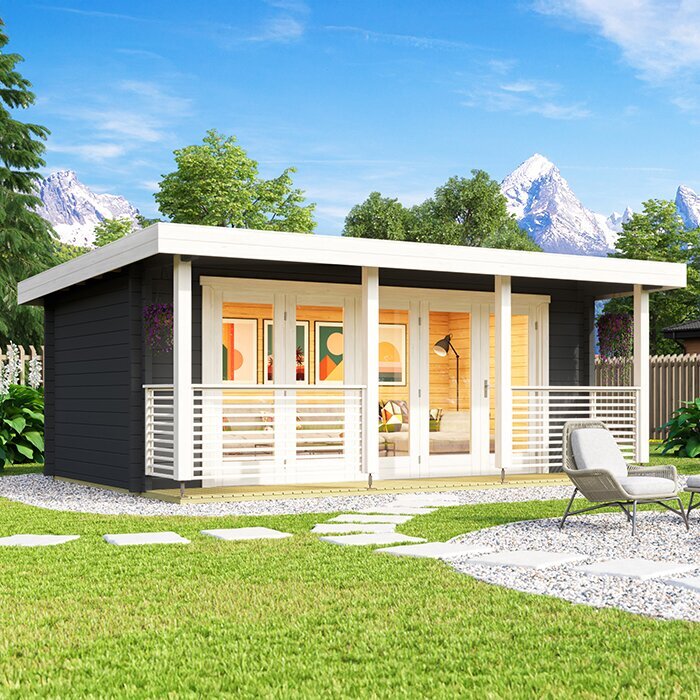
If the material or coverage is uncertain, test the idea before buying a permanent fitting. Hold samples against the glass at the relevant times and from the usual seating position; compare how much view, daylight and privacy each leaves. A freestanding screen or parasol can help you judge approximate coverage if it is designed for outdoor use and is stable in its intended setup. Keep any test item out of doorways and paths, and do not improvise fixings on the building. A swatch indicates appearance, not the performance of a full-sized installed system, so treat the trial as a way to compare choices rather than a guarantee.
Use the same simple record for each option: note when glare remains, whether the shade covers the relevant pane, if the view is acceptable, and whether doors and handles stay accessible. Photograph the position from inside at the times you normally use the room; comparing pictures is often more useful than relying on memory. Check the room again with the shade fully raised or open, since daylight and the garden view may matter at other times. This makes it easier to choose partial, adjustable or full coverage without defaulting to the darkest option.
Details to confirm before ordering a summer house
When selecting a new summer house, assess its position, glazed-front layout and shade plan together. A building that suits a particular corner of the garden may face a different direction from the one used in product photography; orientation and nearby trees or buildings affect exposure. Compare available drawings and exact opening dimensions, then decide whether the likely shade can be fitted without obstructing the doors or covering more glass than you want. For an existing building, start with its measured front and the maker’s guidance rather than assuming a universal blind size or attachment. Include any space needed to operate or draw back the chosen treatment.
Before you commit, ask the supplier which details are confirmed and which need a site visit or professional assessment. Do not assume a summer house roof, eaves or wall is rated to carry an awning, sail or other attached shade; obtain written confirmation and involve a qualified installer where support or fixings are uncertain. If the building or external shade raises questions about local planning, boundaries or shared access, seek guidance from the relevant authority or a suitable professional before ordering. Keeping these checks together makes the shade choice part of the purchase, not an afterthought.
Frequently asked questions
Is external shade better than a blind inside?
External shade can intercept direct sun before it reaches the glass. An internal blind controls light and glare after the sun has passed through the glazing. The better choice depends on exposure, fixing options and whether you want a treatment you can adjust from inside. Check the building and glazing maker’s guidance.
Will an overhead canopy shade every large glass front?
No. Coverage depends on the front’s orientation, the canopy’s position and the time of day. Low-angle rays can pass beneath or around an overhead projection. Observe the site and ask for a coverage drawing before ordering.
Can I attach an awning or shade sail to the summer house?
Only if the manufacturer confirms that the particular building and fixing location are suitable, and the installer agrees. Do not assume the roof, eaves or wall can support an awning or sail. A separately supported shade may be an option, subject to the site and its supplier’s instructions.
Can I use solar-control film instead of a blind?
Film may be worth considering, but do not rely on a general product description to establish compatibility. Ask the glass supplier and garden-house maker to confirm that the film suits the glazing and check any relevant fitting instructions and terms.
How can I reduce glare without losing all the daylight?
Consider partial or adjustable coverage rather than automatically shading the whole front. Compare samples at the times glare occurs, from the usual seating or working position, and check how much view and daylight remain. The actual effect depends on the material and the glazing.
Good shade for a large glass front comes from matching the treatment to the actual sun path, not covering the glazing by default. A clear record of exposure, use and door movement helps compare internal blinds, external systems and planting. Check fit, fixing support, upkeep and the full order before committing; the chosen arrangement should address problem light while retaining the view and access that make the summer house useful.
