
What Makes a Well-Built Outdoor Hot Tub?
Outdoor hot tub guide
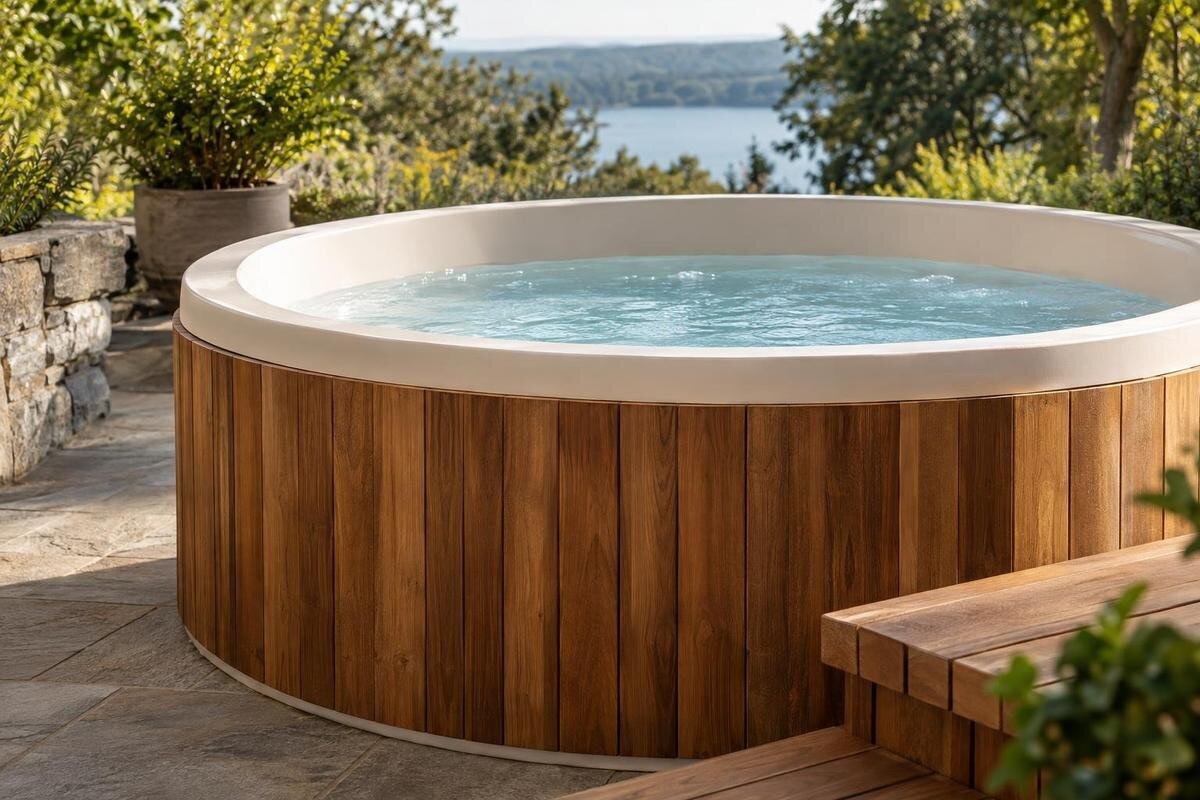
An outdoor hot tub can look carefully finished while its hidden construction remains hard to assess from a product page. Colour, trim and photography reveal only visible surfaces; they do not explain what materials sit beneath them, how parts are joined or whether a technician can reach them later. A useful build-quality check separates direct observations from claims that need support. This guide shows what to inspect, what evidence to request and when missing information should keep a model off a shortlist until questions are answered.
Why appearance alone cannot prove build quality
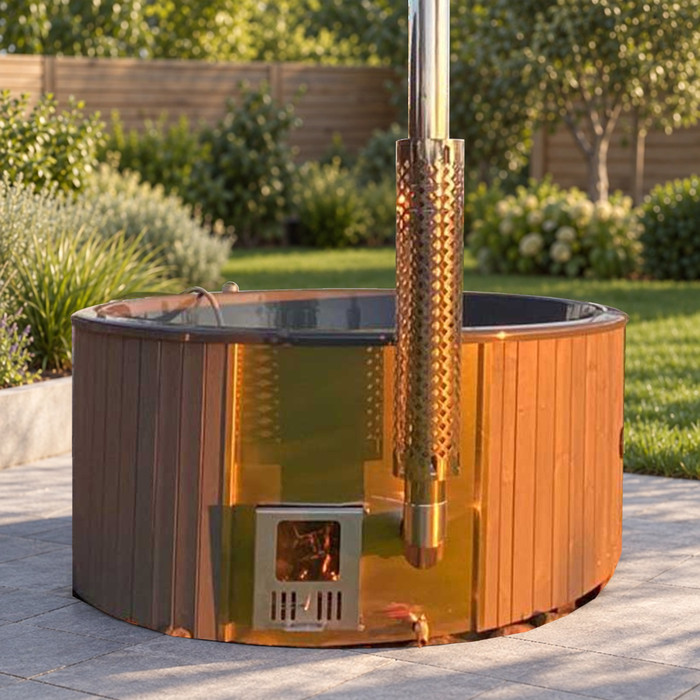
An outdoor hot tub’s finish is the easiest part to judge from a showroom display or product photograph, but it is only one layer of the product. Smooth panels, even colour and tidy trim may indicate care in visible finishing; they cannot show how concealed supports are arranged, how joints are made or whether components can be reached later. A polished exterior is not evidence of a poor build either: it simply answers a narrower question about appearance. Keep visible workmanship and construction evidence in separate notes, rather than allowing the first to stand in for the second.
Use images to record limited observations: whether edges line up, gaps look even and visible surfaces appear free of obvious damage. Note the viewing angle and the areas that are hidden; a close-up may omit the underside, inner structure and panel connections. Do not infer thickness, material, strength or weather resistance from lighting or texture. The catalogue entry for Bloomcabin hot tub Cove 2 identifies a model to assess, but its name alone cannot tell you how it is built. If images do not resolve a detail, ask whether a model-specific close-up or drawing is available.
Check the materials and supporting structure
Ask the seller to identify materials by component, rather than relying on one broad description of the whole tub. The vessel or inner surface, support structure, outer panels, base, fasteners and seals may have different roles and may use different materials. For each term in the description, ask which part it refers to and whether it covers the complete component. Words such as “timber”, “metal” or “reinforced” are starting points, not full specifications: grade, treatment, thickness or reinforcement method can change what the claim means. A construction drawing or component list can make these distinctions easier to follow. Pay particular attention to descriptions that move between a surface finish and the material beneath it. If the wording names only an outer layer, leave the underlying construction unconfirmed. This keeps an attractive finish from being recorded as a specification for the entire panel or vessel.
Then ask how the supporting structure carries the product’s intended load, and whether there is a model-specific drawing or written design description. Do not estimate strength from exterior panel thickness or a photograph of the base; a facing may serve a different purpose from a support. If the seller quotes a rating or makes a structural claim, request the document that defines its scope and who prepared it. Use the exact name Bloomcabin Hot Tub Haven 6 in the enquiry, so an answer for a different item is not mistaken for evidence about this model.
Assess fit, joints and finish
At an in-person display, look along panel edges and around corners for consistent alignment, secure trim and tidy transitions. Note obvious gaps, lifted edges, cracked finishes or sealant that appears uneven, but treat these as questions rather than diagnoses. Some seams or clearances may be deliberate, and camera angles can distort a straight edge. Ask the seller to explain any feature you cannot interpret; do not press, force or dismantle parts that are not intended for customer inspection. On a sample unit, also ask whether fit is checked after final assembly, rather than assuming one attractive display shows how every unit is finished.
Where the design includes access doors, covers or removable panels, check how they sit against adjoining surfaces and whether visible fasteners appear complete. Ask whether those pieces are intended to come off for maintenance and how they should be refitted; a snug appearance does not identify the seal material or prove sealing performance. If photos of the Bloomcabin Hot Tub Fjord 8 leave a join unclear, request a model-specific close-up or drawing instead of comparing it with a different product. Photographs can help you ask better questions, but cannot show the hidden side of a joint.
Ask how the hot tub is assembled
Ask how the main components are brought together: which joints are fixed mechanically, bonded or sealed, what fixings are used, and which connections become hidden after finishing. You need not assess engineering calculations yourself; the useful distinction is between a list of materials and an explanation of how those materials are assembled. A manual, exploded view or drawing may identify a joint, but only if it is tied to the model being discussed. Generic illustrations can clarify terms, yet they cannot establish that the same method is used on every product. Where a connection is concealed in the finished tub, ask whether the available illustration shows it before the surrounding panels are fitted. This makes the request more precise than asking for another exterior photograph, and helps distinguish the joint itself from the trim that covers it.
When a seller describes a joint as reinforced, sealed or bonded, ask what that means for the specific connection and whether the stated method is recorded. Also clarify where final assembly and inspection take place, who checks alignment, fixings and seals, and whether the check is documented. One process is not automatically better than another, so focus on what is done and what the evidence covers. For Bloomcabin hot tub Aurora 10, keep each answer tied to that model rather than borrowing a description from a different listing.
Look for evidence behind construction claims
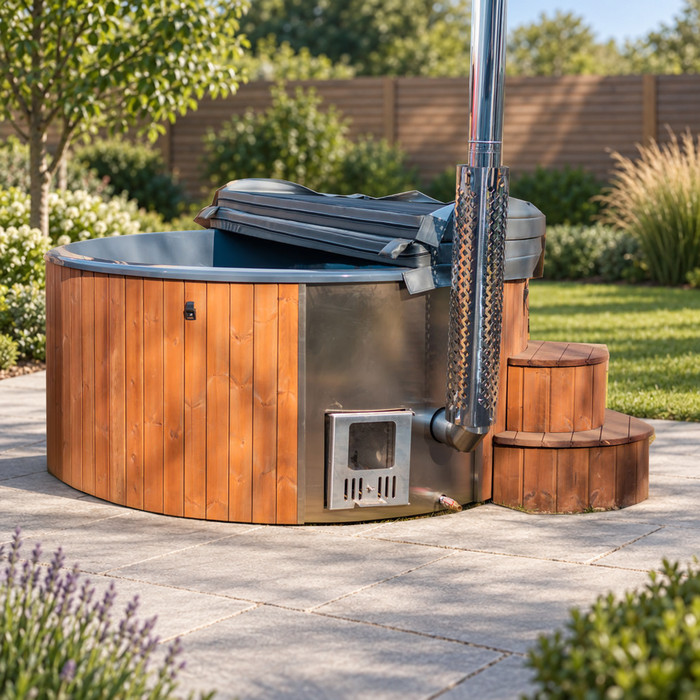
Separate factual descriptions from marketing adjectives. Terms such as “premium”, “heavy-duty”, “reinforced” or “weather-resistant” need a defined scope before they help you compare. Ask which component the phrase describes, what feature supports it and whether the claim applies to the exact model, not just a product family. A statement such as “built to last” communicates confidence but does not identify a material, joint, test or inspection method. Until supporting detail is supplied, keep that wording in the promotional column of your notes.
Useful evidence may include a component-by-component specification, construction or parts drawing, assembly or service instructions, and documentation for a specific performance claim. No single document proves every aspect of quality, so match each item to the question it is meant to answer. Check the model name, version and date; a generic brochure or a photograph of a similar product may not apply. Review the Cove 2 product information on that basis: note what is actually documented and list any gaps separately. If no document is available, ask whether the seller can provide a written, model-specific explanation.
Consider access for servicing and repairs
Service access is part of practical build quality because concealed parts may need inspection or repair. Ask which components sit behind a panel or cover, where each access point is and whether the panel is intended to be removable. Do not treat a visible panel as proof that every serviceable part can be reached. Find out whether a technician would need to move another section first, and whether opening the access point requires tools or specialist instructions. A product photo rarely explains the complete route from the outside to the part that needs attention.
Request the model’s service drawing or manual and ask what clearance is needed to reach each described access point. Check whether those points would remain usable in the intended position, and who can confirm that if it is unclear. The Haven 6 product page can help identify the model in a service-access enquiry, but a panel shown in one view does not establish access to every component. If the seller cannot explain the route, ask what information can be obtained before relying on the design for servicing.
Check whether parts can be identified and replaced
Repairability depends not only on opening a panel but also on identifying what can be replaced. Ask whether components are individually replaceable or supplied only as larger assemblies, how parts are identified, and whether a service or parts diagram shows them. Do not assume a component is standard or interchangeable just because it looks similar to another one. A clear part reference and an explanation of the repair route are more useful than a general assurance that repairs are possible. If replacement means changing an assembly, ask what that assembly includes and which surrounding parts would remain in place. Keep this separate from the question of access: being able to reach a component does not answer whether it can be replaced on its own.
Ask who handles parts enquiries for the exact model and whether the seller can confirm what support is available. If a stated support period exists, find out what it covers and whether it refers to the tub, particular components or both; do not assume all parts have the same arrangement. For the Fjord 8 listing, use the model name when asking about replacement parts so the answer can be matched to the right product. If the seller cannot confirm a detail, keep it unresolved rather than treating a similar-looking item as a substitute.
What warranty terms can—and cannot—tell you
Read the actual warranty wording to see whether it treats different components or types of issue differently. Check what is covered, when cover begins, what the owner must do, what exclusions apply and how a claim is handled. Ask whether labour, transport or other work is addressed separately, rather than assuming the same terms apply to every part. These details tell you what the supplier promises under stated conditions; they are not an inspection report on the materials, joints or workmanship. In your notes, distinguish the component named in the warranty from the problem covered by it. A reference to a panel, vessel or fitting should not be expanded into a promise about every possible issue affecting that part. Where the wording is unclear, request clarification of that specific clause.
A longer headline period is not, by itself, evidence of better construction. Compare the scope, conditions and claim process, and make sure the document refers to the model you are considering. When reviewing the Aurora 10 product details, request the applicable warranty wording rather than assuming a general brand statement covers it. Keep the exact document and any written clarification together, so a broad sales description is not confused with the terms that actually apply.
Questions to ask the seller about build quality
Make the conversation specific. Ask: “Which materials are used in the main vessel, supports and exterior panels?” “How is the supporting structure described, and is there a drawing for this model?” “How are the main joints assembled?” “Which parts of that construction can I see in a product-specific photograph or document?” These questions make it easier to distinguish a direct answer from general reassurance. If the seller uses a technical term, ask what part it refers to and whether the explanation can be provided in writing.
Then ask: “Where are the service points, and what must be moved to reach them?” “Can parts be identified individually, and who handles enquiries about replacements?” “Which warranty document applies to this model, and what does it cover?” A helpful answer names the component, model and evidence rather than relying on broad claims. If a question cannot be answered immediately, ask whether the information can be confirmed before you make a decision. An unanswered question is not proof of a defect, but it remains an unknown.
Compare models using verifiable evidence
Use the same headings for every model in your comparison: materials by component, support structure, joints and assembly, visible finish, supporting documents, service access, parts support and warranty scope. For each point, record whether it is documented for the model, visible only, or still unanswered. Note the document or image that supports an entry and check that it refers to the same version of the product. This simple record prevents a polished photograph in one listing from being compared with a detailed specification in another as if they were equivalent evidence. If two descriptions conflict, record the precise disagreement rather than choosing whichever sounds more favourable. Ask which description applies to the product currently being offered. Until that is clarified, an apparently detailed specification should remain unresolved on the affected point, rather than being counted as confirmed.
The catalogue information available for the four models in this guide establishes their identities but does not verify their materials, supporting structures, service access, parts arrangements or warranty terms. There is therefore no basis here to declare one better built than another. That lack of evidence is not proof that a model is poorly made, but it is not a reason to assume quality either. Shortlist a model with confidence only when the information you consider important is clear enough to assess; otherwise, leave the point marked unknown.
Frequently asked questions
How much can a product photograph tell me about build quality?
A photograph can help you assess visible finish, alignment and obvious damage, but it cannot show concealed supports, the construction of a joint or the route to serviceable parts. Treat it as a source of questions, not proof of materials or strength. Ask for model-specific documents or close-ups when an important detail is hidden.
Which documents are useful when checking construction?
Ask what is available for the exact model: a component specification, construction or parts drawing, assembly instructions, service manual, or documentation supporting a specific performance claim. Check that the material names, model and version match the product you are considering. No single document establishes every aspect of quality, so consider what each one actually confirms.
Does a service panel mean repairs will be straightforward?
Not necessarily. Ask which parts can be reached through it, whether other sections need to be moved, and whether a technician needs tools or specialist instructions. Check any required clearance against your intended position and ask for a service drawing. A visible panel is only one part of the repair route.
Does a longer warranty mean a hot tub is better built?
No. A warranty sets out a supplier’s promise under stated conditions; it is not an inspection report. Read which components are covered, what the owner must do, what exclusions apply and how a claim is handled. Compare the wording and scope rather than using the headline period as a measure of construction.
What if the seller cannot confirm materials or parts support?
Record those details as unknown and ask whether a model-specific answer can be provided in writing. Missing information does not prove a defect, but it cannot support a confident comparison either. If the unanswered point matters to your decision, do not assume the material, repair route or availability of parts from appearance or a model name.
Build quality is easier to judge when appearance, construction details and service arrangements are considered separately. Look for information tied to the exact model, and match each claim with evidence that addresses it. Where materials, joints or repair support remain unclear, keep that uncertainty visible in your comparison rather than turning a neat finish or reassuring phrase into a verdict.
