
What Size Hot Tub Do You Need?
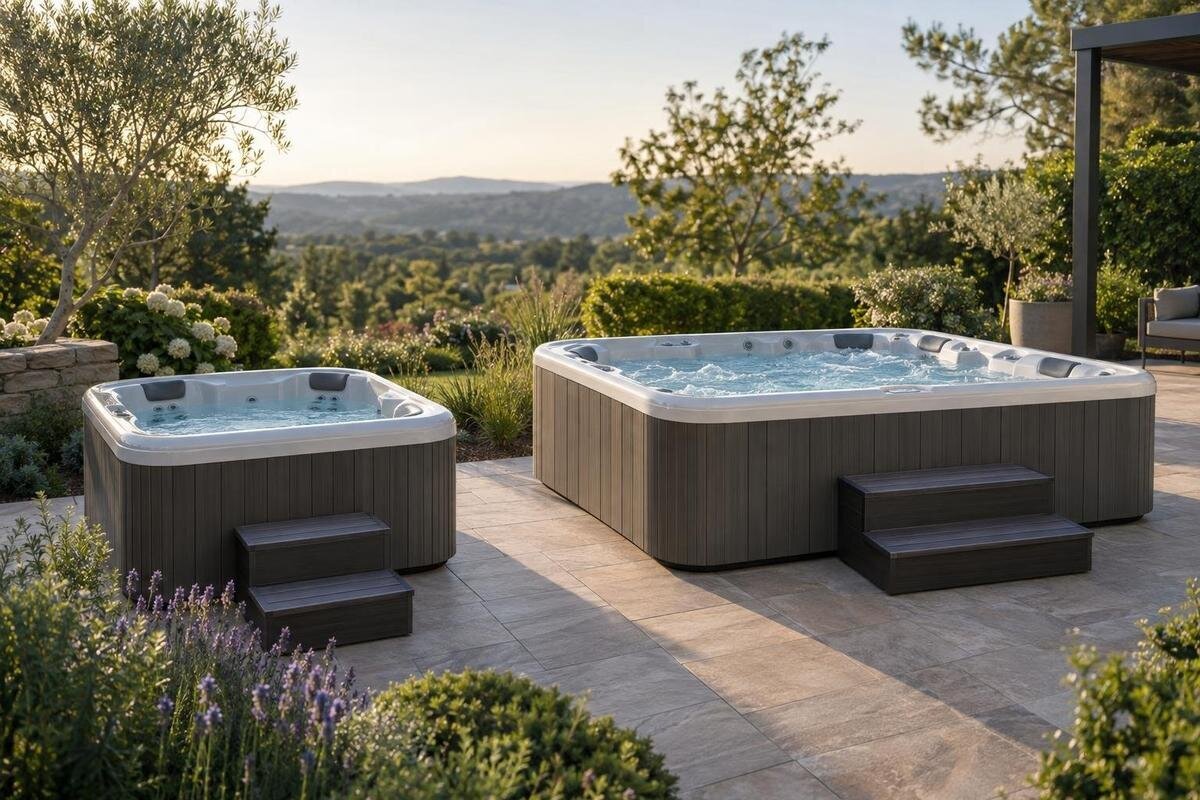
Hot tub sizing guide
Choosing a hot tub by a number on a product page can be misleading: a stated capacity, the arrangement of seats and the tub’s external measurements answer different questions. The right size is the one that gives the people who usually soak together enough room in the positions provided, while also accommodating occasional visitors if that matters to you. Begin with the number of people who use it at the same time, then check what each capacity statement means and how the measured space relates to the seating. A model name or photograph is not a substitute for those details.
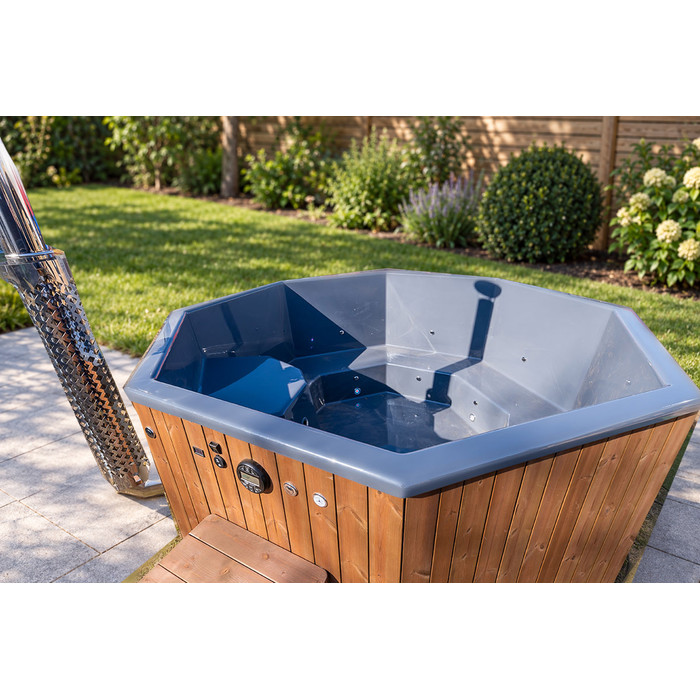
What hot tub size actually means
Hot tub size is not a single measurement. A capacity figure tells you how many occupants the product information associates with a model, subject to any wording attached to it. External dimensions describe the tub’s overall outside size. Internal measurements or a seating plan, when available, are more directly relevant to the room people share around the seats. These details answer different questions: the stated number of users, the product’s physical scale and the arrangement of its usable area. Read each separately rather than treating one headline figure as a complete description.
A listed seat count also says nothing on its own about how spacious those places feel. Positions can differ in shape and orientation, and the area for legs or movement may be shared; check the actual layout rather than assuming each seat offers the same room. Conversely, outside measurements cannot be translated into a reliable user count, because the internal arrangement matters. For each candidate, record the stated capacity and its exact wording, the seating layout, any internal measurements and the external dimensions in separate fields. Mark missing information as unknown rather than estimating from a product name or photograph. Keeping the fields separate shows whether you have a size constraint or still need evidence about comfort.
How many people will use it together?
Count people who will use the tub at the same time, rather than adding everyone in the household or on a possible guest list. A home with four residents may usually have two people soaking together, while another household may want all four to sit in the tub on most weekends. The useful figure is the ordinary simultaneous group, not the total number of people with access. When looking at the Cove 2 product page, compare any stated capacity with this headcount. Describe your intended use in plain terms, such as two people on weekday evenings and four together most weekends, so that your comparison reflects how you expect to use the tub.
Write down two counts: the most common group and the largest group that regularly shares a session. Add an occasional-guest count separately, with a note on how often that happens. People who use the tub at different times do not need to be added together, whereas friends who routinely join do belong in the regular number. If schedules vary, focus on the busiest overlap, not the total number who might use it over a day. Do not count on taking turns unless that suits the way you want to use the tub. This tally gives you a realistic baseline before comparing capacity claims.
What does the stated seating capacity include?
Capacity and seat count are related, but not interchangeable. One listing may count individual seats; another may describe the number of people a model is intended to accommodate, perhaps using a qualifier such as ‘up to’. Read the exact wording, any nearby note and the conditions in the specification. If a figure is presented as a maximum, do not treat it as a promise of generous personal space. When reviewing the Haven 6 product page, preserve the distinction between a stated number of seats and a stated number of occupants rather than recording both simply as ‘capacity’.
Check what the number counts: separate seating positions, a continuous seating area or an overall recommended group. Where a diagram is available, use it to understand how places are arranged and whether occupants may share part of the interior. A seat tally can help you spot when there are fewer positions than people in your usual group, but it cannot prove that all those people will be comfortable. If the page does not explain its count, ask the retailer to clarify it. Keep the original wording beside the number rather than rewriting different kinds of claims as the same generic capacity.
Will those seats feel comfortable for your group?
Even a confirmed capacity may not suit every group equally. People differ in height, build and preferred posture; the same seating arrangement can feel roomy to one group and close to another. Feet and legs use shared interior space, and people may want to shift position rather than sit still. Think about how your usual users would sit together: could shoulders or knees feel crowded, and is there room for normal movement? These are practical questions about fit, not a different way to calculate the manufacturer’s stated maximum.
If practical, inspect or try the exact seating arrangement rather than a similarly named product. Assess the group together where possible: trying one seat in isolation will not show how everyone's preferred positions work alongside one another. Consider whether each person would be happy in their allocated place or whether several people would want the same position. During an inspection, focus on the room around shoulders, knees and feet rather than just counting places. If a visit is not practical, use any seating plan and confirmed internal measurements in Fjord 8 product information to identify what you can assess remotely. Ask about any important gaps, such as the space shared by neighbouring positions. A diagram can explain the arrangement, but do not estimate measurements from its apparent scale. Keep any remaining uncertainty about comfort separate from the stated capacity.
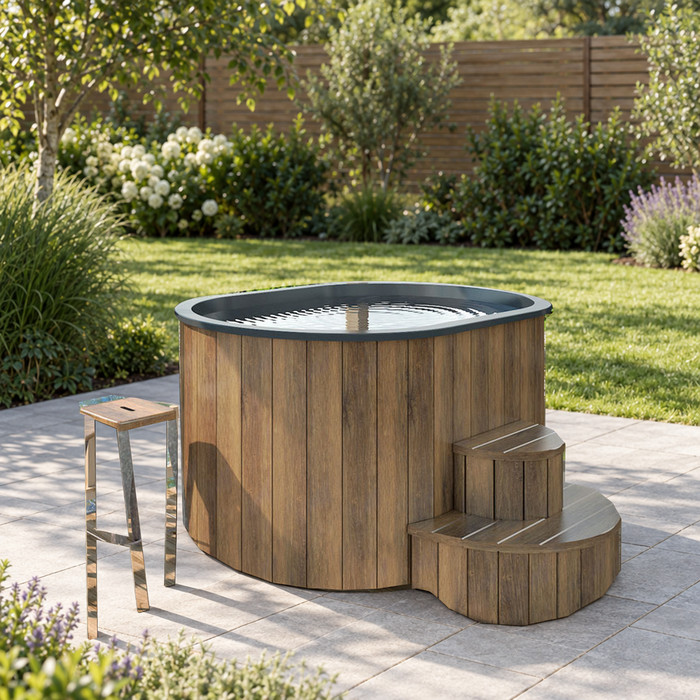
Why external dimensions do not show seating space
External dimensions tell you the overall outside size, not how many people can sit comfortably. Where length, width and height are provided, they describe the tub’s exterior; the interior can have a different shape and usable width because of its walls and seating layout. Two tubs with similar outside measurements need not have identical room inside, and a larger outside figure does not automatically mean more seats. Treat external dimensions as a separate size check. They help you compare the products’ physical scale, while the seat plan and internal data are more useful for judging how a group will fit.
When comparing figures, check that each measurement describes the same points and configuration. Confirm that dimensions are labelled as external, and look for a separate internal measurement; do not treat an unexplained number as the seating area. Record length, width and height in a consistent order and use the same units across your comparison, so that a change in presentation does not look like a difference in size. Review the Aurora 10 product page for clearly labelled dimensions. If interior measurements are not published, ask for a seating diagram or an explanation of the usable space. An exterior length and width alone cannot settle how much room occupants have, so leave that question open rather than using outside measurements as a substitute.
How to balance regular users and occasional guests
Occasional guests should influence your decision in proportion to how often they will use the tub. If friends or family regularly join the same session, include them in the expected headcount. If the larger group is a rare event, decide whether choosing for that peak would improve the experience enough to matter in everyday use. A high stated maximum can be tempting, but it may not mean a relaxed fit for your particular guests. Conversely, choosing only for the usual pair can be frustrating if several people routinely share it. Separate the regular group from occasional visitors before comparing models.
Make a short note for each candidate showing an ordinary session, the busiest regular session and any occasional gathering. Add how often each happens, then compare those patterns with the stated capacity and seating layout in the Cove 2 listing, if that information is provided. For a rare gathering, be clear about what you want to accommodate: must everyone sit together, or would separate sessions genuinely suit the occasion? Neither preference needs to be assumed. If sharing one session is the reason for inviting guests, a plan based on taking turns would miss that requirement. If separate sessions are welcome, there is less reason to make the full guest list your minimum capacity. This makes the compromise explicit without allowing an uncommon event to decide the size automatically.
Compare each candidate on the same terms
Use the same information for every candidate. A figure described as ‘seats’ on one listing should not be compared casually with a qualified capacity on another. Record the exact label, number and any qualification, along with the seating layout, published internal measurements and external dimensions. Keep blank fields visible; filling them with guesses makes a shortlist look more precise than it is. The names Cove 2, Haven 6, Fjord 8 and Aurora 10 identify products, but their numerals alone do not establish a ranking by seating, comfort or physical dimensions. Include Bloomcabin Hot Tub Haven 6 in the comparison on exactly the same evidence standard as the other options.
A useful table has separate columns for everyday users, peak regular use, the wording of the capacity claim, seating layout, internal space and outside measurements. Mark each figure as stated or still to be confirmed, and make sure it refers to the exact model information you are considering. Then identify essentials, such as enough places for the regular group and a layout that seems suitable for them. Only after that compare preferences, such as room for occasional visitors. This avoids letting one large number or model name decide the shortlist before you know what it actually describes.
What to ask when a specification is unclear
When a product page leaves a gap, make your question precise. Ask what the capacity counts, whether the figure is a maximum or a suggested group size, how the seats are arranged and whether internal measurements are available. If a dimension appears without a label, ask whether it is external and how it is measured. Relate the question to your group rather than asking only whether the tub is ‘big enough’. For example, explain how many people will usually sit together and ask which published seating information helps you assess their fit. When enquiring about the Fjord 8 listing, identify the particular figure or seating detail you need explained. That gives the retailer a specific question to answer instead of inviting a general description of comfort.
Keep any clarification with the relevant specification, and make sure the answer refers to the exact model and configuration you are considering. A product photograph can illustrate a design, but perspective does not reliably show dimensions, seat spacing or a headcount. Descriptive words such as ‘compact’ or ‘spacious’, if used, are not substitutes for measurements or a clear capacity definition. If a retailer cannot clarify a point, treat it as unknown while comparing options. It is better to pause on a model whose suitability depends on an assumption than to calculate capacity from its exterior size.
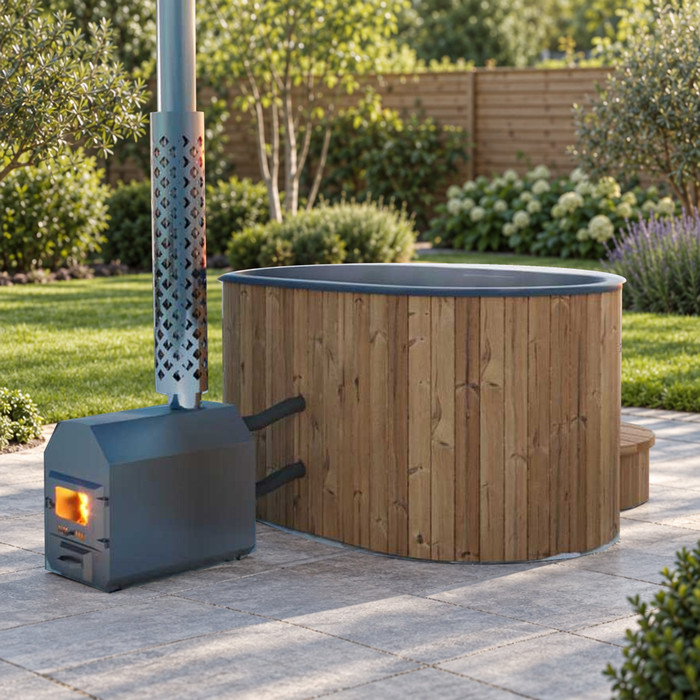
Turn your requirements into a shortlist
Once you have gathered the details, shortlist in two passes. First, set aside any option whose confirmed capacity or seating layout cannot meet your normal pattern of use. Then compare the remaining candidates against the busiest regular session and the occasional-guest group, if that matters to you. Assess Bloomcabin hot tub Aurora 10 against those same requirements, using the stated measurements and clearly described capacity. Distinguish a confirmed mismatch from an unanswered question: a model with too few stated places is different from one whose seat count is not yet clear. Keep the latter on hold rather than treating it as either suitable or unsuitable. This gives you a shortlist of supported choices alongside a separate record of options awaiting clarification.
Separate requirements from preferences. Your regular group's ability to sit comfortably is a requirement; room for a rare gathering may be a preference, depending on how much that event matters to you. If two candidates meet the essentials, identify the specific benefit of any additional seating. Would it accommodate people who often join, give regular users a choice of suitable positions, or serve only an unlikely occasion? A lower capacity can be enough for a smaller regular group if the positions suit them. A higher stated count is useful when the extra places meet a genuine need and the layout supports it. The aim is to explain why one size suits your use better, rather than choosing the highest number by default.
A final size check with your regular users
Before choosing, review the shortlist with the people who will usually share the tub. Use a normal session as the example and identify where each person would sit. Ask whether those positions suit their preferred posture and leave enough room for ordinary movement. If an inspection or trial informed your choice, discuss the whole group's experience rather than relying on the view of the person who found the most comfortable seat. Where you are working from specifications alone, distinguish what the seating plan shows from what remains uncertain. If users disagree about the fit, identify the particular position or shared area causing concern. A general impression that a tub looks spacious will not resolve a specific concern about knees, shoulders or seating position.
Summarise the size decision in a short note: the usual group, the busiest regular group, the seating arrangement you expect to use and the occasional-guest compromise you accept. Record why the chosen size meets those needs, including any clarification that changed your assessment. This is especially useful if several people have compared different models and formed different impressions. Someone reading the note should be able to understand why the size suits your household without relying on a model name or an unexplained capacity figure. If you cannot describe the fit clearly, return to the particular unanswered question rather than restarting the entire comparison. The final choice should reflect an agreed pattern of use, not just one person's preferred headline number.
Frequently asked questions
Does the stated capacity mean everyone will be comfortable?
Not necessarily. It tells you what the product information says the model can accommodate, with any qualification attached. Comfort also depends on the seating arrangement and the room available. Compare those details with the people who will use the tub together.
Should I count everyone in my household?
Count the people who are likely to use the tub at the same time. If household members usually soak in separate sessions, do not add them together. Note the largest group that regularly shares a session separately from occasional visitors.
Can external dimensions tell me how many people will fit?
No. External dimensions describe the tub’s outside size, not the usable room around its seats. Check the stated capacity and seating layout, and look for internal measurements if available.
Is it worth choosing a higher capacity for guests?
That depends on how often guests will use the tub with you and whether the seating layout suits the group. Give regular use more weight than a rare gathering, but include guests who routinely join.
Can I infer capacity from a model name or photograph?
No. A number in a model name does not verify capacity, and a photograph cannot confirm measurements or comfortable seating. Use the current product information and ask for clarification where a key detail is missing.
The right size is not simply the one with the largest stated capacity. It is the one whose documented seating and usable space suit the people who most often use it together, with occasional guests included where they genuinely matter. Keep capacity wording, seat layout and external dimensions separate as you compare options. If a key figure is unclear, treat the shortlist as provisional rather than relying on a guess.
