
Buying a Pergola on Black Friday for Installation Next Spring
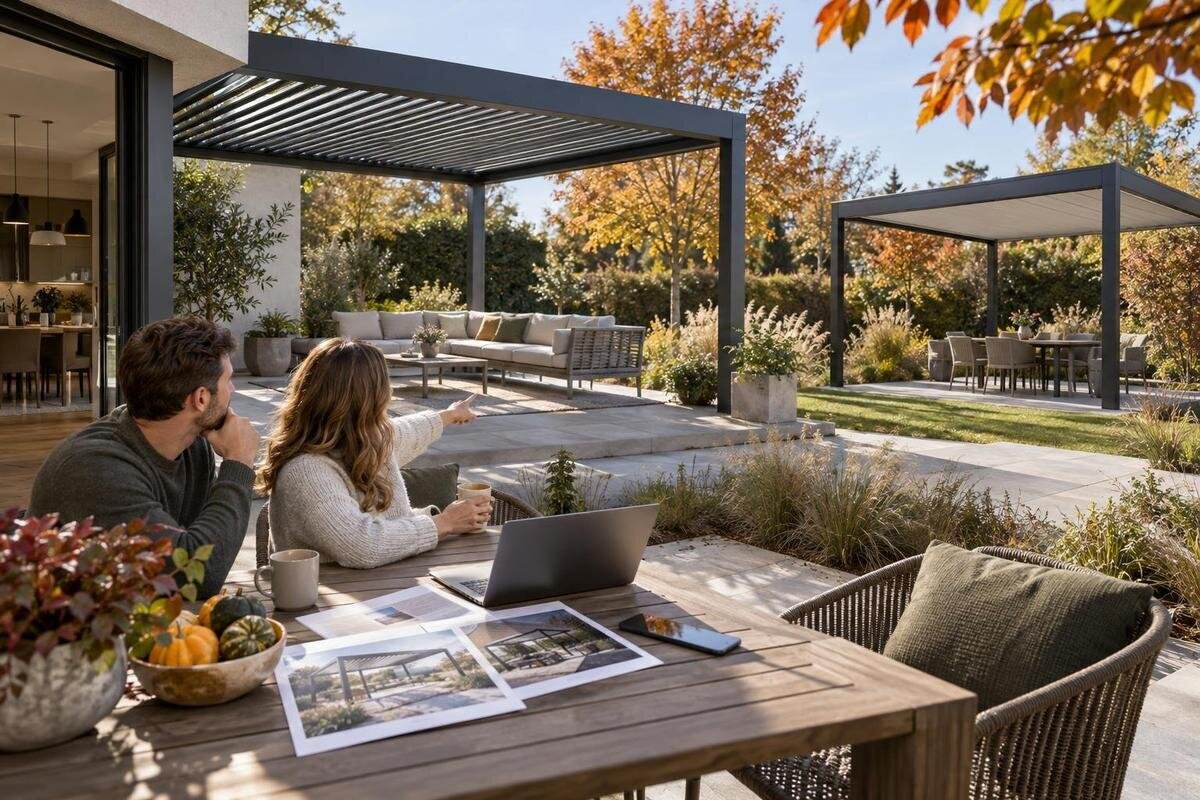
Pergola buying guide
Buying a pergola on Black Friday for installation next spring means making two decisions together: whether a particular design fits your outdoor space, and whether buying months ahead suits the project. The event date can be a useful point for comparing prices, but it should not dictate your choice or installation plan. Begin with the way you use the area and a measured footprint, then compare exact product details, site requirements and the terms of any offer shown. This guide focuses on those choices and on keeping purchase information useful through to spring. It does not assume that a discount is active, that a listing has a particular specification or that an order guarantees an installation date.

Set a realistic spring installation window
Black Friday and a spring installation are separated by months, so define the date you are planning for before you compare pergolas. Pick a preferred month or a realistic range, then work back through the decisions that must happen first: finalising the footprint, confirming the exact model, checking the site and agreeing who will handle installation. This is a planning sequence, not a promise that a retailer or installer can meet a particular date. If you have not yet measured or asked for professional input, leave room for those answers to change the shortlist. If the work depends on another renovation or a property handover, add that dependency to the calendar too. Treat timing as a constraint alongside appearance and price.
Ask the retailer what timing they can confirm for the exact item: is the available information a firm supply window or only an estimate, and does placing an order reserve a product or simply record a request? Ask what notice you will receive if the estimate changes and what the purchase terms say about changes or delays. Check the installer’s calendar separately; ordering a product and booking someone to install it are not necessarily the same arrangement. Keep the answers with your quote. If a date is essential, do not convert a general estimate into a guaranteed arrival or installation date unless the relevant parties confirm it explicitly. That keeps the spring plan realistic before an offer influences your decision.
Define how you will use the pergola area
List how the area will be used in an ordinary week: outdoor meals, seating, shade, or some combination. That purpose sets priorities more clearly than browsing by appearance alone. A dining setup needs room for the table and for chairs to be pulled out; a lounge arrangement may need a different clear area. Decide what matters most—such as a particular footprint, a relationship to the house or a specific kind of cover—and separate those essentials from preferences. Agree who will use the space and which parts must stay open for access. A short brief helps you reject attractive options that do not solve the actual problem, and makes later comparisons less likely to drift towards features you do not need.
Look at the area at the times you expect to use it and note where existing walls, doors, windows, trees, drains, lights and garden furniture sit. A rough plan with measurements is more useful than relying on memory, while a photo can help show context to an installer. Mark furniture you already own and any route people need to keep clear; do not assume a staged product image is drawn to scale. If weather protection or a particular degree of shade matters, write it down as something to verify in the product information rather than treating the word pergola as a performance promise. This turns browsing into a search against real conditions instead of an aesthetic exercise.
Compare pergola styles by their published details
Product pages often use labels to distinguish layouts or types, but a name is not a specification. The listings use names such as Bloomcabin pergola, bioclimatic pergola and wall-mounted pergola; treat them as identifiers, not as proof of dimensions, operation, components or suitability. Begin with the Bloomcabin pergola listing and record the exact product name or variant shown, then use the same checklist for any alternative. If a page does not answer an important question, mark it unknown instead of filling the gap from the heading, a photograph or a similar-looking model. This keeps a seasonal price comparison tied to the item you may actually order.
Make the comparison like for like. Put each candidate in a simple table with the information that affects your choice: stated overall dimensions, layout or attachment type, included components, listed site requirements and relevant exclusions. Use the same column headings for every option so an apparent advantage is not simply a difference in how much detail each page gives. Record which statements come directly from product information and which are questions for the retailer. A different label can signal a difference worth investigating, but it does not prove that one option gives more shade, needs less work or suits your site better. An entry marked “not stated” is more useful than a guess when you are deciding how to spend the budget.
Questions to ask about a bioclimatic pergola
The word “bioclimatic” can help narrow a search, but it is not a complete description of how a particular model works. On Bloomcabin’s bioclimatic pergola listing, look for the exact configuration and the product’s own explanation of what it is designed to do. Do not infer a particular mechanism, degree of shade, rain protection or seasonal performance from the label alone. Check whether the claims relate to the way you plan to use the area, and note any stated limits. If the information uses broad language without explaining the feature you care about, ask the retailer to identify it for the exact model rather than relying on the category name.
Turn each appealing feature into a buyer question. If you expect the amount of cover to change, check what changes, how it is operated and which components the quoted configuration includes; do not assume an item shown in a picture is part of the base product. If you mainly want shade at certain times, check what the listing states and consider the orientation and surroundings of your site. These checks are not a technical investigation; they are a way to test whether the offered configuration addresses your priorities. Keep claims about a product’s function separate from your expectations of how the finished space will feel, and do not pay extra for a description that remains unclear.
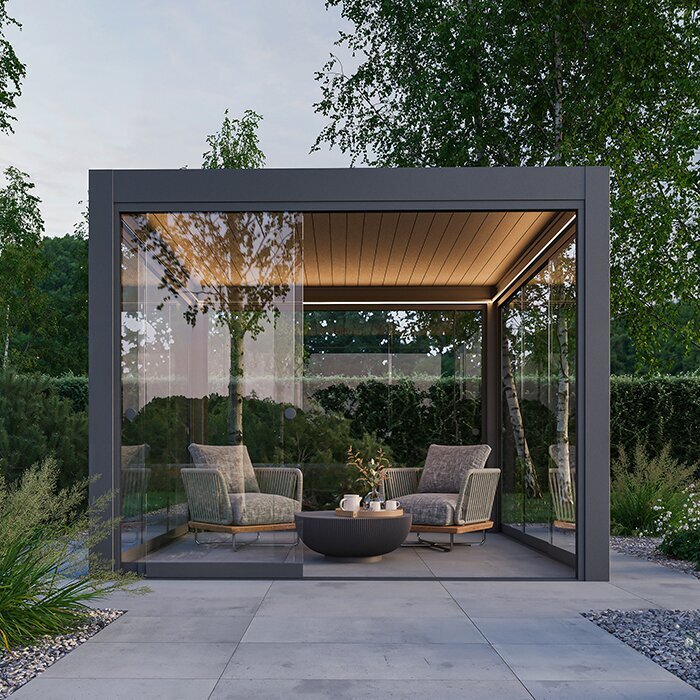
Check a wall-mounted option against the building
A pergola listing described as wall-mounted raises different questions from one whose position is not described that way. Consider where it would meet the house and whether windows, doors, gutters, fittings or the preferred route through the patio affect the layout. The Bloomcabin wall-mounted pergola listing identifies that kind of option, but its name alone does not tell you the exact attachment arrangement, what the building must provide or whether the wall at your home is suitable. Treat those as model- and site-specific details, not something to infer from a façade photograph. Sketch the intended position before narrowing your choice, and note any existing features that could conflict with it.
Before ordering a wall-related configuration, get the product requirements and proposed location reviewed by a qualified installer if you are unsure about the building interface. Ask what information they need from the manufacturer and whether the itemised quote assumes any work beyond the product itself. This is not something to decide from a quick visual inspection or by copying how another pergola appears in a photograph; hidden construction and site conditions are not visible there. If a landlord, body corporate or other decision-maker is involved in your property, confirm any relevant approval before committing. A clear answer can rule out an unsuitable layout before a sale date puts pressure on you.
Measure the usable footprint
Measure the rectangle or outline you can actually use, then mark obstacles and furniture on the same plan. Include the clear space needed around a table, chairs and common routes, rather than measuring only to the patio edge. Note doors and windows that open outwards, steps, lights and fixed garden features that may affect the position. Keep a separate record of the outdoor area’s boundaries and the pergola’s stated outer dimensions; they are not necessarily the same measurement. When an exact drawing is available, use its labelled dimensions and confirm what each measurement includes. Do not estimate a product’s size from a photograph, even if the scene looks similar to yours.
Compare your plan with the dimensions for the exact option, not with a generic category description. Use the product page for Bloomcabin’s pergola as one place to check the published details, if they are provided; if dimensions or clearances are missing, request them before deciding. Ask whether measurements refer to the outside frame, the usable area beneath it or another point, and have an installer confirm the layout when that distinction matters. A pergola that fits between two boundaries on paper may still interfere with movement or existing features. This basic overlay helps you notice those conflicts before the offer period ends, without attempting structural calculations.
Compare the full price and offer terms
If a retailer displays a Black Friday price, compare the total for the exact model and configuration you have shortlisted. A percentage or crossed-out figure is not enough to establish value on its own: compare like for like, check what amount you would actually pay, and note any separate costs that affect your project budget. A lower figure for another variant, a smaller configuration or an item with a different scope does not make a fair comparison. Include professional work you have already been quoted for when you judge the whole project cost, but keep the product price and that work clearly separated in your notes. Do not assume a saving until the terms and figures are visible.
Read the offer conditions before you add the item to your budget. Check which product name or variant qualifies, whether the price depends on a code or payment condition, when the offer ends, and what is excluded. Save the wording and date alongside the quote so you can check the exact terms later. For a useful reference, compare the page for Bloomcabin’s bioclimatic pergola only after confirming it is the same variant and included scope as any other quote; do not compare an advertised base product with a fuller configuration elsewhere. If a term is vague or the final total changes at checkout, ask the retailer to clarify before paying.
Keep purchase details accessible until spring
Months can pass between an event purchase and site work, so save a compact record while the information is easy to find. Keep the product name and variant, the page or quote, any drawing or dimensions supplied, written answers to your questions, the price and the offer conditions together. Save the order confirmation and note which details were spoken and which were provided in writing. If you compare several similar listings, identify each record clearly; otherwise it is easy to attach a measurement or condition to the wrong option. The Bloomcabin pergola page can be one reference in your shortlist, but the specific quote and order documents are the record to use for your purchase.
Set a reminder to review the plan before spring rather than leaving the paperwork untouched. Check that the ordered model, dimensions, promised scope and agreed timing still match what the installer expects to work with. If a product page has changed, use the order documents and ask the seller which specification applies to your order; do not silently substitute a newer picture or description. Reconfirm any assumptions about site conditions that may have changed, such as furniture or landscaping, before work is scheduled. The point is not to keep reopening the purchase decision, but to catch a mismatch while there is still time to ask questions. A concise written record makes that follow-up easier.

Resolve product and site questions before paying
Turn unresolved details into a short checklist for the exact model. Depending on your priorities, that might include the outer dimensions, the materials and finish stated by the supplier, what components are included, care information, site or mounting requirements, and any stated limits relevant to your outdoor conditions. These are questions to verify, not features to assume: a model name or attractive photograph does not establish them. If dependable shade or weather cover is essential, ask what the published product information actually supports and where its limits are. Keep the answers with the right variant so they do not get confused with another listing.
If an answer depends on the building structure, the surface at the site or a technical installation requirement, ask a qualified installer or other appropriate professional rather than trying to work it out from a catalogue description. You can still compare prices while those questions are open, but do not place an order on the assumption that an unresolved requirement will be easy to meet. Check any written documentation supplied for the exact product and ask for clarification where wording conflicts. The bioclimatic pergola listing is only a starting point for that check; its category label should not replace model-specific detail. This keeps the purchase decision grounded in information that applies to the item you are considering.
Decide whether to buy now or wait
Before the offer deadline, sort your criteria into essentials and preferences. Essentials might be a verified fit, an arrangement that suits the site, a configuration that meets your intended use and a price that stays within the full project budget. Preferences can help rank the remaining options, but they should not outweigh a missing answer on a critical point. Compare only the models that meet the essentials, and record why each remains on the list. If more than one qualifies, decide which trade-off you prefer before looking at a countdown or sale wording; that prevents urgency from changing the meaning of your original brief.
Keep a fallback: another model whose details you can verify, a different layout, or waiting for a later buying window. If a wall-mounted format remains under consideration, use the wall-mounted pergola page to check that exact option against your questions about the building and footprint; the label is not a recommendation for your property. It is reasonable to pass on an offer if its scope is unclear, the measurements do not work or the timetable cannot be confirmed. The result is not a forced purchase, but a choice between a defined pergola and a project plan you can still stand behind when spring arrives.
Frequently asked questions
How early should I order for a spring installation?
There is no single lead time that suits every order or site. Ask the seller what timing they can confirm for the exact model, and check the installer’s calendar separately. Leave room for site checks and decisions to take longer than expected; Black Friday itself does not reserve an installation date.
Does a Black Friday price guarantee a saving?
No. Compare the amount payable for the exact model and configuration with equivalent options, and read the offer conditions. Check what is included and whether any separate costs affect your project budget. Do not treat a percentage or crossed-out figure alone as proof of the value you will receive.
Can I judge the pergola’s size from a product photo?
A photo can help you assess appearance, but it is not a reliable scale drawing. Measure the intended area and compare it with dimensions for the exact model. If the page does not clarify what those measurements cover, ask the seller for details before deciding whether the layout will work.
Do “bioclimatic” and “wall-mounted” tell me what the pergola can do?
They identify a type or layout, but do not establish a particular model’s dimensions, features, included parts or suitability for your site. Check the product information for the exact configuration and ask the seller or a qualified installer about any detail that affects your intended use.
Should I order before an installer has reviewed the site?
If the layout, building or site requirements could affect which model you choose, get suitable professional input before committing. You can compare prices in the meantime, but avoid ordering on the assumption that an unresolved requirement will be straightforward to meet.
A Black Friday purchase makes sense only when the product, its terms and the spring plan all line up. A measured layout, a written comparison of the exact offer and a list of unresolved site questions can help separate a useful price from a rushed decision. Keep a second option, and be prepared to wait if an essential dimension, requirement or date cannot be confirmed. That leaves you choosing for the outdoor area you actually have, with a plan that can be checked again before installation.
