
Buying a Bioclimatic Pergola: How to Evaluate Its Adjustable Roof
Pergola buying guide
The adjustable roof is usually the central question when you buy a bioclimatic pergola, but the label “adjustable” does not explain how its louvres move or what protection the closed position provides. Before you buy, look for the movement range, the control method and clear information about shade, airflow and rain handling. Match those details to the way your outdoor area is used: a setting that suits midday shade may feel different when you want more sky, a breeze or shelter from rain. This pergola buying guide explains what to ask, what a product description cannot tell you, and how to compare options without relying on photographs or broad claims.

What an adjustable louvre roof does
Bioclimatic pergolas generally use roof louvres—slats that can be turned to alter the openings above an outdoor space. Changing their angle changes the balance of overhead shade, daylight and open sky. That makes the roof different from a fixed canopy, but the label alone does not say how far the slats move, how they are operated or how the roof behaves when shut. Product names and lifestyle photographs are not specifications. For a buying decision, treat “bioclimatic” as a design category and ask for the exact movement and weather details of the model you are considering. A fixed canopy may suit someone who prefers one set roof position; the adjustable version offers a choice, not an automatic improvement.
Write down the situations the roof needs to handle: a table that gets strong sun at lunch, seats used in the afternoon, a preference for an open view of the sky, or a need to keep rain away from a particular entrance. Put these in order of importance. One roof position cannot maximise shade, ventilation, daylight and shelter at once, so a priority list prevents an attractive feature from being mistaken for a complete solution. If you are choosing mainly for rain cover, the ability to tilt louvres is only one part of the assessment; the stated weather performance and water route matter too. Include people who will use the area regularly, since different routines can change which compromise feels acceptable.
How the louvres move
Find out whether the roof slats rotate through a set arc, whether they all follow the same movement, and which direction they turn. A drawing of open, intermediate and closed positions is more useful than a single photograph because it shows how the gaps change. Do not assume that an opening roof retracts: rotation and retraction are different actions. Ask for a description of the mechanism and, if available, a demonstration of the exact system. For the bioclimatic pergola listing, check whether the product details state its roof movement rather than inferring it from the category name. A cross-section can also make clear what remains exposed when the roof is open.
Then check how the movement feels in ordinary use. Can the louvres be stopped at a partial angle, or does the system offer only a few set positions? Does one control move every slat together, or are there separate zones? Ask how an end position is indicated and whether the motion is smooth enough for the adjustments you expect to make. A video can show a sequence, but it may depict another size or version. Confirm the exact model and control arrangement in writing before comparing it with a demonstration. If you adjust the roof several times during a meal, easy stopping may matter more than maximum opening; if it will stay in one setting, a simpler range may be enough. Check whether any operating limits apply and where they are explained.
Adjustment range and positions
An adjustable roof may offer several preset positions or a range that can be stopped at different angles; confirm which applies to the exact model. Ask for the stated opening range and a diagram of the fully open and closed positions. Those details help you judge how much sky is exposed and how much overhead cover remains, but they do not establish rain resistance. The pergola product listing should be assessed on its own information; do not assume its roof action matches a bioclimatic design just because both products are called pergolas. Where an angle is quoted, ask how it is measured and whether it describes the version you are ordering.
Angle is not only a number. The direction of the louvres and the gaps between them affect what you see and how sunlight crosses the area. Ask whether the louvre direction is fixed in the configuration or can be selected, and request a drawing that shows the roof from above as well as from the side. If two options have similar maximum openings, the one that offers a useful intermediate position may be easier to live with. Do not infer the available range from a rendering that shows one attractive angle; get the operating positions for the version being quoted. Compare that view with the seats and pathways underneath, not only with a plan of the frame. The view of the sky from below may differ from what a roof plan suggests.
Sun angle through the day
Sunlight shifts through the day and year, so the shade beneath a roof can change even when the louvres stay in one position. Note when you use the space most and which seats, doorways or windows need cover. An adjustable roof can change the overhead opening, but it cannot guarantee the same shaded area at every hour. Low-angle sun may come in from the side, where roof adjustment alone may not help. Look at the orientation of the patio and nearby buildings, walls or trees rather than assuming that a product photograph represents your conditions. If you also want to preserve daylight indoors, note that as a separate priority from shading the patio.
Observe the area at the times that matter to you and note where direct sun falls; even a few simple observations are more useful than judging shade from a generic image. Ask for the louvre direction on the proposed layout and compare it with the way the sun enters your space. For the listed bioclimatic pergola, use any roof drawings or orientation information provided; if those details are absent, ask for them before relying on the product to shade a particular seat. Seasonal changes in sun angle or tree cover can also alter the pattern, so note them if they affect how you use the area. Screens or other side shading may be a separate consideration, not an automatic part of the roof.
Shade, daylight and airflow
An open roof lets more sky and light through; angling or closing louvres changes how much overhead shade and airflow is available. The effect in the seating area also depends on nearby walls, screens, wind and orientation, so roof position alone cannot guarantee a cool or breezy space. Decide whether you value an open view, filtered daylight, deeper shade or moving air most often. More open area is not automatically more comfortable: it can also mean greater exposure to direct sun and rain. If you include this pergola page in your shortlist, compare only information stated for its own roof; a category name and staged photograph cannot show how air or light will behave at your site.
If the structure sits beside a room, consider how different roof positions may change daylight through nearby glazing. Keep the judgement practical: do you want more sky above outdoor dining, less direct glare on a window, or a choice between the two? A pergola cannot replace a site-specific shade plan, and side exposure will remain a separate issue. Ask the supplier to explain how the louvre angle changes the open area, then compare that explanation with your priorities. Where natural airflow matters, look at the whole setting as well: walls and screens can restrict air movement even when louvres are open. This matters if outdoor and indoor use have different daylight priorities. Avoid accepting broad terms such as “all-season comfort” as proof of a temperature, airflow or sun-blocking result.
Rain protection and water management
Treat the closed position as a question, not a guarantee of a dry space. The way rain is managed depends on the roof design, joints and edges, and any drainage components. Find out what level of protection the supplier claims, which parts are included and whether the claim has stated limits. Ask whether the information addresses wind-driven rain, as well as where water is directed. For the pergola listing in the bioclimatic range, rely only on product-specific wording about weather performance; the word “bioclimatic” does not establish that the roof is watertight. Ask which conditions fall outside the stated claim, rather than treating silence as reassurance.
Think through the use of the area as well as the roof claim. If water reaches an outer edge, would it fall beside a doorway, seating or a route you need to keep clear? Ask for a plan or explanation of the proposed water route and whether gutters or outlets are part of the order. Also ask what limits apply to operating or leaving the roof in specified weather, and follow the manufacturer’s written guidance instead of guessing from the closed position. Find out what maintenance the drainage arrangement needs and how it is accessed. Those answers help distinguish a rain-management feature from a promise of a completely dry outdoor room.
Controls for everyday use
Pergola roof controls should be easy to reach and straightforward for the people who will use them. Find out whether the roof is operated by a crank, switch, remote or another arrangement; these are options to ask about, not features to assume. Check whether one action moves the whole roof or separate sections, where the control will be located, and whether someone standing or seated at the table can use it without moving furniture. If your shortlist also includes a wall-mounted pergola listing, check whether its product details specify the controls; the mounting-format label alone does not tell you how its roof is adjusted. Think about whether every regular user can operate it confidently.
With a powered system, ask what happens if power is unavailable and whether a manual override or other procedure is specified; do not assume one is included. Find out what is supplied with the pergola, which controls or accessories are optional, and whether operation is limited in particular conditions. If app-based or remote controls are offered, ask what setup they depend on and whether a simpler control is included. Compare the routine, not just the feature list: a control that is easy for one person may be inconvenient for others sharing the space. Request the operating instructions before ordering so the purchase description and your expectations match.
Roof layout and usable space
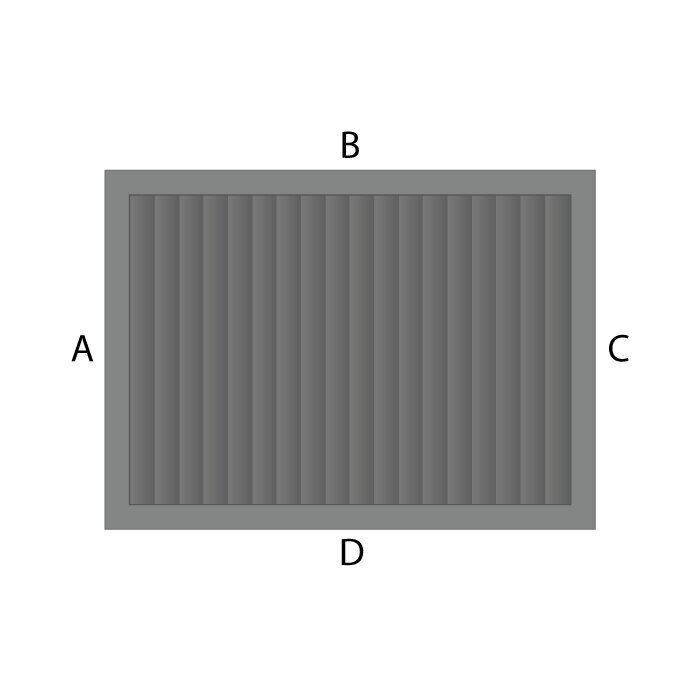
Check the drawing of the complete pergola against the space, not just the roof area. The position of the supports, the edges of the louvres and any surrounding eaves, lights or door swings can affect how you use the covered area. Ask for dimensions of the proposed configuration and a plan showing louvre direction; a product image may show a different layout. A separate pergola listing is not a substitute for the drawing of the exact model and arrangement you plan to order. If anything projects above or beyond the frame when open, ask for the relevant clearance shown on the drawing.
Consider the area you actually need shaded: a table, an outdoor cooking surface or a path between the house and garden may need different coverage. Compare the usable roof area with your seating plan and remember that shade moves as the sun moves. Allow space for chairs to be pulled out and doors to open, but do not assume the roof’s outer dimensions equal the practical shaded zone. The louvre direction and location of supports may also affect sight lines from the seats. If a drawing is unclear, ask the supplier to mark the orientation and covered footprint on the version being quoted.
Compare product specifications before ordering
Make a comparison sheet with one line for each exact product and columns for louvre movement, angle range, control type, stated rain performance, water management, dimensions, maintenance and what is included. Keep marketing language separate from written product details: “adjustable” is not a range, and “weather-resistant” is not a specific rain guarantee. If the wall-mounted pergola product page is also on your shortlist, use any roof or control details it states; do not transfer information from the bioclimatic page to it. Note which points are standard and which, if any, are optional so the comparison stays like for like.
Ask the seller to identify the exact model and configuration on the order, including any control, drainage parts or accessories on which your decision relies. Confirm what is excluded and whether delivery or installation is included; those details affect the purchase scope, even though they do not explain roof performance. Keep answers to technical questions in writing and compare them on the same basis across shortlisted products. If a detail is missing, mark it as unconfirmed rather than filling the gap with an assumption from a photograph, another size or a neighbouring product page. Check the stated maintenance and warranty terms too, and ask how service is arranged without assuming that every product has the same support. Keep these terms with the other details you relied on.
Priorities for the final choice
Set the priorities before deciding which roof is suitable. A buyer who wants to adjust shade throughout the day may value a clear angle range and easy control; someone whose main concern is rain shelter should first understand the exact weather claim and water route. If side sun or wind is the problem, an adjustable roof may address only part of it. Choosing with those trade-offs in view is more reliable than ranking products by the number of features named in their descriptions. Set one or two non-negotiable roof requirements, then decide where you are willing to compromise.
Before placing the order, make sure the product name, roof mechanism, control type, chosen dimensions and any stated weather limitations all refer to the same version. A useful answer is one you can check in the specification or written order, not a verbal assumption that an image will match. Keep the details you relied on with the order so a later question can be matched to the right configuration. That record also helps you compare the delivered arrangement with what you selected. The best fit is the pergola whose available roof positions and known limits suit the way you use the outdoor area, with no essential feature left to guess.
Frequently asked questions
Is an adjustable louvre roof retractable?
Not necessarily. Some roofs adjust by rotating the slats, while a retractable roof moves the covering away from part of the frame. Ask what the exact model does, how far it moves and whether its product information shows the different positions.
Will closed louvres keep all rain out?
That cannot be assumed. Ask for the product-specific rain claim, including any limits for wind-driven rain, and find out how water is directed and which drainage components are included.
Does opening the louvres always make the area cooler?
No. Opening them may increase the area exposed to the sky and airflow, but the result depends on wind, surrounding walls, screens and sun exposure. Treat comfort claims as product- and site-specific.
What control system should I choose?
Compare the control options actually offered, how easily people can reach them, whether the roof moves as one zone, and what happens if power is unavailable. Confirm what is included with the pergola in writing.
Can an adjustable roof provide shade at every time of day?
No. Sun angle changes through the day and year, and low-angle light can enter from the side. Check the louvre direction against your space and consider whether separate side shading is needed.
An adjustable roof is valuable when its movement gives you useful choices, not simply because the product description calls it flexible. Clear details about louvre positions, controls, rain handling and limits let you decide whether those choices suit your outdoor space. Compare what the roof can do in writing with the moments you actually want to use the pergola, and the final decision will rest on function as well as appearance.
