
Buying a Pergola: A Guide to Choosing the Right Type

Pergola buying guide
If you plan to buy a pergola, begin with its layout: a freestanding structure and a wall-mounted one answer different planning needs. Roof design, expected cover and site conditions matter just as much as appearance. This guide compares the main types and the practical questions that help you choose an option suited to your home.

Define the job the pergola must do
Before comparing designs, decide what the pergola should make easier: outdoor meals near the kitchen, a sitting area set apart in the garden, or a sheltered transition between the house and patio. These uses point towards different layouts, but none determines a product on its own. Consider how people will move through the area, whether furniture needs to remain in place, and whether the space is mainly for eating, relaxing or another activity. A clear purpose—such as a place to eat outdoors regularly—is more useful than choosing by appearance alone. It gives you criteria for comparing layout, roof and scale, and makes it easier to reject features that do not serve your plans.
Decide what you expect from the overhead cover as well. You might want an open, airy framework, partial shade or more control over the amount of sun reaching the space. The word ‘pergola’ does not, by itself, promise full shade or rain protection. Identify which matters most: filtered daylight, a view of the sky, flexibility between open and covered conditions, or shelter from particular weather. Treat each as a result to verify in the product information, not an assumption based on photographs. If household members have different priorities, agree on the compromise before browsing; otherwise, a decorative feature may be expected to perform like an enclosed outdoor room.
Freestanding or attached to the house?
Two broad layouts cover many buying decisions. A freestanding pergola is independent of the house and may suit a garden zone or patio where a separate structure makes sense. A wall-mounted pergola attaches to the house and keeps the outdoor feature close to it. The first offers more choice in position; the second may feel more connected to an adjoining room. Neither layout is automatically easier, safer or better suited to a particular property. Consider the routes between doors, garden paths and seating as you compare them; a structure that cuts across everyday movement may not improve the space. Decide whether you want a separate destination or an area linked to the building, then check if the site and product requirements support that arrangement.
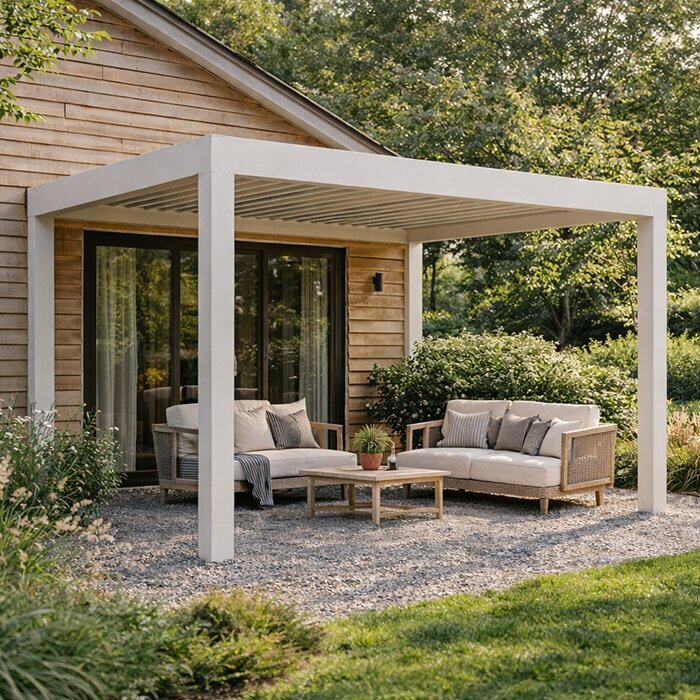
A wall-mounted pergola is attached to the house, which can make the outdoor area feel connected to an adjoining room and keep it close to a door. Its fit depends on the building as well as the pergola: the wall, fixing zones, openings, eaves, gutters and any services all need consideration. Do not assume that every exterior wall is suitable or that a structure can be fixed wherever a photograph shows it. Compare both layouts in context, and have attachment details assessed by a qualified installer or building professional where necessary. For a product-level comparison, a wall-mounted pergola listing identifies the type to look at; confirm the intended fixing arrangement from the product documents rather than from the label alone.
When a wall-mounted pergola suits your plans
Choose a wall-mounted layout if proximity to the house is central to how you plan to use the space: for example, you may want seating near a living-room entrance or a dining area close to the kitchen. That is a planning advantage, not evidence of easier installation. Door swings, window access, steps, existing paving and the route along the wall all affect how comfortable the area feels. Consider whether the pergola could shade a window or crowd a narrow passage, and whether people can still use doors and outdoor routes without awkward detours. The comparison is about the structure’s relationship to the building; the actual product still needs to match verified site conditions and dimensions.
Before choosing this type, review the supplier’s drawings for the intended wall interface, projections, clearances and specified fixing conditions. Have the proposed location assessed by a suitably qualified professional if there is uncertainty; existing finishes may conceal what is behind them. Ask who is responsible for installation, whether that service is included and what preparation the customer must arrange. Check the manufacturer’s information on water management at the junction and around the structure, without assuming a wall-mounted pergola forms a sealed extension. the attached pergola option in the catalogue can help you identify a product in this category, but it does not establish that a particular wall is suitable.
Where a freestanding pergola can work
Freestanding options suit plans where the pergola should define a destination away from the house, or where attachment to a building is not the intended arrangement. They can visually divide a broad patio, frame a seating area or create a pause along a garden path, provided the setting has room for the structure and the way people use it. Consider the entire footprint, not just the posts: a dining table, chairs pulled out, a path around the area and access for maintenance all take space. Think too about whether the structure frames a view from the house or blocks one, and whether it leaves access for garden maintenance. Use the manufacturer’s drawings and the site’s actual measurements before settling on a size.
Independent of the house does not mean temporary or portable. Surface type, drainage, level, ground conditions, anchoring and exposure can affect what is possible, while the required support depends on the product and site. Ask the seller which base or installation arrangements are specified, and have unusual slopes, weak surfaces or uncertain ground assessed rather than adapting the structure yourself. Check that the final position leaves room for maintenance and works with existing boundaries and routes. the general pergola listing can serve as a point of comparison for the stated product type and requirements; do not assume a standard listing suits every setting.
Compare open, fixed and adjustable roof designs
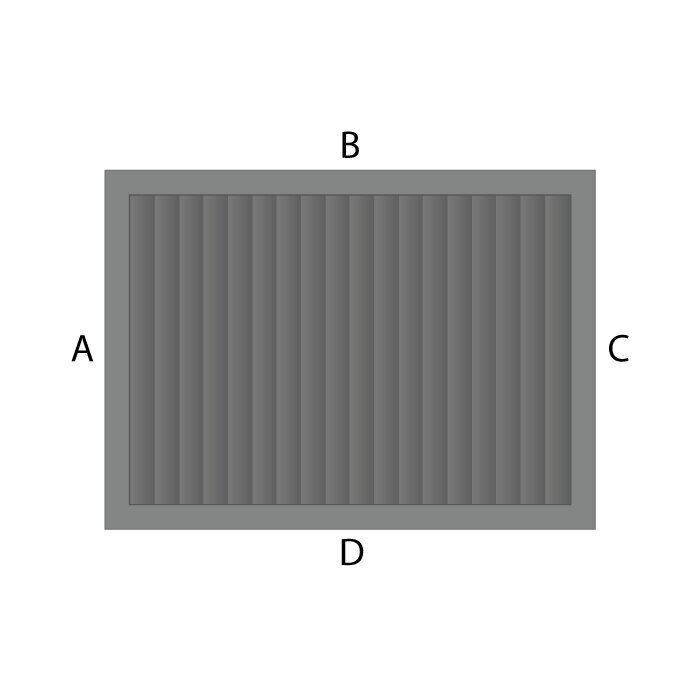
Pergola roof designs vary, and a name on a listing is not a substitute for the actual description. An open or slatted top keeps the view and daylight more present, while spacing and orientation affect how much direct sun is interrupted. A fixed cover changes that balance and may create a more enclosed feel; a retractable canopy, where offered, provides another kind of flexibility. None of those labels alone proves rain resistance, UV performance or wind suitability. Compare drawings, roof materials and operating instructions, then decide whether openness, shade control or more consistent cover matters most. Confirm whether the advertised configuration includes all the roof components you expect, rather than assuming accessories are included.
A bioclimatic label often points to a roof with adjustable elements, but it is not a full specification: ask what physically moves, how it is operated and which positions are available. Confirm whether the system needs power and, if it does, what provision is required; electrical work should be handled by an appropriately qualified professional. Do not infer these details from a photograph or model title. a pergola listing labelled bioclimatic gives you a named category to compare, but verify its mechanism, controls and stated limits in the actual specification. If simplicity matters more than adjustment, another roof design may be a better fit, depending on the documented features.
Match shade and rain expectations to the roof
If shade is the main reason for buying, distinguish the amount and kind of shade you want from the promise of shelter. Open rafters or slats can create patterned shade whose effect changes with the sun’s angle; a fabric canopy can provide a more continuous shaded area when it is in place, but its coverage and permitted operating conditions depend on the design. A solid cover changes daylight and rain run-off differently again. These are broad design differences, not performance ratings. Check the exact roof coverage and the manufacturer’s guidance for orientation, then consider how sunlight reaches the intended spot at the times you plan to use it. If a dining table extends beyond the roof’s coverage, the space may not provide the shade you expect.
Rain shelter needs its own evidence. Read the manufacturer’s claims about roof joints, water run-off and drainage, and check whether the product is described as weather-resistant, rainproof or simply open overhead; the wording matters. Ask how water leaves the roof, whether gutters or outlets are specified and what happens at the edges beside a wall or seating area. Wind exposure can also affect which roof positions or covers are permitted. Do not treat a pergola as a substitute for an enclosed extension unless the documentation supports the performance you require and a professional confirms suitability for your site. the listed pergola product page is a place to check declared roof details, not a guarantee of rain protection.
Materials, finishes and maintenance
Material affects appearance, care and how a pergola relates to nearby finishes, but a broad material label is only the beginning. Timber, metal and composite products can vary by grade, construction, finish, coatings and fabrication; two structures described with the same material name may need different care. Read the materials list and care guidance for the exact product, including whether cleaning, touch-ups or periodic treatment are expected. Ask about the actual exposure at your property, such as coastal air, strong sun, wind-blown dust or damp corners, instead of assuming one material or category suits every site. If low upkeep is a priority, compare the stated maintenance routine rather than relying on a phrase such as ‘maintenance-free’; ask what still needs attention.
Finish and hardware deserve the same attention as the main frame. Ask what is included, whether different finishes are offered and how the supplier describes cleaning, corrosion protection or replacement parts; do not infer these from a lifestyle photograph. Check whether the care instructions require a particular cleaning method or advise against common products, and whether maintenance is needed after installation. Ask whether the finish is consistent across visible components such as posts, beams and roof parts. If the pergola sits near existing doors or furniture, compare colour and texture with samples where possible rather than relying on screen images. the bioclimatic pergola product page can be checked for material and care information; its category name alone tells you neither.
Choose a form and scale that suit the setting
A pergola can look proportionate in a product image and still dominate a small patio or seem undersized beside a broad home. Compare the manufacturer’s overall dimensions and height with the space as it is used, including furniture, walking routes and overhead features. Consider how posts or supports affect views, door and window access, and the way the roof relates to the building. These details influence which type feels appropriate: a freestanding feature may read as a focal point, while an attached design may feel integrated with the outdoor edge. Treat those as visual tendencies, not rules; drawings or a scaled plan can reveal the relationship before purchase.
Style should follow the house and garden, but appearance should not be the only test. Compare roof line, post shape, colour and finish with existing materials, then check whether the form has the clearances and mounting arrangement your site needs. A clean-looking option may rely on a particular wall or support layout, while a more substantial appearance may take more visual space. Review images from several angles if supplied and request a dimensioned drawing, because a single perspective can distort scale. this pergola listing can be one point of comparison for style; use its own drawings and stated dimensions rather than estimating from the photograph.
Weather exposure and installation requirements
Rain, wind, direct sun, trees and debris affect how a pergola will be used and maintained. The right response depends on the structure and its location, so do not choose a roof or support system on the basis of a generic claim such as ‘all-weather’. Ask for the product’s documented limits and whether they apply to the configuration you intend to buy. Consider how the roof is meant to drain and whether nearby vegetation, windows or paths could be affected. If the site is wind-exposed, sloped or otherwise unusual, seek advice from a qualified building or installation professional before ordering, rather than adapting the design on guesswork.
Clarify who assesses the base, wall, fixings and surrounding conditions, and who completes installation. Supplier instructions may state limitations, but a product listing alone cannot determine whether a wall or surface is adequate. If the structure connects to the house, ask a professional to consider the junction and water management; if it stands separately, confirm the specified support arrangement for the actual ground. Ask whether any local approvals or other requirements apply to the intended work, and confirm this with a relevant local authority or qualified professional rather than assuming. the bioclimatic pergola entry should be assessed by its stated limits and exact configuration, not by the category name.
Compare the complete order
Price comparisons are useful only when the items and services being compared are clear. Ask for a written description of the chosen model, its roof and frame components, any accessories, and what is excluded. Confirm delivery arrangements, access to the property, unloading responsibilities, assembly and installation responsibilities, and whether preparation or a separate professional service is needed. If you compare more than one pergola, put the same questions to each supplier; a lower headline figure may not cover the same scope. This is not a reason to assume hidden costs, but a way to understand what each quote actually includes before you commit.
Before placing an order, check the manufacturer’s warranty terms, care instructions, spare-parts arrangements and process for reporting damaged or incomplete items. Ask which party handles each issue and what evidence or steps the supplier requires, without assuming that standard conditions are identical across products. Confirm the exact model, dimensions, finish, roof arrangement and delivery address on the order confirmation; correct errors before delivery or installation is arranged. Keep the product documents and agreement together so the pergola can be checked against what you selected. These details round out the buying choice: a type may suit the garden, but the order must also match your expectations.
Frequently asked questions
What is the difference between a freestanding and a wall-mounted pergola?
A freestanding pergola is positioned independently of the house; a wall-mounted one attaches to it. The first can define a separate outdoor zone, while the second keeps the structure beside the building. Site layout, support requirements and the wall’s suitability still determine which arrangement works.
Does a bioclimatic pergola keep out rain?
The term alone does not establish that. Check the exact roof design, permitted positions, drainage details and stated weather limits. Ask for the product documentation, and do not assume that adjustable elements make a structure weatherproof.
Can any exterior wall support a wall-mounted pergola?
No. The required fixing arrangement and the wall construction have to suit the product. Check the manufacturer’s requirements and have the proposed location assessed by a qualified building or installation professional if there is any uncertainty.
How do I choose between an open and a covered roof?
Decide whether openness, filtered shade or more consistent cover matters most, then compare roof drawings and documented performance. Check daylight, rain run-off, wind limitations and care requirements for the specific product; a category name or photograph cannot settle these questions.
What should I check before placing an order?
Confirm the model’s dimensions, materials, roof arrangement, installation requirements, included components, delivery arrangements, care guidance and warranty terms. Ask what is included in the price and who is responsible for installation or site work rather than assuming these are covered.
Choosing the right pergola means balancing layout, roof, upkeep and the performance you can verify for your site. Settle first on whether the structure belongs beside the house or in a separate part of the garden, then decide how open or covered you want the space to feel. Use those priorities to compare materials, dimensions and installation arrangements. Before ordering, make sure the exact model and quoted scope match what you expect. A good choice suits the way you will use the outdoor area and can be installed under the conditions stated for that product.
