
Buying a Pergola for a Hotel or Holiday Property
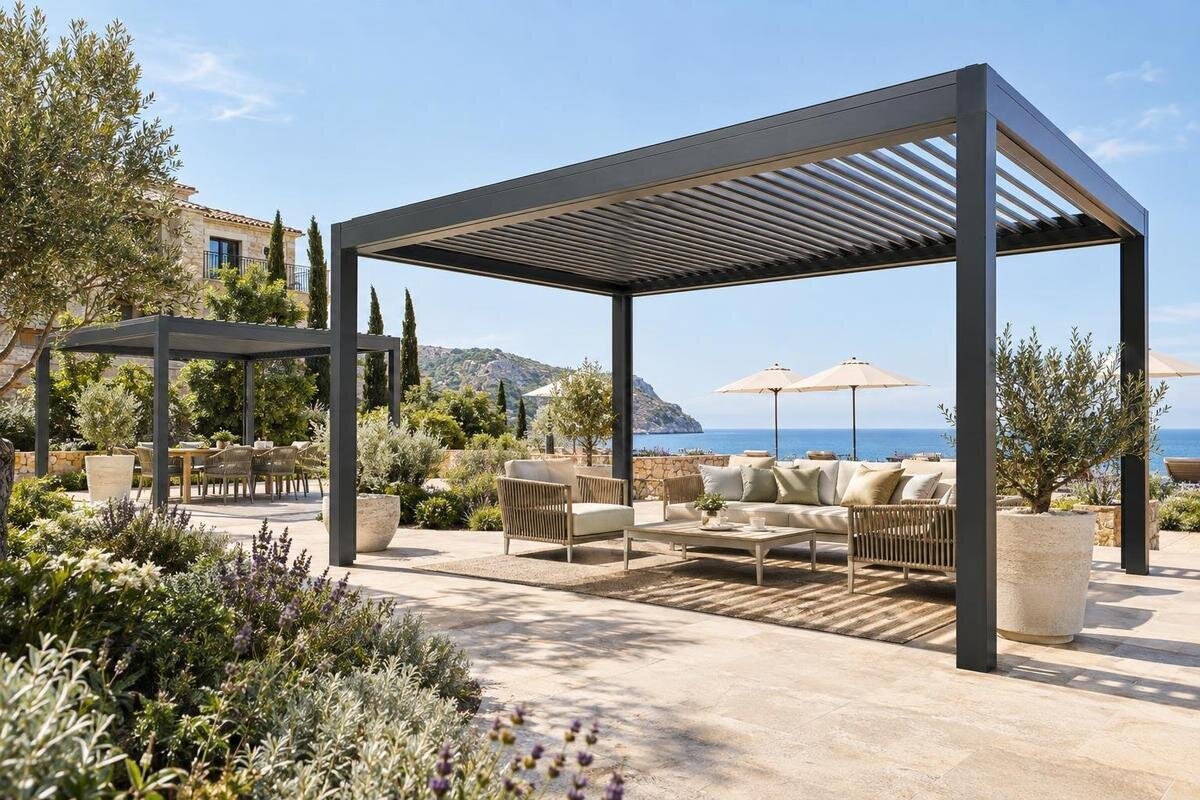
Hospitality pergola buying guide
Buying a pergola for a hotel or holiday property is less about choosing a style than defining what the outdoor area must do for guests and the team who run it. A poolside lounge, breakfast terrace and quiet courtyard can have different requirements, even if each appears to need shade. Begin with the main activity, then consider guest circulation, usable floor area, shelter expectations, installation conditions and day-to-day operation. This guide offers a practical way to prepare a buying brief, compare product information and co-ordinate the order with the property manager and installer. The aim is a structure suited to the space and its use, not simply one that looks attractive in a photograph.

Define the main purpose of the outdoor area
List the activities that will take place under the pergola and decide which one is the priority. A breakfast area has different requirements from a lounge for reading, waiting between activities or evening gatherings. Note how many guests the space should accommodate at its busiest, whether tables will be used at set times and whether the area needs to serve more than one purpose during the day. A hotel may switch between breakfast and informal seating, while a holiday property may rely on one shared outdoor living area. Treat these as specific patterns to plan for, not a reason to make the brief cover every possible activity. A clear primary use helps you judge footprint, shelter and optional features.
Separate essential requirements from preferences. Essentials might include keeping a route from guest rooms to shared facilities clear, covering a planned seating zone or leaving an entrance visible. Preferences might include a particular appearance, finish or accessory; consider these once the functional conditions are met. Note who approves the purchase, who uses the space and who will maintain it, as those roles may belong to different people. Once the brief is written, use the Bloomcabin pergola product page as one item to compare. Check any claims against information for the exact product: a name or photograph does not confirm its dimensions, shelter performance or suitability for your property.
Plan guest, staff and service routes
Walk the main approaches as a guest would: from the entrance, reception or accommodation to the outdoor area, and from there to shared facilities. Identify places where people naturally pause, turn, queue or cross one another. A route that seems clear on an empty terrace may narrow once tables are occupied or chairs are pulled back. Include staff movement too, such as carrying breakfast items, clearing tables, bringing out linen or checking the area. For a holiday property, consider whether guests can find the pergola easily without passing through a service area. If possible, observe the routes at busy times as well as when the space is quiet.
Mark door swings, steps, changes in level, gates and routes that must remain clear before testing a position. Consider the experience of a guest carrying luggage, pushing a pram or using a mobility aid, and avoid creating tight turns with furniture or supports. If the proposed position is beside a building, include the Bloomcabin wall-mounted pergola listing in your enquiry as a product to review. Its label does not establish whether it suits your wall or site. Ask a suitably qualified installer to assess the proposed fixing and identify any information needed before you make a choice.
Measure the usable footprint
Measure the area on site rather than estimating from a photograph or the size of a nearby patio. Record the boundaries, doors, steps, drains, trees, existing posts and anything that cannot move. Mark the footprint you would like the pergola to occupy, then compare it with the space needed for tables, seats, walking routes and staff access. Distinguish the outside dimensions of a structure from the area it will actually shade or cover; those figures are not automatically interchangeable. A measured plan gives the supplier and installer a shared reference and can reveal conflicts before an order is placed. Include the location of fixed furniture or services that could affect the layout.
Test more than one arrangement if the area has several intended uses. Mark table edges, chair positions and the space needed to pull a chair out, then draw a clear route to doors and facilities. Check whether a proposed structure would obstruct signage, views or light into an adjacent room. When requesting information, use the Bloomcabin pergola listing to identify the product you are asking about and request dimensions for the exact option. Do not estimate its size or covered area from the image, or substitute figures from a similarly named item. If the available information does not answer a key question, ask for clarification before comparing it with your plan.
Set realistic expectations for shade and rain
Decide what guests should be protected from and when they are most likely to use the space. Observe how direct sun moves across the proposed area at different times of day, and note nearby buildings, trees or structures that cast shade. A drawing of a pergola's footprint does not show how shade shifts across the seating area. If guests are likely to use the space at different times of year, consider how the sun's position and existing shade may change. This helps you describe the outcome you want when comparing options, rather than choosing from appearance alone. It may also show that moving the seating is part of the solution.
Consider rain separately. Do not treat a pergola as equivalent to an enclosed indoor space unless the product information confirms the shelter you need. Ask the supplier whether the chosen product is intended to keep rain off, how its roof handles water and what limits apply in wind or heavy weather. If guests need somewhere to sit through a shower, decide whether the property has another suitable sheltered area. The Bloomcabin bioclimatic pergola page identifies a product listing, but its name alone does not explain how the roof operates or what protection it offers. Base your expectations on product-specific information, not an assumption drawn from the label.
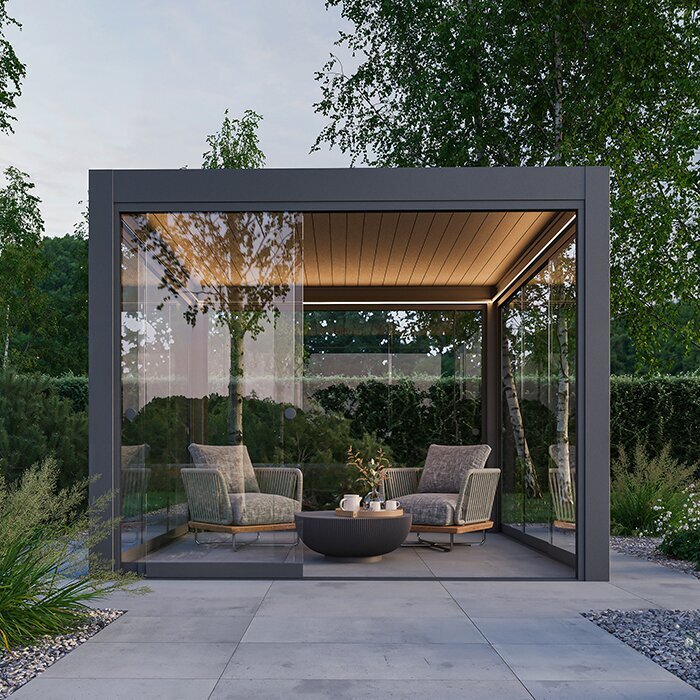
Fit the pergola around furniture and activities
Use the actual furniture plan to test the footprint. List the type and number of tables, chairs, loungers or benches intended for the space, then leave room for guests to sit down, stand up and move past occupied seats. Include tables used for service and space for staff to reach them without carrying items through a tight gap. If furniture will move between breakfast and evening use, decide where it will be stored while the layout changes. A structure sized around a table top alone can leave too little room once chairs and people are in place, so test the complete arrangement before settling on dimensions.
Consider how the layout fits the accommodation as a whole. A formal dining area and a holiday home lounge may call for different arrangements, even if both need outdoor seating. Think about privacy from neighbouring rooms, supervision of children, visibility from reception or host areas and any furniture already on site. When comparing a planned footprint with a product, use the product page for the Bloomcabin pergola to identify the item and ask for dimensions that apply to the exact configuration. The product name and image do not confirm that your furniture will fit. Keep enough flexibility for the area to work as intended without blocking the routes guests and staff need.
Choose between a freestanding and wall-mounted position
Decide whether the preferred position calls for a freestanding structure or an attachment to an existing building; treat this as a site and layout decision, not just a styling choice. A freestanding arrangement may let you place a guest zone away from the facade, while a building-adjacent position can affect doors, windows, exterior maintenance and access along the wall. Neither approach is automatically easier or better, because the answer depends on the property and the product. Show the intended footprint and routes to the supplier or installer before choosing a mounting arrangement. Include any planned furniture and note whether the space needs to remain accessible for building maintenance.
Do not select a wall-mounted pergola solely because it appears to save floor area. The building surface, fixing requirements, site exposure and manufacturer's installation conditions need to be assessed for the specific location by a suitably qualified professional. The Bloomcabin wall-mounted pergola page identifies an option for that discussion, but its title is not evidence of compatibility with your property. Ask who will assess the proposed fixing and what drawings or installation information they need. If that assessment calls for changes, revisit the layout and total project scope before ordering rather than assuming the original plan will still work.
Compare features by how the team will use them
Separate essential features from extras by linking each one to a guest or staff task. If a product offers adjustable components or controls, confirm exactly what moves, how it is operated and what instructions the team will need. If lighting, screens, heating or other additions are being considered, check that each is explicitly available and compatible with the selected structure; do not assume it can be added later. Any powered component should be specified and assessed with an appropriate professional, rather than treated as a simple accessory. This keeps the buying brief focused on features that support the way the area will actually be used.
Ask for clear written descriptions of selected features, including operating limits, cleaning access, stated weather conditions and what is supplied versus optional. For a hotel, consider whether staff on different shifts can explain and operate the controls. At a holiday property, decide whether guests will need instructions and where those instructions will be kept. The Bloomcabin bioclimatic pergola listing can be included in your comparison, but do not infer a mechanism or feature set from the word bioclimatic. Rely on the information for the exact product and request clarification where its operation or limitations are not clear.
Confirm site and installation requirements before ordering
Check the physical site before finalising the order. Note the surface, changes in level, drainage, nearby services, overhead obstructions and access for the people carrying out the work. Share measurements and photographs with the supplier or installer, but ask whether an in-person assessment is needed before a site is approved. If the proposed location is on a balcony or roof terrace, do not assume a pergola shown in a ground-level setting is suitable there. Confirm that the product is intended for that location and obtain a qualified site assessment. Also consider whether installation work could affect guest access or use of nearby facilities while it is under way.
Clarify the installation scope in writing: what surface and fixing arrangement are assumed, whether site preparation or assembly is included, who provides it and what access is needed during the work. Ask about delivery access, handling of packaging and any disruption to guest areas instead of assuming these services are part of the product price. The product page for the Bloomcabin bioclimatic pergola can identify the item you are discussing, but it does not replace model-specific installation information or an assessment of the site. Have unresolved questions answered by the supplier and installer before authorising the purchase, so that the order reflects the actual work required.

Plan cleaning, maintenance and the operating budget
Consider who will look after the structure once guests start using the area. Ask for cleaning and maintenance guidance for the exact product; do not rely on assumptions drawn from a photograph or a similar model. Check whether routine care involves moving parts, specialist equipment or a service provider, and decide who will arrange or record it. Prepare a handover for the property team that covers any controls, care limits and what to do if a component is damaged. At a holiday rental, clear written instructions can help guests use the area appropriately without staff needing to explain it at every arrival. Include these responsibilities in the operating plan, not only in the purchase discussion.
Compare the whole cost of putting the pergola into service, not just the quoted structure. Ask for separate figures where possible for the product, delivery, site preparation, installation, chosen options and ongoing service, and record which items are excluded or provisional. These are costs to ask about, not services every seller includes. If you are buying for several properties, estimate each location separately: access, layout and mounting conditions may change what has to be arranged. A quotation with unclear scope is difficult to compare with another. Requesting detail lets you assess the full project without assuming that the lowest initial figure will also mean the lowest overall cost.
Put the order details in writing
Before authorising the order, make sure everyone is referring to the same item and configuration. The written specification should identify the product, quantity, agreed dimensions, finish, selected options and accessories, plus whether it is freestanding or wall-mounted where relevant. Ask the supplier to distinguish included parts from optional extras and list any exclusions. If an important dimension, operating feature or site requirement is not stated, get clarification in writing rather than filling the gap from a photograph or product title. Refer to the approved site plan or drawing where one is used. This gives the installer and property manager a shared record for the work and handover.
Compare the final quotation with the approved site plan, furniture layout and installation responsibilities before confirming or paying. Check the stated delivery arrangement, timing, payment schedule, cancellation or return terms, and any warranty or service terms in the seller's documents; do not infer them. Have the property manager and the person responsible for the installation review the same version. If you are considering more than one pergola, check quantities and configurations against each individual site rather than copying the first order. A final review of the written details can prevent avoidable misunderstandings and makes it clearer who is responsible for each part of the project.
Frequently asked questions
What should I decide first when buying a pergola for a hotel?
Define the main guest activity and the number of people the area should accommodate at its busiest. Then map the routes guests and staff need. This gives you a practical brief for comparing the footprint, shelter and features before you focus on appearance.
Will a pergola keep guests dry?
Do not assume so from a product name or photograph. Ask the supplier for written information about the selected product's roof, rain handling and weather limits. If guests need dependable shelter during rain, plan an alternative covered area unless the product information confirms the protection you require.
Is a wall-mounted pergola always better beside a building?
No. The best position depends on the guest routes, doors, windows, maintenance access, the building surface and the product's installation requirements. Have a suitably qualified professional assess the proposed fixing and site before choosing a wall-mounted option.
How do I choose a pergola size for guest seating?
Measure the area and draw the tables, seats and routes guests and staff will use. Include space for chairs to be pulled out and people to move past them. Compare the plan with dimensions supplied for the exact product, and distinguish the structure's footprint from any stated covered area.
What should I confirm before placing an order?
Confirm the product identity, quantity, dimensions, finish, chosen options and mounting arrangement in writing. Also check what is included in delivery and installation, what site preparation is expected, and the seller's terms for timing, payment, returns, warranty and service.
Choose the pergola around a clearly defined guest use, then let the measured layout and the property's operating needs guide the comparison. When the product identity, site assumptions and installation scope are documented, the purchase is easier to manage and the outdoor area is more likely to work as intended.
