
What to Consider When Buying a Pergola for Your Poolside Terrace
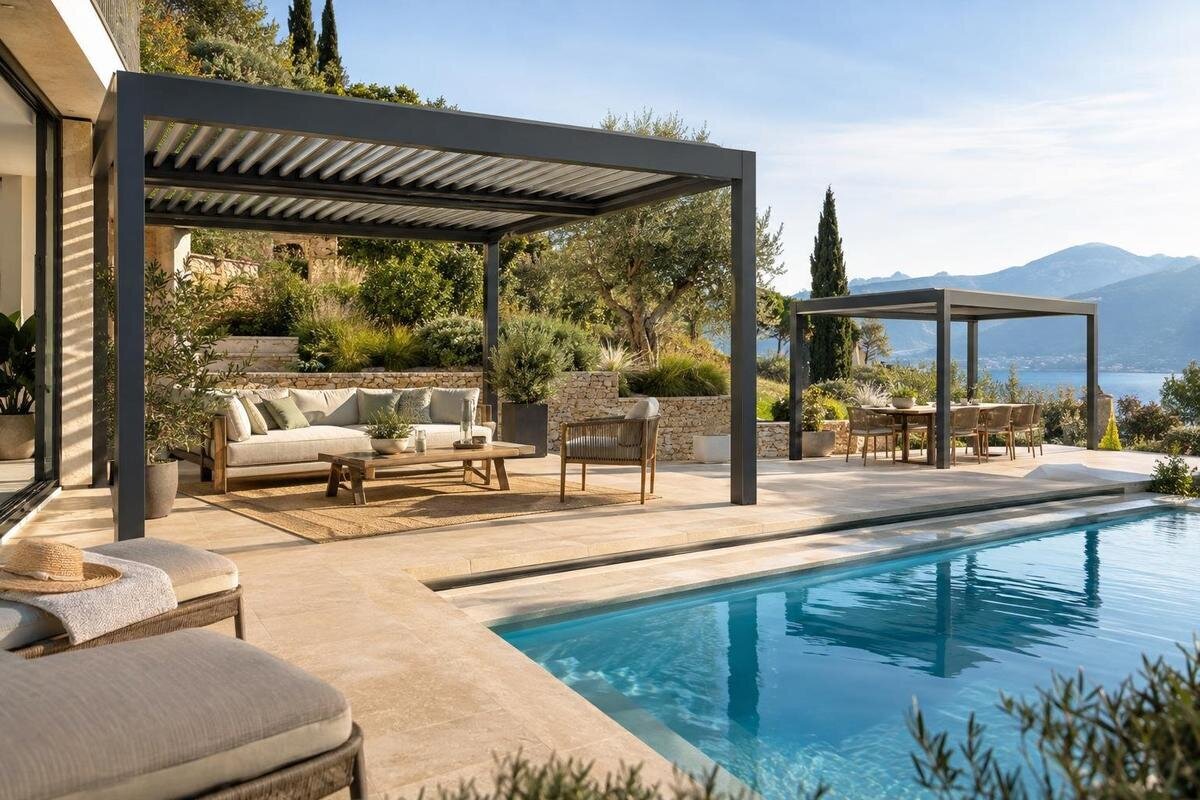
Pergolas by the pool
Buying a pergola for a poolside terrace starts with the way you use the space, not the shape of the structure. Map where people swim, sit and move, then decide which part needs shade and what the pergola must leave open. A clear brief makes it easier to compare size, roof arrangements, placement and order details without guessing from a picture.

Decide what needs shade
First decide which activity needs shade. A table where people eat, loungers used between swims and the route from the house to the pool place different demands on a terrace. If the main aim is to sit out of direct sun, shade over the seating may matter more than covering every metre of paving. If people gather around several seats, draw that area as a distinct zone. Note when the terrace is used most: shade wanted around midday may fall differently from shade wanted later. One or two clearly defined zones give you a more useful brief than a vague request for a larger pergola, and help you assess whether a proposed location serves the way you actually use the pool.
Separate shade from shelter in your brief. The word pergola does not establish whether a product has an open top, fixed covering or adjustable elements, or how much direct sun it blocks. Decide whether you prefer filtered light or a more complete overhead cover, then look for a clear description of that arrangement and any stated coverage. Keep rain protection as a separate requirement, since it does not follow automatically from a shade description. If a listing leaves a point unanswered, ask before comparing it with another option. For an initial reference, the Bloomcabin pergola listing can be read alongside other pages; use only the details actually published and do not infer performance from a name or image.
Measure the terrace and note fixed features
Measure the actual terrace and mark the things that cannot move: the pool edge, house wall, posts, steps, doors, drains, access covers, planting beds and existing boundary features. Record the clear width and depth where a structure could sit, rather than measuring the whole paved area if part of it must stay open. Include the route between the home, pool and seating. A quick plan showing the pool shape and fixed features can reveal corners that look empty in a photograph but are important in everyday use. Note height changes as well as horizontal boundaries.
Pay particular attention to changes in paving level, gullies, service access and any area where water flows after rain. Existing paving may be a finished surface rather than a suitable fixing point; its appearance does not show what lies underneath. Mark any drainage channel or access cover that a proposed footprint might cross instead of overlooking it on the sketch. Use your measurements to compare the site with the stated details on Bloomcabin’s pergola product page. If required dimensions or fixing information are not clearly given, ask rather than estimating from the image.
Observe shade at the times you use the pool
Shade moves as the sun’s position changes, so a fixed outline on a plan cannot show exactly where it will fall throughout the day. Observe the terrace at the times people are most likely to use it, and note where shaded patches land on the seating, pool access and open paving. If possible, repeat the observation at more than one time of year; a pergola bought for one sunny afternoon may not meet the brief through the rest of the season. Photos with the time recorded, or a simple sketch, can help you compare the same places without relying on memory. Note existing shade from walls or trees separately.
Use those observations to rank the areas you want covered. A compact shade zone may preserve an open feel, while a wider one may suit several seats; neither is automatically right for every pool terrace. Check whether the desired effect depends on a stated roof arrangement, orientation or adjustment feature, and ask for an explanation if the listing is vague. Do not assume a product photograph shows the amount of shade you will get at your site. The Bloomcabin pergola product page is another page to assess against your written requirements; confirm the details instead of treating the product name as a performance description.
Keep routes around the pool clear
Keep movement through the pool area at the centre of the layout. People need to reach the steps or ladder, leave the water, get to towels and move between the terrace and house without threading between posts or chair legs. Sketch the usual routes and place proposed supports outside them where possible. Consider whether a gate, door or pool cover needs to be opened, and whether furniture is likely to shift into a walkway when moved. Think about how people carrying towels or other items will pass one another. A pergola can define a seating zone, but its supports should not turn an easy route into a narrow detour.
Think about sightlines as well as footsteps. From the house and main seating, consider whether the structure would block a view across the pool or make access points harder to see. Leave practical access to pool equipment, covers and areas that need regular cleaning, rather than treating every edge as spare space. There is no single pool-edge distance that fits every terrace or product: the design, site and any applicable local requirements matter. Ask a qualified installer or relevant local authority about the proposed position before ordering. The other Bloomcabin pergola listing may form part of your shortlist, but its product page cannot answer site-specific clearance questions.
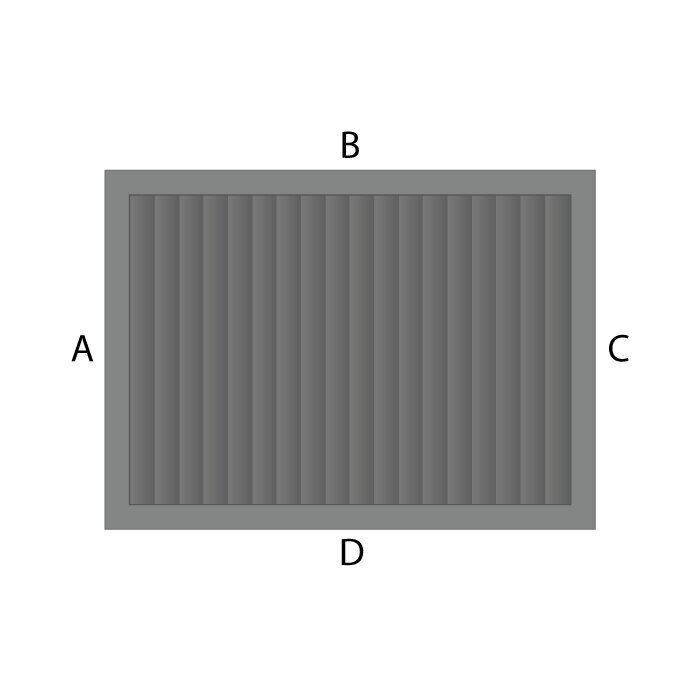
Match the pergola’s footprint to the layout
Once the usable zone is clear, choose dimensions around the way the furniture is actually arranged. Place chairs, loungers or a small table on your sketch at their in-use size, then mark where someone stands to pull out a chair or walk around a lounger. Include the pergola’s support positions rather than comparing only the span between them. You can mark an approximate footprint on the paving with removable tape or another non-damaging marker, then test everyday circulation. Try the arrangement with more than one furniture position if the terrace is used in different ways. This is a planning aid, not a substitute for stated measurements or professional site assessment.
Check width, projection and height separately, because a structure that fits between two walls may still interfere with a door, window or the feeling of space above the seating. Compare the stated overall dimensions with the area you want shaded; the shadow can extend beyond or fall short of the footprint as the sun moves. Avoid rounding a close fit into a yes: allow for any posts, brackets or eaves described in the listing, and verify which measurements refer to the full structure. Consult the product details for Bloomcabin’s pergola for stated measurements, but do not estimate them from its image.
Compare the roof arrangement with the protection you expect
Pergola descriptions can cover very different overhead arrangements. An open-beam structure, slatted top, fixed cover and adjustable roof do not give the same experience, and the word pergola alone does not promise a waterproof area. A roof arrangement that addresses sun does not necessarily provide shelter from wind. If rain protection matters, look for explicit information about the cover and how water is managed; if keeping the space bright and open matters, make that a separate requirement. Do not treat shade, privacy, rain protection and wind shelter as interchangeable benefits, because one feature may not deliver all of them.
Make a short list of the conditions you want the structure to meet: how much light you want to retain, how much seating should be covered and whether you expect to use the area in light rain. Then compare documented details, including any stated limits. Product photographs may show a particular view or setting, but cannot establish how a cover will perform on your terrace. If the listing does not explain the overhead arrangement or weather performance, ask for written clarification before buying. The Bloomcabin pergola catalogue entry is one page to review using those questions, not a substitute for answers about the specific configuration.
Check materials and care for poolside use
Poolside exposure makes care a worthwhile buying question. A structure may be near splashes, wet furniture, sunscreen, airborne grit and regular terrace cleaning; what matters is whether its stated materials and finish suit those conditions and how they should be maintained. Ask what materials are used, which cleaning products are permitted, whether routine care is needed and which parts may require attention over time. Avoid assuming that a material is suitable simply because it is pictured beside water. If you use particular pool or paving cleaners, mention them when asking about care so you can compare the guidance with your usual routine.
Compare upkeep on practical terms, not just by material name. A clear maintenance guide helps you understand the recommended cleaning method and how to deal with ordinary marks or debris. Ask whether cleaning access is needed above or around the structure and whether its placement would make that work awkward. Consider where leaves, dust or water may collect in the chosen spot without assuming the pergola has a particular drainage or cleaning feature. You can also ask what replacement parts or care support are described by the seller. Choose only when the available guidance is clear enough for the routine you are willing to follow.
Confirm how the pergola can be supported
Check the intended support arrangement before settling on a position. Some pergolas are designed to be fixed to a building; others are freestanding, and some layouts may impose specific limits on where supports can go. These are not interchangeable choices. A wall that looks convenient may have doors, windows, services or a finish that affects installation, while an open area of paving may not show what lies beneath it. Read the product information for the stated installation method and do not infer it from an image or category name. The right arrangement depends on the structure and the conditions at the chosen spot.
Have a qualified installer assess the actual wall, terrace surface and access before you order. Ask what preparation, fixings and clearances are required for the selected structure, and whether the proposed position conflicts with drainage, service routes or other site features. Do not try to resolve load or anchoring questions by estimating from photographs or general guidance; the product and substrate need professional assessment. For a first review of published information, see the listed Bloomcabin pergola page, then confirm suitability for your own site. The page identity alone does not show how a particular structure must be fitted.
Plan delivery and installation before ordering
Ordering involves more than choosing a footprint. Check the route from the delivery point to the installation area: a narrow gate, steps, a turn in the passage or an uneven path can affect how large items are handled. Confirm package dimensions and handling arrangements if they are provided, and ask what happens if the items cannot reach the chosen location. Also establish whether assembly is included, arranged separately or expected of the buyer; do not assume delivery means installation. Reviewing the Bloomcabin pergola product listing alongside these questions can help you identify which order details are stated and which need confirmation.
Before committing, make sure you understand the parts supplied, assembly instructions, installation responsibilities and any site preparation expected by the seller or installer. Read the applicable delivery, returns and warranty terms at the time of purchase rather than relying on a summary or an assumption; this article cannot establish what applies to a particular order. If local approval or pool-related requirements may affect the position, check with the relevant authority or a suitably qualified professional before arranging delivery. Resolving these points in advance is easier than discovering that the location or installation plan is unsuitable after the pergola arrives.
Consider appearance and future use
Finally, judge how the structure will sit beside the house and pool, not only whether it fits on paper. Compare its overall scale, lines and colour with the terrace paving, pool edge, doors and existing outdoor furniture. A simple shape may blend with a busy setting, while a visually prominent design may become a focal point; either can work if it suits the architecture and proportions. Be cautious about colour impressions from online photos, which are not a reliable substitute for written colour descriptions or a physical sample where one is available. Aim for a pergola that connects the zones without making the terrace feel crowded.
Give future use a place in the decision too. Consider whether loungers may move, extra seating may be added, or pool equipment and furniture need to be stored nearby; a layout that works only with everything in one exact spot can become inconvenient. Compare your shortlist against the priorities you set: shade, dimensions, access, cover arrangement, care and installation. Separate essentials from preferences and ask about undocumented points before you pay. This is more useful than choosing the largest or most elaborate structure by default, because the right purchase is the one that fits the way this pool terrace is used.
Frequently asked questions
How much of the pool terrace should a pergola shade?
Begin with the seats or activity you most want shaded and note when that area is used. Shade shifts through the day and across the year, so compare your observations with the product’s stated roof arrangement. Do not choose by footprint alone or assume the entire area beneath a pergola will stay shaded.
Is there a standard distance between a pergola and the pool?
There is no single spacing that suits every site. Keep routes to pool steps, exits, equipment and gates clear, then check the product’s installation requirements and any applicable local conditions with a qualified installer or relevant authority. A general figure cannot account for every product and terrace layout.
Will a pergola keep rain off the terrace?
Not necessarily. Pergolas can have different overhead arrangements, and the word itself does not confirm a weatherproof cover or a particular way of managing rainwater. If rain protection matters, check the written description of the exact configuration and ask how runoff is handled before buying.
What should I measure before ordering?
Measure the clear space where the structure could sit, including its full footprint and support positions. Note doors, steps, changes in paving level and routes that need to stay open. Check the height and other dimensions stated for the product, then compare them with furniture in its usual in-use positions.
What should I confirm before placing an order?
Confirm the dimensions, roof arrangement, care guidance, installation method and any site preparation required. Also check what the order includes, who is responsible for assembly or installation, and the applicable delivery and returns terms. Ask a qualified professional about site suitability or local requirements where these may affect the proposed position.
A poolside pergola should make a chosen part of the terrace more comfortable to use while leaving swimming access, circulation and maintenance practical. Measure the real site, observe when and where shade is needed, and compare the written product details with a marked-out layout. Check the roof arrangement, care and installation requirements instead of reading specifications into a product name or photograph. Considering the site and everyday routines together helps you choose a structure that feels proportionate beside the pool and order with fewer unanswered questions.
