
Buying a Pergola for a Windy Location: What to Check
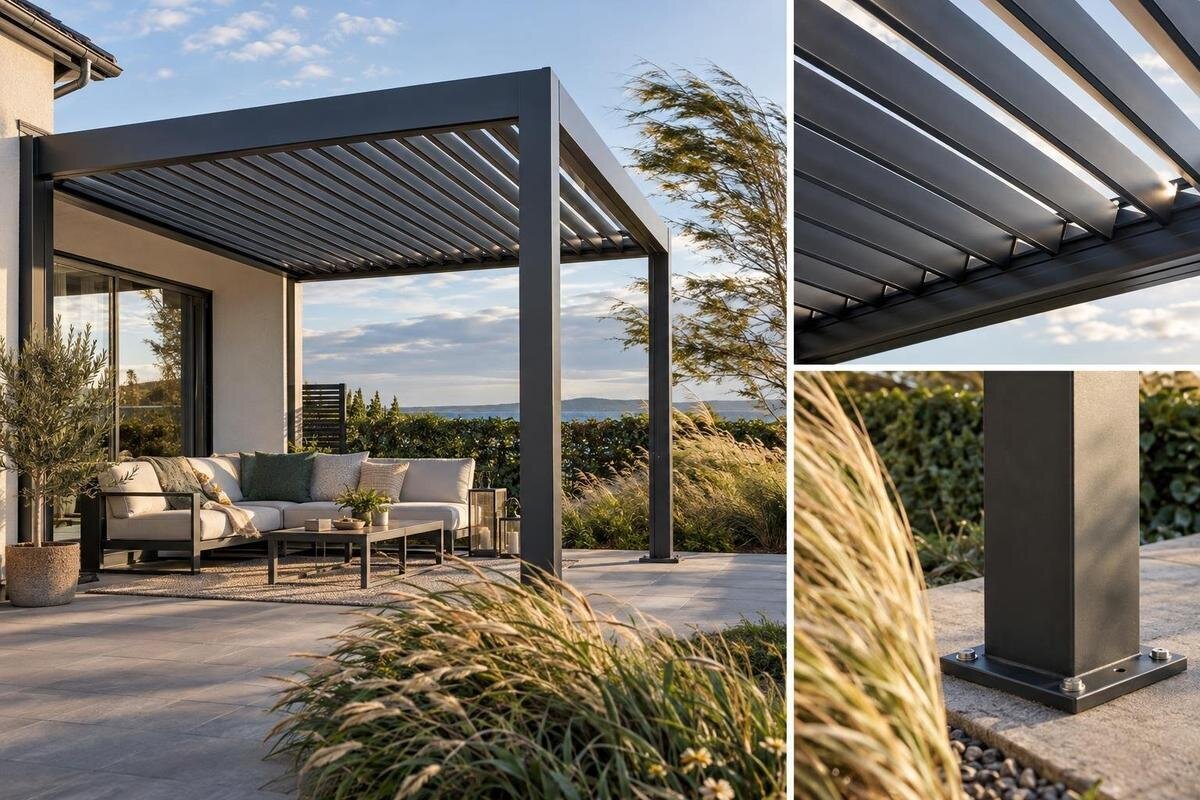
Pergola buying guide
Buying a pergola for a windy location is a site-matching decision, not a search for a product described simply as “wind-resistant”. Compare the conditions at the proposed position with the wind information and anchoring requirements for the exact model and configuration. That gives you a basis for asking the right questions before placing an order.

Assess exposure at the exact site
A windy location is not simply an open field: airflow can differ across one property. Consider whether the proposed footprint sits in an open area, beside a building corner, in a narrow gap between structures, near a boundary wall, or on a rise or in a dip. Note which directions usually bring strong wind and whether conditions are steady, gusty or both. If possible, observe the site on more than one day. A calm visit gives little evidence about a place exposed at other times. Look for recurring clues such as movement in vegetation, loose items that are regularly displaced and areas where doors are difficult to hold open. These observations describe the setting; they do not establish a pergola’s wind limit.
Look at conditions beyond the footprint as well. A fence, building or tree may alter airflow, but should not be treated as proof that the pergola will be sheltered; planting can also be trimmed or removed. Record which nearby features are permanent and whether openings between buildings seem to channel wind. Note where the strongest movement is felt in relation to the proposed position, rather than writing only that the garden is “windy”. Specific observations help a supplier or qualified professional ask relevant follow-up questions, while keeping a site description separate from a technical wind assessment. Also note whether the proposed position is exposed when doors or gates are open, as these features can affect how the space is used without proving anything about wind loads.
Prepare a useful site brief
Before comparing products, make a simple plan showing the intended footprint and its position relative to the house, outbuildings, walls, trees, gates and changes in level. Add photographs from several directions and note which way each one faces. Record the ground or base that would carry the supports, whether any part of the pergola would meet a building, and the roof or side configuration you have in mind. Include any wind directions you have observed. Mark access routes and fixed obstacles too, because moving the proposed position slightly can change both the support conditions and the exposure. A pergola product page can identify a candidate in your enquiry, but an image cannot confirm its wind suitability.
Give the supplier enough context to respond to the actual site, not just the product category. Ask which model-specific documents apply, what configuration they cover and what site information is needed to assess a match. If you do not know how the base is constructed, say so rather than guessing. Share the same brief with anyone assessing the installation, so that each discussion refers to the same position and setup. A general answer such as “suitable for outdoor use” does not explain whether a pergola for windy areas suits your particular exposure. Keep a dated copy of the plan and photographs, especially if you later compare several positions or alter the proposed layout.
Understand what a wind rating covers
A wind rating is useful only when you understand its boundaries. Ask what units and definitions apply, and whether the figure relates to sustained wind, gusts or a stated category. Find out whether it covers the complete assembled pergola or a particular component, and which roof position, side elements, anchoring and base assumptions are included. Ask whether the documentation identifies a particular installation method or any preparatory work needed for that assessment. The product documentation should define how to read the information. Do not turn a figure into a simple safe-or-unsafe judgement without understanding those conditions.
Compare products on a like-for-like basis: two numbers may refer to different configurations or assumptions, so a higher-looking figure is not automatically a better match for your site. Ask how the stated limit relates to the exposure you described and whether any conditions are excluded. Treat this pergola listing as an identifier for the candidate, not as evidence of wind performance. If the product page does not state a rating or its basis, request written clarification from the supplier before relying on it. Record the answer alongside the model name and proposed configuration, rather than relying on a recollection of a conversation.
Match anchoring requirements to the base
Wind suitability depends on more than the visible frame. The specified supports and anchoring arrangement must correspond to the base at the proposed location. Review the product information for the required fixing points, connection type and supporting surface. Do not assume that fixings supplied with a product, if any, suit every site. Paving, a concrete base, a deck and soil are not interchangeable; the visible surface alone may not show what lies beneath or how it is supported.
Ask what fixing components are included and what additional work or materials may be needed. A professional familiar with the site can check whether the actual base matches the product’s stated requirements; avoid substituting generic fasteners or improvised reinforcement. If a wall-mounted pergola page is on your shortlist, ask what connection it specifies and what the building side must provide. The listing cannot confirm that a particular wall is suitable. It is also useful to establish whether the proposed fixing locations are accessible and unobstructed before work begins. Establish this before arranging delivery or preparing the area, since a different support requirement may affect both the position and the work needed on site.
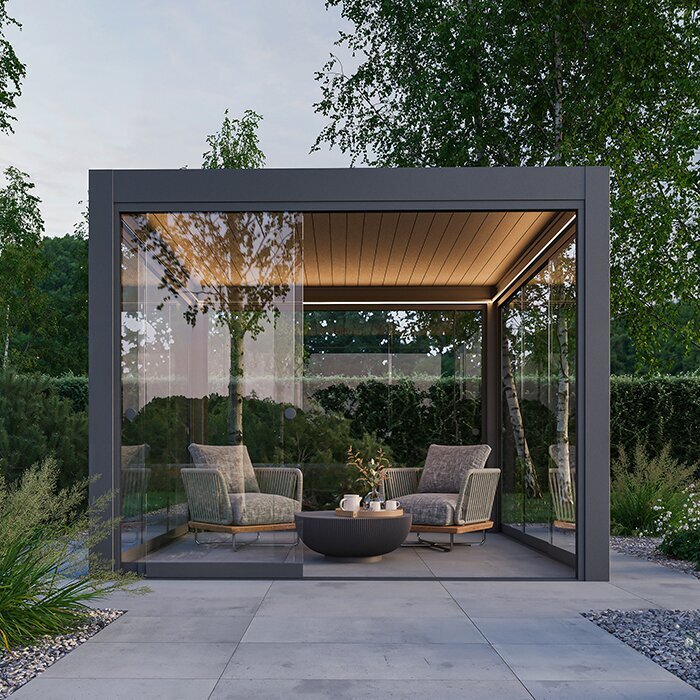
Compare freestanding and wall-mounted designs
The choice between freestanding and wall-mounted designs affects the support conditions you need to check, but neither type is automatically better in wind. A freestanding pergola has its own specified support and base requirements. A wall-mounted design also depends on the connection to the building and on the structure at that point. A wall may alter airflow around the site, but that does not establish how the assembled pergola will perform.
Compare the documented fixing arrangement with the space and structure you actually have. For a wall-mounted option, ask an appropriate professional to assess the wall material, its condition and the proposed connection; for a freestanding option, the base still needs to match the product requirements. A wall-mounted product listing can identify the design you are considering, but its label is not a structural assessment. Ask whether the intended position would require changes to drainage, paving or other fixed features before treating the layout as final. Choose a layout only once the site-specific support questions have been answered. Do not assume that an existing patio, wall or nearby building has been designed to support the proposed arrangement.
Check the roof configuration and add-ons
Wind information may apply only to a particular configuration. If a design has movable, retractable, louvred or fabric elements, ask which arrangement is covered and whether side screens or panels are included. Do not infer a product’s operating limits from photographs or a category name. For example, a bioclimatic label does not by itself explain how a particular model operates or which wind conditions its documentation covers. A bioclimatic pergola page identifies a candidate; its own documentation is what you need to assess.
Include anything you plan to attach or add later in your questions. Screens, shade elements and other accessories may affect the configuration being considered, so confirm whether each is compatible and covered by the product’s wind information. Do not assume that an accessory is included, or that adding one leaves the stated conditions unchanged. If you expect your requirements to change, such as adding a screen at a later stage, factor that into the comparison before choosing a model. Where an accessory has its own instructions, keep those with the main product information so that the full intended arrangement can be reviewed together. Ask whether the written information distinguishes between accessories supplied with the model and separately selected items, so that your enquiry describes the intended setup accurately.
Make sure the operating instructions are practical
A suitable purchase also needs clear instructions for changing weather. Ask whether the manufacturer specifies a position for the roof or side elements in wind, or calls for any component to be secured, moved or removed. Do not assume that one setting is safer, or that it is sensible to adjust a mechanism once gusts have started. Request the instructions for the exact model and configuration, including any stated conditions that prompt a change.
Consider who will be responsible for following that guidance and whether they can do so in practice. If a property is sometimes empty, or the pergola will be used by people who may not know its operating requirements, ask what the product instructions say about those circumstances. Controls and required actions should not depend on improvisation. Think through how you would receive and retain the relevant instructions after installation, particularly where more than one person uses the outdoor area. For this bioclimatic option, use the listing to identify the candidate, then obtain its model-specific operating guidance before deciding whether it suits the way you will use the space. Read the guidance before purchase, not only during installation, because it may affect whether the planned location and daily use are workable.
Plan for the surrounding space
Compare possible positions on your site plan, not just the most attractive one. Consider how the pergola would relate to doors, gates, paths and nearby buildings, and whether a narrow gap or corner changes the airflow at the footprint. A position that feels sheltered in one direction may be exposed from another. Use your observations to assess alternatives, but do not treat a wall, fence or planting as a replacement for the product’s documented wind limits.
Include nearby items and future plans in the buying decision. Furniture, umbrellas, movable screens and planters may need attention when conditions become windy, while anything intended to attach to the pergola needs a compatibility check. Avoid planning around an accessory that has not been assessed as part of the chosen configuration. Evaluate the listed pergola option in the position and with the surrounding items you actually intend to use, rather than judging it in isolation from a product photograph. This may include considering whether a gate, path or doorway needs to remain clear when the space is in everyday use. Leave practical access around the structure for the actions described in its instructions and for routine inspection of visible connections, without assuming that a particular clearance is suitable for every model.

Compare documents, not just product descriptions
For each candidate, record the wind information and its stated conditions, the approved configuration, the anchoring requirements and the assumed base. Note the dimensions and components stated in the product information, along with any questions that remain unanswered. Keeping these details together makes differences easier to spot and helps prevent a broad description such as “wind-resistant” from standing in for a defined limit. Date each version of the information and note the source of an answer, particularly if the proposed configuration changes during planning. Photographs and model names identify a product; they do not establish its dimensions or performance.
Before ordering, ask for the current, model-specific documents and clarification of any exclusions, including accessories or site conditions not covered. Confirm what is included and what must be arranged separately, such as site assessment or installation work; do not assume these are part of the product. If a bioclimatic product listing is in your comparison, check its own documentation rather than transferring specifications from another pergola with a similar name or appearance. Keep written answers with the product information you share with the installer. A simple comparison table can show where one candidate has clear documentation and another still has unanswered questions, making it easier to pause before committing.
Know when to pause for site-specific advice
Get site-specific professional advice when exposure is difficult to describe, wind seems to funnel between structures, the base construction is unknown, or a wall connection is being considered and its suitability is uncertain. This is especially important if the product information and the site conditions appear to conflict. Professional input is also useful where a change in position would affect the supporting surface or the relationship to an existing building. The supplier can explain the documented limits and fixing requirements; a suitably qualified structural professional can assess whether the proposed support and site match them.
If a supplier cannot explain what a stated rating covers, or how the specified anchoring relates to your base, treat that as an unanswered buying question. Do not try to make up the difference with an unapproved fixing or an assumed configuration. You can clarify the requirements, compare another option or reconsider the position. The decision should rest on the exact pergola setup and the real site, not on a reassuring phrase or a guess about what the structure can withstand. Pausing at this stage is useful when the available information cannot be connected clearly to the intended installation, rather than treating uncertainty as confirmation.
Frequently asked questions
What should a pergola wind rating tell me?
Look for the conditions behind the figure, not just the number. Ask what units and wind definition it uses, which pergola configuration it covers, and what anchoring and base are assumed. The supplier should be able to explain how the stated information applies to the specific product you are considering.
Is a “wind-resistant” description enough to choose a pergola?
No. The phrase alone does not explain a product’s wind limits or the conditions under which it was assessed. Ask for model-specific written information and its anchoring requirements. If those details are unavailable or unclear, treat suitability as unresolved rather than relying on the description.
Is a wall-mounted pergola automatically better in a windy area?
No. A wall-mounted design depends on both its specified connection and the building structure at that point. A freestanding design has its own support and base requirements. Neither type is automatically suitable; compare the product documentation with the actual site and have uncertain support conditions assessed by an appropriate professional.
Does a wind rating cover screens or other add-ons?
Do not assume that it does. Ask which roof position, screens and accessories are included in the wind information, and whether the instructions specify a different arrangement in particular conditions. If you plan to add components later, confirm their compatibility and the effect on the stated configuration before ordering.
Who can assess an exposed pergola site?
The supplier can clarify the product’s documented limits and fixing requirements. A suitably qualified structural professional can assess whether the proposed site and supporting structure match those requirements. Share the same site plan, photographs and intended configuration with both, and state clearly if the base or wall construction is unknown.
The useful choice is the pergola whose documented configuration and anchoring requirements can be matched to the actual site. Describe the exposure clearly, confirm what the wind information covers and resolve questions about the base or building connection before ordering. If the evidence does not fit the conditions you have, clarify the gap or consider another position rather than relying on a broad wind-resistant description.
