
Buying a Pergola for an Exposed South-Facing Terrace
Pergola buying guide
When you buy a pergola for an exposed, south-facing terrace, compass direction is only one part of the decision. Work out when direct sun reaches the space, what wind and rain do there, how much shade you want and which supports can be approved. Then compare the usable footprint and product-specific details. This order helps you choose for the terrace’s actual conditions instead of relying on a general label or an attractive image.

Before you buy 1
What south-facing and exposed mean on site
Compass direction is a useful clue, but it is not a site assessment. In South Africa, the sun’s path changes with the season and latitude, while neighbouring buildings, roof overhangs, trees and the terrace’s exact angle affect when direct light reaches it. A south-facing space may be shaded at one time and receive sun at another; a bright outlook does not necessarily mean direct sun falls on the seating area. A balcony above or a nearby wall may shade only part of the terrace. Treat orientation as one input, not a guarantee that the space will be cool, dark or protected.
Define exposed in practical terms. It may mean direct sun on the table, gusts crossing an open side, rain driven under a roof, glare off pale paving, or a combination. An overhead cover can address some of these conditions, but it does not automatically block side wind or stop rain entering from the edge. Write down what needs to change and what should remain, such as airflow, daylight, a view or an open area of sky. Include where people usually sit, because a sheltered position against the house may feel very different from a chair near the terrace edge. If discomfort comes from low-angle sun arriving from one side, a roof-only solution may not address it. This distinction helps you avoid choosing a heavier cover for a problem caused mainly by wind or glare.
Sun and shade at the times you use the terrace
Observe the terrace at the hours you expect to use it rather than relying on one midday visit. Note direct sun in the morning, around midday and later in the day, and mark where it falls on the intended seating or dining area. Repeat on clear days when possible and record the date, because the sun angle changes through the year. If a tree, neighbouring building or roof overhang casts a shadow, note whether that obstruction is permanent or seasonal. This helps you decide whether you need shade for a particular hour, for a larger part of the day or over one defined part of the terrace.
Use a simple plan with sunlit areas marked at each observation, rather than a general impression such as ‘too bright’. Photograph the same view with the time noted if that makes comparison easier, and record whether the sun reaches the space where people sit or only along the boundary. Include the table position and any preferred alternative layout, as moving seating can sometimes change the shade requirement. A pergola’s shadow depends on its orientation, height and cover, so a compass label or lifestyle image cannot predict the result. If you have seen the terrace only in one season, treat the record as partial and ask for product-specific drawings or dimensions before estimating the covered area.
Before you buy 2
Wind, rain and runoff need separate checks
Sun is only one part of exposure. Notice whether the terrace is open on one side or several, how gusts move around corners, and whether chairs or other light objects are regularly displaced. Check conditions where people will sit as well as beside the house: the area at the edge can feel different from the threshold. Notice whether wind is mainly an occasional nuisance or regularly affects meals, reading or doors opening onto the terrace. Nearby walls and railings can redirect airflow, so shelter at a doorway is not a reliable guide to the whole terrace. Keep a brief note of conditions on calm and breezy days rather than designing around one unusual gust.
After rain, note where water comes from, collects or drains; include downpipes above and thresholds at doors. A new cover may change runoff, so do not assume existing drainage will suit a different water pattern. The word pergola alone gives no information about rain performance, drainage or wind suitability. Ask for product-specific guidance for the conditions at your address and have the proposed attachment reviewed by a qualified installer where needed. For example, the Bloomcabin pergola listing should be assessed through its actual specifications and installation information, not its name or image. If the listing is silent on an essential point, ask for clarification before comparing it.
The shade pattern you want from a pergola
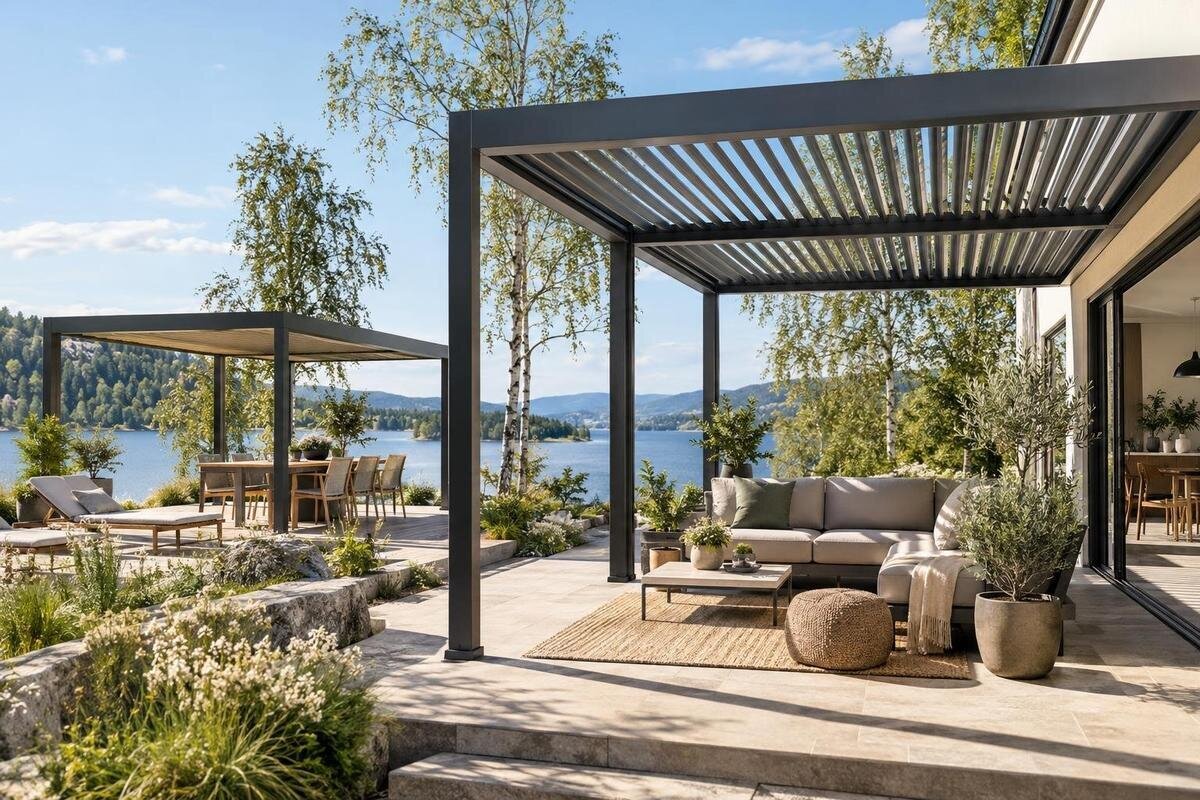
Decide what shade should look like before comparing models. Some pergolas have an open-beam or slatted top, while others may have a fixed covering, adjustable slats or a retractable covering. These are general design possibilities, not features of every pergola. An open top can allow patches of sun through; a more continuous covering may create a broader shadow, depending on its material. Work out whether you prefer dappled light, more consistent overhead shade or the option to change the amount of sky above you. Match that preference to the hours and area you marked on your site plan.
Keep shade separate from weather protection when reading descriptions. A covering can reduce direct sun without being designed to keep out driven rain, and side screens can change both airflow and the sense of enclosure. Consider whether the terrace needs to remain open at certain times, such as when you want a breeze or an unobstructed view. Ask whether a covering is fixed or adjustable, how it is operated, and what limits apply. The bioclimatic pergola listing is one labelled option to compare, but the name alone does not confirm how its roof works or whether it suits your exposure. Check the current product details and request any missing information in writing.

Before you buy 3
Terrace dimensions and everyday clearances
Measure the part of the terrace you want to use, not just the outer edge available for a frame. Draw door and gate swings, windows or shutters that open outwards, steps, drains, lights, external taps and fixed railings. Add the table, chairs, loungers or other furniture at their actual sizes, leaving a clear route between the door and seating. Allow room to pull chairs out and to pass behind someone who is seated, rather than measuring only the furniture when it is pushed in. Note where people need to stand when moving furniture or using the space. This plan can show whether a pergola would cover the useful area without placing a post or edge where it makes everyday movement awkward.
Compare your plan with the supplier’s stated width, projection and height, as well as the position of posts or wall connections. Ask whether the listed dimensions refer to the outside of the frame or to the usable covered area, and allow for any clearances or overhangs shown in installation drawings. Use measurements for the Bloomcabin pergola page only if they are explicitly published; ask rather than estimating from a photograph. Check that the proposed height also works with the building’s eaves, windows and fixed fittings.
Mounting options and the condition of the support
A wall-mounted arrangement can be considered when a suitable building face meets the terrace, but the wall’s visible finish does not show whether it can support the intended attachment. Cladding, insulation, waterproofing and the structure behind the finish may all affect the assessment. Ask a qualified building professional or installer to inspect the actual wall, proposed attachment points and any effect on existing weatherproofing. If the terrace is shared or part of a rented property, confirm the approval process before ordering rather than assuming that the work can proceed.
A freestanding arrangement avoids using the wall as a support, but it still needs suitable support locations and an appropriate way to secure it. A terrace surface is not automatically a suitable base, particularly where its construction, condition or waterproofing has not been assessed. Have a qualified professional assess the support surface and the manufacturer’s requirements; do not plan fixing details from photographs or generic diagrams. The wall-mounted pergola listing identifies a mounting category, not whether your wall or the listed fixing approach is suitable. If you cannot verify a product’s site requirements, resolve that gap before placing an order.
Before you buy 4
Materials and upkeep for the site’s exposure
Consider what the terrace exposes the structure to over time. Depending on the site, that might include dust, leaves or bird debris from nearby trees, frequent wetting, strong sunlight or coastal air. Look at where debris is likely to collect, especially close to walls, gutters or overhanging branches, because access for cleaning matters as much as the cleaning routine itself. These conditions can call for different care, so check the declared frame and covering materials, recommended cleaning method and any stated limits for the location. Do not choose a finish by appearance alone. Also consider whether you can reach the areas that need routine cleaning safely, and ask how maintenance is expected to be carried out.
Ask what inspection or upkeep is required for each moving part, covering, connector or water-management feature that the model actually includes. Find out whether any cleaning products or replacement components are restricted, and whether the routine will be manageable with the access you have. Compare the Bloomcabin bioclimatic pergola page using its exact material and care information, not the word bioclimatic. If the terrace is near the coast or regularly gets windblown grit, ask the supplier to confirm suitability and maintenance needs for those conditions.
A fair comparison of pergola listings
Compare options using the same questions. For each one, record the overall dimensions and covered area, what kind of top is supplied, whether it adjusts, the mounting arrangement, the frame and covering materials, care instructions, and any stated limits for sun, wind or rain. Record the source of each answer, such as a product page, drawing or written supplier reply, so that a later comparison does not turn an assumption into a fact. Separate standard components from optional extras, and note whether assembly, fixings or screens are included. These are details to verify, not assumptions: a product title, model label or rendered image does not settle them. Similar wording across two listings does not prove that their specifications match.
A short comparison table can make missing information clear. Mark each point as confirmed, not stated or requiring site approval, then ask about gaps before treating an option as a match. Place the Bloomcabin pergola product page beside other candidates only after checking its actual dimensions, shade design and attachment details against the same list. Do not assume that similarly named models share sizes, materials or features. Keep written replies with the product information so you can pass the same facts to your installer and avoid a last-minute mismatch.

Before you buy 5
Delivery access and installation arrangements
A pergola that fits on paper can still be difficult to receive and install on a terrace. Measure the route from delivery access to the work area: gate openings, steps, lifts, corridors and turns, where relevant, as well as any limits on temporary storage. Consider whether access is shared and whether furniture, planters or other items would need to be moved before work begins. Ask for package dimensions and weights if they could affect access, and check whether all parts arrive together or require separate arrangements. The finished frame dimensions do not tell you how a product is packed. Make sure an installer can reach the site and work around existing fittings and furniture.
Before paying, confirm what the purchase includes, what additional parts may be needed, whether assembly is supplied or must be arranged separately, and who will check the site-specific fixing plan. Read the current terms for delivery, cancellations and returns rather than relying on assumptions about timing or service. The wall-mounted Bloomcabin pergola page can be one candidate to inspect, but its label does not say what fixings or installation support are included. Confirm the details for the exact configuration you intend to order, especially if a wall assessment or access constraint could change the plan.
A site brief for the final buying decision
Turn your observations into a short site brief before choosing. Include when you need shade, the area to cover, your preferred balance of light and airflow, the wind and rain exposure, the intended mounting surface and any maintenance concerns. State which points are essential and which are preferences, such as keeping a view open or retaining space for a particular table layout. Add a measured sketch and dated photos showing where sun or rain reaches the terrace. Give the same information to the supplier and qualified installer so they are answering the same question. Ask for product-specific details and site limitations, rather than a broad assurance that a pergola is suitable for outdoor use.
Shortlist only options whose coverage, dimensions, attachment approach and care requirements match that brief, with important unanswered points resolved before ordering. A product labelled bioclimatic, such as the bioclimatic pergola product page, needs the same evidence as any other listing; the category name does not make a model right for a particular terrace. Do not fill gaps with guesses from a photo or model name. The strongest choice is one that fits the measured space and preferred shade, with suitability for the actual support surface and exposure confirmed.
Frequently asked questions
Does a south-facing terrace automatically need a heavier shade cover?
No. Orientation alone cannot tell you how much direct sun reaches the seating area or when. Record the shade at the times you use the terrace, then choose a covering pattern that addresses those hours. If the main problem is glare or wind rather than overhead sun, a heavier cover may not solve it.
Will a pergola keep rain off the terrace?
Not necessarily. Pergola designs and coverings differ, and the word pergola does not confirm that a model is intended to shed rain or prevent water reaching the sides. Check the exact covering and drainage details, and ask how the proposed setup will affect water on your terrace.
Can I attach a pergola to the terrace wall?
Only if the actual wall and proposed fixing arrangement are suitable. The visible finish does not confirm what lies behind it or how an attachment could affect waterproofing. Ask a qualified installer or building professional to assess the wall before you order a wall-mounted design.
Which measurements matter when choosing a pergola?
Measure the intended covered area and mark doors, windows, drains, steps, fixed fittings, furniture and clear walking routes. Then compare the plan with the product’s stated overall dimensions, height and support positions. Ask what each published measurement represents if the usable covered area is unclear.
What should I confirm before ordering?
Confirm the covering and how it works, the dimensions, materials and care requirements, the mounting arrangement, and any stated limits for the site conditions. Also check what is included, how delivery can reach the terrace, and who will assess the fixing plan. Resolve important gaps before placing the order.
On an exposed, south-facing terrace, the useful choice is the one that matches the light, wind and rain at the places people actually use. A measured layout helps you judge coverage; a professional assessment addresses the proposed supports; product-specific information answers what a listing name cannot. Once those points align, compare appearance and finish with confidence. If an essential detail is still unclear, keep the shortlist open until it is resolved.
