
What to Consider When Buying a Pergola for an Outdoor Kitchen
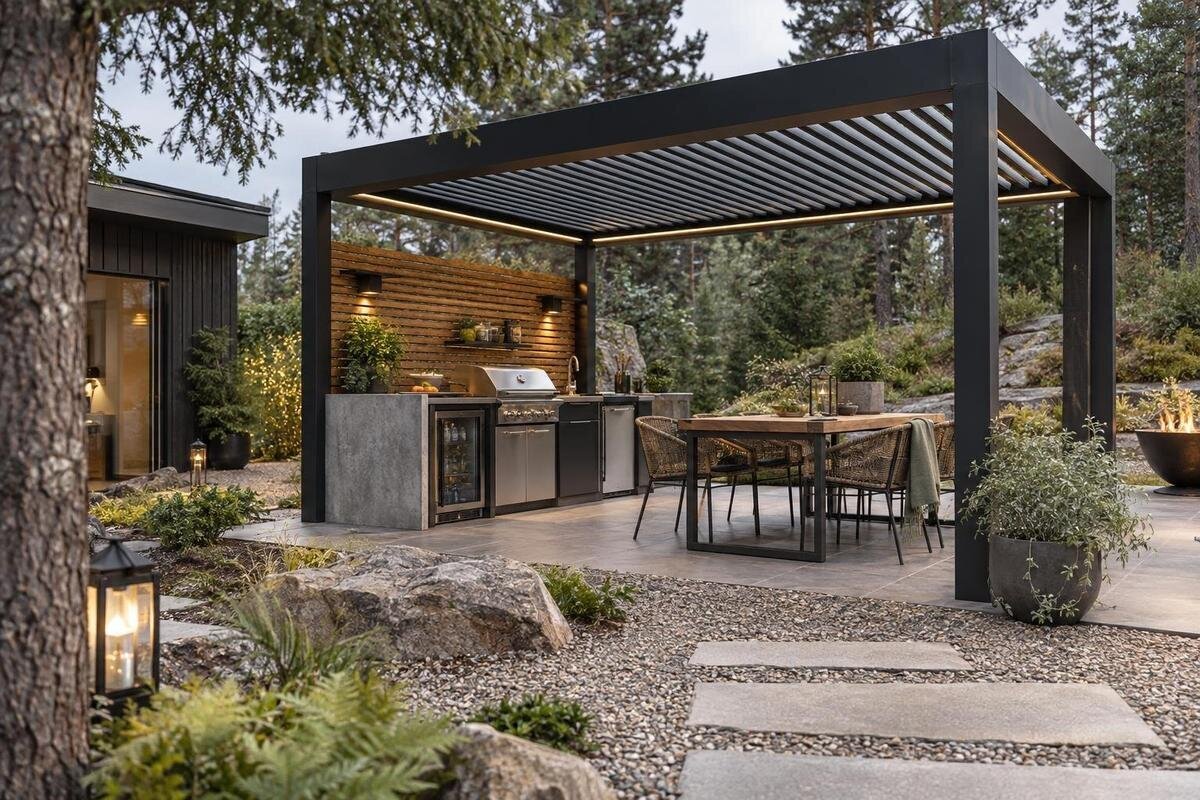
Outdoor kitchen pergola buying guide
An outdoor kitchen changes what a pergola needs to do. It has to fit the cooking and dining layout, provide the level of shade you want and leave suitable clearance around equipment that produces heat or smoke. Buying by appearance or footprint alone can leave you short on preparation space, awkward circulation or uncertain about whether the roof arrangement suits cooking. Before comparing styles, map the appliances, work surfaces, dining area and routes between them. Then assess each option against the site, your shade and rain requirements, and the product information. That order helps you choose a structure that works with the kitchen plan rather than simply looking right on the patio.

Pergola buying checklist 1
Map the cooking and dining zones
Begin by writing down what the outdoor kitchen actually includes: the braai or grill, preparation surfaces, serving point, sink if planned, storage and any dining furniture. The pergola should relate to the complete arrangement, not just the appliance. A footprint that gives the cooking station shade may leave diners exposed; one centred over a table may not cover the worktop. Decide whether you want shade over cooking, dining or both, and identify which activities happen at the same time. This turns a broad style choice into a practical layout question and helps you compare options against an intended use rather than a product photo.
Sketch the sequence from carrying food outdoors to preparing, cooking, serving and clearing away. Mark where the cook stands and where another person may pass with dishes. If the dining area will sometimes be used without cooking, decide whether it needs its own shade or can share the kitchen’s coverage. Note whether you expect quick meals or longer gatherings, since that changes how much of the surrounding space matters. A large roof is not automatically more useful if it covers unused paving, while an undersized one can divide activities awkwardly. This use map makes later size and shade comparisons more realistic.
Measure the complete footprint
Measure the area where you could place the pergola, then mark its full outline on the ground with removable tape or chalk. Include supports or projections where the product information shows them, rather than just the rectangle you want covered. Check width and depth against worktops, appliance doors or lids when open, and the room needed for a person to stand and work. A site can look generous until the kitchen is in use, so compare the marked layout with an actual measured plan. When reviewing the Bloomcabin pergola page, use dimensions stated on the page rather than judging scale from an image. If both overall frame size and shaded area are stated, compare the two separately.
Measure nearby fixed features too: walls, steps, posts, doors, windows, eaves, gutters, drains and outdoor taps can affect placement or access. Record the space available to open doors and pass around the structure, including the route from the house. If the patio shape is irregular, note its narrowest point and any change in level instead of relying on one overall measurement. Product photographs may not show the exact position of supports or roof projections, so compare the published dimensions and installation drawing, where supplied, with your sketch. Ask for clarification if a key measurement is missing; do not estimate it from the image.
Pergola buying checklist 2
Match shade to the way the area is used
Shade needs vary with time and task. Observe the proposed site at the hours when you cook and eat, and note which parts of the patio receive direct sun then. The sun’s position changes over a day and through the year, so a midday view will not describe every meal. Consider whether the priority is shade over a work area, a comfortable dining place or a transition between the two. Check whether nearby buildings or trees already shade part of the site. A simple sketch noting the time, shaded area and planned activity makes competing layouts easier to assess.
Think about how the roof design described in each listing affects the shade you want, rather than assuming every pergola gives the same coverage. If a page describes slats, panels or an adjustable roof, verify what positions are available and how much shade the stated arrangement provides; a name or image is not enough to establish that. Compare another Bloomcabin pergola listing with your observations by checking its actual product description and dimensions. Keep the question specific: does the documented configuration shade the cooking or seating area at the times you care about? Do not treat a pergola as a guaranteed way to change conditions around cooking equipment.
Check the clearance required by cooking equipment
Clearance around cooking equipment is a separate decision from the pergola’s footprint. Read the appliance maker’s instructions for the required distance from overhead and neighbouring surfaces, including the roof and other parts of the structure. Requirements differ between appliances, so a measurement borrowed from another braai or grill is not a reliable guide. Draw the permitted operating area on your plan before settling on a position. Account for movable lids, hinged parts and service access as the appliance instructions specify. If the documentation does not clearly address an overhead structure, ask the appliance manufacturer and a qualified installer to confirm whether the proposed arrangement is suitable.
Heat, smoke and airflow also matter. A roof or nearby wall can change where hot air and smoke travel, while the cook needs clear access to operate and monitor the appliance. Do not assume that an open-sided appearance guarantees adequate ventilation or that a pergola roof is intended to sit above a heat source. For a braai, grill, hob or other appliance, compare the pergola’s documented materials and use limitations with the appliance requirements. This pergola product page is a page to inspect, not evidence of clearance or cooking suitability; get a professional view if either set of instructions leaves doubt.
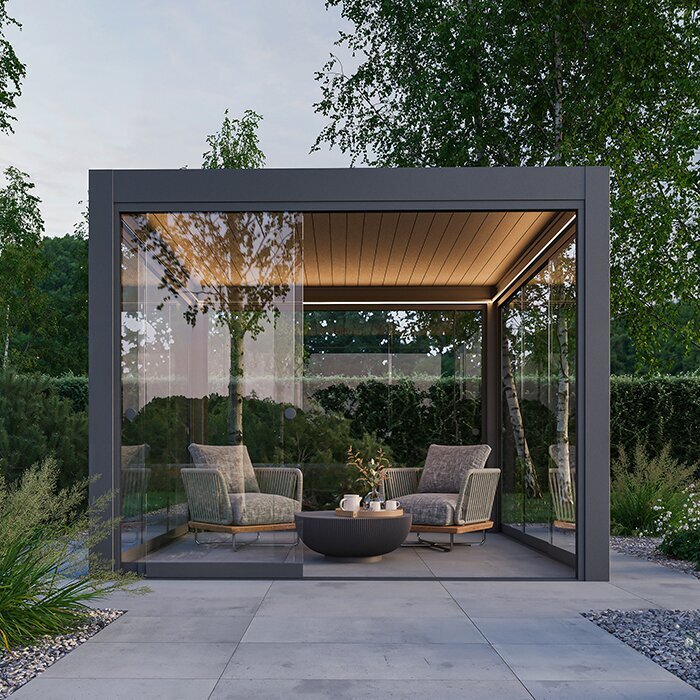
Pergola buying checklist 3
Compare materials and maintenance needs
The cooking area creates different cleaning and exposure questions from a purely decorative seating spot. Smoke, grease splashes, sunlight, rain and, where applicable, salt in the air can affect what maintenance is needed. Compare the materials stated for the frame, roof and fittings, along with any finish or coating the listing identifies. Do not assume the whole structure uses one material because one part is visible in a photograph. For a product page such as the product page for this pergola, look for explicit material descriptions and care guidance. If these are absent, ask before ordering rather than guessing.
Consider how you will clean the area around the structure as well as the structure itself. Grease and soot can land beyond the cooking surface, so assess the stated finishes against the cleaning methods you expect to use. Ask the manufacturer which products or methods are suitable. Check whether the care routine is practical for the location, especially if the pergola will be hard to reach once furniture or worktops are in place. A claim about lower maintenance should be supported by clear product information. Choose based on the material and upkeep details actually supplied, not a general assumption that timber, metal or another material is always best.
Understand the roof’s limits in rain
Shade and rain protection are not interchangeable. A structure may leave parts of the kitchen exposed, and the term pergola does not by itself tell you whether the roof is open, covered, adjustable or intended to manage rain. Decide which surfaces need shelter: a preparation counter may have different needs from a dining table or appliance. Then check the listing’s roof description and the maker’s stated weather limitations. If dependable rain cover is important, ask for clear details about what the structure is designed to do rather than inferring it from a product photograph.
Rain also affects where water runs and where people can stand while the kitchen is in use. Look for information about roof drainage or water management, and ask how exposed edges might affect nearby counters, furniture and circulation. Do not put the only planned dry preparation space beneath a section whose coverage is uncertain. If a listing describes moving roof parts or particular operating positions, confirm the instructions for rain and wind rather than assuming they can be left in any position. Check the linked Bloomcabin listing for what it actually states, and get advice from the supplier or installer if the site needs more than shade.
Pergola buying checklist 4
Confirm the position and mounting arrangement
Choose the position in relation to the house, kitchen and route into the garden. A standalone layout may suit an open patio, while a plan beside a wall may require a different mounting arrangement; these choices need to match the product’s installation design, not just its appearance. Think about windows and doors, eaves, guttering and vents, as well as smoke direction and the way people reach the cooking area. A pergola that fits on a plan can still conflict with a door or service point. Mark these features before deciding where the structure should sit.
If you expect any part of the structure to connect to a building, confirm that the product documentation allows that mounting method and explains its conditions. Do not assume an exterior wall, fascia or patio surface is suitable just because the structure can be drawn beside it. Review the linked pergola listing for its stated configuration, then ask a qualified installer to assess the actual building and site. If mounting instructions or substrate requirements are not available, resolve that before placing an order. The same check applies where access to the installation area is restricted or the surrounding layout is unusual.
Leave room for serving and circulation
Plan for serving and people moving through the space, not just for the cook. Allow room around the table for chairs to be pulled out, and consider the width of the route carrying food between the preparation surface and dining area. A serving trolley, bin or storage cabinet may also occupy space that is easy to overlook on an empty patio. Position posts and furniture so they do not interrupt the natural passage between the house, kitchen and seating. Measure the pieces you already own; for anything still to be bought, use stated dimensions rather than a mental estimate.
If the kitchen is a social area, decide whether people can gather without crowding the person working at the appliance. Keep cooking and sitting activities distinct enough for the arrangement you want, and consider whether all seats need to be under cover. Sketching furniture at scale can show when a dining table competes with doors, preparation access or a walking route. Check the Bloomcabin product listing against that plan only after accounting for furniture and people; the product image cannot show how your patio will function. This layout comparison is more revealing than comparing pergola styles in isolation.

Pergola buying checklist 5
Check the site and installation requirements
Ask what the installation assumes about the surface and site. Paving, a deck, a concrete area or a change in level may each need a different assessment; do not assume a structure can be fixed to any existing surface. Check whether the manufacturer provides installation instructions, what preparation is required and whether assembly is included or arranged separately. A qualified installer can assess fixing points, building or ground conditions and other site-specific constraints. Avoid making a final decision while the required base or mounting detail is still unknown, because it may change both the location and the work involved.
Before ordering, confirm how delivery can reach the chosen position and whether the parts can be moved through gates, passages or around existing landscaping. Check what is included, whether accessories or foundations are separate, and who is responsible for assembly and site preparation; do not assume those details from a photograph. Read the supplier’s order and after-sales terms, including delivery, returns and warranty information where provided. If the property has its own approval process or shared-space rules, check with the relevant property manager or authority before committing. These practical questions belong in the buying decision, not just in the plans for installation day.
Compare listings before placing an order
Compare options using the same criteria, not just appearance or a headline feature. Record the published outer dimensions, roof description, mounting arrangement, stated materials, care requirements, assembly information and any documented site restrictions. Mark each item as confirmed or still to be clarified. A page such as the second product page can be checked against the same list as other candidates; its name and pictures do not replace written specifications. This side-by-side view makes missing information visible and helps prevent an attractive design from being mistaken for one that fits your kitchen and installation conditions.
Before placing an order, settle any unanswered question that could change the location, cooking clearances, coverage or installation work. Confirm the exact model, included components, dimensions and mounting approach on the current listing, and read the supplier’s terms for payment, delivery, cancellations, returns and warranty as applicable. If an answer comes from a separate manual or supplier message, keep it with your order details so the installer and household can refer to the same information. A useful choice is the option whose documented details match the measured plan and intended use, not simply the one with the longest feature list.
Frequently asked questions
Can I put any braai or grill under a pergola?
No. Check the appliance maker’s instructions for clearance from overhead and nearby surfaces, then compare those requirements with the pergola’s documented materials and use limitations. If either set of information is unclear or the instructions do not align, ask the appliance manufacturer and a qualified installer. The structure’s appearance alone cannot confirm that it is suitable above cooking equipment.
Will a pergola keep an outdoor kitchen dry?
Not necessarily. The word pergola does not specify whether a roof is open, covered or designed to manage rain. Check the product information for its roof configuration and weather limitations, and consider where rain might reach counters, furniture and walking routes. If reliable rain cover is important, get clear details before ordering rather than assuming a photograph shows the full protection.
How much space should I allow?
Measure the complete structure’s footprint, then add the room needed for the appliance to operate, the cook to work, and people to pass or sit. Include furniture, open appliance doors or lids, and nearby features such as steps and doors. Use the product’s stated dimensions and the appliance maker’s clearance instructions; there is no single measurement that suits every kitchen layout.
What material is best for an outdoor kitchen pergola?
There is no universal best choice. Compare the materials stated for the frame, roof and fittings, then check the care guidance for the site’s exposure to sun, rain, smoke, grease and, where relevant, salt in the air. Ask which cleaning methods are suitable and whether the stated maintenance is practical for your layout. Do not infer a material or its upkeep from a product image.
Can I place a pergola against my house?
That depends on the product’s documented mounting arrangement and the building itself. Do not assume a wall, fascia or patio surface is suitable because a pergola appears beside a house in an image. Check the installation information and ask a qualified installer to assess the actual site. Resolve any uncertainty about mounting before you commit to a position or place an order.
A pergola for an outdoor kitchen is a better fit when its measured footprint, shade and roof details work with the cooking layout and the site. Compare written product information with your plan, confirm appliance clearances and resolve mounting or installation questions before ordering. Keeping serving routes, furniture and day-to-day care in view alongside the cooking zone helps the finished space work as a whole.
