
Buying a Pergola for Rain Protection: Roof and Drainage Limits
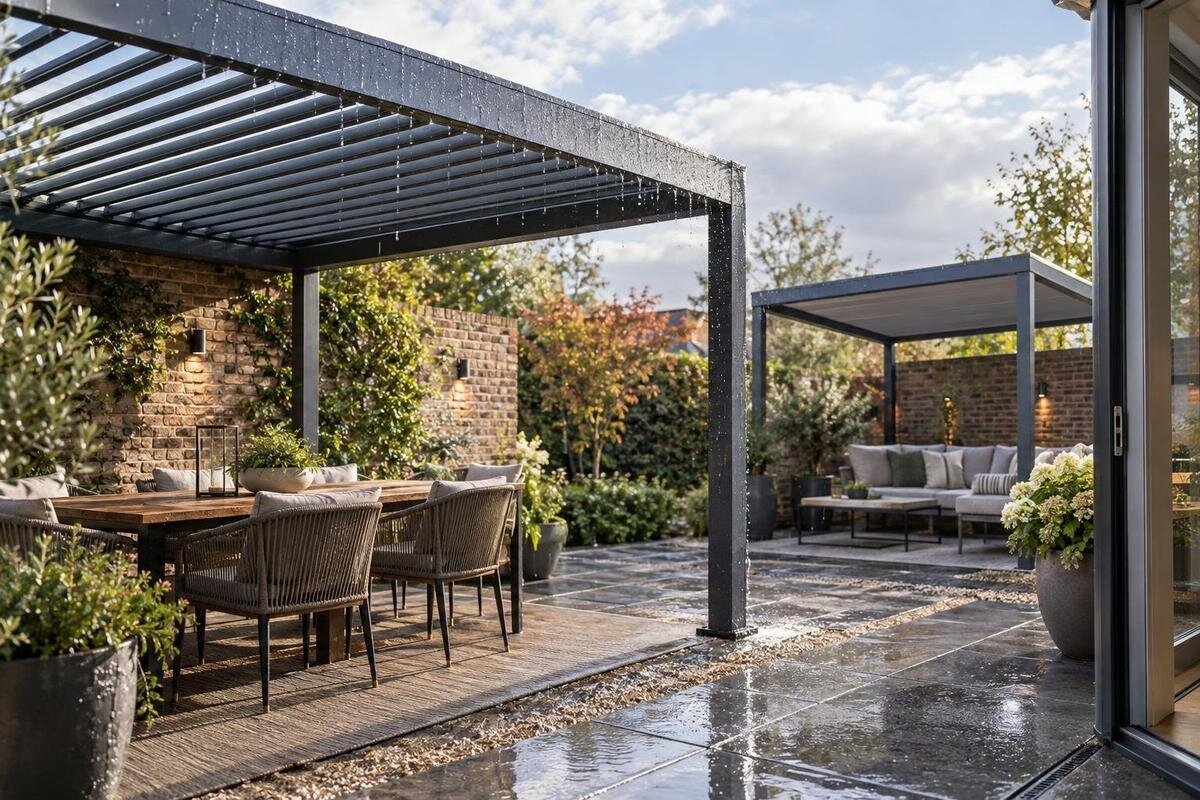
Pergola buying guide
If you want to buy a pergola for rain protection, begin by separating the area covered overhead from the area that will stay reliably dry. Rain may pass through roof joints, blow in under open sides or run off onto the paving; the outcome depends on the specific roof configuration and how water is handled at the site. This guide explains what roof coverage can and cannot do, how to follow runoff from the roof to the ground, and what to verify on a product listing before ordering. A pergola can make an outdoor area more usable, but its name or roof outline alone is not a promise of weatherproof shelter. Make your choice against the level of protection you actually need.

01
A pergola roof is not an enclosed shelter
A pergola is an overhead structure, not automatically an enclosed, sealed room. The roof can shelter the space directly beneath it only to the extent that its surface, joints, edges and orientation are designed to manage rain. Open sides leave rain a route in, and water can enter at seams or the perimeter even when the roof looks continuous from below. A product photograph may show a finished installation on a clear day; it cannot establish how the assembly performs in a shower. Treat the difference between overhead cover and an all-weather enclosure as the first buying decision.
For a patio table that can be cleared quickly, some shelter from light or vertical rain may be enough. If you want to leave cushions, appliances or other items beneath the roof, or keep a route dry, you need a clearer performance claim than a general promise of shade or cover. Decide what may get wet, how often, and whether rain entering from the sides is acceptable. Also consider whether the space must remain usable while rain is falling or merely needs cover between showers. These are practical requirements to consider before choosing a roof and layout, not details to leave until after installation.
Roof construction determines how rain is managed
Pergola roofs can be fixed, adjustable or retractable, and those categories do not guarantee a particular level of rain resistance. An open roof leaves a path for rain; adjustable sections may close but still rely on joints, channels and edge details. A continuous cover can block direct rain across its surface while allowing water through at joins or where it meets a frame. Read the roof description for the exact model and configuration rather than inferring performance from a style name. The bioclimatic pergola page is one listing to inspect for stated details, not evidence by itself that a roof is sealed.
Look beyond the material or mechanism to how water is supposed to move across and away from the roof. Ask whether the stated coverage applies in every roof position, whether edges and connections are included in the rain claim, and what happens when water reaches the perimeter. A roof described as water-resistant may have different limits from one described as waterproof; those terms are useful only when the supplier explains what they mean for that product. Compare the wording used for each option rather than treating these descriptions as interchangeable. If the description is brief, request the relevant product information before comparing it with another design.
02
Measure the area that needs cover
For a fair comparison, sketch the patio and mark the area you actually want sheltered. Look for the roof dimensions, not only the space taken up by the supports, and check which configuration those dimensions describe. When comparing listings, including the Bloomcabin pergola page, look for a dimensioned plan or ask for the measurements if they are not stated. Check whether a stated width and projection describe the roof itself or another part of the installation. Do not assume that a product image shows the exact scale or roof projection of the model you would order.
Then place the table, chairs or other items you intend to use beneath the structure on your sketch. Leave room to pull out chairs and move around without shifting everything to the centre of the roof. The area that stays dry may be smaller than the roof outline because rain can enter around the edges, especially when it is blowing across the patio. Consider where people will walk in and out, too. It can help to mark the seating positions used most often, rather than measuring only the furniture when it is pushed in. A roof that covers the furniture but leaves the usual entrance exposed may not provide the shelter you had in mind.
Wind-driven rain can reach an open pergola
Rain does not always fall straight down. Wind can carry it under a roof from one or more sides, so a covered footprint is not necessarily a dry footprint. Notice which sides of the proposed location are open and whether nearby walls or other structures shelter it from some directions. That shelter may help in one situation without protecting the area from rain approaching another way. The wall-mounted pergola listing identifies a broad configuration to examine, but its label alone does not establish how protected your patio will be from sideways rain.
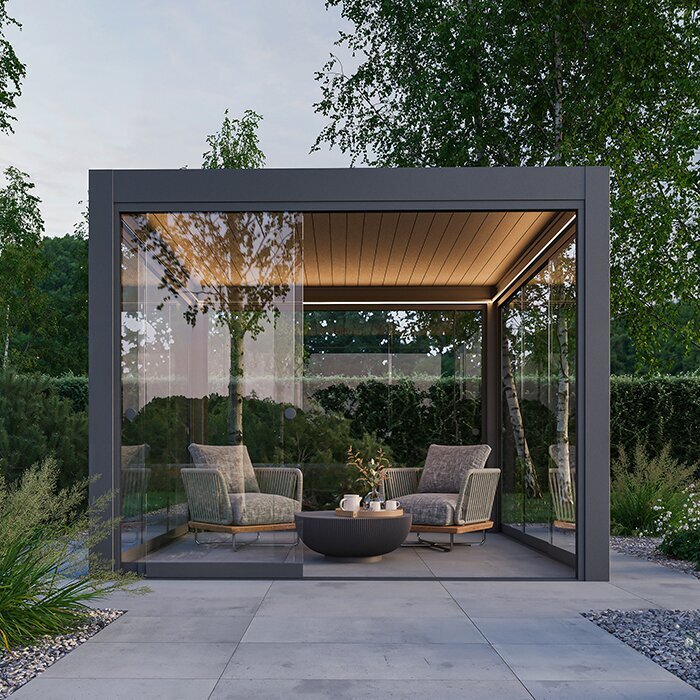
Think about the area at the height where rain could reach it, not only the roof above. A side panel or screen should not be treated as a weather seal unless the product information specifically describes its performance in that role. Consider whether water could reach doorways, seating or items kept near the outer edge. Notice whether an exposed corner is where people usually sit or where cushions are stored, as that can change the practical value of the cover. If the pergola will serve a particular outdoor area, observe how rain approaches that space and discuss any uncertain exposure with the supplier or installer. This helps avoid buying a roof that covers the right spot from above but misses the practical need.
03
Trace roof runoff through the drainage system
Rain that lands on a roof has to leave it somewhere. Depending on the design, water may be guided through channels, gutters or outlets, or run off at an edge. Check which of these features the exact configuration includes and where the outlet is positioned. On the pergola product listing, look for specific information about gutters or drainage rather than assuming they come with the roof. Distinguish between a visible channel in an image and a drainage component identified in the product information. If details are missing, ask whether the parts are included, optional or not part of that configuration.
Trace the route from the roof surface to the outlet, then consider whether that route suits the position of your furniture, doors and walkways. A gutter may collect water but still direct it to an inconvenient point; a roof edge may release water where people pass. Ask for a drawing or description that clarifies the outlet location and how it connects with the proposed layout. Consider where water may splash after discharge, particularly if an outlet is close to a frequently used path. Also ask what routine access the design requires to keep channels or outlets clear. A rain-management feature is most useful when you understand both what it collects and where it sends the water.
Check where the water reaches the ground
Roof drainage is only part of the decision: water still has to reach a suitable place once it leaves the pergola. Consider the paving, soil and existing drainage around the proposed site. Runoff could splash onto nearby furniture, cross a path or collect where people enter. If you are considering a wall-mounted layout, include any discharge near the building in your assessment. The wall-mounted pergola page identifies a mounting category, but does not show the drainage route for your particular site.
Look at the area after rain if you can, and note places where water already pools or flows across the space. Do not assume that a nearby drain can accept runoff from a new roof; the route and capacity need to be assessed for the site. Note whether the proposed discharge point would affect a neighbour's boundary, a doorway or the normal route through the garden. If the ground layout is complex, or you are unsure where the water should go, ask a qualified drainage professional to review it. This is not a matter of calculating a universal slope or adding a generic outlet: the right approach depends on the existing surface and where the water can be directed.
04
Ask what a rain-performance claim covers
Words such as waterproof, water-resistant or rainproof are not enough on their own to tell you how a pergola will perform. Ask what roof position the claim applies to, whether it covers joins and edges, and what conditions or limitations the supplier specifies. If a test, rating or performance document is available, ask what it measures and whether it applies to the precise model and configuration you are considering. The listing labelled for a bioclimatic pergola is a page to compare against that information, not a substitute for it.
Use product documents to compare like with like. A roof shown in one position may have different rain behaviour from the same system in another position, and optional components can change the arrangement. Check whether the published dimensions, roof details and drainage description refer to the same configuration. Record the exact option named in each document so that details from different versions are not accidentally combined. Images can help you understand appearance, but they do not confirm performance or what is included. If you receive a broad claim without an explanation of its limits, ask for the model-specific details in writing so you can judge whether they meet your requirements.
Check the wall connection and site structure
A wall-mounted pergola brings the building connection into the buying decision. The wall surface, the proposed fixing area and the junction between the structure and the building all need to suit the design. Rain can enter at a poorly managed connection, so do not assume that attaching a roof to a wall makes the space watertight. A freestanding layout avoids that particular wall junction, but it still needs to suit the site and have an appropriate support and fixing arrangement.
Before ordering, discuss the proposed position with a qualified installer or other suitable professional, especially if the attachment point, existing wall finish or drainage route is uncertain. Ask them to assess the connection and the treatment of the roof-to-wall interface for the chosen design. They can also identify whether the intended position creates access or drainage issues that are not evident from a product image. This is a site-specific review, not something that can be settled by a product name or a general image. Sharing the exact model information and intended layout gives the professional a clearer basis for identifying any compatibility questions before the purchase is finalised.

05
Confirm the complete configuration before ordering
Check exactly what the order includes. A photograph may show a complete installation, while a product page describes a particular model or configuration. Confirm the roof type and dimensions, and whether any gutters, outlets or other drainage components shown or discussed are included, optional or supplied separately. Before ordering from this Bloomcabin pergola listing, use the model details on the page to identify the exact configuration you are considering; do not rely on an image alone.
Ask for a clear breakdown of any components that affect rain management and what, if anything, must be arranged separately for your site. Read the supplied information about assembly, maintenance and any relevant terms so you understand the responsibilities attached to the purchase; do not assume that every pictured part is included. Keep a copy of the configuration details used for your decision, especially where an option changes the roof or drainage arrangement. Keep the model name and configuration consistent across the product information and your order. If a change in roof or drainage options is possible, confirm that the information you used to assess rain protection applies to the version you will receive.
Choose a pergola against your rain expectations
Compare shortlisted pergolas using the same questions: what area is covered, how the roof handles rain, what the stated performance claim includes, and where runoff is directed. You can apply those questions to that bioclimatic pergola product page or any other candidate without assuming that its category name answers them. Give each requirement a clear status: confirmed in the product information, clarified by the supplier, or still unknown. This comparison also makes it easier to identify which unknowns matter most for the intended use of the space. That makes it easier to see whether a lower level of shelter is acceptable or whether a key point remains unresolved.
Match the evidence to the way you plan to use the space. If occasional shelter from vertical rain is enough, your priorities may differ from someone who wants furniture or a route to remain dry during wind-driven rain. Consider whether you can move vulnerable items indoors before bad weather, or whether they need dependable protection in their usual position. No roof outline can promise that result without relevant performance information and a suitable site layout. If the product details do not explain the protection you need, pause to ask for clarification or compare another configuration. It is better to recognise an unanswered question before ordering than to discover the limit after the pergola is in place.
Frequently asked questions
Will a pergola keep my patio dry in the rain?
Not necessarily. The result depends on the roof design, joints and edges, wind direction, and how water is drained away. Open sides can let rain blow in, even when the area below is covered from above. Check what the manufacturer says about the exact roof configuration and the conditions that claim applies to.
Does closing an adjustable roof make a pergola waterproof?
A closed position does not, by itself, prove that a roof is waterproof. Water may still pass at joins or edges, and the design may have limits. Look for model-specific performance information that explains how the roof behaves when closed and whether the claim includes its drainage channels and perimeter.
Do gutters make the area underneath dry?
Gutters or channels can collect and direct roof runoff, but they do not prevent rain entering through roof joints or open sides. Check whether the drainage parts are included, where their outlets are positioned and where the water goes after it leaves the roof.
Is a wall-mounted pergola more rainproof?
Not automatically. A wall may reduce exposure from one direction, but it does not seal open sides or establish how the roof performs. The connection between the pergola and the building also needs suitable assessment. Compare the documented rain performance and have site-specific attachment and drainage questions reviewed by a qualified professional.
What should I confirm before ordering?
Confirm the exact roof configuration, its stated dimensions, what the rain-performance claim covers, and whether gutters, outlets or other drainage parts are included. Establish where runoff will discharge and whether the proposed location and attachment suit your site. If a key detail is unclear, ask for clarification before placing the order.
A sensible pergola purchase considers the dry area you want, the ways rain could reach it from the sides, and where roof runoff will go. A roof may cover a defined footprint yet still admit wind-driven rain or send water to an inconvenient place. Use model-specific dimensions and performance information, then have site-dependent drainage or attachment questions assessed by an appropriate professional. If the available information does not match the protection you need, clarify the gap or compare another pergola configuration before ordering.
