
Buying a Pergola with Lighting: Plan for Evening Use
Pergola buying guide
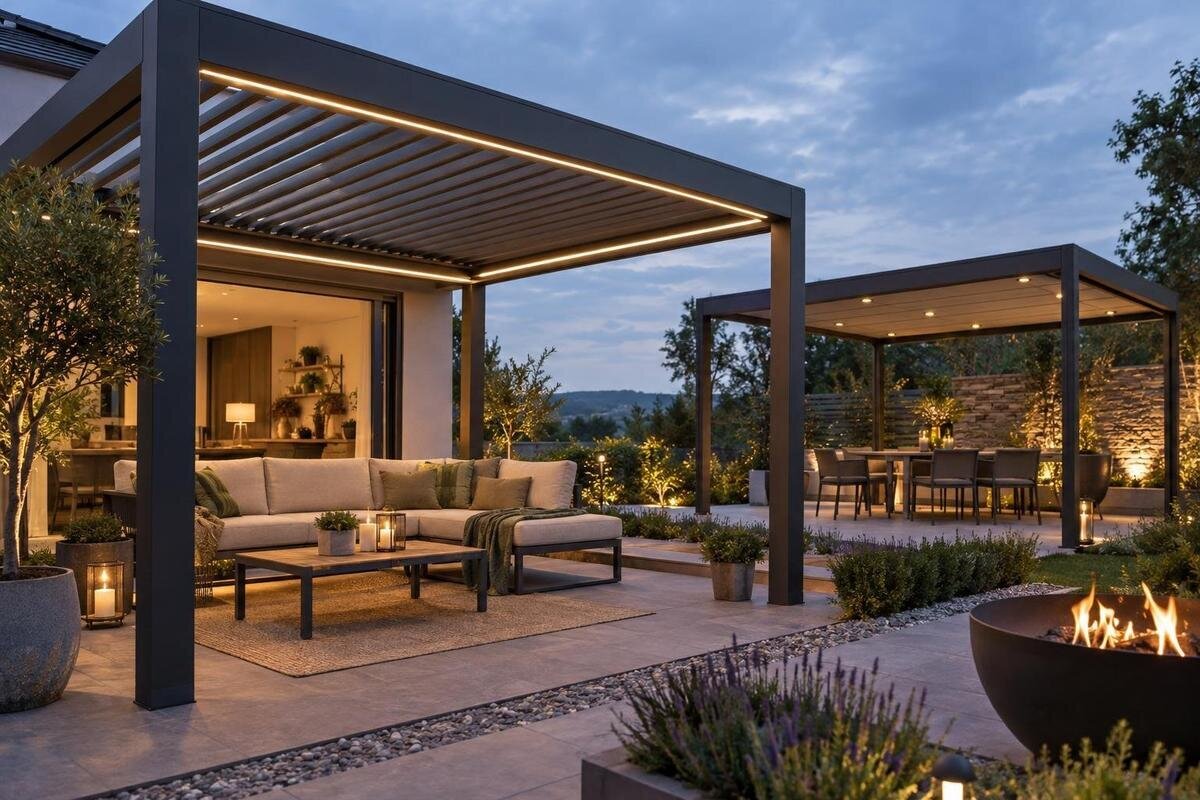
Buying a pergola with lighting is less about choosing a fitting from a photograph and more about matching a complete setup to the way you use the space after sunset. Decide where people will sit, eat and move, then consider the kind of light that suits those activities. Also consider how the space connects to the house, patio and garden, since comfortable evening use depends on more than the area beneath the pergola. Before ordering, confirm whether fittings, controls and power components are included, optional or supplied separately, and whether they suit the planned location. A pergola listing should not be treated as proof that lights are part of the package.
Decide how you will use the pergola after dark
List the activities you expect to do most often, rather than designing around a once-a-year gathering. A pergola used for supper needs light on the table and enough general illumination for people to see one another; a space used mainly for conversation may suit a softer background. Reading, serving food and moving between the house and seating area create different needs. Note what happens after dark, where it happens and who uses the area. Include the usual way people arrive, serve themselves and leave, not only the point at which everyone is seated. Consider children, older visitors or anyone carrying plates, as these routines may make a clear route more important than decorative light. The aim is a purchase that reflects everyday routines.
Think about how use changes over an evening. Guests may begin at the dining table and later move to lounge chairs, while the same area may serve a quick meal one night and a longer visit another. Decide whether one level of light would suit all those uses or whether separate zones would be more useful. If the pergola opens onto a darker patio or garden path, include that transition in your plan. Also note whether furniture stays in one arrangement: a light aimed at a fixed table may be less useful when seating is moved. Separate must-haves from occasional extras before comparing products.
Map the areas that need light
Sketch the pergola footprint and mark the table, chairs, serving surface, doorways and routes people actually use. Beside each point, note whether it needs clear task light, softer background light or no direct light. This helps distinguish light for an activity from general illumination, and avoids assuming that a fitting over the centre will reach every corner. Where someone needs to see food, a book or a change in level, check that light will fall on that area rather than simply brightening the structure above.
Think about what people see from each seat, not only what the plan looks like from above. A bare or poorly positioned source can shine into someone's eyes, reflect in a window or leave a stark contrast between a bright table and a darker route. Diffused or shielded light may feel more comfortable for relaxed seating, while a more focused source can serve a particular task. Look at sightlines from the house and from the approach to the pergola as well as from the chairs. Ask for a layout drawing or clear product information showing fitting positions and light distribution. A lifestyle photograph rarely provides enough detail to judge coverage.
Choose the brightness and colour of the light
Choose a light appearance that suits the setting, while keeping useful visibility in mind. Warm-looking light can feel softer, while a cooler appearance may seem more functional; the result also depends on the fitting and surrounding colours. Ask for the stated colour appearance and light output, if available, rather than relying on a label alone. Consider whether the pergola lights will sit comfortably alongside the house's exterior lighting. For meals, think about how the light shows food and table finishes. Light-coloured paving, dark timber and reflective glass can change the perceived brightness, so assess the proposed arrangement in the context of the surfaces around it. If possible, view a sample or a clear demonstration of the actual fitting instead of judging from an edited photograph.
One bright fitting may make a central table visible but leave seating edges or access routes dim. A layered arrangement, with general illumination and a more focused source for dining or serving, can suit different tasks if the proposed setup supports it. Dimming or independent zones add choice only when supplied and compatible, so treat them as specification items rather than assumed features. Ask which fittings switch together, whether brightness can be adjusted and what controls are required. The Bloomcabin pergola listing can be part of your comparison, but its title alone does not confirm whether lighting is offered or included.
Check what the pergola listing includes
A pergola and a lighting package may be sold together, offered as options or sourced separately; the product details and written quote need to make clear which applies. Check the itemised contents for the actual fittings, quantities, any dedicated power components, control equipment and accessories needed for the specified setup. Confirm whether the quote covers installation or only the supplied items. Check whether a stated quantity corresponds to every area on your plan, rather than assuming a package is designed for your particular furniture arrangement. If something is described as optional, ask what else is needed to make the selected lighting work, rather than assuming a later add-on will fit.
Use the same test when reviewing another Bloomcabin pergola listing: treat a light as included only when the current specification or quote says so. A photograph showing an illuminated setting does not confirm that the fittings are part of the order, that they are the ones being quoted or that they suit every configuration. Ask the supplier to record the complete package, including exclusions and the exact setup the answer applies to. If lighting is a separate line item, ask for its description and confirm compatibility with the chosen pergola before placing the order.

Compare power options and lighting controls
Choose controls around how you expect to use the area. A switch near the usual entrance, a remote used from the seating area or an app-based control may each be convenient in different layouts, if offered. Check whether the lights can be switched independently, whether dimming is available and whether any control is included in the quote. Think about who needs to operate the lights and where they will be when doing so. Consider whether you want to light the whole area at once or only the dining or seating zone on quieter evenings. A control that sounds useful on paper may be awkward if it is not accessible from the places where people enter or sit.
Compare the power arrangement for the specific fittings rather than assuming every pergola lighting setup works the same way. If solar is offered, ask where the panel can be positioned and whether that location gets suitable sun; do not assume it can be placed away from the pergola unless the product allows it. For battery lighting, consider how it will be recharged. Mains connections and any required work should be assessed by a qualified electrician, who can also advise on local requirements. This pergola product page is a useful comparison point only after its exact lighting and power details have been confirmed.
Plan the pergola's position in relation to the house
The pergola's location affects where light is useful and where it may spill. Consider nearby doors, windows, existing exterior lights and the position of the dining or lounge area. A fitting that works from one seating position may shine towards a window or feel too bright from another. Mark the pergola's intended position on a simple site sketch, then add the main seating and walking routes. Include steps, level changes and the route used when carrying food or drinks, because these are places where people need to see clearly. This makes it easier to discuss fitting placement and helps you see whether the lighting plan covers the activities you listed.
If possible, review the proposed layout from inside the house as well as from beneath the pergola. Note whether light would reflect in glazing or spill into an area where you want a quieter setting. Existing garden lights may already cover a path, while a darker transition may need attention; the aim is to avoid both a gap and unnecessary duplication. When comparing a further Bloomcabin pergola listing, check its exact configuration and the lighting arrangement that can be specified for it. Do not infer placement or included fittings from a product name or image.
Check outdoor suitability and maintenance
Outdoor fittings and connections need to suit the exposure at the chosen site. Rain, dust and direct sun can affect components, and conditions may differ between a sheltered position and an exposed one. Ask the manufacturer for the stated outdoor suitability of each fitting and connection, and check that the information applies to the location where it will be used. A pergola's overhead structure does not, by itself, confirm that lights or connections are protected from the weather. If a protection rating is quoted, ask what it covers and whether it applies to the full setup or only a particular component.
Consider care and replacement before committing to a lighting arrangement. Ask how accessible the fittings will be for cleaning or servicing, whether any parts are replaceable and where to find the relevant maintenance guidance. Consider whether furniture, planting or the pergola structure would make routine access difficult once the space is in use. Clarify who supplies replacement components and who should carry out electrical work; do not plan to open or alter connections yourself. These details matter when a fitting is integrated into the overall setup, as well as when lights are sourced separately. Apply the same checks to a second pergola page to compare without assuming that its lighting or maintenance requirements match another product.
Measure the pergola area before ordering
Measure the intended footprint and note the position of posts, beams, doors, windows and furniture. Check headroom above the areas where people sit or stand, and leave room for normal movement around the table and seating. Mark the locations where light is needed on the plan, then compare those with the fitting positions shown in the specification. Include the clearance needed to pull chairs back, open doors and walk around the edge of the arrangement after dark. This is more useful than choosing a layout by eye from a photograph, which may not show the actual scale or the arrangement you plan to use.
Confirm that the proposed fittings suit the exact pergola configuration and can be positioned where they will serve your activities. If you want to add separate lights, ask what mounting points or accessories are compatible rather than assuming any fitting can be attached. Discuss cable routes and any connection work with a qualified electrician; the product page is not an installation plan. The listed Bloomcabin option can be assessed alongside your measurements, but confirm its current dimensions, supplied components and lighting compatibility before relying on it for your layout.
Compare the complete cost of the setup
Compare the cost of the complete arrangement, not just the pergola itself. A written quote may need to distinguish the structure, lighting fittings, controls, compatible accessories and installation work. If separate suppliers are involved, identify who is responsible for confirming compatibility and coordinating the work. Ask what is excluded, including any site-specific electrical work, so you can compare like with like. Keep a note of whether each amount is confirmed, provisional or dependent on a site assessment, as this prevents an incomplete allowance from being mistaken for a final comparison. If a quote includes a lighting package, check that it matches the quantities and positions in your plan rather than treating a general description as a full specification.
Ongoing use may also affect which setup is practical. Compare published power consumption where it is available, and think about how often the lights will be used and whether any batteries or replaceable parts need ongoing attention. Do not estimate running costs from a product name or a photograph. Put the same categories side by side for that separate pergola listing and any other option you are considering, including stated exclusions and installation responsibilities. This makes differences between quotes clearer without assuming that a lower initial price represents the complete cost.
Compare written specifications before ordering
A simple comparison sheet can keep the decision focused. Record the planned activities, the areas that need light, the desired light appearance, the control method and the preferred power arrangement. For each pergola, note only what the current specification or written quote confirms, then mark anything still unclear. Record the date of each quote or specification as well, so that you do not compare an earlier option with a later revised package. Keep essential requirements separate from optional features; that makes it easier to judge whether an elaborate control system or extra fitting genuinely improves the way you will use the space.
Before ordering, ask for the exact pergola configuration, lighting components, quantities, controls, power requirements and installation responsibilities to be set out together. Confirm which details are included, which are optional and which still need an electrician or supplier to assess for your site. The same questions apply to the other pergola page in your comparison; the page name alone cannot answer them. A clear written specification gives you a sound basis for comparing the proposed setup with your evening-use plan.
Frequently asked questions
Are lights usually included with a pergola?
Do not assume so. Some offers may bundle fittings, while others may quote the pergola and lights separately. Check the current product specification and itemised quote for each fitting, control and accessory; photographs and category names do not confirm what is supplied. Ask for the exact package to be recorded before you order.
Can I add lights after the pergola is installed?
Possibly, but compatibility depends on the structure, mounting points, suitable outdoor fittings and the available power arrangement. Ask whether the proposed lights can be fitted to the exact pergola configuration and what installation work may be needed. Planning cable routes and light positions early can prevent a later layout compromise.
What lighting works well for dining under a pergola?
Prioritise comfortable light on the table, with enough general illumination to see faces and move around. A focused dining light paired with softer background light can work well if the chosen system supports both. Check light distribution and control options rather than choosing by brightness alone.
Should I choose solar, battery or mains-powered lights?
Compare only the arrangements offered for the chosen fittings. Solar needs a panel location with suitable sun exposure; battery systems need a practical recharging plan; mains-powered fittings may require a qualified electrician to assess the installation. Check published output and runtime information rather than assuming one source will suit every site.
How do I check whether pergola lights suit outdoor use?
Ask for the manufacturer's stated outdoor suitability for the exact fitting and connection, taking account of the exposure at your pergola. The structure above it does not automatically protect lights from rain, dust or sun. Confirm care and replacement guidance, and have a qualified electrician assess electrical connections where needed.
A pergola that works well after dark brings together a considered layout, comfortable light and a clearly specified setup. Prioritise the places where people gather and move, then compare the written package details and site-specific installation needs. The best choice is not automatically the brightest or most elaborate; it is the arrangement that gives useful light where it matters, with components and responsibilities clear before you order.
