
Buying a Pergola with Side Screens: Privacy and Weather Considerations
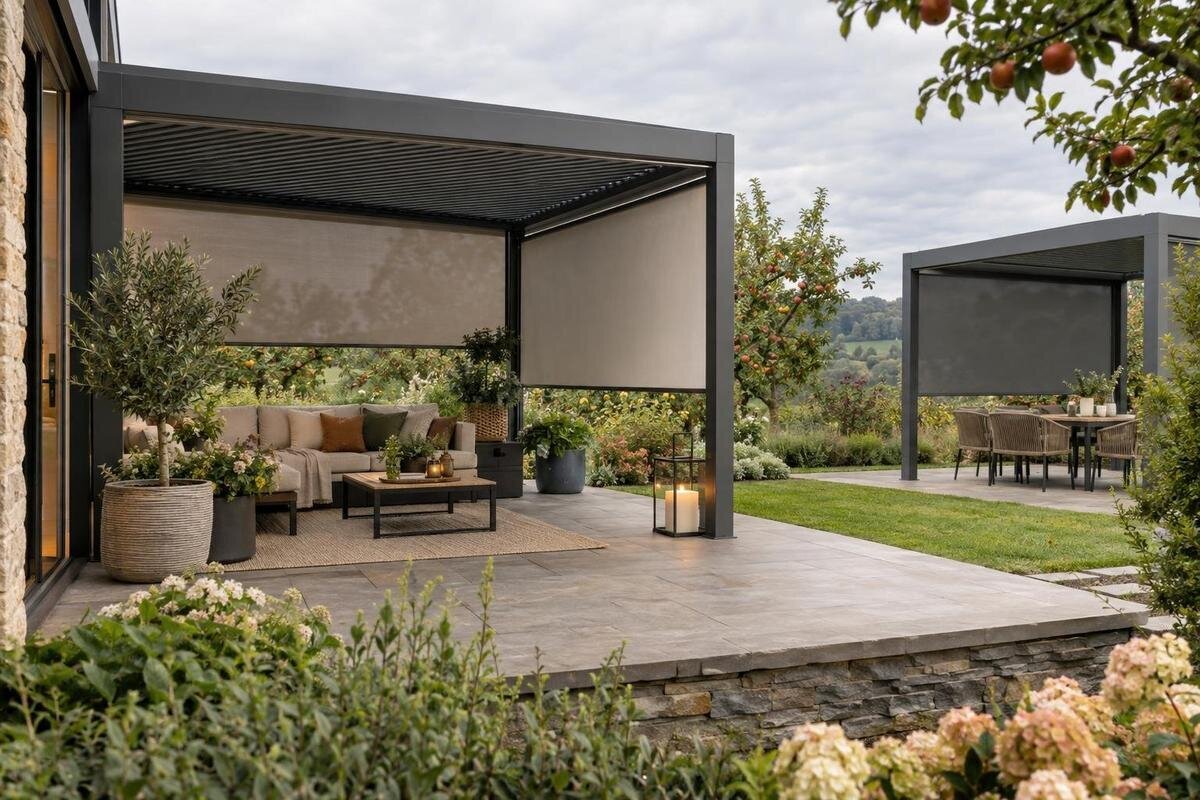
Pergola buying guide
Side screens may make a pergola more private from a particular view, but they do not automatically block every sightline or turn the space into a weatherproof room. A sound buying decision starts with the people and views around your site, then balances coverage against airflow, access, wind and rain. Before choosing a configuration, mark where you sit and walk, identify which sides need screening, and confirm exactly what the order includes. Dimensions, operating limits, mounting and weather suitability must be checked for the proposed arrangement, not inferred from a photograph or a product name.

Map the sightlines around the pergola
Begin with the view you want to block. Stand and sit where people will actually use the pergola, then look towards neighbouring windows, balconies, shared paths, roads or other overlooked areas. A screen that blocks one direct line can still leave a diagonal view open, while screening the wrong side may hide a view you want to keep. Check from the approach as well as from the seating area: someone walking in may be visible even when the main chairs are screened. If household members use the space differently, note their usual positions and activities rather than planning around one idealised viewpoint. Decide whether you need privacy from a particular direction or a generally enclosed feel; those are different aims.
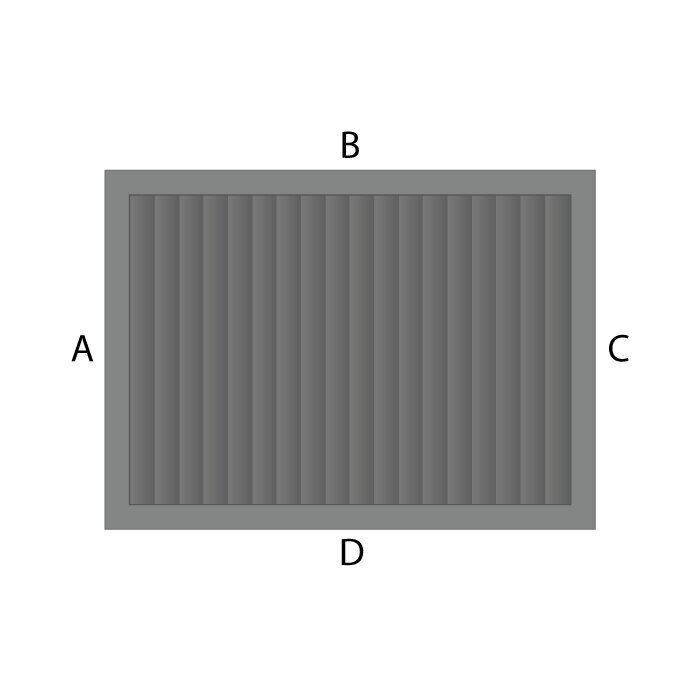
Transfer those observations to a simple site sketch. Label each side by a landmark such as the house, boundary or driveway rather than using left and right, which can become confusing between a drawing and a view on site. Mark the intended footprint, usual seating, entry route, sightlines to block and views to retain. Note whether privacy is needed from seated and standing positions; a sightline from an upper window may need a different response from one beside a ground-level path. The sketch need not be technical, but a clear plan makes it easier to compare screen coverage and explain the layout consistently to the supplier and installer. Check it from the proposed seating positions before you order.
Choose screen coverage by side and opening
Once the sightlines are clear, decide how much of each side needs screening. If different configurations are offered, a panel on one side may address a boundary view, while a return at a corner can help close an angled view; extra coverage also changes how open the area feels. Do not choose a full perimeter simply because a product photograph shows one. Identify routes needed for people, a garden gate or a view you want to preserve. Privacy depends on where a panel begins and ends as much as on which side it occupies, so note any corner gaps and openings in your sketch.
Check the written details for the exact configuration and ask for anything that is unclear. When reviewing a pergola product page, distinguish the frame in a photograph from screens, tracks, brackets or other parts that may be ordered separately; an image does not establish what is supplied. Confirm the height and width of each screen, any gaps at corners and the clear opening left for entry. Ask which named side each screen is intended to cover, using your site sketch rather than an ambiguous left-or-right description. If configurations differ, compare them against your measured sightlines instead of selecting by the number of panels alone.
Check visibility in daylight and after dark
A screen's appearance is not the same as its privacy performance. Depending on its construction, a more open weave may preserve some view or airflow but allow people to see through; a denser surface may obscure more of the view but make the area feel less open. These are trade-offs to verify, not guarantees: light, angle, distance and background can all affect visibility. Ask what the proposed screen is made from and how much can be seen through from both sides. If samples are available, view one at a similar distance and angle to the planned installation rather than judging only from a close-up image.
Do not assume that a screen provides one-way privacy. A panel described as a privacy screen may still allow some visibility from certain angles or in particular lighting conditions. At night, lighting within the pergola can change the balance between inside and outside views, depending on the screen. If evening privacy matters, ask for information about both sides and test a sample under similar lighting if one is available. When comparing another pergola listing, verify what screen arrangement is actually being offered and what its description means; a photograph alone cannot set reliable expectations.
Balance airflow with access and views
Side screens affect openness as well as sightlines. A less open panel or more covered sides may interrupt breezes, while a more open screen may allow more air and preserve more of the view. The effect depends on the screen's construction, how many sides are covered and how wind reaches the site. Think about the times you use the pergola and whether a direct breeze is welcome or uncomfortable. If airflow matters, do not decide from the word privacy alone. Spend time in the area and note where breezes usually enter and leave; one visit on a calm day will not describe every condition.
Plan for people to move through the space without brushing against a screen or squeezing past furniture. Mark the entry route, garden gate and any nearby door that needs to open. If a screen moves, find out where it travels and whether it needs clear space when open; do not assume that it can be parked out of the way. When reviewing a pergola listing, check how the proposed screen arrangement affects usable openings and access, rather than relying on an attractive arrangement in a photograph. A clear route is part of the layout, not an afterthought.
Assess wind exposure before choosing a screen
Wind is not just an issue for the screen itself: a side panel can change how wind meets the complete pergola. A broad or relatively closed screen may present more resistance than an open side, but the effect depends on the panel, frame, roof, fixings and exact arrangement. Do not treat a calm day or a sheltered display photograph as evidence that a configuration suits an exposed site. Ask for guidance that applies to the screen and pergola together, including any restrictions on how screens should be positioned in stronger wind. If the advice is unclear, pause before ordering and seek an assessment from a suitably qualified installer or professional.
Describe the site as accurately as you can. Note whether the area is open, between buildings, beside a building corner or partly sheltered by surrounding structures, and record the directions from which strong winds tend to arrive. These observations help a supplier or installer understand the setting, but they do not establish that the pergola is suitable. For the candidate listing, ask for any relevant wind-use guidance for the specific screen configuration and whether the site needs a professional assessment. Do not calculate a safe wind limit yourself or assume that nearby walls or planting provide dependable protection.
Treat rain protection as a separate question
Do not buy side screens on the assumption that they will keep the area dry. Depending on coverage, gaps and wind direction, a screen may reduce some direct exposure, but water can still enter around edges or openings and from above. Rain driven sideways behaves differently from rain falling straight down, and a side panel cannot resolve how the roof handles water. Decide whether you want modest shelter from passing showers or a space expected to remain usable in wet weather; those are not the same requirement. Ask the supplier to describe the limits of the exact roof-and-screen arrangement, not the screen in isolation.
Ask how the screen itself is intended to be used in wet conditions, whether it needs particular care after rain, and what weather limits apply to the complete arrangement. With a product page as a reference, do not treat a statement about one component as proof about the whole structure. Keep roof runoff and surface drainage as separate checks; a side screen cannot correct water flowing from a roof onto the patio. If shade from low sun or glare is another goal, confirm what the specific screen is intended to provide and which side needs coverage rather than assuming an opaque appearance guarantees shade.
Check the mounting position and site constraints
Decide where the pergola is intended to stand and whether the proposed arrangement relies on a wall or another support. Do not infer that a product is suitable for a particular mounting position from its name or an image. If it is to be attached to a building, ask whether the proposed wall and configuration are appropriate and what a qualified installer needs to assess. For a freestanding arrangement, confirm what support and installation requirements apply. The screen, frame and attachment method need to be considered as one configuration, especially where the site is exposed to wind.
Look at the whole installation area, not just the footprint. Note paving levels, changes in ground level, gutters, downpipes, doors, windows, external fixtures and services that may affect the position or the route of a moving screen. A wall return or roof overhang can also limit where a screen can travel. Treat the linked product page as a starting point for identifying the item, not as confirmation that it fits your site. Ask a qualified installer to assess the relevant clearances and supports; do not try to resolve structural questions with measurements alone.
Measure the space and specify the configuration
Measure the area that will be available after any planned paving or other site work is complete. Record the overall space for the pergola, distances to boundaries and walls, and any fixed obstacles. Then check the usable area inside it, including the space needed for seats, a table and a clear route through. If a screen moves, allow for its travel or parked position according to the product information; do not assume it stays within the frame. Keep the measurements in metres and label them on your sketch so that the supplier can distinguish the outer footprint from the open area you want to use.
Before placing an order, turn the sketch into a clear configuration note: identify each screened side by its nearby landmark, show the entry, and state which views should remain open. Confirm whether quoted dimensions refer to the frame, the outermost screen parts or another reference point. Keep the selected product page alongside the note and ask the supplier to confirm that the dimensions and included components correspond to the arrangement you have described. If a drawing or configuration summary is provided, check that its orientation matches your own plan before approving it. This simple cross-check can prevent confusion between the layout you expect and the one being quoted.
Compare the quote, inclusions and aftercare
Compare quotes only after you know what each one covers. Ask for separate details of the pergola, screens, tracks or fittings, installation and any other selected components, and confirm whether anything shown in an image is excluded. Check that each quote describes the same screen sides, dimensions, finish and mounting arrangement. Ask whether a site visit or additional work is needed and how it would be costed; do not assume those items are included. A lower total is not a like-for-like comparison if one option leaves out a required screen or installation component. Keep the written configuration with the quoted amount so that you can compare the same scope across candidates.
Before committing, ask about cleaning instructions, routine checks, adjustment and the availability of replacement screens or parts. Care can differ by screen and frame material, so use the supplier's advice for the exact combination rather than a generic cleaning method. Read any written warranty, return, exclusion and service terms supplied with the quote; do not rely on verbal assurances. Also clarify what happens if a delivered component does not match the approved configuration or is missing. Use this candidate page to identify the product under consideration, then confirm aftercare and order terms directly for the arrangement you plan to buy.
Decide how much screen flexibility you need
Some screen systems are fixed, while others may be opened, moved or removed; do not assume a particular option is available with the pergola you are considering. A fixed panel keeps its position but offers little adjustment when you want to open a view or change the sense of enclosure. A movable screen can provide flexibility, yet it needs room to travel and a suitable place to sit when open, and it adds an operating routine. Decide whether changing the coverage is important enough to justify those extra requirements. Ask which positions are permitted and how the screen should be used in wind or rain.
Think about who will operate the screens and how often. Check whether handles or controls can be reached without moving furniture, whether an open panel obstructs a path, and whether the operating side is accessible from where you stand. If partial positions matter, ask whether they are permitted and how they should be secured; do not infer this from the appearance of a mechanism. A demonstration or clear written instructions can help you understand the daily routine before buying. The useful question is not simply whether a screen moves, but whether its operation suits the way you expect to use the pergola.
Frequently asked questions
Can a pergola with side screens give complete privacy?
Not necessarily. Gaps, corners, screen height, viewing angles and lighting can all affect what people can see. Map the important sightlines and check privacy from both inside and outside the proposed area, including after dark if you plan to use it then.
Should I screen every side of the pergola?
Only if that coverage suits your privacy needs and still leaves enough access, airflow and openness for the space. Start with the views you want to block, then check where an entrance or an open side would be useful. More screening is not automatically a better fit.
Will side screens protect the pergola from strong wind?
Do not assume that they will. Screens may interrupt direct breezes, but their effect on the complete structure depends on the screen and pergola configuration. Ask for wind-use guidance for the proposed arrangement and seek a qualified site assessment if its suitability is unclear.
Will side screens keep rain out?
They may reduce some direct exposure, depending on their coverage and the direction of the rain, but water can still enter around edges, openings or from above. Confirm the limits of the complete roof-and-screen arrangement rather than treating a side screen as a waterproof wall.
What should I confirm before placing an order?
Confirm the overall dimensions, which sides are screened, the screen dimensions and operating arrangement, what parts are included, and how the pergola is to be mounted. Also get written guidance on wind and rain limits, installation requirements, quoted costs, delivery and the applicable aftercare and return terms.
Treat privacy and weather as separate requirements. A site sketch shows which screens answer a genuine sightline; written product and installation guidance helps clarify whether the complete arrangement suits the space and its exposure. Once those questions are settled, choose the coverage that meets your privacy needs while retaining the access, airflow and views that matter to you. That is a more dependable basis for ordering than choosing the most enclosed-looking photograph.
