
Buying a Replacement Pergola: Can You Reuse Existing Foundations?
Pergola buying guide
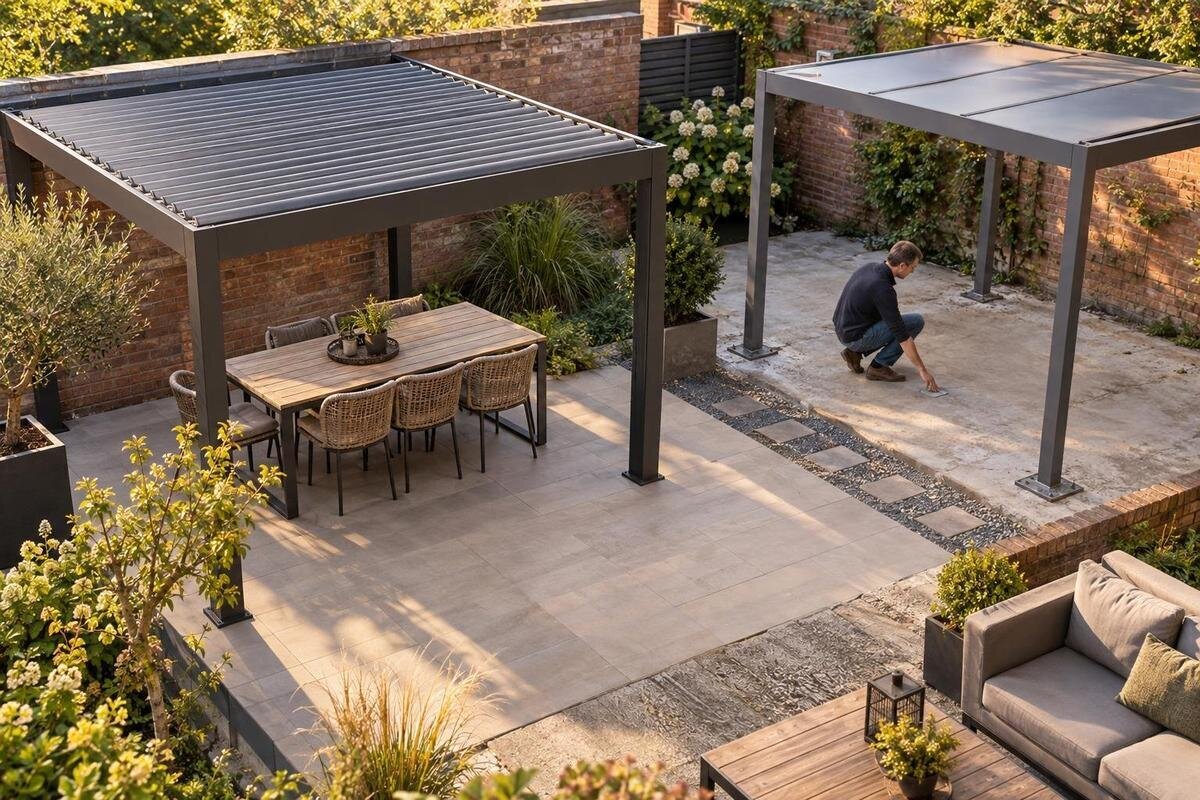
Buying a replacement pergola can seem straightforward when the posts will stand where the old ones did, but existing foundations are not automatically suitable for the new structure. Their position, condition and connection have to work with the exact replacement; a good-looking concrete base or a similar overall footprint is not enough to confirm that. This decision can affect the product you choose, installation planning and the final project cost. Use this guide to gather the old installation details, compare them with the proposed pergola and get a clear answer on whether the foundations can stay, need professionally designed changes or should be replaced.

Why the old foundations may not suit a replacement
A replacement pergola does not inherit the suitability of the old structure simply because it will occupy the same spot. Foundations are part of a system: their position, construction and connection must suit the particular replacement and the loads it is designed to carry. The previous pergola may have had different post positions, base plates or anchoring details; those differences matter even when the two structures look similar. A matching outside footprint is not proof that each new support can be fixed to an existing base. The question also changes if the new arrangement connects to a building rather than standing independently, or the reverse.
Ask each supplier for the installation guide, support layout, anchoring requirements and site-preparation information for the exact model you are considering. A catalogue image or broad product name cannot establish compatibility. Use the Bloomcabin pergola product page to identify a candidate, then request the documents needed to compare it with your site. If a relevant measurement or requirement is missing, record it as unknown and ask before ordering or arranging work. Keep separate the decision to reuse the concrete from the decision to reuse old anchors; the answers may differ. Photographs can help start a conversation, but cannot by themselves establish suitability.
Find out what is beneath the existing supports
Gather anything that explains how the existing pergola was installed: plans, handover documents, original instructions, contractor notes, invoices or dated photographs. Useful records identify the support locations and what was built beneath them, not only the pergola’s appearance. Check whether each post sits on an individual footing, a larger concrete base or a slab, and whether any support connects to a building. Do not assume all the bases are identical; previous repairs or alterations may have changed one. If a footing type, depth or material is not documented, mark it as unknown rather than filling the gap with an estimate. Also note whether a drawing predates later work.
Photograph each visible base from more than one angle and record its position relative to a fixed point, such as a wall or paving edge. Note visible fixings, repairs, movement and any areas that cannot be seen; avoid disturbing the installation just to find out what is underneath. Keep the old pergola’s model details if known, but do not assume they prove a different replacement will work. When considering a Bloomcabin product listing, ask which installation information applies to that exact option and what details about the site the supplier needs. If records are incomplete, say so explicitly to any installer you consult.
Compare post positions, not just the overall footprint
Compare the proposed support plan with the positions of the existing bases, not just the canopy dimensions or the usable area underneath. The distance between posts, number of supports, corner positions and offset from a wall or edge can differ. Ask for a dimensioned layout for the replacement and compare it with an accurate record of the visible base locations; do not estimate from product photographs. This is a compatibility check, not a structural approval. If a post would land beside a footing, over an old opening or close to an edge, do not shift it or improvise a fixing without professional advice.
Plan the intended position and the foundation question together. A post might need to move to preserve access, avoid a door swing or work around a wall, drain or paved edge, but that changes its relationship to the supports. A supplier can clarify the intended layout; a suitable professional must determine whether the existing bases can serve it. Apply the same standard to the listing you are comparing: use documented support positions for the exact option rather than assuming a similar-looking structure will line up. If the proposed footprint differs, ask whether a professionally designed adjustment or new foundations are needed before you buy.
Assess the condition of every foundation
Inspect every visible base and the surrounding area, not only the easiest corner. Note cracking, crumbling or flaking concrete, visible movement, uneven settlement, exposed metal, rust staining, loose or damaged anchors, standing water, and evidence of previous patching. Photograph each concern and mark its location; differences between supports can help a professional assess the site. These observations are reasons to seek advice, not a do-it-yourself diagnosis: a surface mark does not establish the condition below ground, and a neat-looking surface does not prove the footing is sound. Avoid covering a concern with paint, filler or new paving before it has been assessed.
Age alone is not a reliable pass or fail. A base may have carried the previous pergola for years, yet the replacement can have a different support arrangement or structural demands; an older base may also be serviceable if a professional confirms it. Share the photographs, repair history and known changes with the person assessing the site. If you are considering the option on this product page, ask for its exact installation guidance and give that information to the assessor. Pay attention to signs that the ground or paving has shifted since the old structure was installed. An opinion about old concrete without details of the replacement leaves half the question unanswered.

Check the anchor connection separately
Concrete condition is only one part of reuse: the connection between each post and its base has to suit the new structure too. Record whether old anchor bolts, threaded rods, plates or other fittings remain and whether any appear bent, loose, corroded or altered. The replacement’s installation instructions should set out its permitted fixing arrangement; ask the supplier or installer to confirm whether existing hardware can be kept for that exact design. A bolt that looks intact, or seems to fit a hole, is not sufficient evidence that it is approved. Do not remove, cut, reuse or reposition anchors until the installation professional has advised what should remain.
Some differences cannot be solved by choosing a nearby hole or adding another fastener. Spacing, distance from the concrete edge and how far an anchor is set into the base are technical matters; leave the assessment to a qualified professional. Do not drill into a footing or adapt an old fixing by trial and error. Ask the installer who will confirm the connection and whether a structural assessment is needed. For the option you are assessing, obtain the exact fixing detail and compare it with what is actually present on site. A general assurance that it is “a pergola base” is too vague to support an order.
Have the structure and site assessed together
A footing can look substantial and still need professional assessment of its capacity. Relevant factors include the ground and drainage, how the footing was constructed, whether it has moved, and the forces the proposed structure will transmit through its supports. Site changes since the original installation—such as excavation, altered paving or recurring water—may matter. Wind exposure and planned side panels, coverings or other additions can also change the demands on a pergola. The outside surface alone does not reveal every condition below ground. Do not turn these factors into a calculation from a photo or a rule of thumb; provide them to a qualified structural professional.
Where capacity is uncertain, ask a suitably qualified engineer or other competent structural professional to assess the existing bases against the replacement’s actual information. An installer can explain the fitting process, but be clear about who is making the structural judgement and what evidence supports it. If the pergola connects to a building, the wall and its connection are part of the question too; an existing bracket does not automatically suit a new product. Provide the drawings for the exact item under consideration and describe planned additions and site conditions, so the advice addresses your project rather than a generic structure. Ask for the conclusion and any conditions in writing.
Ask the supplier and installer before ordering
If your purchase depends on keeping the existing foundations, contact the seller or manufacturer before checkout. Give them the proposed model or product page, details of the old pergola, base photographs, known measurements and installation records. Ask for the replacement’s support layout, approved anchoring method and site-preparation requirements; then ask whether that information is enough to assess reuse or whether a site inspection is needed. A useful answer relates to your actual post positions and foundation type. General advice that pergolas commonly sit on concrete does not settle whether your particular bases are suitable. Separate confirmed facts from estimates when you send the information.
Ask specific questions and keep replies with your order paperwork: “Can these supports be used with this exact layout?”, “Which anchor details must match?”, “Who confirms the condition and capacity?” and “What work is excluded from the supply or installation quote?” If the answer depends on an installer’s visit, ask how that inspection is arranged and whether it should happen before the order is final. For the option you are evaluating, such as the listing you have selected, request details rather than assume an online image or product name reveals the installation requirements. A written response helps prevent general guidance being mistaken for approval of your site.
Compare the full cost of reuse and replacement
Compare the cost of two complete plans, not a reuse estimate against only the price of new foundations. A reuse plan may still involve an inspection, removal of the old pergola, anchor work, surface repairs or changes to surrounding paving. A replacement plan may involve excavation, new concrete, reinstating finishes, waste disposal and extra labour. These are possible items, not guaranteed charges; the site and agreed scope determine what applies. Request itemised quotes so you can see whether removal, installation and finishing work are included on both sides. Include any professional assessment needed to approve the reuse plan, not just contractor labour.
Ask each contractor to state the assumptions behind the quote: whether existing bases are accepted, who verifies them, what happens if a defect is found after removal, and how a changed post layout affects the work. Check whether site assessment, structural advice, installation, groundwork and disposal are separate services, and confirm the scope directly rather than infer it from a headline total. When pricing the product page, ask for comparable proposals: one based on professionally approved reuse and another that includes foundation replacement if that is a realistic alternative. This makes it easier to spot a low initial figure that leaves necessary work undecided.
Resolve uncertainty before finalising the order
Resolve foundation questions early enough to let them influence your buying decision. If an installer needs to see the site, arrange that before finalising the order where possible; if the supplier needs a drawing, request it while comparing options rather than after installation has been scheduled. Ask what information is required and whether a confirmed change in layout could affect the order terms. Do not assume the product can be returned, modified or cancelled if the old bases fail an assessment. Read the applicable terms and get any agreed exceptions in writing. It is easier to compare plans while you still have a choice of layout and groundwork.
Confirm what the purchase covers and who coordinates each part of the work. Product supply, site inspection, structural advice, foundation construction and installation may be arranged separately, so ask which party is responsible and when the old structure must be removed. If several contractors are involved, share the same drawings and assessment with all of them; otherwise one may price a different support layout or assume a condition that no one has verified. Clear responsibilities make written proposals easier to compare and reduce last-minute surprises. Delivery of the pergola itself is not evidence that the site is ready.
Use clear criteria for the final decision
Use a clear decision rule before placing the order. Reuse is worth considering only when the existing bases have been identified, their condition and structural suitability assessed, the new support positions and anchoring method match or have an approved design solution, and the responsible professional confirms the plan for the exact pergola. Keep that confirmation, the drawings and installation requirements together. “Same size” is not enough; the evidence must relate the actual foundations to the particular replacement. If a key point remains unresolved, make the purchase conditional on clarifying it or pause the order.
Plan on replacement or professionally designed remedial work where the supports are damaged, displaced, incompatible with the new layout or cannot be verified to the required standard. The final recommendation belongs to the person qualified to assess the site and structure, not to a visual comparison or a generic photograph. Once a decision is made, ensure the quote and order describe the agreed arrangement: which bases remain, what work is required and who will complete it. That gives you a practical record for scheduling installation and helps prevent foundation assumptions being lost between the purchase and the people doing the work.
Pergola foundation FAQs
Can I keep the foundations if the replacement pergola has the same footprint?
Not on footprint alone. The new support positions, foundation condition, anchor arrangement and structural suitability all need checking. Compare the replacement’s support layout with the actual bases, then have the proposed setup assessed for the exact pergola. Similar overall dimensions do not confirm that its posts can be fixed to the old foundations.
Can I reuse the anchor bolts from the old pergola?
Only if the replacement’s installation requirements accept them and an appropriately qualified professional confirms that their type, position and condition are suitable. A matching thread or intact appearance is not enough. Leave the bolts in place until you have advice; the concrete may be reusable even when the old anchors are not.
Do small cracks mean I need new foundations?
A crack’s appearance alone cannot determine whether a foundation is suitable. Photograph and note its location, along with any movement, water or signs of repair, then ask a qualified professional to assess it. Neither assuming every crack requires replacement nor treating a neat-looking surface as proof of safety is a reliable basis for the purchase.
Should I order before the foundations are assessed?
If keeping the existing foundations is important to your budget or layout, try to resolve their suitability before finalising the order. Ask the supplier what information is needed and whether a site inspection is appropriate. Check the applicable order terms too; do not assume a product can be returned or changed if the old bases prove unsuitable.
What information should I send the supplier or installer?
Share the old pergola’s details and any installation records, plus clear photographs of every visible base and fixing. Include known measurements, repairs, site changes and anything that remains uncertain. Ask for the proposed pergola’s support layout and anchoring information. The more clearly you separate confirmed facts from estimates, the easier it is to get relevant advice.
Existing foundations can be an asset only when they work with the exact replacement, not simply because they survived the old pergola. Gather the records, compare a documented support and anchoring layout with what is on site, and obtain an assessment of condition and structural suitability. Then compare a properly scoped reuse plan with the cost and disruption of replacement. If any of those points remains unknown, resolve the uncertainty before committing rather than guessing. A clear, recorded decision makes the purchase and installation plan more reliable.
