
Buying a Bioclimatic Pergola on Black Friday: Which Features Matter?
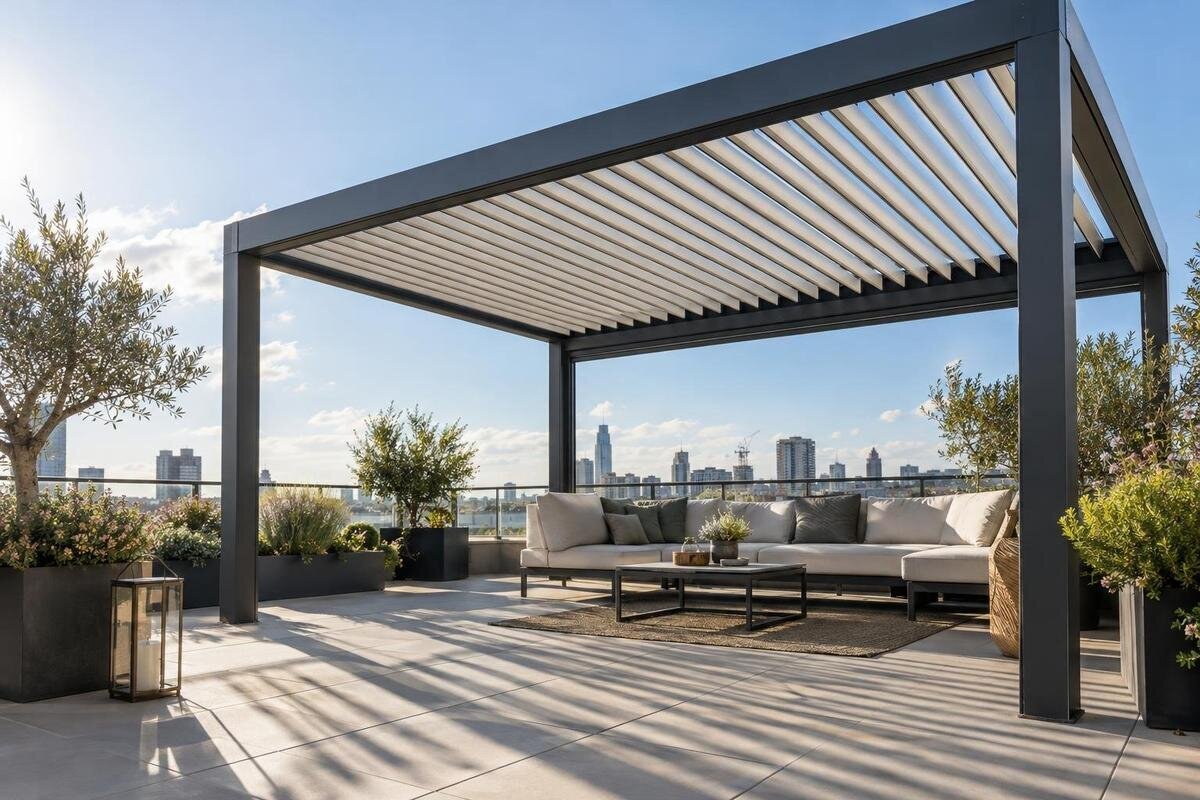
Black Friday pergola buying guide
Buying a bioclimatic pergola on Black Friday is easier when you separate the roof features you need from extras that may appear in a listing. A bioclimatic pergola uses an adjustable louvre roof, but the useful movement range, weather performance, drainage and control method must be checked for the exact configuration. Think first about the everyday job of the covered area: how you want to balance sun, shade and airflow, what happens when rain arrives, and who will operate the roof. Then compare event pricing only after those details match. This guide helps you build a shortlist without assuming a feature shown is included or that a sale is active.
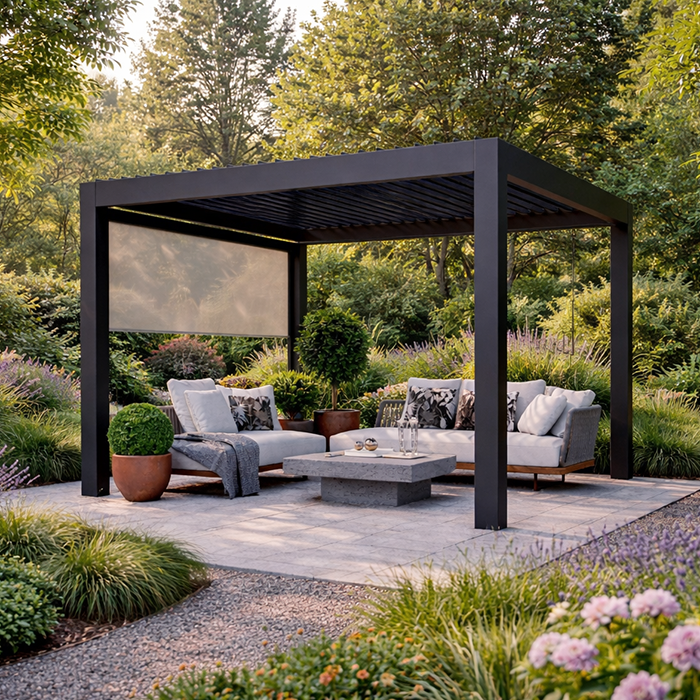
What makes a pergola bioclimatic?
A bioclimatic pergola is usually defined by roof louvres that can be adjusted rather than a fixed, unchanging cover. By changing their position, the roof can alter how much direct sun and open sky reaches the area beneath it; the effect also depends on sun angle and the structure’s surroundings. That makes adjustment useful for more than a simple open-or-closed choice. Before adding options to a shortlist, decide which outcome matters most: more shade during a particular part of the day, a brighter space at other times, or the ability to respond as conditions change. Also consider whether the space is used mainly for meals, relaxing or passage, since each creates a different preference for light and cover.
Product descriptions can use similar labels while leaving important differences unclear. Check the stated louvre movement and operating range, whether positions between fully open and closed are available, and whether the roof is divided into sections that can be adjusted separately. Ask how that movement is controlled and whether the maker explains what to do in changing weather. Use the bioclimatic pergola listing as a starting point for reading its actual feature description, not as proof of any particular angle or control. If the detail is missing, seek clarification before treating the feature as part of the offer. A precise answer lets you compare products by how the roof works, instead of by the category label alone.
How louvre adjustment affects shade
Angle matters because sunlight changes through the day. A position that shades an overhead area when the sun is high may not block low-angle rays reaching from the side; louvres are not a substitute for screening every edge. Consider the times when you use the space and where direct light comes from then. If the goal is dappled light rather than full shade, ask how finely the louvres can be set and whether the adjustment is continuous or limited to stated positions. The answer should be tied to the product’s mechanism, not an assumption based on the word adjustable. If only one setting is likely to be used most often, place less weight on a long list of controls.
Look for straightforward operating information: how a chosen position is set, whether one control moves the whole roof or separate sections, and whether there are limits on operation in rain or wind. Those instructions affect day-to-day convenience as much as the feature list. If different settings are central to your choice, compare the louvre-roof pergola page with the detail in the listing or written specification: the category label alone cannot establish range or fine control. Keep separate any side screens, blinds or other shading options; they address a different direction of sun and may not be included. Ask how those additions fit around the roof before counting them as a complete shade solution.
What weather protection is actually stated?
Do not equate adjustable louvres with a completely rainproof room. When louvres are closed, water handling can depend on the roof design, joints, edge details and conditions around the structure; wind-driven rain can also reach an open side. Ask for a clear statement of the intended rain protection, what position the roof must be in, and any stated limits or exclusions. If keeping cushions, dining items or electrical equipment dry matters, make that requirement explicit before ordering rather than relying on a photograph or a broad weather-protection phrase. Ask whether the claim covers ordinary rainfall only or explains more exposed conditions; do not substitute an informal sales description for the written product information.
Compare wording carefully. Shade, rain protection and waterproof are not interchangeable promises, so look for performance information that explains what is covered and under which conditions. Check whether the seller points to a product specification or installation conditions that qualify the claim; do not assume that a pergola product page has the same roof behaviour as a bioclimatic option. For open-sided use, consider what rain can reach horizontally and whether separate side protection is offered and compatible. If your intended use depends on a dry area, ask a qualified installer or supplier what the stated system can achieve at your site. Record the answer against the exact model, not only a sales conversation.
Drainage: where roof water goes
Rain protection is only as useful as the route water takes once it leaves the roof. Product information should explain whether water is channelled through the frame or directed to outlets, where those outlets sit, and what is supplied with the structure. These are questions, not features to assume: do not infer a gutter, downpipe or a particular discharge direction from a product image. Check where water would land in relation to a doorway, path, seating or neighbouring area, because an outlet can affect how practical the layout feels. If several outlets are shown or mentioned, confirm which are present on the configuration you are considering.
Ask how channels and outlets are accessed for routine clearing, what maintenance the manufacturer recommends, and whether the system’s drainage depends on a particular installation arrangement. This is especially relevant beneath trees or where leaves and grit accumulate, but the product instructions should determine care. Compare the drainage description alongside the roof claim in the bioclimatic pergola product page; a statement about louvres alone does not explain the water path. If the listing is silent, have the supplier clarify the complete route and whether required parts are included in your chosen configuration before comparing prices. Also ask where discharged water is intended to go, because it may influence where the structure can sensibly sit.

Manual, motorised and automated controls
Control choices should suit the person who will adjust the roof, not simply add novelty to a specification. A manual mechanism may appeal when simple operation is enough; a powered system may be more convenient for frequent adjustment, but its controls, power needs and operating instructions must be confirmed for that product. Do not infer a motor, remote, wall switch or app from a picture or from the bioclimatic label. Note which methods the listing explicitly describes and whether they are included in the quoted configuration or shown as separate options. Think too about who will use the pergola: an impressive control system is of little value if the everyday method is confusing or inaccessible.
Compare how many control points are provided, whether the louvres move together or in zones, and whether any sensor or automation is available, optional or absent. Ask whether a user can still operate the roof in the way the instructions specify if power is unavailable; do not assume a manual override. If the system is powered, check electrical requirements and compatibility with the intended site through the supplier and a suitably qualified professional—do not plan wiring from marketing copy. Ask which sensor inputs, if any, are supported and what they actually control; an item named in a brochure may not be in the offer. A shorter feature list may be preferable if its operating method is clear and matches how the space will be used.
Matching the roof to sun and outdoor use
Think about exposure before choosing a louvre feature set. Record where the sun falls on the seating or dining area at the times you use it, and note whether shade is needed overhead or along one side. Roof louvres can change cover from above, but they cannot by themselves block every low sun angle or provide privacy. A simple observation over a few days can reveal whether the priority is adjustable overhead shade, side screening, or both. Keep those needs separate when comparing products, because a screen or blind may be an extra rather than part of the roof. Also consider whether nearby trees or buildings cast shade that changes the value you place on an adjustable roof.
Placement also changes how a roof meets the rest of the outdoor area. Consider door swings, walking routes, drainage direction and where furniture must sit, while keeping the focus on coverage rather than choosing the largest possible structure. If the layout would meet a wall, inspect a wall-mounted pergola option only as a separate configuration to assess; confirm that its actual product details meet your bioclimatic louvre requirement. Do not assume a label or picture answers the questions of orientation, clearance or site fit. Those should be checked against the product information and the actual space. If side protection is on your list, confirm how it relates to louvre positions and the access you need.
Site exposure to wind, rain and debris
Sun, wind, rain and debris act on the actual site. A sheltered courtyard, an exposed garden and a position near trees can create different priorities even in the same town. Note whether the planned area receives driving rain, strong gusts, airborne dust, salt-laden air or falling leaves; mention these when asking about the material, finish and use conditions. The aim is not to diagnose the site yourself, but to identify the exposures a supplier or installer needs to consider when confirming suitability. Think about seasonal changes too, such as where wind or leaf fall is most noticeable, without assuming the product handles every condition.
Ask for stated limits and required conditions rather than accepting a general all-weather claim. Product information should identify what the structure is designed for, but a photograph or broad label cannot establish wind resistance or suitability for a particular position. If you compare it with another pergola product page, make sure each listing describes a comparable roof and the same kinds of exposure; do not transfer claims from one design to another. For a site with demanding wind or building-attachment questions, have a qualified professional assess the setting and confirm requirements before purchase, without relying on an online comparison alone. Do not choose a wind-related feature or rating by guesswork.
Mounting type and support requirements
How a pergola is supported matters to both fit and the questions you need answered. Freestanding and wall-mounted arrangements are not automatically interchangeable: they occupy different positions around the area and may have different support and fixing requirements. If a wall connection is being considered, review the wall-mounted pergola product details for the exact configuration and fixing information, but do not take the page label as confirmation that an existing wall is suitable. Ask the supplier what information a professional will need to confirm before the order is finalised. This distinction also matters when comparing a product image with your intended layout; resemblance is not evidence of compatibility.
Before buying, check the intended support points, the dimensions and clearances shown for the exact configuration, and any constraints on where the roof can be positioned or water discharged. A competent installer or other qualified professional should confirm that the building or ground condition can support the selected arrangement and that it fits the site. This is a site-specific assessment; no generic article can determine the adequacy of a wall, post base or fixing. Keep any written confirmation tied to the model and configuration you are actually considering, especially if promotional choices can change the supplied components. Ask about any preparation or access requirements early enough to include them in the purchase plan.
Materials, finish and maintenance
Material and finish are buying features too, but do not identify them from colour or a staged image. Check the listing or product documentation for the stated frame and louvre materials, surface finish and care guidance. If the pergola will be near the coast, exposed to dust or positioned under trees, ask whether the maker gives specific cleaning or corrosion-care instructions for those conditions. Avoid assuming that a coating is maintenance-free or that a finish will remain unchanged; look for the actual care schedule and any stated limits. This is a useful filter if two offers appear similar, since a clear care guide can answer questions that promotional photographs cannot.
Maintenance affects whether controls and drainage remain practical over time. Ask how accessible channels, moving parts and control components are meant to be cleaned or inspected, which routine tasks are recommended, and what to do if a component needs service. Check availability and compatibility of any optional screens, sensors or replacement parts in the same product range, rather than assuming future additions will fit. Read the written terms for care-related exclusions as well as coverage, but do not treat the existence of a stated term as proof that a specific issue is covered. If cleaning access looks difficult in the proposed position, resolve that before purchase.
How to assess a Black Friday offer
Black Friday changes the timing of a purchase, not the questions a pergola must answer. An event label is not evidence that a discount is active or that the advertised configuration includes every feature shown in a photograph. If an offer is displayed when you shop, compare the exact model, roof type, louvre operation, controls, drainage components and accessories against the price and terms for that same configuration. A Bloomcabin pergola listing can be considered alongside a bioclimatic listing only after you confirm whether both describe comparable roof functions. Avoid comparing a bare structure with a package that includes additions. Check that any advertised saving refers to the item and options selected, not simply to a visually similar image.
Make a short table with four columns: required feature, what the product information says, what remains unclear and the cost or term attached to it. Mark adjustable range, rain claim, drainage route and controls as essential or optional for your use. Then check offer dates or eligibility only if stated, the checkout total, included components, delivery or installation scope, and cancellation or return terms. These points do not prove an offer is good or bad; they show whether it matches your requirements. If a feature is omitted from the written configuration, treat it as unconfirmed until the seller clarifies it. Save the final description or quote so you can check it against your order confirmation.
Frequently asked questions
Can a bioclimatic pergola keep the area completely dry?
Not automatically. Ask for the stated rain performance with the louvres in the specified position, and note any limits for wind-driven rain or water entering from open sides. Verify the drainage route as well: a general phrase such as “weather protection” does not establish that the covered area will be sealed.
Do I need motorised louvres?
That depends on how often you expect to adjust the roof and who will use it. Compare the operating method, the controls actually included and any stated power requirements. If considering a powered option, ask whether the instructions describe a fallback for a power interruption; do not assume one is provided.
What should I compare on Black Friday?
Compare the exact configuration, not just the event price. Check the stated louvre operation, rain protection, drainage, controls and included accessories, then review the offer terms and checkout total. A feature shown in a photograph or a Black Friday label does not confirm that it is part of the configuration.
Will adjustable louvres shade the whole outdoor area?
They adjust cover from above, but low-angle sun can still reach from the sides. Note when and where direct sunlight falls in the area you use. If you need side screening too, check whether it is offered separately and whether the product information confirms compatibility.
Can any wall support a wall-mounted pergola?
No. The product’s support and fixing requirements need to be checked against the actual building and site. Ask the supplier what information is needed, and have a suitably qualified professional confirm whether the proposed wall and configuration are appropriate before purchase.
Treat the purchase as a match between roof features and site conditions first, and a seasonal offer second. The key is not the largest collection of options, but a louvre range and operating method you understand, clear information about weather protection and drainage, and controls suited to your routine. Check materials, care, placement and support requirements against the product information, and involve a qualified professional where the site calls for it. On Black Friday, compare the written configuration and terms line by line. If a feature that matters is unclear, pause rather than assuming it is included. That way, your decision rests on how the pergola will work in your outdoor space, not on the event label alone.
