
Choosing Pergola Furniture: Aluminium, Wood or Wicker
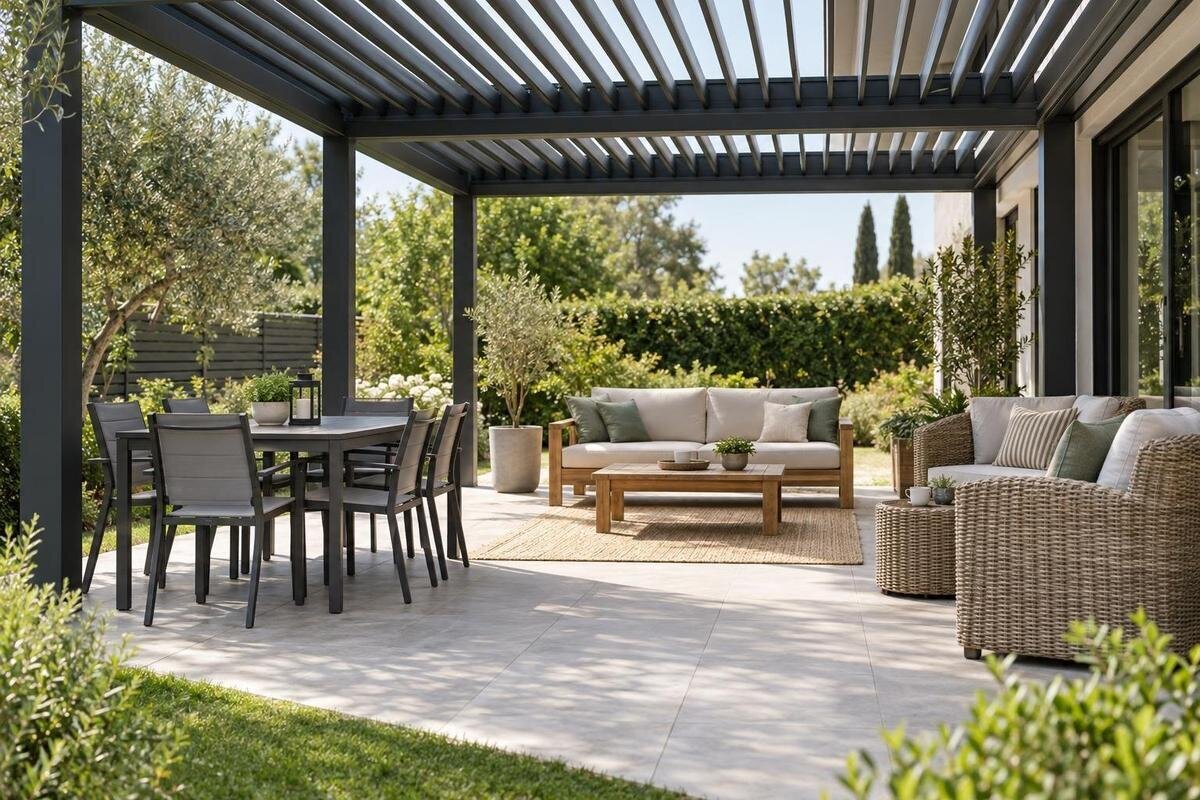
Pergola furniture guide
Furniture beneath a pergola can still be exposed to strong sun, wind-driven rain, dust and everyday spills. Aluminium, wood and wicker can all suit an outdoor setting, but those labels alone do not tell you how often a piece needs attention or whether it belongs in the most exposed spot. Compare the exact material and finish, the way you use the area, and the maintenance you are willing to do. Then measure the furniture and the space needed to use it against the usable pergola footprint before choosing a set.

Before you buy 1
Furniture for dining or lounging
Begin with the job the furniture must do. A table used for regular meals has different priorities from occasional lounge chairs: dining needs a usable surface and chairs that can be drawn out, while lounging puts more weight on seat depth, back support and access to a side table. Count the people who use the space most often, then decide whether extra seats are needed frequently enough to remain there. Note which pieces will stay outside between uses and which can be moved or stored. The more often furniture is left in place, the more important it is to choose a care routine you can keep up with.
Write down each item and its actual dimensions, then sketch its in-use footprint rather than relying on a product photograph. Include chairs pulled back, a side table and the route to the door or garden; an outline around the table alone misses the space people need to sit down and pass. If you are still comparing pergola sizes, Bloomcabin Pergola options are listed from 9 to 24 m². Check the selected dimensions against your arrangement rather than treating the stated area as a seating-capacity guide. Give each piece a clear purpose in the plan: a large lounge chair may be worthwhile for daily relaxation, while extra dining chairs that are rarely used might be better stored elsewhere. This keeps the material comparison tied to furniture you actually need.
Check exposure at each seating position
Conditions can vary across one pergola. Observe the seating area at the times you expect to use it: direct sun may reach an outer chair even when the table is shaded, while a wall or screen can create a more sheltered corner. Note which side receives wind-driven rain, where dampness lingers after a shower, and whether dust or salt-bearing air is a concern at your site. This is more useful than assuming every place beneath the structure has the same conditions. Furniture that suits a sheltered dining corner may be harder to maintain close to an open edge.
An open-sided pergola does not make furniture weatherproof. Check the maker's outdoor-use and care guidance against the conditions where each seat will stand. When considering Bloomcabin Bioclimatic Pergola options, mark the proposed seating positions on your plan and note the exposure at each one. Do not treat the model name or its stated area as evidence that the furniture will remain dry or shaded. Compare an inner seat with one near an open edge: would both receive the same care, or would one need to be moved more often? If you expect to rearrange the furniture regularly, consider those alternative positions too. This gives you a clearer basis for assessing material suitability than judging only the most sheltered spot.
Before you buy 2
Aluminium furniture: finish and upkeep
Aluminium is often shortlisted by buyers who want a straightforward frame-cleaning routine. It is not automatically maintenance-free: the finish, joints, feet and fasteners all affect the care needed. Ask which cleaning products are suitable and what to do if a coated surface is marked. Check whether the frame has narrow crevices where dust settles, and look for care guidance for damp or salt-bearing air if that applies to your site. The word aluminium does not tell you whether every component has the same material or finish, so assess the complete piece rather than just its visible rails.
Consider touch and handling as well as cleaning. A metal seat or tabletop can warm in direct sun, and the pergola's shade may shift during the day. If you expect to sit there in direct sunlight, try a chair in comparable conditions if possible, or consider whether removable cushions suit your routine. Furniture weights vary, so do not assume every aluminium chair is easy to lift, stack or move. Check the individual piece's stability on your paving and whether you can comfortably reposition it for cleaning. If possible, try the movement you will make most often, such as drawing a dining chair back or carrying it to storage, rather than judging its handling from a brief lift.
Wood furniture: species, finish and care
Wood offers natural variation in grain and colour, but the word wood covers many species and finishes. Ask what the furniture is made from and whether it is oiled, sealed, painted or supplied without a finish. Different timbers and coatings have different care needs; a general instruction to oil outdoor furniture is not a reliable routine for every piece. Sunlight can change a finish's appearance, while repeated wetting and drying may affect the surface. Look for specific guidance on cleaning, touch-ups and the treatment, if any, recommended by the maker.
Decide whether that care fits the way you use the pergola. Check surfaces that may collect water, such as horizontal ledges or gaps around joints, and consider how easily you can reach the underside and frame for cleaning. After wind-driven rain, the furniture may need time to dry; cushions may need separate care. Do not apply a generic oil or sealant unless the maker's instructions identify it as suitable. A wood set can work in a more exposed position, but its species, finish and the actual exposure all matter more than the broad material label.

Before you buy 3
Wicker furniture: identify the weave
Wicker describes a way of weaving, not one particular material. Furniture sold with a wicker look may use natural fibres or synthetic resin, and the frame beneath the weave may be made from something else again. Ask what the strands and frame are made from and how each part should be cleaned. Natural fibre and synthetic resin have different care requirements; a synthetic weave is not automatically suitable for every level of sun, dampness or rain. Check the maker's stated outdoor use rather than judging suitability by appearance alone.
Inspect the weave for loose ends, uneven strands or places where dirt could collect, and ask how to clean between the gaps without damaging the finish. Look at the back and underside as well as the visible seat: will you be able to reach those areas once the furniture is in place? Deep seats and cushions can also make it harder to reach behind a chair or leave room for it to dry after rain. When comparing Bioclimatic Pergola configurations, draw the full outer shape of woven chairs, not just their seat cushions. Consider whether the woven appearance is what you want, or whether the particular chair also offers the comfort and manageable cleaning routine you need. A wicker look alone does not answer either question.
Comfort, cushions and everyday handling
Material alone does not determine whether a chair is comfortable. Try the seat if you can, or compare its dimensions with chairs you already use. Dining chairs need to work with the table: check seat height, arm height and whether the arms can fit beneath the tabletop. Lounge furniture usually has different proportions and may take up more floor space. Think about how easy it is to get in and out of each seat, and whether the arrangement lets people reach a side table without shifting other furniture. A showroom set can look compact until its chairs are pulled back.
Treat cushions as a separate buying decision. Ask what the covers are made from, how they should be cleaned, whether they can be removed and where they can dry or be stored. A cushion that looks suitable for outdoor use still needs care matched to its fabric and the actual exposure. Try the chair with the cushions you intend to use, and establish whether those cushions are included in the purchase. If you are planning seating beside a building with a Bloomcabin Wall-Mounted Pergola, consider how you will reach and remove every cushion without having to shift the whole arrangement. Count loose back cushions as well as seat pads when planning storage. The relevant question is not simply whether the chair feels comfortable, but whether keeping it comfortable involves a routine you are happy to follow.
Before you buy 4
Measure the table, chairs and walkways
Test the whole arrangement, not just the furniture's footprint when unused. Mark the table and chair positions with tape or chalk, then allow for chairs being pulled out, people moving between seats and access to the door or garden. Include a table leaf if you plan to extend it, and add any footstool, side table or fixed item that will stay in the area. A quick outline is a concept, not a measured installation plan, but it can reveal when a route becomes awkward or a chair blocks access before you buy the set.
Compare that outline with the dimensions of the selected pergola configuration, not just its total area. Use the measurements for the Regular pergola configurations you are considering to test each furniture arrangement separately. A broad lounge chair and a dining chair may occupy similar space on paper but need different amounts of room in use. For a dining set, try sitting down, pulling the chair back and passing behind it. For a lounge arrangement, include any footstool and check whether the side table remains within comfortable reach. If you are choosing between two sets, mark each layout in turn rather than combining their dimensions into one sketch. You can then compare aluminium, wood and wicker pieces on equal terms: the same number of usable seats, the same intended activity and the same routes through the space.
Plan for drying and storage
Decide where cushions, throws and covers will go when they are not in use. A storage box takes up floor space and needs room to open; stacked chairs need a place that does not block a route. If furniture stays outside, check how the maker recommends cleaning and drying it after rain. Do not assume a cover will keep every item dry from wind-driven rain, or that covering damp furniture is harmless: trapped moisture can be a problem. Use covers and storage in line with the care instructions for the furniture and fabrics you choose.
Add the storage arrangement to the furniture plan before choosing the pergola footprint. When assessing the Bloomcabin Bioclimatic Pergola range, include the space occupied by a box or stacked chairs and the room needed to reach them. Then walk through the storage routine: remove the cushions, carry them to the chosen place and check how the lid or door opens. If you prefer to bring them indoors, identify where they will go rather than leaving that decision until after delivery. Also consider whether the person who usually puts the furniture away can comfortably handle each piece. This makes the comparison between materials more practical. A set that needs little surface cleaning may still involve more daily handling than you want, while a different arrangement may better suit the storage space you already have.

Before you buy 5
Combining aluminium, wood and wicker
A furniture set does not have to use one material throughout. You might compare a metal table with wood chairs, or keep woven seating for a separate lounge area, if those pieces suit the tasks and the space. Check practical details as well as appearance: chair arms must fit beneath the table, seat heights need to suit it, and each material may have a different cleaning routine. Try the proposed combination together where possible, rather than assuming separately comfortable pieces will work as a set. A mixed arrangement can be useful when dining and lounging have different needs, but establish how many care routines you are taking on before buying several pieces.
Make one list of the maintenance required for every material, finish and cushion. Separate tasks shared by the whole arrangement from those that apply to only one piece, and check which cleaning products are suitable for each surface. If a mixed dining and lounge layout is planned beneath a model from Bloomcabin's regular pergola range, label the individual pieces on the sketch so that neither group is overlooked. You can also compare how the colours, textures and proportions look together without insisting that everything matches. Decide which element you want to repeat, such as a cushion colour or a similar chair shape, then assess the practical compromises separately. Keeping a particular visual style should not require accepting an uncomfortable chair or a maintenance task you already know you will avoid.
Questions to ask before buying
Ask for the exact material and finish of the whole piece. For aluminium, clarify the finish and care instructions; for wood, ask for the species and the recommended treatment; for wicker, establish what the weave and underlying frame are made from. Confirm the maker's guidance for outdoor use in the conditions you have observed, and ask how the furniture should be cleaned. Check the care requirements for cushions and covers separately. Also confirm which pieces are included in the set and obtain dimensions for each item, rather than assuming a photograph shows everything supplied.
Before choosing, compare the answers for the actual pieces on your shortlist rather than ranking aluminium, wood and wicker in the abstract. If a wall-side arrangement is part of that shortlist, keep the selected dimensions from the Wall-Mounted Pergola listing alongside the furniture details so that the structure and furniture are assessed together. Note any unanswered question against the relevant item: an unclear finish, an unspecified frame material or missing cushion-care guidance should not disappear into a general description of the set. Finally, separate your essentials from preferences. Comfortable seating and a care routine you can manage may matter more than having every piece in the same material. This gives you a useful basis for choosing between complete furniture sets without relying on appearance or a broad material label alone.
Frequently asked questions
Which pergola furniture material is easiest to maintain?
Aluminium is often straightforward to wipe down, but its finish and fittings still need attention. Wood and wicker vary according to the timber, weave and finish. Compare the care instructions for the complete piece, including its frame and cushions, rather than relying on the material name alone.
Is wicker furniture suitable under a pergola?
It depends on what the weave is made from and how exposed the seating area is. Natural fibre and synthetic resin have different care needs, and the frame may be a separate material. Check the maker's outdoor-use guidance and allow for cleaning and drying.
Does aluminium furniture get too hot in the sun?
A metal seat or tabletop can feel warm after direct sun, but the effect depends on the surface and conditions. Check where the shade falls when you use the area, and try the furniture or consider removable cushions if heat is a concern.
Can I leave outdoor cushions under a pergola?
Do not assume that a pergola keeps cushions dry or shaded. Sun and wind-driven rain can reach seating areas, and fabrics have different care needs. Check the cushion maker's instructions and plan where cushions can dry or be stored when they are not in use.
How do I check whether a dining set will fit?
Measure the table and chairs, including the space needed to pull chairs out and move around them. Add any side tables or storage, then compare the layout with the selected pergola's dimensions. A total area figure alone does not show whether the arrangement will work.
There is no universal winner among aluminium, wood and wicker. Choose the material whose care fits your routine and whose construction suits the exposure where you plan to use it. A measured layout, comfortable seating and clear care instructions are better guides than a material label alone; together, they help make the furniture practical for everyday use and manageable through changing weather.
