
Buying a Freestanding Pergola on Black Friday: Choosing the Right Size
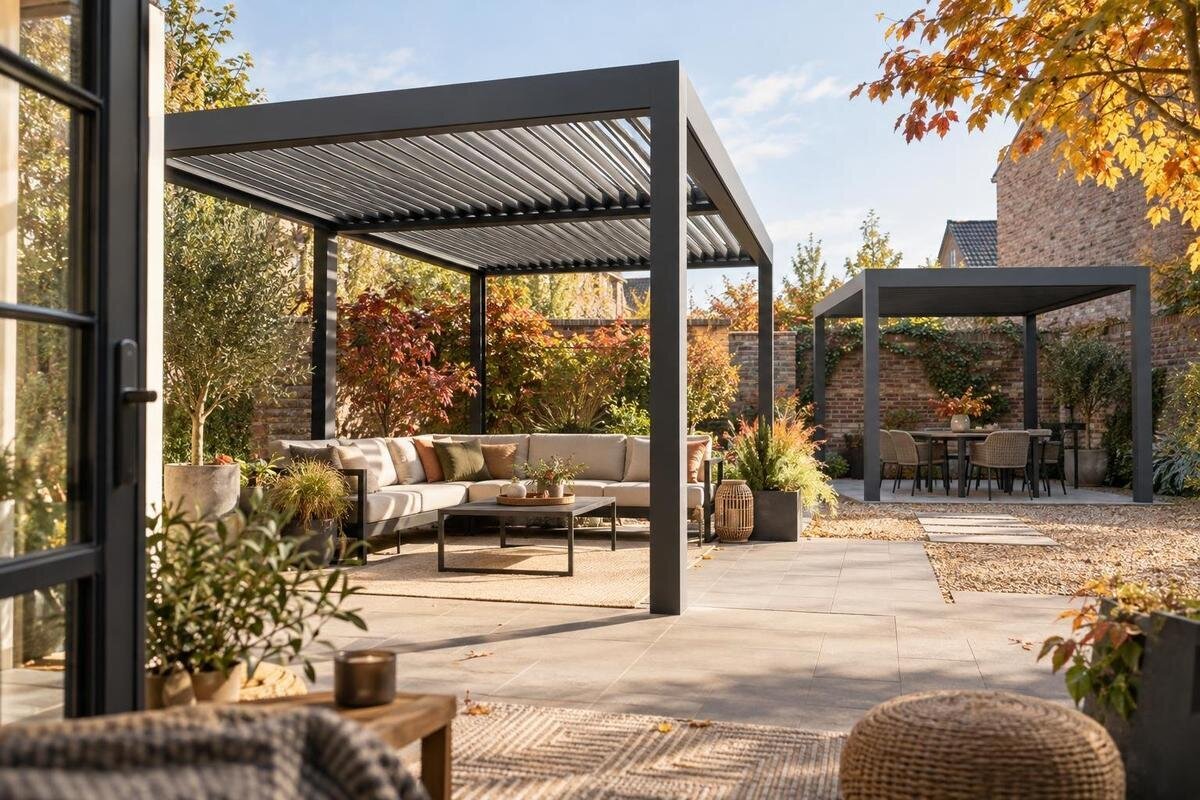
Pergola buying guide
Black Friday can bring several pergola sizes into the same search, but the right choice still comes down to how your outdoor area works. Decide where you want shade, measure the ground available, and map the seating and walking routes that need to remain usable. A freestanding pergola uses space beyond the area directly beneath its frame: supports, access around it and the room needed to use furniture all affect the fit. This guide takes you from a measured site plan to a sensible shortlist, while showing how to assess a seasonal offer without letting the event dictate the dimensions.

01
Define the outdoor area you want to use
Start with the activity the pergola is meant to support, rather than with a size shown in a photograph. Is the main purpose outdoor dining, a pair of lounge chairs or a flexible gathering spot? That choice defines the useful zone: the ground on which people and furniture need to fit, not simply the full patio or garden. If several activities will share the space, decide which takes priority and whether they happen at the same time. A compact dining nook has different space needs from a dining set with room for guests to circulate, even when the table itself is identical.
Sketch the intended zone and identify what must remain outside it: a planting bed, steps, a door opening, a braai, a pool edge or another fixed feature. Include the way people approach the area, not only the portion you hope to shade. Photographs are poor measuring tools because perspective can make a frame look smaller or larger than it is. Treat the Bloomcabin pergola listing as a source of product details to compare, not as a layout example to copy. Your own site plan, rather than the image, should decide which dimensions deserve a closer look.
Measure the available ground and note obstacles
Measure the usable area at ground level with a tape measure and record its length and width in metres. Take measurements where the pergola could stand, rather than from a distant fence line that only appears parallel. Patios can taper, gardens can have angled edges and paths can cut into the available rectangle. If the site is irregular, draw a basic outline and add measurements at each change in direction; do not reduce a complicated shape to one optimistic estimate. Note which edge each number belongs to so you can compare the same boundaries with a listing later. Recheck the figures before ruling a size in or out; a second reading can catch an error near a fixed boundary.
Mark features that affect the footprint: gates, steps, drains, planted areas, outdoor taps, doors and windows, trees, boundary fences or a route people use every day. Note which items are fixed and which could realistically move; do not rely on shifting something until that change is agreed. Measure the remaining clear area between the tightest points, not just the broadest stretch. Compare your sketch with this pergola product listing by looking for clear overall dimensions and, if available, a layout drawing. If the information is unclear, ask the seller before treating a listed size as a confirmed fit.
02
Check what the listed dimensions measure
Product dimensions need interpretation. A listing may state outside length and width, the distance between supports, frame height or the size of a covered area; those figures do not necessarily describe the same boundary. The outside footprint can include projections, while the clear space between supports may be smaller. The dimensions of the frame also do not guarantee that every point below it will be shaded throughout the day. Look for a plan view, a side view and labels explaining exactly what is measured. If a diagram gives only one number or leaves support positions unclear, do not fill the gap by guessing from a photograph. Ask for clarification before matching the product to a narrow terrace or a layout with fixed obstacles.
When reviewing the relevant Bloomcabin pergola page, confirm the stated product type as well as how the dimensions are defined. This guide concerns freestanding layouts, so do not assume every pergola listing represents the same installation type. Compare like with like: use the same front-to-back and side-to-side references on your sketch and in the product information. Note any stated projection separately instead of silently adding or subtracting it. If a specific measurement is missing, ask the retailer to confirm it and keep the response with your purchase notes. The aim is to understand what physical area the stated size represents, not to interpret a drawing by guesswork.
Allow space for the furniture you will use
Place the furniture on your plan before selecting a pergola. Measure the dining table or lounge pieces you expect to use, then include the area taken by chairs when they are pulled back and people are seated. A table that fits inside a frame on paper may leave too little room to move around it, serve food or reach a seat. Include benches, side tables and any item that will normally stay beneath the frame. If you own the furniture, measure it rather than relying on a product description. If you do not, use the dimensions of the style you intend to buy as a provisional estimate and leave room to revise the plan.
Think about how much of the furniture needs to sit beneath the frame at the same time. If chairs are regularly pushed out on one side, placing that side close to a support may make the arrangement awkward even when the table fits. Use removable tape or a drawn rectangle to test alternative positions, and walk through the layout with the chairs pulled out. A larger frame may offer more flexibility, but extra area is worthwhile only if your site and budget support it. Use the Bloomcabin product page to check whatever dimensions are provided, not as evidence that its size suits your furniture.

03
Keep everyday routes and access clear
Plan the routes that need to pass beside or through the pergola. These may include the everyday path from the house to the garden, access to a gate, a route to the pool or the way people carry food to an outdoor dining area. Draw each route on the site sketch and check where the supports would sit in relation to it. A passage that looks wide enough on an empty patio can feel pinched once chairs, a table or people are in place. Consider both the usual direction of travel and the point where somebody needs to turn, pause or pass another person.
Doors and windows matter as much as paths. Note which way doors open, where window handles sit and whether outdoor furniture is normally moved through a doorway; then check that a support, beam or occupied chair will not obstruct those tasks. Allow for cleaning, reaching planted beds or accessing services if those areas need to remain usable. The aim is not to add an arbitrary buffer around every side, but to identify the clearances your household actually needs. Compare the routes with the dimensions provided for the listed pergola option, and do not count a route as clear simply because it remains technically passable without furniture.
Choose a position for a freestanding structure
A freestanding pergola is planned as a separate structure rather than as an extension supported by a wall. That gives you a choice of position within the site, but it does not mean every spot or surface is suitable. Mark where each support would land and check the full footprint against boundaries, paving joints, planting and services you know are present. Do not assume a fence, wall or nearby building can take part of the load, or that a structure can be fixed to any surface. Follow the product instructions and ask a qualified installer about site and installation requirements; use your size plan to identify questions, not to make structural assumptions.
Position can also affect whether the area works as a place to sit. Observe the space at the times you expect to use it and note how sunlight and existing shade move across it; frame dimensions alone do not promise a particular shaded patch. Nearby trees and buildings can change the light, and the useful zone may shift during the day or year. Decide which hours matter most, then compare the potential position with that pattern. If another Bloomcabin pergola listing appears in your comparison, confirm its product type, written dimensions and siting requirements rather than assuming it is freestanding or judging its footprint from an image.
04
Mark out each size before comparing
Set out a candidate footprint at full scale on the ground before comparing several sizes. Use removable marking tape, rope or other temporary markers, and follow the stated outside dimensions, including any projection shown in the drawing. Mark support positions separately if they are identified. Do not push markers into the ground where hidden services may be present. A full-size outline makes it easier to see whether a support falls across a route or whether the frame sits awkwardly against a boundary. It also shows how much patio or garden remains outside the structure, which a top-down drawing may not make obvious.
Walk the marked area from the approaches you will use, open nearby doors and place chairs or boxes where furniture would sit. Try the arrangement with chairs pulled out, not only tucked neatly under a table. If you are deciding between two dimensions, mark each one in turn and note the practical difference: a seat may gain clearance, or a route may become constricted. When checking the product listing, record whether its measurements are overall or internal; if the information does not say, ask rather than infer. Temporary marking tests the layout only and does not confirm that the surface or fixing method is suitable for installation.
Compare Black Friday offers without changing your plan
Black Friday can make it tempting to focus on a headline price or accept a size because it appears in an offer. Treat the event as a time to compare purchase options, not as a reason to alter your site plan. An advertised saving is useful only if the exact product and dimensions meet your needs and the complete price and terms suit you. Offer details do not replace measurements: listings can differ in product type, size, included items, delivery arrangements or conditions. Verify each point from the retailer’s current information instead of assuming two promotions are comparable.
Make your size shortlist before comparing event pricing. For each candidate, record the exact listing name, overall dimensions, clear area if stated, included items, delivery costs and relevant purchase conditions. Then compare like with like; do not judge a smaller configuration against a larger one solely by the displayed price. If this catalogue page is among the options, check the product type, dimensions and terms given for that listing rather than inferring details from another pergola or its URL. No offer should push you towards a footprint that blocks access, sits badly on the site or leaves too little usable room for the activity you planned.

05
Check access, delivery and installation requirements
A good site fit is not the only practical fit. Measure the route from the likely delivery drop-off point to the proposed location, including gates, narrow paths, steps and tight turns. Ask the retailer what delivery access information and package measurements are available; packaged goods and the installed footprint are different things. Do not assume components can be carried through a narrow opening simply because the finished pergola would fit beyond it. If access depends on removing a gate or moving other items, confirm that those changes are possible and included in your plan before ordering. Keep delivery questions separate from the dimensions of the final structure.
Before placing an order, read the product information for site preparation, assembly and fixing requirements, and ask who is responsible for work that is not included in the purchase. Have a qualified installer assess questions about the surface, ground conditions, nearby services or placement if they fall outside your experience. Photographs cannot confirm fixing points, the suitability of a paved surface or the space needed for assembly. The right size is one that can be sited and installed as specified, not merely one whose outline fits a drawing. If a requirement could change where supports must go, revisit the layout before choosing a final dimension.
Choose a size that suits the measured layout
Reduce the choice to a small set of dimensions that pass the same checks. A simple comparison note can list the available ground width and depth, the seating arrangement, routes that must stay clear, the stated product footprint and any unresolved questions. Mark each option as a fit, too tight or not yet confirmed, and note why; that stops a low price or impressive photograph from replacing practical reasoning. A size is not a good match if the furniture works only when nobody is using the walkway, or if its supports occupy a place needed for everyday access. Keep the reason attached to each candidate so the comparison remains useful.
Select the option that accommodates the main use with the clearances you have identified, without paying for a larger footprint that your site cannot use. Before checkout, reopen the exact product page and verify the chosen size, dimensions, product type and purchase terms; a page title or image is not a dimension drawing. If a key measurement or site requirement remains unclear, ask the retailer or installer rather than guessing. Black Friday may affect what you compare or when you buy, but the lasting decision is whether the pergola fits your outdoor layout and supports the way you intend to use it.
Frequently asked questions
How do I work out the right size for a freestanding pergola?
Measure the usable area, mark the routes and fixed obstacles, then map the furniture you plan to use beneath it. Compare that layout with the product’s stated overall dimensions and support positions. Choose a size that leaves the access and seating space your layout requires.
Should the pergola cover the table exactly?
Not necessarily. A table may fit while chairs, people moving around it or space to serve a meal do not. Include chairs pulled out from the table and check where the supports would sit before deciding how much of the furniture needs to be beneath the frame.
Do pergola dimensions tell me how much shade I will get?
Not on their own. Overall frame dimensions describe a physical footprint, but the shaded area can depend on the design and the sun’s position. Check the product information for what its measurements refer to, and consider when you intend to use the space.
Should I choose a larger pergola because of a Black Friday offer?
Only if the larger size suits your site and plans. Compare the exact product, dimensions, included items and purchase terms rather than letting a displayed price set the size. A lower price is not useful if the footprint blocks access or does not suit your furniture.
What should I confirm before ordering a freestanding pergola?
Confirm the product type, overall dimensions, support positions and any stated clear internal area. Check the route to the installation site and ask the retailer or a qualified installer about site preparation and fixing requirements you cannot verify yourself.
Choosing a freestanding pergola on Black Friday is easier when the measurements are settled first. A site sketch, furniture plan and marked-out footprint reveal whether each candidate leaves room for people to move and for installation requirements to be met. Once one or two sizes pass those checks, compare the exact listing and purchase terms, and treat any offer as one factor rather than the decision. The right pergola size is the one that fits your measured outdoor layout and comfortably supports the way you expect to use it.
